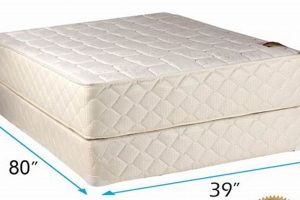
The necessity of a box spring for use with a memory foam mattress is contingent upon several factors, primarily the type of bed frame employed and the manufacturer’s stipulations. A traditional box spring, consisting of a wooden or metal frame containing springs, was initially designed to provide support and elevate innerspring mattresses. However, memory foam mattresses, owing to their unique construction, may not always require this specific type of foundation.
Utilizing an inappropriate foundation can potentially compromise the integrity of a memory foam mattress, voiding the warranty in some instances. A solid, flat surface is often preferred as it offers consistent support across the entire mattress area. The historical reliance on box springs stemmed from the need to prevent innerspring mattresses from sagging and to increase their overall lifespan. Modern memory foam mattresses, constructed with dense foam layers, often exhibit enhanced durability and may perform optimally on alternative support systems.
Considerations surrounding bed frame design, warranty requirements, and desired bed height are crucial when determining the appropriate foundation. Alternatives such as platform beds, adjustable bases, and slatted frames can provide adequate support for memory foam mattresses, eliminating the need for a traditional box spring in many cases.
Considerations Regarding Mattress Support
Selecting the appropriate support system for a memory foam mattress requires careful evaluation. The following tips offer guidance for optimizing mattress performance and longevity.
Tip 1: Evaluate the Bed Frame: Assess the existing bed frame to determine its suitability for a memory foam mattress. Frames with wide gaps between slats may not provide adequate support, potentially leading to mattress sagging.
Tip 2: Consult the Manufacturer’s Warranty: Review the mattress warranty specifications. Many manufacturers stipulate specific foundation requirements, and failure to comply may invalidate the warranty.
Tip 3: Consider a Platform Bed: Platform beds offer a solid, even surface ideal for memory foam mattresses, eliminating the need for a traditional box spring in most situations.
Tip 4: Explore Slatted Foundations: If utilizing a slatted foundation, ensure the slats are closely spaced (typically no more than 3 inches apart) and sufficiently robust to support the mattress and occupants.
Tip 5: Assess Bed Height Preferences: Account for the desired bed height when selecting a foundation. If a higher profile is preferred, a low-profile box spring or platform bed frame with added legs can achieve the desired elevation.
Tip 6: Investigate Adjustable Bases: Adjustable bases provide both support and customizable positioning, enhancing comfort and potentially offering therapeutic benefits. These are a viable alternative to box springs.
Tip 7: Avoid Flexible Box Springs: Flexible or coil box springs are not ideal for memory foam mattresses. The springs can create uneven support, potentially damaging the foam layers over time.
Adhering to these guidelines ensures optimal support, extends the lifespan of the mattress, and safeguards the warranty. Proper foundation selection is a critical component of maximizing the investment in a memory foam mattress.
Understanding the relationship between mattress construction and support systems facilitates informed decision-making, leading to enhanced sleep quality and long-term value.
1. Frame Type

The configuration of the bed frame fundamentally influences whether a box spring is necessary when used with a memory foam mattress. Different frame designs offer varying degrees of support, which directly impacts the mattress’s performance and longevity.
- Platform Beds
Platform beds incorporate a solid or closely-slatted surface, providing consistent support across the entire mattress area. This design typically eliminates the need for a box spring, as the platform itself offers the necessary structural foundation. The flat, rigid surface ensures even weight distribution, which is crucial for preventing premature sagging of the memory foam.
- Slatted Frames
Slatted frames consist of a series of horizontal supports, typically made of wood or metal, spaced across the bed frame. The suitability of a slatted frame for use with a memory foam mattress depends on the slat spacing. Narrow spacing (generally less than 3 inches) provides sufficient support, potentially negating the need for a box spring. Conversely, wider spacing may result in uneven support and potential mattress damage, necessitating a box spring or alternative solid foundation.
- Metal Frames with Central Support
Some metal bed frames feature a perimeter frame with a few supporting legs and a central support beam. These frames may require a box spring to provide adequate support across the entire mattress surface. Without a box spring, the mattress could sag or become damaged in areas lacking direct support from the frame itself. The addition of a bunkie board could function as an alternative to a traditional box spring.
- Adjustable Bases
Adjustable bases are designed with a built-in support system specifically engineered for use with memory foam mattresses. These bases offer adjustable positioning and often eliminate the need for any additional support structure. Adjustable bases provide a uniform and adaptable foundation, ensuring proper weight distribution and facilitating the desired functionality of the adjustable features.
In summary, the selection of a bed frame directly influences the need for a box spring when using a memory foam mattress. Platform beds and adjustable bases generally obviate the requirement, while slatted frames and metal frames may necessitate a box spring or alternative foundation, depending on their specific design and support capabilities. Understanding these distinctions is crucial for optimizing mattress performance and preserving its structural integrity.
2. Mattress Warranty

Mattress warranties often stipulate specific foundation requirements, directly impacting the necessity of box springs when using a memory foam mattress. Failure to adhere to these requirements can result in warranty voidance, rendering the manufacturer not liable for defects or premature wear. For instance, a warranty may explicitly state that the mattress must be supported by a solid, non-yielding foundation or a slatted frame with slats no more than a certain distance apart. The rationale behind these stipulations lies in ensuring proper weight distribution and preventing sagging, which can compromise the structural integrity of the memory foam.
Consider a scenario where a consumer places a memory foam mattress directly on a bed frame with widely spaced slats. Over time, the mattress may begin to sag in the areas between the slats, leading to discomfort and potential damage to the foam layers. If the mattress has a warranty clause specifying a solid foundation, this type of damage would likely not be covered. Similarly, a warranty might specify that using a traditional box spring with certain memory foam mattresses can create uneven support, thereby voiding the warranty. The presence of springs in the box spring can generate pressure points, accelerating wear and tear on specific areas of the mattress.
Therefore, careful examination of the mattress warranty is crucial before deciding on a foundation. Consumers should verify the specific requirements outlined by the manufacturer, ensuring that the chosen support system complies with these stipulations. Ignoring warranty clauses can lead to unexpected expenses and the loss of protection against defects, highlighting the practical significance of aligning the foundation choice with the warranty’s specifications. A proactive approach involving thorough research and adherence to warranty guidelines helps safeguard the investment in a memory foam mattress and maximizes its lifespan.
3. Support Requirement
The support requirement of a memory foam mattress directly influences the decision regarding the necessity of box springs. The density and composition of memory foam necessitate a stable and uniform foundation to prevent sagging and ensure proper spinal alignment. Insufficient support can lead to premature degradation of the mattress, resulting in discomfort and reduced sleep quality. For example, a memory foam mattress placed directly on a frame with widely spaced slats may experience concentrated pressure points, leading to uneven wear and potential structural damage. The absence of adequate support compromises the mattress’s ability to conform to the body, negating the pressure-relieving benefits that are inherent in memory foam construction.
Conversely, the need for box springs may be mitigated by alternative support systems that provide equivalent or superior support. Platform beds, featuring a solid or closely-slatted surface, often eliminate the requirement for a box spring by delivering a consistent and even foundation. Adjustable bases offer customized support and positioning, catering to individual comfort preferences while maintaining the mattress’s structural integrity. The key consideration is whether the chosen foundation, irrespective of being a traditional box spring, fulfills the essential support requirements dictated by the memory foam’s composition and the manufacturer’s specifications. Compliance with these support parameters is critical for preserving the mattress warranty and maximizing its useful life.
In summary, the support requirement serves as a pivotal factor in determining whether box springs are needed with a memory foam mattress. The choice hinges on whether the existing or intended bed frame provides adequate and uniform support to prevent sagging and maintain the mattress’s structural integrity. Exploring alternative support systems and carefully assessing warranty guidelines offers a comprehensive approach to meeting the memory foam’s specific support needs, ensuring both comfort and longevity. Failure to address these needs can result in diminished sleep quality, premature mattress wear, and potential warranty invalidation.
4. Desired Height

The desired height of a bed influences the decision of whether a box spring is necessary when using a memory foam mattress. Achieving a specific bed height is often a matter of personal preference, accessibility, or aesthetic considerations within a bedroom’s design. This preference directly impacts foundation selection, including the inclusion or exclusion of a box spring.
- Accessibility Considerations
Individuals with mobility limitations or specific health needs may require a bed at a particular height to facilitate ease of entry and exit. A bed that is too low can be challenging to get into or out of, while one that is too high may pose a safety risk. In these cases, a box spring can be used to elevate the memory foam mattress to the desired level. However, if the frame already provides sufficient height, a box spring may be unnecessary or even detrimental, resulting in an excessively high bed. Consideration of accessibility needs is a primary factor in determining the optimal height and, consequently, the foundation requirements.
- Aesthetic Preferences
The visual appearance of a bed contributes to the overall aesthetic of a bedroom. Some individuals prefer a higher profile bed, which can create a sense of luxury and prominence. In such cases, a box spring may be utilized to achieve the desired height, especially if the bed frame itself is relatively low. Conversely, a minimalist or modern aesthetic often favors a lower profile bed. Platform beds, which typically do not require a box spring, can provide the desired low height while still adequately supporting the memory foam mattress. The aesthetic preference thus plays a crucial role in foundation selection.
- Storage Requirements
The space beneath the bed can be a valuable storage area, particularly in smaller living spaces. Achieving a higher bed height through the use of a box spring can create additional storage space underneath the bed. Alternatively, bed frames designed with built-in storage drawers can achieve the dual purpose of providing support for the memory foam mattress and offering ample storage without the need for a box spring. The decision depends on the priority given to storage versus other factors such as accessibility and aesthetic preferences.
- Mattress Thickness
The thickness of the memory foam mattress itself also contributes to the overall bed height. A thicker mattress will naturally result in a higher bed, potentially negating the need for a box spring to achieve the desired height. Conversely, a thinner mattress may require a box spring or an alternative foundation to raise the bed to a comfortable and visually appealing level. The interplay between mattress thickness and desired bed height is a key consideration in determining the appropriate foundation.
The desired height of a bed is intrinsically linked to the decision of whether a box spring is needed with a memory foam mattress. Factors such as accessibility needs, aesthetic preferences, storage requirements, and mattress thickness all contribute to determining the optimal foundation. While a box spring can effectively increase bed height, alternative solutions like platform beds or bed frames with built-in storage may provide the desired height while also meeting the support requirements of the memory foam mattress.
5. Cost Efficiency

Evaluating the cost efficiency concerning the necessity of box springs with a memory foam mattress involves a comprehensive assessment of initial investment, long-term durability, and potential replacement costs. The economic advantages and disadvantages of various support systems warrant careful consideration.
- Initial Purchase Price
The initial purchase price of a box spring, compared to alternative foundations such as platform beds or adjustable bases, represents a significant cost factor. Traditional box springs may present a lower upfront investment compared to more sophisticated support systems. However, this immediate cost advantage must be weighed against potential long-term considerations related to durability and compatibility with memory foam mattresses. The lower price point should not overshadow the potential for premature wear or the voiding of mattress warranties due to inadequate support. Conversely, a higher initial investment in a platform bed or adjustable base may translate to enhanced longevity and better overall value, negating the need for box spring replacement over time.
- Longevity and Replacement Costs
The lifespan of a box spring and its potential for replacement contribute directly to the overall cost efficiency equation. Box springs, particularly those of lower quality construction, may exhibit a shorter lifespan compared to more robust alternatives like solid-wood platform beds. The frequency of replacement translates directly into increased long-term expenses. Furthermore, the cost of disposing of an old box spring and acquiring a new one should be factored into the economic analysis. Investing in a durable foundation from the outset can mitigate these recurring replacement costs, ultimately proving more cost-effective over the long term.
- Impact on Mattress Lifespan and Warranty
The choice of foundation can significantly impact the lifespan of the memory foam mattress itself, thereby influencing the overall cost of sleep-related investments. An inadequate or incompatible foundation can lead to premature mattress sagging or damage, necessitating earlier replacement. Additionally, failure to comply with the manufacturer’s warranty requirements regarding foundation type can void the warranty, leaving the consumer responsible for repair or replacement costs. A cost-efficient approach involves selecting a foundation that not only provides adequate support but also aligns with the warranty specifications, maximizing the mattress’s lifespan and safeguarding against unforeseen expenses.
- Long-Term Health and Comfort
Cost efficiency extends beyond the immediate financial considerations to encompass long-term health and comfort benefits. A properly supported memory foam mattress promotes spinal alignment and pressure relief, potentially mitigating back pain and improving sleep quality. The resultant improvements in health and well-being can translate to reduced healthcare costs and increased productivity. Investing in a foundation that optimizes sleep quality and supports physical health represents a form of preventative healthcare, yielding long-term cost savings that extend beyond the price of the mattress and foundation themselves. A well-supported mattress is an investment in long term well-being.
In conclusion, evaluating the cost efficiency pertaining to the requirement of box springs with a memory foam mattress involves a holistic assessment encompassing initial purchase price, longevity, warranty compliance, and long-term health benefits. While a box spring may present a lower upfront cost, alternative foundation options may prove more economical over the lifespan of the mattress, considering factors such as durability, warranty protection, and potential health benefits. A comprehensive analysis of these elements facilitates informed decision-making, ensuring that the selected support system provides optimal value and long-term cost efficiency.
6. Alternative Foundations
The decision concerning the necessity of box springs with a memory foam mattress is fundamentally linked to the availability and suitability of alternative foundations. These alternatives offer support systems that can negate the need for traditional box springs, influencing mattress performance, longevity, and warranty compliance. The exploration of these foundations is paramount in determining whether a box spring is truly required.
Platform beds, for instance, exemplify a prominent alternative. Their solid or closely-slatted surfaces provide uniform support, distributing weight evenly across the mattress. This design characteristic often eliminates the need for additional support from a box spring. Adjustable bases represent another alternative, offering customizable support and positioning while maintaining the mattress’s structural integrity. Such foundations directly address the support requirements of memory foam, potentially rendering box springs superfluous. Slatted frames, when designed with closely spaced and robust slats, can also provide adequate support, acting as viable substitutes for box springs. The practical significance of understanding these alternatives lies in the potential cost savings, aesthetic flexibility, and enhanced functionality they offer compared to traditional box springs.
In summary, alternative foundations represent a crucial component in evaluating the necessity of box springs for memory foam mattresses. The availability and suitability of these alternativesincluding platform beds, adjustable bases, and adequately designed slatted framesdirectly impact the decision-making process. By considering these options, individuals can make informed choices that optimize mattress performance, prolong its lifespan, and potentially avoid the added expense and bulk of a traditional box spring.
Frequently Asked Questions
The following questions address common concerns regarding the compatibility of box springs with memory foam mattresses, providing clarity on the optimal support systems for ensuring mattress longevity and performance.
Question 1: Does a memory foam mattress always require a box spring?
The necessity of a box spring depends on the bed frame and mattress warranty specifications. Platform beds and adjustable bases generally eliminate the need for a box spring, while some slatted frames or metal frames may necessitate one for adequate support.
Question 2: Can using a box spring void the mattress warranty?
Yes, using an inappropriate or non-recommended foundation, including certain types of box springs, can void the mattress warranty. It is crucial to review the warranty specifications to ensure compliance with the manufacturer’s requirements.
Question 3: What are the alternatives to using a box spring with a memory foam mattress?
Alternatives include platform beds, adjustable bases, and slatted frames with closely spaced slats. These options provide adequate support without the potential drawbacks associated with traditional box springs.
Question 4: How does a slatted frame compare to a box spring in terms of support?
A slatted frame can provide comparable support to a box spring, provided that the slats are closely spaced (typically less than 3 inches apart) and sufficiently robust to support the mattress and occupants. Wider spacing may result in uneven support and potential mattress damage.
Question 5: What is the impact of bed height on the decision to use a box spring?
Bed height preferences influence the foundation choice. If a higher bed profile is desired, a box spring can increase the height. However, if a lower profile is preferred, a platform bed or low-profile foundation may be more suitable.
Question 6: How does cost efficiency factor into the decision of using a box spring versus alternative foundations?
Cost efficiency involves considering the initial purchase price, longevity, and potential impact on mattress lifespan. While box springs may have a lower upfront cost, alternative foundations may offer better long-term value due to enhanced durability and warranty compliance.
Selecting the appropriate foundation necessitates careful consideration of mattress warranty, bed frame type, support requirements, desired height, and cost efficiency. Understanding these factors ensures optimal mattress performance and longevity.
Proceed to the next section to explore specific considerations for maximizing memory foam mattress lifespan.
Do I Need Box Springs With a Memory Foam Mattress
The preceding analysis establishes that the necessity of box springs with a memory foam mattress is not a universal requirement. The suitability of a box spring depends primarily on factors such as the bed frame design, the specific stipulations of the mattress warranty, the desired bed height, and the support characteristics of alternative foundations. Platform beds and adjustable bases often negate the need for box springs, while certain metal or slatted frames may necessitate their use to ensure adequate support and prevent warranty voidance.
Ultimately, an informed decision regarding “do i need box springs with a memory foam mattress” requires a careful evaluation of the prevailing circumstances and adherence to manufacturer guidelines. Prioritizing proper support will maximize mattress longevity and ensure a comfortable sleep experience. Consumers are encouraged to thoroughly examine their bed frame, mattress warranty, and personal preferences before committing to a specific foundation choice. The long-term value of the mattress investment hinges upon this deliberate and informed decision-making process.
![Upgrade Your Sleep: Twin Mattress & Box Spring Set - [Year] | Organic & Natural Mattress Buyer’s Guide: Non-Toxic Sleep Solutions](https://mattressworldpa.com/wp-content/uploads/2025/07/th-3528-300x200.jpg "Upgrade Your Sleep: Twin Mattress & Box Spring Set - [Year] Organic & Natural Mattress Buyer’s Guide: Non-Toxic Sleep Solutions")