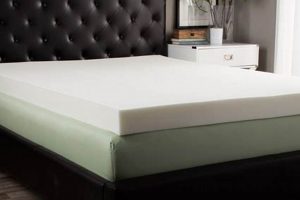
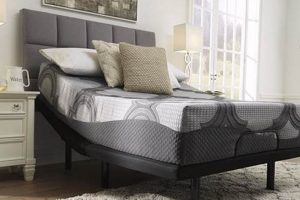
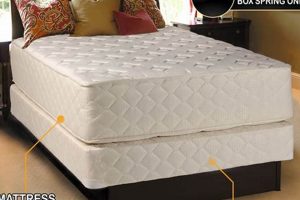
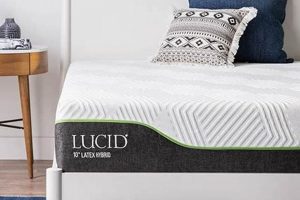
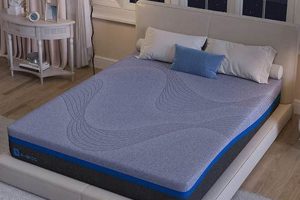
A substantial addition to existing sleep surfaces, a six-inch profile for these comfort layers indicates a significant investment in pressure relief and support. For example, a memory foam product of this thickness will deeply contour to the body, potentially alleviating stress on joints and pressure points. Similarly, a latex version may offer a resilient, responsive feel that elevates the sleeping experience.
The enhanced cushioning offered by such a depth addresses various needs, ranging from correcting the inadequate support of an aging mattress to simply optimizing sleep quality. Historically, thinner versions served primarily as minor adjustments to comfort, whereas the greater dimension allows for a more transformative change. This can translate into improved spinal alignment, reduced tossing and turning, and subsequently, a more restful night.
The subsequent sections will delve into specific materials commonly utilized, their performance characteristics, considerations for different sleep positions, and factors influencing longevity and maintenance.
Optimizing Your Sleep Experience
Selecting the appropriate accessory necessitates careful consideration of individual requirements and preferences. The following guidelines offer insights for informed decision-making and enhanced satisfaction.
Tip 1: Assess Support Needs: Prioritize firmness based on body weight and sleeping posture. Individuals requiring enhanced spinal alignment should consider denser materials.
Tip 2: Evaluate Material Properties: Memory foam excels in pressure relief, while latex provides a responsive, buoyant feel. Fiberfill offers breathability, though it may compress over time.
Tip 3: Consider Heat Regulation: Certain materials, such as gel-infused memory foam or open-cell structures, promote airflow and minimize heat retention, crucial for temperature-sensitive sleepers.
Tip 4: Measure Bed Dimensions Accurately: Ensure precise measurements to prevent overhang or undersizing, maintaining a consistent sleep surface.
Tip 5: Inspect Density Ratings: Higher density indicates enhanced durability and resistance to sagging. Inquire about density specifications when possible.
Tip 6: Factor in Mattress Condition: Assess the underlying mattress’s current state. A worn mattress may negate the benefits of even the most substantial addition, suggesting a complete replacement may be more effective.
Tip 7: Review Warranty Information: Familiarize yourself with the warranty terms and conditions, including coverage for defects and premature degradation. Retain proof of purchase for warranty claims.
Implementing these strategies facilitates the selection of a sleep surface that aligns with individual requirements, promising improved sleep quality and long-term comfort.
The final section will provide information on proper maintenance and cleaning to maximize lifespan.
1. Pressure Relief
A six-inch-thick sleep surface alteration significantly enhances pressure relief by distributing body weight more evenly across a broader area. This principle is rooted in physics; a larger contact surface reduces the concentration of force on specific points. For example, an individual with chronic hip pain may experience a marked reduction in discomfort as the denser material contours more precisely to their body, minimizing stress on the affected joint. The increased thickness allows for deeper compression and greater conformity, mitigating pressure peaks that contribute to pain and discomfort.
The type of material used further influences the degree of pressure relief. Memory foam, for example, is known for its viscoelastic properties, which allow it to mold to the body’s shape and evenly distribute weight. This reduces pressure points that can lead to numbness, tingling, and discomfort, especially in areas like the shoulders, hips, and knees. Latex, while more resilient, also provides pressure relief by conforming to the body’s contours while still offering support. In contrast, thinner versions lack the necessary depth to adequately redistribute weight, resulting in less effective pressure reduction.
In summary, the substantial depth directly correlates with enhanced pressure relief. The increase volume allows for deeper compression, superior contouring, and more effective weight distribution. This principle is critical for individuals seeking relief from chronic pain, improved sleep quality, and overall comfort, provided the correct material is selected to match the specific user needs.
2. Spinal Alignment

Maintaining proper spinal alignment during sleep is crucial for musculoskeletal health and overall well-being. A six-inch profile has the potential to significantly influence alignment by altering the support characteristics of the sleep surface.
- Sag Mitigation
Sagging in an older mattress can disrupt spinal alignment, leading to discomfort and potential long-term issues. A substantial six-inch profile can compensate for the underlying mattress’s deficiencies, effectively leveling the sleep surface and restoring a neutral spinal position. For example, an individual experiencing lower back pain due to mattress sag may find relief with such a substantial addition, provided it offers adequate support.
- Contour Accommodation
Proper contouring around the body’s natural curves is essential for spinal alignment. The increased thickness allows for deeper compression and conformity, particularly in the lumbar region. This supports the natural inward curve of the lower back, preventing hyperextension or flattening. Without adequate contouring, the spine can be forced into unnatural positions, resulting in muscle strain and discomfort.
- Support Consistency
A uniform level of support across the entire sleep surface is necessary to maintain consistent spinal alignment. A profile of this depth can ensure that the spine remains in a neutral position regardless of sleep posture. This is particularly important for combination sleepers who change positions throughout the night. Inconsistent support can lead to spinal rotation or lateral bending, disrupting alignment and causing pain.
- Material Selection
The material composition directly affects the degree of spinal support. Denser materials, such as high-density memory foam or latex, provide greater resistance to compression, promoting spinal stability. Softer materials may allow for excessive sinking, potentially compromising alignment. The appropriate material selection depends on individual body weight, preferred sleeping position, and specific support requirements. Individuals seeking maximum spinal support should opt for firmer, denser materials.
The interplay between sag mitigation, contour accommodation, support consistency, and material selection ultimately determines the effectiveness in promoting spinal alignment. When carefully chosen to match individual needs, a six-inch addition can create a more supportive and ergonomically sound sleep environment, contributing to improved sleep quality and reduced musculoskeletal stress.
3. Material Density

Material density, measured in pounds per cubic foot (PCF), critically influences the performance and longevity of a six-inch thick mattress topper. Higher density generally correlates with increased support, durability, and resistance to compression over time. For example, a high-density memory foam topper, rated at 4 PCF or higher, will exhibit greater resilience and maintain its shape longer compared to a lower-density counterpart. This translates to improved pressure relief and spinal support, particularly for individuals with higher body weights or those who prefer a firmer sleep surface. The cause-and-effect relationship is direct: increased density leads to enhanced structural integrity, which in turn supports consistent performance over the lifespan of the product.
The practical significance of understanding material density extends to the consumer’s purchase decision. A lower-density topper, while potentially more affordable, may compress prematurely, leading to sagging and reduced support. This not only diminishes comfort but can also contribute to musculoskeletal issues due to improper spinal alignment. Consider a scenario where an individual purchases a low-density memory foam topper marketed as providing pressure relief. Within a few months, the topper may develop impressions and offer inadequate support, negating the intended benefits. In contrast, a higher-density option, although more expensive initially, provides a more consistent and reliable sleep surface over an extended period, representing a better long-term investment. Retailers should provide transparent density specifications, allowing consumers to make informed choices based on their individual needs and budget.
In summary, material density is a primary determinant of a six-inch thick mattress topper’s performance and durability. High density translates to improved support, resistance to compression, and extended lifespan, ultimately enhancing sleep quality and reducing the risk of premature product failure. Challenges remain in standardizing density measurement and ensuring accurate product labeling, requiring greater transparency from manufacturers. This understanding is essential for consumers seeking to optimize their sleep experience and make informed purchasing decisions.
4. Heat Dissipation
Temperature regulation during sleep significantly impacts comfort and restfulness. The depth of a six-inch comfort layer influences heat retention and dissipation, affecting the overall sleep experience.
- Material Composition and Airflow
The type of material used in construction profoundly affects airflow and, consequently, heat dissipation. Denser materials, such as traditional memory foam, tend to restrict airflow, trapping heat. Conversely, materials with open-cell structures, such as latex or gel-infused memory foam, promote better ventilation, allowing heat to dissipate more readily. For instance, a six-inch latex option with an open-cell design will exhibit superior breathability compared to a comparable memory foam product, minimizing heat buildup.
- Thickness and Insulation
While the increased thickness provides enhanced comfort and support, it also increases the insulative properties of the sleep surface. In warmer environments, this can lead to heat retention, exacerbating discomfort. The six-inch profile creates a greater barrier to heat transfer away from the body. To mitigate this effect, manufacturers incorporate cooling technologies, such as phase-change materials or ventilated designs, to improve heat dissipation. These technologies counteract the inherent insulative properties of the added thickness.
- Sleeping Position and Surface Contact
Sleeping position influences the area of contact between the body and the sleep surface, affecting heat accumulation. Individuals who sleep on their back or stomach have a larger contact area compared to side sleepers, potentially leading to increased heat retention. A six-inch comfort layer can exacerbate this effect by conforming closely to the body, reducing airflow. Conversely, side sleepers may experience better ventilation due to the smaller contact area and increased airflow around the body.
Understanding the interplay between material composition, thickness, and sleeping position is crucial for optimizing heat dissipation. Selecting materials with enhanced breathability and incorporating cooling technologies can mitigate the potential for heat retention associated with a six-inch-thick sleep surface enhancement. These considerations contribute to a more comfortable and restful sleep environment, particularly in warmer climates or for individuals prone to overheating.
5. Motion Isolation
The effectiveness of motion isolation, a crucial aspect of sleep quality, is significantly impacted by the depth of a sleep surface modification. A six-inch thick mattress topper possesses a substantial capacity for dampening movement originating from a sleep partner. This depth provides ample material to absorb and dissipate energy, preventing disturbances from transferring across the bed. The increased mass and density inherent in a six-inch profile act as a buffer, minimizing the ripple effect commonly experienced with thinner mattress pads or less supportive mattresses. For instance, when one individual shifts position during the night, the energy of that movement is largely contained within the immediate vicinity, reducing the likelihood of awakening their partner. This capacity is particularly beneficial for couples with differing sleep schedules or those prone to restless sleep.
The material composition of the six-inch thick mattress topper further influences its motion isolation capabilities. Memory foam, due to its viscoelastic properties, excels at absorbing and dissipating energy. Latex, while more responsive, also provides adequate motion isolation, particularly in denser formulations. In contrast, innerspring or fiberfill toppers typically offer less effective motion isolation due to their springy or less dense nature. Real-world applications demonstrate the practical benefits of effective motion isolation. Consider a scenario where one partner frequently gets out of bed during the night; a six-inch memory foam topper can significantly reduce the disruption caused by these movements, allowing the other partner to maintain uninterrupted sleep. Similarly, individuals sharing a bed with pets can benefit from enhanced motion isolation, minimizing disturbances caused by pet movements.
In summary, the substantial depth and material composition of a six-inch thick mattress topper play a critical role in enhancing motion isolation. The increased mass and density of such a profile effectively dampen movement, preventing disturbances from transferring across the sleep surface. While the effectiveness of motion isolation varies depending on the specific materials used, a six-inch topper generally offers a significant improvement compared to thinner alternatives. Understanding this connection is essential for individuals seeking to minimize sleep disruptions caused by a sleep partner or pets, leading to a more restful and restorative sleep experience. Challenges in accurately quantifying motion isolation performance and standardizing testing methods persist, highlighting the need for more transparent and objective product information.
6. Longevity

The lifespan of a six-inch thick mattress topper represents a significant consideration for consumers. Its extended usage hinges on various factors that determine its structural integrity and continued performance.
- Material Composition and Degradation
The inherent properties of the materials used in construction dictate the rate of degradation. For instance, high-density memory foam exhibits greater resistance to compression and sagging compared to low-density alternatives. Natural latex typically outlasts synthetic latex due to its superior resilience. The type of materials employed directly influences the durability and resistance to breakdown over time.
- Density and Compression Set
Density, measured in pounds per cubic foot (PCF), correlates directly with the ability to withstand compression without permanent deformation. A higher PCF indicates a greater mass of material per unit volume, enabling enhanced resistance to compression set. Compression set refers to the degree to which a material fails to return to its original thickness after prolonged compression. Lower density materials are more susceptible to compression set, leading to reduced support and comfort over time.
- Usage Patterns and Weight Distribution
The frequency and intensity of use contribute to wear and tear. Individuals who sleep alone or share the bed with a lightweight partner will generally place less stress on the surface, extending its lifespan. Uneven weight distribution, concentrated in certain areas, can accelerate localized compression and degradation. Rotation of the topper, if feasible, can help distribute wear more evenly across the entire surface.
- Maintenance and Environmental Factors
Proper maintenance practices, such as regular cleaning and protection from moisture and extreme temperatures, can significantly impact longevity. Exposure to direct sunlight or excessive humidity can accelerate material breakdown. Using a protective mattress encasement can prevent the accumulation of dust, allergens, and moisture, prolonging the lifespan and maintaining hygiene.
The synergistic effect of material composition, density, usage patterns, and maintenance practices ultimately determines the lifespan of a six-inch thick mattress topper. A well-maintained, high-density topper constructed from durable materials can provide years of reliable support and comfort, representing a worthwhile long-term investment.
7. Edge Support
Edge support, the stability provided along the perimeter of a sleep surface, becomes a salient factor when considering the addition of a six-inch thick mattress topper. The structural integrity of the edge directly influences the usable sleep area, ease of ingress and egress, and overall longevity of the assembly.
- Compression Resistance
The ability of the edge to resist compression under pressure determines its supportiveness. A reinforced edge, common in higher-quality toppers, prevents excessive sinking when sitting or lying near the perimeter. For example, a six-inch memory foam topper lacking edge reinforcement may exhibit significant compression, reducing the usable sleep surface and creating a sensation of rolling off the bed. Edge support is crucial for those who frequently utilize the entire sleep surface or require assistance getting in and out of bed.
- Material Density Consistency
Consistent material density throughout the topper, including the edges, ensures uniform support and prevents localized sagging. A six-inch topper with lower density material along the edges may exhibit premature degradation and reduced support in these areas. This inconsistency can lead to uneven spinal alignment and discomfort. The density must be adequately distributed and reinforced at the periphery to extend product lifespan.
- Structural Reinforcement Techniques
Manufacturers employ various techniques to enhance edge support. These include the use of high-density foam encasements, perimeter coils, or reinforced stitching. These methods provide additional structural support, preventing the edges from collapsing under pressure. A six-inch latex topper, for instance, may incorporate a high-density foam perimeter to maintain its shape and prevent sagging along the edges.
- Impact on Usable Surface Area
Effective edge support maximizes the usable sleep surface. Without adequate support, the edges may compress, reducing the available space and creating a feeling of instability. A six-inch topper with strong edge support allows individuals to fully utilize the entire surface area, promoting comfortable sleep in any position and increasing usable sleeping space for couples. This is especially important if the underlying mattress has sagging edges.
The interplay between compression resistance, material density consistency, structural reinforcement techniques, and usable surface area determines the overall effectiveness of edge support in a six-inch thick mattress topper. A well-designed topper will incorporate these elements to provide a stable and supportive perimeter, enhancing sleep quality and extending the product’s lifespan.
Frequently Asked Questions
The following addresses common inquiries regarding six-inch thick sleep surface enhancements, providing concise and informative responses.
Question 1: What types of materials are commonly used in six-inch thick mattress toppers, and what are their key differences?
Common materials include memory foam, latex (natural or synthetic), and fiberfill. Memory foam offers pressure relief and contouring, latex provides responsiveness and durability, and fiberfill offers breathability but may compress over time. Density variations within each material type also impact performance and lifespan.
Question 2: How does a six-inch thick mattress topper impact the firmness of an existing mattress?
A six-inch topper generally softens the overall feel of the sleep surface. However, the specific effect depends on the topper’s firmness level. A firm topper will add support and minimize sinking, while a softer topper will enhance cushioning and conformability. The underlying mattress’s condition also plays a role; a worn mattress may still feel softer despite the addition.
Question 3: Is a six-inch thick mattress topper suitable for all sleeping positions?
Suitability varies by individual preference and body weight. Side sleepers generally benefit from the enhanced pressure relief, while back sleepers may require a firmer topper for optimal spinal alignment. Stomach sleepers may find a six-inch topper too soft, leading to excessive sinking and potential back strain. Selection should align with individual needs and posture.
Question 4: What is the recommended cleaning procedure for a six-inch thick mattress topper?
Spot cleaning with mild detergent is generally recommended. Avoid immersing the topper in water, as this can damage the materials and compromise its structural integrity. Refer to the manufacturer’s instructions for specific cleaning recommendations. The use of a mattress protector is advisable to prevent stains and moisture damage.
Question 5: How does a six-inch thick mattress topper affect heat retention?
The increased thickness can potentially increase heat retention. However, materials such as open-cell memory foam, gel-infused foam, and latex promote airflow and dissipate heat more effectively. Consider these materials if temperature regulation is a primary concern.
Question 6: What is the expected lifespan of a six-inch thick mattress topper?
Lifespan depends on material quality, density, usage patterns, and maintenance practices. High-density materials and proper care can extend the lifespan to several years. Indications of wear include sagging, compression, and reduced support. Replacing the topper when these signs appear is recommended to maintain sleep quality.
In summary, a six-inch thick mattress topper offers enhanced comfort and support. Informed selection, proper maintenance, and realistic expectations contribute to a positive ownership experience.
Consider consulting expert reviews and individual product specifications for tailored information.
Conclusion
The preceding exploration of the six-inch thick mattress topper has highlighted its multifaceted nature, revealing its influence on support, comfort, and overall sleep quality. Critical factors such as material density, heat dissipation, motion isolation, edge support, and longevity contribute to its performance. Individual needs and preferences must guide the selection process to optimize the benefits derived from this substantial addition to the sleep environment.
The six-inch thick mattress topper represents a significant investment in sleep enhancement. Careful consideration of the elements discussed herein, combined with informed purchasing decisions, will contribute to maximizing its value and ensuring a sustained improvement in sleep quality and musculoskeletal health. Continuous innovation in materials science and manufacturing processes promises further advancements in topper technology, offering increasingly sophisticated solutions for individualized sleep needs.