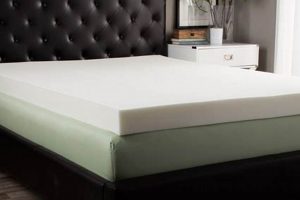
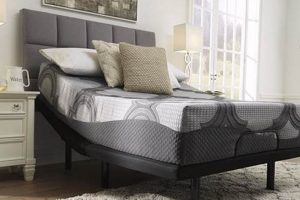
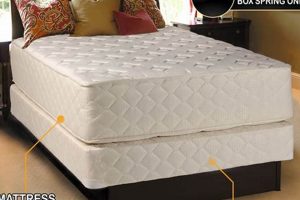
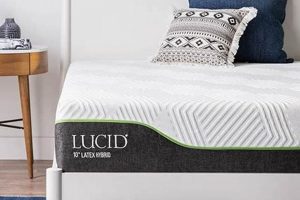
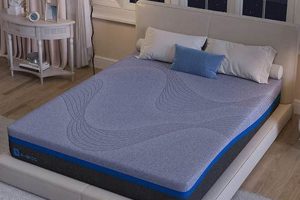
A bedding accessory designed to enhance sleep comfort and protect the mattress, featuring a specific thickness. This layer, generally placed atop a mattress but beneath the fitted sheet, adds cushioning and support. An example might be a memory foam layer designed to improve spinal alignment during sleep, measuring three inches in depth.
The incorporation of this type of layer offers multiple advantages, including increased comfort, extended mattress lifespan, and potential relief from pressure points. Historically, such additions to mattresses were simpler, made from materials like cotton or feathers. Modern iterations often involve advanced materials like memory foam or gel, offering enhanced support and temperature regulation. These features contribute to a more restful sleep experience.
The following sections will delve into the materials commonly used in their construction, the variety of support levels available, and the factors consumers should consider when making a purchase. The goal is to provide a comprehensive overview to aid in selecting the optimal bedding solution.
Considerations for Optimal Selection
The following recommendations are designed to aid in the informed selection of a bedding layer of the specified thickness. Careful consideration of these points can contribute to an enhanced sleep experience and extended product lifespan.
Tip 1: Material Composition. Evaluate the materials used in construction. Memory foam offers conforming support, while latex provides a responsive feel. Fiberfill options such as down alternatives may be preferable for those with allergies.
Tip 2: Density and Support Level. Assess the density of the materials. Higher density generally correlates with greater durability and support. Select a support level that aligns with individual sleep preferences and spinal alignment needs.
Tip 3: Temperature Regulation. Consider temperature regulation features. Gel-infused materials or breathable covers can help dissipate heat and prevent overheating during sleep.
Tip 4: Mattress Compatibility. Ensure compatibility with the existing mattress. A layer that is too firm or too soft may negate the benefits of the underlying mattress.
Tip 5: Care and Maintenance. Inquire about care and maintenance requirements. Removable, washable covers simplify cleaning and extend the product’s lifespan.
Tip 6: Warranty and Return Policy. Review the warranty and return policy. A generous return policy allows for assessment of the product’s suitability within the home environment.
Careful attention to these points should result in a bedding solution that maximizes comfort, support, and longevity.
The subsequent section will synthesize these considerations to present a focused summary of the key factors influencing the selection process.
1. Enhanced Pressure Relief
The inclusion of a bedding layer with a depth of three inches is directly correlated with enhanced pressure relief during sleep. The increased thickness provides a greater capacity to distribute body weight across the surface area, thereby reducing concentrated pressure on specific points, such as the hips, shoulders, and back. This is particularly beneficial for side sleepers, where concentrated pressure on the shoulder and hip joints can lead to discomfort and restricted blood flow. For example, a person experiencing chronic back pain may find that the addition of such a layer significantly reduces pain and improves sleep quality by minimizing pressure on sensitive areas.
The efficacy of pressure relief is also influenced by the material composition of the layer. Memory foam, for instance, conforms closely to the body’s contours, providing customized support and further reducing pressure points. Latex offers a more resilient and responsive surface, distributing weight more evenly. The practical application of this understanding lies in the ability to select a material and thickness that best addresses individual pressure relief needs, leading to a more comfortable and restful sleep experience. The presence of enhanced pressure relief also contributes to improved blood circulation and reduced tossing and turning during the night.
In summary, the strategic use of a three-inch-thick bedding layer directly impacts pressure distribution, enhancing sleep comfort and potentially alleviating pain. The selection of appropriate materials further optimizes this effect. Understanding the interplay between thickness, material, and pressure relief is paramount for those seeking to improve sleep quality and overall well-being. Challenges may arise in determining the optimal combination for individual needs, emphasizing the importance of considering personal preferences and specific health conditions.
2. Support Layer Thickness

The thickness of a support layer directly influences the overall performance and suitability of a bedding accessory. In the context of a mattress accessory measuring three inches, the support layer’s depth dictates its capacity to provide cushioning, pressure relief, and spinal alignment.
- Pressure Distribution Capacity
A thicker support layer, such as that found in a three-inch model, offers increased surface area and volume to distribute body weight. This distribution minimizes localized pressure points, particularly beneficial for side sleepers and those with musculoskeletal discomfort. For instance, a three-inch layer of memory foam can effectively contour to the body, reducing pressure on the hips and shoulders compared to a thinner alternative. This impacts overall sleep quality and potential pain reduction.
- Motion Isolation Characteristics
The ability of a support layer to isolate motion is directly related to its thickness and material composition. A three-inch layer of dense foam, for example, can significantly dampen movement transfer, preventing disturbances from a sleeping partner. This is relevant in scenarios where one sleeper is restless or has a different sleep schedule, ensuring undisturbed rest for the other individual.
- Edge Support Implications
Support layer thickness contributes to edge support, the stability provided along the perimeter of the mattress. A three-inch layer can enhance edge support, preventing sagging and providing a consistent sleep surface across the entire mattress. This is important for individuals who sleep near the edge of the bed or require assistance when getting in and out of bed.
- Overall Durability and Longevity
The thickness of the support layer impacts its overall durability and lifespan. A thicker layer, particularly if constructed from high-density materials, is generally more resistant to compression and degradation over time. This translates to a longer-lasting product that maintains its support and comfort characteristics for an extended period.
In conclusion, the thickness of the support layer in a three-inch bedding accessory is a critical determinant of its performance characteristics. Pressure distribution, motion isolation, edge support, and durability are all directly influenced by this parameter. Selecting a three-inch model with appropriate material density ensures optimal support and extended product lifespan, maximizing the investment in improved sleep quality.
3. Material Density Impact

The density of the materials comprising a bedding accessory measuring three inches in thickness significantly affects its performance characteristics and long-term durability. Material density, typically measured in pounds per cubic foot (PCF), directly influences factors such as support, pressure relief, and resistance to compression. A higher density indicates a greater mass of material within a given volume, resulting in a firmer and more supportive product. Conversely, a lower density suggests a less substantial construction, potentially leading to reduced support and a shorter lifespan. For example, a three-inch memory foam pad with a density of 4 PCF will generally provide greater support and exhibit less compression over time compared to an identical pad with a density of 2 PCF. The selection of appropriate material density is, therefore, crucial for optimizing the benefits derived from a three-inch bedding accessory.
The practical significance of understanding material density extends to considerations of comfort and suitability for different sleep preferences. Individuals seeking firmer support, such as those with back pain or who prefer to sleep on their stomachs, may benefit from a higher-density material within the three-inch layer. This provides enhanced spinal alignment and prevents excessive sinking into the mattress. Conversely, individuals prioritizing pressure relief or a softer feel may opt for a lower-density material that conforms more readily to the body’s contours. Furthermore, the density of the material affects its thermal properties; denser materials may retain more heat, while less dense materials may promote greater airflow. The material choice should, therefore, consider individual thermal comfort needs and preferences. For example, a memory foam topper of 5lb density will hug the body and retain heat, making it suitable for winter, while a 2.5lb density topper will retain less heat and therefore be cooler to sleep on, and more suited for warmer months.
In summary, material density is a critical factor in determining the performance and suitability of a three-inch bedding accessory. It influences support, pressure relief, durability, and thermal properties. While higher density generally equates to greater support and longevity, the optimal choice depends on individual sleep preferences, body weight, and thermal comfort requirements. A thorough understanding of material density allows consumers to make informed decisions, maximizing the benefits of the product and ensuring long-term satisfaction. Challenges arise in accurately assessing material density without direct product testing; therefore, consulting product specifications and reviews is essential for making informed purchasing decisions.
4. Temperature Regulation

Temperature regulation within a bedding system is significantly influenced by the properties of a mattress accessory. When considering a three-inch mattress pad, its material composition and design directly impact the ability to dissipate or retain heat. Materials such as memory foam, while conforming to the body and providing pressure relief, can often restrict airflow, leading to heat retention. Conversely, materials like latex or those incorporating gel infusions may promote better air circulation, resulting in a cooler sleep environment. Therefore, the selection of a three-inch mattress pad should account for its potential effect on temperature regulation and consider materials designed to mitigate heat buildup. For example, individuals prone to night sweats may benefit from a pad incorporating breathable fabrics or cooling technologies to enhance thermal comfort and reduce sleep disturbances.
The importance of temperature regulation is further emphasized by its direct correlation with sleep quality. Elevated body temperatures can disrupt sleep cycles and lead to restlessness, thereby diminishing the restorative benefits of sleep. A three-inch mattress pad can either exacerbate or alleviate this issue depending on its thermal properties. Some pads are engineered with open-cell structures or phase-change materials to regulate temperature fluctuations throughout the night, maintaining a stable and comfortable sleep environment. Practical applications include the use of bamboo or cotton covers, which offer enhanced breathability compared to synthetic alternatives. Furthermore, the overall thickness of the pad can influence heat retention, with denser materials potentially trapping more heat, highlighting the need for careful material selection to optimize temperature regulation.
In summary, temperature regulation is a critical component of a three-inch mattress pad, affecting both comfort and sleep quality. The selection of materials and design features directly impacts the pad’s ability to manage heat. Challenges arise in balancing the benefits of pressure relief and support with the need for adequate airflow and thermal regulation. Understanding the interplay between material properties and temperature control is essential for making informed decisions and achieving a restful sleep experience. Addressing this aspect effectively can significantly improve sleep outcomes and overall well-being.
5. Mattress Protection
A primary function of a mattress pad, particularly one measuring three inches in thickness, is to provide a protective barrier for the underlying mattress. This protection manifests in several ways, mitigating the impact of spills, stains, and general wear and tear. The three-inch thickness offers a substantial layer between the sleeper and the mattress core, absorbing liquids and preventing them from penetrating the mattress fibers. Furthermore, the pad acts as a buffer against friction, reducing the abrasion that can degrade the mattress surface over time. For example, a household with young children or pets benefits significantly from this protective layer, minimizing the risk of costly mattress damage and extending the lifespan of the investment.
The practical significance of this protective function extends beyond mere aesthetics. A well-maintained mattress, shielded by a three-inch pad, exhibits reduced levels of allergen accumulation. The pad, being more easily laundered or replaced than the mattress itself, serves as a first line of defense against dust mites, pet dander, and other common allergens. This is especially relevant for individuals with allergies or respiratory sensitivities. Additionally, the protection offered by the pad preserves the structural integrity of the mattress, preventing sagging and maintaining consistent support over time. For example, consider a high-end innerspring mattress; the three-inch pad guards against coil breakdown by distributing weight more evenly, therefore maintaining comfort.
In summary, the connection between mattress protection and a three-inch mattress pad is a critical aspect of its value proposition. It safeguards against spills, stains, and wear, thereby extending the mattress lifespan and promoting a healthier sleep environment. While the pad itself requires occasional cleaning or replacement, this is a more manageable and cost-effective solution than replacing an entire mattress. Understanding the protective benefits of this accessory allows consumers to make informed decisions, prioritizing both comfort and the long-term preservation of their sleep investment. The challenge often lies in selecting a pad with both effective protection and desirable comfort characteristics; therefore, careful consideration of material properties and design features is essential.
Frequently Asked Questions
The following elucidates common inquiries regarding bedding accessories of specified dimensions. Precise information ensures informed purchasing decisions.
Question 1: What constitutes the primary benefit of utilizing a mattress pad of three inches in thickness?
The most significant advantage lies in enhanced pressure relief. The added depth allows for better weight distribution, alleviating stress on pressure points.
Question 2: How does the material composition of a three-inch mattress pad affect its performance?
Material dictates the pad’s feel, support, and temperature regulation capabilities. Memory foam offers conforming support, while latex provides a more responsive surface.
Question 3: Does the density of the material influence the suitability of a three-inch mattress pad?
Material density directly correlates with support and durability. Higher densities offer greater support and resistance to compression.
Question 4: How does a mattress pad of this thickness contribute to temperature regulation during sleep?
Material selection is critical. Breathable materials or those incorporating cooling technologies mitigate heat retention, enhancing comfort.
Question 5: What degree of protection does a three-inch mattress pad offer to the underlying mattress?
The thickness provides a substantial barrier against spills, stains, and general wear. This protection extends the mattress lifespan.
Question 6: What factors should be considered when selecting a mattress pad of this dimension?
Evaluate material composition, density, temperature regulation properties, and mattress compatibility.
These considerations promote a more informed selection process, optimizing sleep quality and product longevity.
The next section will provide actionable recommendations for cleaning and maintaining this product.
Mattress Pad 3 Inch
The preceding analysis underscores the multifaceted benefits and considerations associated with a mattress pad 3 inch. Key aspects explored include enhanced pressure relief, the influence of material composition and density, temperature regulation capabilities, and the provision of mattress protection. The selection process necessitates careful evaluation of these factors to align with individual sleep preferences and specific requirements.
The intelligent application of this information facilitates the acquisition of a mattress pad 3 inch that optimizes sleep quality and extends mattress longevity. A comprehensive understanding of these elements empowers the consumer to make well-informed choices, ensuring a sound investment in a restful and supportive sleep environment.