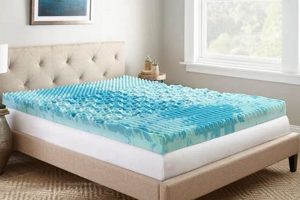
The process of altering the dimensions or shape of viscoelastic polyurethane foam used in bedding is a specific procedure. This modification can range from simple trimming to complex shaping, often performed to customize the mattress to fit specific bed frames, adjust firmness levels, or repurpose the material for other applications. An example includes reducing the width of a standard-sized mattress to accommodate an antique bed frame.
This adaptability offers several advantages. It allows consumers to tailor sleep surfaces to their precise needs and preferences, optimizing comfort and support. Historically, this level of customization was not readily available, requiring consumers to accept standard sizes and constructions. The ability to modify foam mattresses democratizes comfort, enabling individuals to address unique requirements related to body type, sleeping position, or medical conditions.
The subsequent sections will delve into the specific methods employed to achieve these modifications, the tools required, safety considerations, and the potential applications of the resulting foam components beyond their original purpose in bedding. Detailed information about achieving optimal results, while maintaining the integrity of the foam, will also be presented.
Guidance on Modifying Viscoelastic Foam Bedding
Achieving a successful alteration of a viscoelastic foam mattress requires careful planning and execution. The following guidance provides crucial information to optimize the process and minimize potential issues.
Tip 1: Precise Measurement is Paramount: Prior to any physical alteration, meticulous measurements must be taken. Double-checking dimensions against the intended bed frame or application prevents errors and minimizes material wastage. Documented measurements are essential.
Tip 2: Employ Appropriate Cutting Tools: A dedicated electric foam cutter with a reciprocating blade is highly recommended. Standard utility knives or serrated blades can compress the foam, resulting in uneven edges and material degradation. A long, sharp knife is a valid substitute, use with care to avoid injury.
Tip 3: Controlled Cutting Speed is Essential: Applying excessive force or speed can lead to tearing or distortion of the foam. Maintain a consistent, moderate cutting speed to achieve clean, accurate lines. Pause periodically to allow the blade to cool, preventing overheating.
Tip 4: Utilize a Straight Edge as a Guide: A rigid, straight edge, such as a metal ruler or level, should be used as a guide to ensure precise cuts. Securely clamp the straight edge to the foam surface to prevent slippage during the operation.
Tip 5: Minimize Material Removal: Only remove the minimum amount of material necessary to achieve the desired dimensions or shape. Over-cutting can compromise the structural integrity of the mattress and reduce its overall comfort.
Tip 6: Address Edge Imperfections: Minor imperfections or unevenness along the cut edge can be corrected using a sharp pair of scissors or a sanding block. This ensures a smooth, professional finish.
Tip 7: Consider Dust Collection: Foam cutting generates dust and small particles. Perform the work in a well-ventilated area and use a vacuum cleaner to collect debris as it accumulates. Wear a mask to avoid inhaling dust.
Adhering to these recommendations will significantly improve the accuracy and quality of the modification process, maximizing the lifespan and comfort of the viscoelastic foam bedding.
The subsequent sections will explore specialized techniques for complex shaping and contouring of viscoelastic foam, as well as methods for repurposing trimmed foam for various applications.
1. Accurate Measurement

In the context of modifying viscoelastic foam bedding, “Accurate Measurement” forms the foundational element for a successful outcome. Its importance stems from the irreversible nature of material removal; an undersized cut can potentially be rectified, albeit with added complexity, while an oversized cut results in unusable material and a compromised final product. The cause-and-effect relationship is straightforward: imprecise measurements directly lead to dimensional discrepancies in the modified mattress, affecting its fit within a bed frame or its intended application.
The practical significance of “Accurate Measurement” is highlighted in several real-world scenarios. Consider adapting a standard queen-sized mattress for use in an antique bed frame with non-standard dimensions. Failure to accurately measure the frame’s interior dimensions prior to modification would likely result in a mattress that is either too large to fit or too small, creating gaps and diminishing support. The consequences extend beyond aesthetics, affecting sleep quality and potentially leading to discomfort or musculoskeletal issues. Another example involves shaping foam for custom headboards or support wedges. Inaccurate dimensions in these cases render the foam unsuitable for its purpose, representing a complete loss of material and effort.
Ultimately, prioritizing meticulous measurement techniques is paramount in the process of modifying viscoelastic foam bedding. By employing calibrated measuring tools, double-checking dimensions, and accounting for potential compression or expansion of the foam during cutting, the risks associated with inaccurate dimensions are significantly minimized. This emphasis on precision translates into a more efficient, cost-effective, and ultimately satisfactory outcome, ensuring the modified mattress meets the specific needs and expectations of the user.
2. Specialized Tools

The modification of viscoelastic foam bedding materials necessitates tools designed for the unique properties of the substance. Standard cutting implements often prove inadequate, leading to imprecise results and material damage. Selection of appropriate tools is therefore a crucial determinant of the quality and efficiency of the process.
- Electric Foam Cutter (Reciprocating Blade)
This tool, specifically designed for foam, features a reciprocating blade that minimizes compression and tearing during cutting. The oscillating motion allows for clean, smooth edges, reducing material waste. An example of its application involves precisely cutting intricate shapes for custom mattress toppers. The implications of using this tool include improved accuracy and reduced physical exertion compared to manual methods.
- Long, Sharp Knife (Dedicated Foam Knife)
While not motorized, a long, sharp knife with a smooth or lightly serrated blade can be effective. Its length allows for continuous cuts, while sharpness minimizes tearing. Maintaining a consistent cutting angle is crucial. This tool can be applied in scenarios where electrical cutters are impractical, such as m
aking small adjustments to the edges of a mattress. Careful usage and blade maintenance are imperative for optimal results. - Straight Edge (Metal Ruler or Level)
A rigid, straight edge acts as a guide to ensure accurate and consistent cuts. It prevents deviation and maintains dimensional integrity. Clamping the straight edge to the foam surface is essential to prevent slippage. Its application is universal, irrespective of the primary cutting tool. Using a proper guide directly impacts the precision and professional appearance of the modified bedding.
- Measuring Instruments (Calipers, Measuring Tape)
Though not cutting tools in themselves, accurate measuring instruments are vital for determining the dimensions of cuts and ensuring the final product conforms to specifications. Calipers allow for precise measurement of foam thickness, while a measuring tape facilitates overall dimensioning. An example application involves determining the exact amount of foam to remove to fit a mattress into a specific frame. Erroneous measurements at this stage negate the benefits of employing specialized cutting tools.
In conclusion, the selection and proper utilization of specialized tools are indispensable for successful modification of viscoelastic foam bedding. The interaction between appropriate cutting implements, guiding devices, and precise measuring instruments determines the dimensional accuracy, edge quality, and overall aesthetic appeal of the modified material. Improper tool selection and use can lead to wasted material, compromised structural integrity, and increased physical effort, highlighting the critical role these tools play in the overall process.
3. Controlled Speed

In the context of altering viscoelastic foam, “Controlled Speed” denotes the rate at which the cutting implement traverses the material. Its significance is directly linked to the cellular structure of the foam; excessively rapid movement can generate friction, resulting in localized heating. This elevated temperature, in turn, can cause the foam to melt or tear, leading to uneven edges and dimensional inaccuracies. Conversely, insufficient speed can result in the blade binding or snagging, producing similar undesirable outcomes. The relationship is causative: inappropriate speed directly affects the integrity and dimensional precision of the cut.
The practical application of “Controlled Speed” is illustrated in the process of shaping foam for custom contours. Consider creating a wedge-shaped support for individuals with medical conditions requiring elevated positioning. Excessive speed during the initial cut could result in the foam tearing or compressing, altering the intended angle of the wedge and rendering it ineffective for its intended purpose. Similarly, when trimming a mattress to fit an oddly shaped antique bed frame, maintaining a consistent, moderate speed is crucial to prevent the blade from deviating from the marked line. Variations in speed result in corresponding variations in the cut, ultimately affecting the mattress’s fit and comfort. Electric foam cutters with variable speed settings offer a direct means of control; however, even with manual implements, consciously modulating pressure and rhythm facilitates the maintenance of appropriate speed. The operator’s skill and attentiveness directly impact the effectiveness of speed control.
In summary, “Controlled Speed” is not merely a procedural detail; it is a critical determinant of the quality and accuracy of viscoelastic foam modification. Failure to maintain appropriate and consistent speed can lead to material degradation, dimensional inaccuracies, and a compromised final product. Challenges arise from the need to adapt speed to varying foam densities and cutting tool types. Mastering this aspect of foam modification requires a combination of appropriate tools, practiced technique, and a thorough understanding of the material’s response to applied force and temperature. This understanding ultimately ensures the desired outcome is achieved without compromising the integrity of the foam or the safety of the operator.
4. Straight Edge

The utilization of a “Straight Edge” in viscoelastic foam modification is not merely a recommended practice; it is a fundamental necessity for achieving dimensional accuracy and clean edges. The absence of a rigid guide inevitably leads to deviations from the intended cutting line, resulting in mattresses that are misshapen or unsuitable for their intended application. The relationship is direct: any inconsistency in the cutting path will translate to a corresponding inaccuracy in the final product’s dimensions. This is particularly crucial given the forgiving nature of viscoelastic foam, which can mask minor imperfections during the cutting process, only to reveal them upon closer inspection or during use.
The practical implications of employing a “Straight Edge” are evident in various scenarios. Imagine tailoring a full-sized mattress to fit a custom-built platform bed. Without a firmly secured straight edge, the blade is likely to wander, creating uneven edges and a mattress that either strains to fit or leaves unsightly gaps. This directly impacts the bed’s aesthetic appeal and the user’s comfort. Consider also the creation of custom foam wedges for therapeutic purposes. Precision is paramount in these cases, as the angle and dimensions of the wedge directly affect its effectiveness. A wandering cut line, resulting from the absence of a straight edge, renders the wedge useless. The importance of securing the guide cannot be overstated. Movement during the cutting process negates the benefits, potentially creating a worse result than attempting a freehand cut.
In conclusion, the “Straight Edge” is an indispensable component of successful viscoelastic foam bedding modification. Its presence ensures dimensional accuracy, clean edges, and a final product that meets the specified requirements. The challenges of using this tool lie primarily in ensuring its secure placement and consistent application throughout the cutting process. Overcoming these challenges through proper clamping techniques and careful attention to detail is essential for achieving professional-quality results and maximizing the lifespan and comfort of the modified mattress. Without it, professional and safe cutting cannot be possible.
5. Minimal Removal

In the context of modifying viscoelastic foam bedding, “Minimal Removal” represents a strategic approach to material alteration. It underscores the principle of extracting only the necessary amount of foam to achieve the desired shape or dimensions. This principle is paramount due to the irreversible nature of the process and the inherent value of the material itself. Unnecessary excision can compromise the integrity of the mattress, reduce its comfort level, and result in material wastage.
- Preservation of Support Structure
The viscoelastic foam in a mattress is engineered to provide specific levels of support and pressure relief. Removing excessive amounts of foam can disrupt this carefully calibrated structure, leading to uneven weight distribution and potential discomfort. For instance, if a mattress is being tr
immed to fit a smaller bed frame, removing too much foam from the edges can weaken the edge support, causing the sleeper to roll off the bed. The implication is a reduction in the mattress’s overall performance and lifespan. - Prevention of Foam Degradation
Aggressive or excessive cutting can damage the cellular structure of the foam, leading to premature degradation and a loss of its characteristic properties. Tearing or shredding the foam during the removal process creates weak points that are susceptible to compression and collapse over time. A real-world example is attempting to carve intricate designs into a mattress topper; overzealous removal will degrade its intended supportive characteristics. The result is a less durable and less comfortable sleep surface.
- Optimization of Material Usage
Viscoelastic foam is a valuable material, and minimizing waste is both economically and environmentally responsible. The trimmings from a mattress modification can often be repurposed for other applications, such as creating custom pillows, bolsters, or padding for furniture. Removing only what is necessary maximizes the potential for reusing these scraps, contributing to a more sustainable approach. This reflects conscious resource management, reducing waste and extracting maximum utility from the original material.
- Maintenance of Dimensional Accuracy
Accurate modification relies not only on precise measurement but also on controlled material removal. Taking a “less is more” approach allows for iterative adjustments and fine-tuning, minimizing the risk of overshooting the desired dimensions. For instance, when creating a custom headboard from a foam slab, removing small increments allows for gradual shaping, ensuring the final product matches the intended design. The benefit lies in increased precision and reduced likelihood of irreversible errors.
In conclusion, the concept of “Minimal Removal” is intrinsically linked to responsible and effective memory foam mattress modification. By prioritizing preservation of support, preventing material degradation, optimizing resource utilization, and maintaining dimensional accuracy, the process becomes more efficient, cost-effective, and environmentally sound. This principle ensures that the altered mattress retains its intended function and comfort, while minimizing waste and maximizing the lifespan of the material. Careful planning and meticulous execution are key to successfully implementing this approach.
6. Edge Finishing
Following any act of viscoelastic foam modification, “Edge Finishing” represents a crucial stage that directly influences the mattress’s overall comfort, structural integrity, and aesthetic presentation. The process of cutting foam, regardless of the precision employed, inevitably leaves edges that may be uneven, sharp, or prone to crumbling. This necessitates a secondary procedure to refine these surfaces, creating a smooth, consistent transition between the modified area and the original mattress form. Failure to adequately address this stage can result in discomfort for the user, accelerated material degradation, and an unprofessional appearance. A direct cause-and-effect relationship exists between meticulous edge finishing and the long-term durability and usability of the modified mattress.
The practical significance of “Edge Finishing” is readily apparent in real-world scenarios. Imagine modifying a mattress to fit a boat berth. A rough, unfinished edge, constantly rubbing against the boat’s interior walls, will quickly abrade, releasing foam particles and creating an unsightly mess. More importantly, a sharp or uneven edge can cause skin irritation or snag bedding materials. In another example, consider creating custom foam supports for individuals with mobility limitations. Unfinished edges on these supports can create pressure points, negating the therapeutic benefits. Specific techniques, such as sanding with fine-grit abrasives or applying edge banding, are employed to mitigate these issues. The chosen technique depends on the desired level of finish and the intended application of the modified foam.
In summary, “Edge Finishing” is an indispensable component of viscoelastic foam bedding modification. It directly impacts the user experience, prolongs the lifespan of the material, and elevates the aesthetic quality of the final product. Challenges may arise in selecting the appropriate finishing technique and achieving a consistent result across the entire modified area. However, addressing these challenges through diligent effort and the utilization of appropriate tools ensures that the modified mattress achieves its intended purpose while maintaining comfort and durability.
7. Dust Management

The intersection of “Dust Management” and viscoelastic foam modification is characterized by a direct cause-and-effect relationship. The cutting process inevitably generates particulate matter, composed of fragmented foam cells. The quantity and composition of this dust pose potential health and safety risks, underscoring the importance of effective control measures. Inhalation of foam dust can irritate the respiratory system, potentially exacerbating pre-existing conditions such as asthma or allergies. Furthermore, the accumulation of foam dust presents a fire hazard due to its flammable nature. Without adequate “Dust Management,” the modification environment becomes a potential source of both acute and chronic health problems, impacting worker safety and potentially compromising air quality within the surrounding area. This relationship highlights the practical significance of integrating “Dust Management” as an intrinsic component of viscoelastic foam processing.
Effective “Dust Management” strategies encompass a multi-faceted approach. Local exhaust ventilation systems, positioned near the cutting operation, capture airborne particles at the source, preventing their dispersion into the environment. These systems typically incorporate high-efficiency particulate air (HEPA) filters, capable of removing microscopic particles from the airstream. Respiratory protection, such as particulate respirators, provides an additional layer of defense for workers engaged in the cutting process. Routine cleaning protocols, involving the use of vacuum cleaners equipped with HEPA filters, prevent the accumulation of settled dust. The implementation of these strategies is not merely a matter of compliance with safety regulations; it is an ethical imperative, safeguarding the health and well-being of individuals involved in the process. An example of effective implementation would be a dedicated foam modification workstation equipped with both local exhaust ventilation and a filtered vacuum system, coupled with mandatory respirator use for personnel.
In conclusion, “Dust Management” is inextricably linked to the safe and responsible modification of viscoelastic foam bedding. Its effective implementation mitigates health risks, minimizes fire hazards, and promotes a cleaner, healthier working environment. The challenges lie in the selection of appropriate control technologies and the consistent enforcement of safety protocols. Addressing these challenges through rigorous training, proactive monitoring, and a commitment to best practices ensures that the benefits of viscoelastic foam customization are realized without compromising worker safety or environmental integrity. The proactive integration of dust-mitiga
tion systems not only ensures immediate safety but also minimizes potential liabilities and promotes long-term sustainability for businesses involved in this sector.
Frequently Asked Questions Regarding Viscoelastic Foam Bedding Modification
The following section addresses common inquiries concerning the alteration of viscoelastic foam mattresses, providing concise and authoritative responses to ensure a comprehensive understanding of the process.
Question 1: Is viscoelastic foam mattress modification a viable option for adjusting firmness?
The modification of viscoelastic foam to adjust firmness is possible, although the results may be inconsistent. Removing foam generally decreases firmness, but the precise impact depends on the foam’s density and the location of the removed material. Experimentation is often required, and professional consultation is recommended for predictable outcomes.
Question 2: What safety precautions are essential when modifying viscoelastic foam bedding?
Adequate ventilation is crucial to mitigate the inhalation of foam particles. Respiratory protection, such as a particulate respirator, is advised. Sharp cutting implements necessitate caution to prevent injury. Dust accumulation should be controlled to minimize fire hazards.
Question 3: Does modifying a viscoelastic foam mattress void the manufacturer’s warranty?
Most likely, yes. Altering the structure of a mattress typically voids the warranty, as the modifications are outside the manufacturer’s specifications. Consult the warranty documentation for specific details.
Question 4: What are the environmental considerations associated with viscoelastic foam trimmings?
Viscoelastic foam is not readily biodegradable. Trimmings should be disposed of responsibly, ideally through recycling programs if available. Alternatively, consider repurposing the material for other applications rather than discarding it as waste.
Question 5: Can viscoelastic foam mattress modifications address specific medical conditions?
Modifications can potentially alleviate symptoms of certain conditions, such as back pain or pressure sores. Creating custom support contours or adjusting firmness levels may provide relief. Consult with a medical professional or sleep specialist for personalized recommendations.
Question 6: What is the expected lifespan of a modified viscoelastic foam mattress?
The lifespan of a modified viscoelastic foam mattress depends on the quality of the original mattress, the extent of the modifications, and the care taken during the modification process. Well-executed modifications should not significantly reduce the mattress’s lifespan, but improper techniques can accelerate degradation.
These answers provide a foundational understanding of viscoelastic foam mattress modification. Additional research and professional guidance may be necessary for specific applications or concerns.
The subsequent sections will address advanced techniques and innovative applications in the realm of viscoelastic foam utilization.
Conclusion
This exploration of altering viscoelastic foam mattresses has elucidated essential techniques, necessary tools, and critical safety considerations. From precise measurement to meticulous edge finishing, each step profoundly impacts the final product’s integrity and utility. Understanding the nuances of controlled speed and the importance of minimal material removal allows for a refined approach, resulting in a custom-tailored sleep surface. The responsible undertaking of memory foam mattress cutting demands a comprehensive knowledge base and unwavering commitment to best practices.
As customization trends continue to evolve, the ability to modify viscoelastic foam mattresses will remain a valuable skill. However, prospective modifiers must prioritize safety, accuracy, and environmental responsibility. Further research and adherence to industry standards will ensure optimal outcomes, contributing to both individual comfort and sustainable practices within the bedding industry.
![Best Memory Foam Cot Mattress [Safe & Comfy!] | Organic & Natural Mattress Buyer’s Guide: Non-Toxic Sleep Solutions](https://mattressworldpa.com/wp-content/uploads/2025/07/th-4156-300x200.jpg "Best Memory Foam Cot Mattress [Safe & Comfy!] Organic & Natural Mattress Buyer’s Guide: Non-Toxic Sleep Solutions")
![Find Ideal 12" Memory Foam Mattress - [Brand/Benefit] | Organic & Natural Mattress Buyer’s Guide: Non-Toxic Sleep Solutions](https://mattressworldpa.com/wp-content/uploads/2025/07/th-4153-300x200.jpg "Find Ideal 12\" Memory Foam Mattress - [Brand/Benefit] Organic & Natural Mattress Buyer’s Guide: Non-Toxic Sleep Solutions")