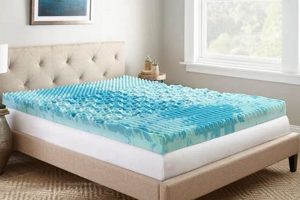
Viscoelastic foam infused with gel particles represents a contemporary sleep surface designed to enhance comfort and support. This technology combines the pressure-relieving properties of the foam with the cooling capabilities of gel, aiming to provide a more regulated sleep temperature. These mattresses are commonly available in varying thicknesses and firmness levels to cater to individual preferences.
Such mattresses are valued for their ability to contour to the body, reducing pressure points and promoting spinal alignment. The inclusion of gel is intended to mitigate the heat retention often associated with traditional viscoelastic foam, contributing to a cooler and more restful sleep experience. The evolution of these mattresses reflects ongoing advancements in sleep technology, driven by the desire for improved sleep quality and overall well-being.
The subsequent sections will delve into the specific characteristics of these mattresses, examining their construction, performance metrics, and considerations for selecting the optimal option. Factors such as density, indentation load deflection (ILD), and thermal conductivity will be explored in detail.
Considerations for Selecting Viscoelastic Gel-Infused Mattresses
Proper selection ensures optimal sleep quality and longevity of the product. The following points outline crucial factors to consider before purchase.
Tip 1: Density Assessment: High-density foam generally offers greater support and durability. Examine the density specifications to ensure adequate support for individual weight and sleep preferences.
Tip 2: Gel Infusion Type: Different methods of gel infusion exist, including beads, swirls, and layers. Research the type of infusion and its purported cooling efficacy to determine suitability.
Tip 3: Indentation Load Deflection (ILD): This measures firmness. A lower ILD indicates a softer feel, while a higher ILD corresponds to greater firmness. Choose an ILD that aligns with preferred comfort level.
Tip 4: Thickness Evaluation: Mattress thickness influences support and comfort. Side sleepers may benefit from thicker mattresses to accommodate shoulder and hip pressure, while back sleepers may prefer thinner options.
Tip 5: Cover Material: The mattress cover impacts breathability and temperature regulation. Opt for materials such as cotton or bamboo, known for their moisture-wicking properties.
Tip 6: Trial Period and Warranty: A generous trial period allows for testing the mattress at home. A comprehensive warranty protects against manufacturing defects and premature wear.
Tip 7: Edge Support: Reinforced edges prevent sagging and provide a consistent sleep surface. Evaluate edge support, particularly if sleeping near the edge of the bed.
Proper assessment of these elements maximizes satisfaction and ensures the purchased mattress provides optimal comfort and support for years. Attention to these considerations prevents suboptimal purchases and promotes improved sleep hygiene.
The following sections will summarize key findings and offer final recommendations regarding this type of sleep surface.
1. Conforming Support

Conforming support represents a critical feature of viscoelastic gel-infused mattresses, dictating how effectively the sleep surface adapts to an individual’s unique body shape and weight distribution. This characteristic directly impacts pressure relief, spinal alignment, and overall sleep comfort.
- Pressure Redistribution
Viscoelastic foam’s ability to mold to the sleeper’s body redistributes weight across a larger surface area, reducing concentrated pressure on areas such as the shoulders, hips, and knees. This alleviates discomfort and promotes better circulation, particularly beneficial for individuals with joint pain or pressure sensitivity.
- Spinal Alignment Promotion
By filling the gaps between the mattress and the body, conforming support encourages proper spinal alignment. This reduces strain on the back muscles and ligaments, minimizing the risk of back pain and stiffness. Neutral spinal alignment is considered essential for restorative sleep.
- Motion Absorption
The conforming nature of viscoelastic materials minimizes motion transfer across the mattress surface. This is particularly advantageous for couples, as it reduces disturbance from a partner’s movements during the night, enabling more restful sleep.
- Customized Comfort
Individualized contouring provides a customized sleep experience tailored to the user’s body shape and sleeping position. This is especially crucial for side sleepers, who require significant pressure relief in the shoulder and hip regions.
The integration of gel into the foam matrix doesn’t directly enhance the conforming support but contributes to thermal regulation, further enhancing the overall comfort provided by viscoelastic gel-infused mattresses. The degree of conforming support is also influenced by the mattress’s density and Indentation Load Deflection (ILD) rating.
2. Temperature Regulation

Temperature regulation is a primary consideration within the design and material composition of viscoelastic gel-infused mattresses. Traditional viscoelastic foam is known for its tendency to retain heat, potentially leading to discomfort and disrupted sleep cycles. The integration of gel particles aims to mitigate this heat retention. Gel, acting as a thermal conductor, assists in dissipating heat away from the body, thereby promoting a cooler sleep environment. The effectiveness of this process is influenced by the type and concentration of gel used, as well as the overall mattress construction. For example, open-cell foam structures allow for increased airflow, further enhancing heat dissipation. Conversely, denser foam with insufficient gel content may still exhibit undesirable heat retention properties.
The practical significance of effective temperature regulation extends beyond mere comfort. Maintaining a consistent and cooler sleep surface can improve sleep latency, reduce nighttime awakenings, and enhance the overall quality of restorative sleep. Individuals prone to night sweats or residing in warmer climates are particularly reliant on this feature. Mattress manufacturers often employ various techniques to optimize temperature regulation, including phase-change materials and breathable cover fabrics. The selection of these materials directly impacts the mattress’s ability to manage heat and moisture, influencing the sleeper’s thermal experience throughout the night.
In summary, temperature regulation is a critical performance characteristic of viscoelastic gel-infused mattresses. While gel infusion represents a significant advancement in addres
sing heat retention concerns, its effectiveness is contingent upon several factors, including material quality, mattress construction, and environmental conditions. Understanding these nuances is essential for consumers seeking to optimize their sleep environment and benefit from the intended cooling properties of these mattresses.
3. Pressure Relief
Viscoelastic gel-infused mattresses are engineered to offer enhanced pressure relief by virtue of their material properties and design. The viscoelastic nature of the foam allows it to conform to the body’s contours, distributing weight more evenly across the sleep surface. This redistribution diminishes concentrated pressure points, particularly in areas such as the hips, shoulders, and spine. The gel infusion further contributes to pressure relief by providing a cushioning effect and promoting a more uniform weight distribution. Individuals suffering from arthritis, fibromyalgia, or other conditions that cause joint pain often report a reduction in discomfort when sleeping on these mattresses. For example, a person with chronic lower back pain may experience a decrease in pain intensity due to the mattress’s ability to support the spine in a neutral alignment and alleviate pressure on sensitive areas. This feature differentiates them from traditional innerspring mattresses, which tend to create localized pressure points due to their spring-based support system.
The effectiveness of pressure relief is influenced by several factors, including the density and thickness of the viscoelastic foam, the type and concentration of gel infused, and the overall construction of the mattress. Higher-density foams generally provide greater support and pressure relief, while thicker mattresses offer more cushioning and contouring. The placement of gel layers or beads also impacts the degree of pressure relief achieved. Some mattresses incorporate zoning, where different areas of the mattress have varying densities or gel concentrations to target specific pressure points. For instance, the shoulder region may be softer than the lumbar region to accommodate the curvature of the spine. A practical application of this technology involves athletes recovering from strenuous training sessions, who may benefit from the pressure relief afforded by these mattresses to minimize muscle soreness and promote faster recovery.
In summary, pressure relief is a key component of viscoelastic gel-infused mattresses, offering potential benefits for individuals seeking to alleviate pain and improve sleep quality. The effectiveness of pressure relief depends on a complex interplay of material properties, mattress design, and individual factors. While these mattresses can provide significant pressure relief, it is crucial to consider individual needs and preferences when selecting a mattress. The challenge lies in accurately assessing personal pressure relief requirements and matching them with the appropriate mattress characteristics. Further research and standardized testing methods would enhance consumer confidence and facilitate informed purchasing decisions.
4. Motion Isolation
Viscoelastic gel-infused mattresses exhibit a notable capacity for motion isolation, primarily attributed to the inherent properties of the viscoelastic material itself. The foam’s structure absorbs and dissipates energy, limiting the transmission of movement across the mattress surface. Consequently, when one individual shifts or gets out of bed, the disturbance experienced by a sleeping partner is significantly reduced. This characteristic proves particularly valuable in scenarios involving co-sleepers with differing sleep schedules or those prone to restlessness. The minimization of motion transfer can lead to improved sleep quality for both individuals, as disruptions are lessened. The efficacy of motion isolation is directly proportional to the foam’s density and thickness; denser, thicker layers generally provide superior motion dampening capabilities.
The practical implications of enhanced motion isolation are substantial. In households with light sleepers or individuals susceptible to sleep disturbances, viscoelastic gel-infused mattresses can markedly improve the overall sleep environment. Consider a situation where one partner works night shifts and the other maintains a regular daytime schedule. The motion isolation properties of the mattress would mitigate disturbances caused by the shift worker’s movements during sleep or upon entering/exiting the bed. Similarly, parents sharing a bed with infants or young children could benefit from reduced sleep interruptions resulting from the child’s movements. This effect contributes to more consolidated sleep periods, which are essential for physical and cognitive restoration.
In summary, motion isolation represents a key performance attribute of viscoelastic gel-infused mattresses, offering tangible benefits for co-sleepers by minimizing disturbance and promoting undisturbed rest. The degree of motion isolation is governed by material characteristics and mattress construction. While these mattresses demonstrate significant motion dampening capabilities, individual preferences and specific sleep needs should inform the selection process. The ongoing development of advanced foam formulations and layering techniques aims to further enhance motion isolation properties, promising even greater improvements in sleep quality.
5. Material Durability

Material durability is a critical factor in assessing the long-term value and performance of viscoelastic gel-infused mattresses. The lifespan and continued support capabilities are directly influenced by the resilience of the materials used in its construction. Understanding the components that contribute to durability aids in making informed purchasing decisions.
- Foam Density and Composition
Foam density, measured in pounds per cubic foot (PCF), directly impacts durability. Higher density foams generally exhibit greater resistance to compression and deformation over time. The type of viscoelastic material also plays a significant role; some formulations are more susceptible to degradation than others. For example, a mattress with a base layer of high-density polyurethane foam and a top layer of gel-infused viscoelastic foam will likely outlast a mattress constructed with lower-density foams throughout.
- Gel Infusion Method
The method by which gel is infused into the viscoelastic foam can affect its long-term integrity. Gel beads, for instance, may gradually migrate or degrade, diminishing the mattress’s cooling properties and potentially compromising the foam’s structural integrity. Conversely, a uniform gel layer integrated throughout the foam matrix may offer more consistent and durable performance. The quality and stability of the gel material are also paramount; inferior gels can break down over time, leading to reduced effectiveness and potential foam deterioration.
- Cover Fabric and Stitching
The mattress cover provides a protective layer against wear and tear. Durable, tightly woven fabrics such as high-thread-count cotton or polyester blends offer greater resistance to abrasion and stretching. Reinforced stitching alo
ng seams and edges prevents unraveling and maintains the mattress’s shape over time. A poorly constructed cover can lead to premature wear and tear, exposing the foam to damage and reducing the mattress’s overall lifespan. Consider a mattress with a zippered cover, which facilitates removal for cleaning or replacement, thereby extending the mattress’s usability. - Support Core Structure
The support core, typically composed of high-density foam or innerspring coils, provides the foundation for the viscoelastic layers. A robust support core is essential for preventing sagging and maintaining proper spinal alignment. Mattresses with reinforced edge support tend to exhibit greater durability, as they resist compression along the perimeter. The type of innerspring system, if present, also influences durability; individually wrapped coils often provide better support and reduce motion transfer compared to interconnected coil systems. Without a stable support core, the viscoelastic layers are more prone to compression and degradation, shortening the mattress’s lifespan.
The interplay of these factors dictates the overall durability of viscoelastic gel-infused mattresses. Investing in a mattress constructed with high-quality materials and robust construction techniques will translate to a longer lifespan and sustained comfort, making it a more cost-effective choice in the long run. Careful consideration of these aspects ensures that the mattress retains its support and pressure-relieving properties for an extended period.
Frequently Asked Questions
This section addresses common inquiries regarding viscoelastic gel-infused mattresses, providing objective and factual information to aid in informed decision-making.
Question 1: What is the expected lifespan of a viscoelastic gel-infused mattress?
The lifespan is typically between seven to ten years, contingent upon factors such as foam density, usage patterns, and maintenance practices. Higher-density foams and proper support systems contribute to longevity.
Question 2: How effective is the gel infusion in regulating temperature?
Gel infusion aims to mitigate heat retention associated with viscoelastic foam. Effectiveness varies based on the type and concentration of gel, mattress construction, and environmental factors. Open-cell foam structures enhance airflow and improve temperature regulation.
Question 3: What is the optimal density for a viscoelastic gel-infused mattress?
Optimal density is dependent on individual weight and preferred firmness. Higher densities generally offer greater support and durability, while lower densities provide a softer feel. A density of 4-5 pounds per cubic foot is often recommended for general use.
Question 4: Are there any potential health concerns associated with these mattresses?
Some viscoelastic foams may release volatile organic compounds (VOCs). Certifications such as CertiPUR-US indicate that the foam has been tested and meets specific standards for low VOC emissions.
Question 5: How should a viscoelastic gel-infused mattress be cleaned?
Spot cleaning with a mild detergent and water is recommended. Avoid harsh chemicals or excessive moisture, which can damage the foam. A mattress protector can help prevent stains and prolong the mattress’s lifespan.
Question 6: What is the significance of the Indentation Load Deflection (ILD) rating?
The ILD rating measures the firmness of the mattress. A lower ILD indicates a softer feel, while a higher ILD signifies greater firmness. Selection should align with individual comfort preferences and sleep position.
In summary, viscoelastic gel-infused mattresses offer a combination of comfort, support, and temperature regulation. Proper understanding of their characteristics and limitations is essential for selecting a product that meets individual needs and expectations.
The following section will provide a concise summary of the key considerations discussed throughout this exploration.
Conclusion
The preceding sections have comprehensively explored the characteristics, benefits, and considerations associated with a memory foam gel mattress. This has included the assessment of support mechanisms, temperature regulation properties, material durability, and motion isolation capabilities. The examination of these mattresses reveals a complex interplay of factors influencing their overall performance and suitability for individual needs.
Given the critical role of sleep in human health and well-being, the selection of appropriate sleep surfaces warrants careful consideration. Continued research and development in this field are essential to optimize mattress design and enhance the sleep experience. Further investigation into the long-term effects of these technologies and standardization of testing methods will ultimately provide consumers with more reliable information for making informed purchasing decisions.
![Best Memory Foam Cot Mattress [Safe & Comfy!] | Organic & Natural Mattress Buyer’s Guide: Non-Toxic Sleep Solutions](https://mattressworldpa.com/wp-content/uploads/2025/07/th-4156-300x200.jpg "Best Memory Foam Cot Mattress [Safe & Comfy!] Organic & Natural Mattress Buyer’s Guide: Non-Toxic Sleep Solutions")
![Find Ideal 12" Memory Foam Mattress - [Brand/Benefit] | Organic & Natural Mattress Buyer’s Guide: Non-Toxic Sleep Solutions](https://mattressworldpa.com/wp-content/uploads/2025/07/th-4153-300x200.jpg "Find Ideal 12\" Memory Foam Mattress - [Brand/Benefit] Organic & Natural Mattress Buyer’s Guide: Non-Toxic Sleep Solutions")