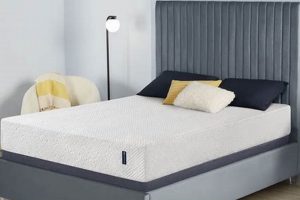
A specific type of sleeping surface is constructed using gel-infused memory foam as a primary comfort layer. This design aims to combine the pressure-relieving properties of memory foam with the temperature regulation offered by gel. These sleeping surfaces are often marketed as offering a cooler and more comfortable sleep experience compared to traditional memory foam mattresses.
The incorporation of gel into memory foam seeks to mitigate the heat retention typically associated with the material, enhancing overall sleep quality. This technology has become increasingly popular due to its potential to improve comfort and address a common complaint among memory foam users. The development represents an evolution in mattress technology, striving to optimize sleep conditions.
The subsequent sections will delve into the specific materials, construction techniques, and performance characteristics commonly found in such mattresses, along with discussing factors relevant to purchase decisions and long-term care.
Tips for Evaluating Gel-Infused Memory Foam Mattresses
Prior to acquiring a gel-infused memory foam mattress, careful consideration of several factors can optimize the selection process and ensure long-term satisfaction.
Tip 1: Density Assessment: Memory foam density significantly impacts durability and support. Higher density foams typically offer increased longevity and enhanced support, while lower density options may exhibit reduced lifespan and potentially faster degradation of support properties.
Tip 2: Gel Infusion Type: Investigate the type of gel used in the mattress. Some mattresses use gel beads, while others employ gel swirls or layers. Each method offers varying degrees of cooling efficiency. Understand the differences to align with individual cooling preferences.
Tip 3: Layer Construction Analysis: Examine the mattress’s layer composition. The presence of additional support layers, such as high-density base foam, contributes to overall stability and prevents sagging. A well-constructed layer system enhances the mattress’s performance and lifespan.
Tip 4: Independent Reviews Consultation: Consult independent product reviews from verified purchasers. These reviews often provide valuable insights into real-world performance, durability, and potential issues. Consider a range of reviews to obtain a balanced perspective.
Tip 5: Warranty and Return Policies: Thoroughly review the warranty and return policies. A robust warranty indicates the manufacturer’s confidence in the product’s quality. A favorable return policy allows for risk-free evaluation within a defined timeframe.
Tip 6: Temperature Sensitivity Evaluation: While gel infusion aims to mitigate heat retention, the material’s temperature sensitivity remains a factor. Consider personal climate preferences and potential need for temperature-regulating bedding to further optimize comfort.
Comprehensive evaluation of density, gel infusion method, layer construction, independent reviews, warranty terms, and temperature sensitivity will aid in selecting a suitable mattress. Prioritize these factors to maximize long-term satisfaction and achieve optimal sleep quality.
These strategies can assist in making an informed decision and ensuring a comfortable and supportive sleep experience.
1. Conformity

Conformity, in the context of a gel-infused memory foam mattress, refers to the material’s capacity to precisely mold to the shape of an individual’s body. This adaptation is crucial for pressure distribution and spinal alignment, and it directly influences the sleeper’s comfort and overall sleep quality.
- Pressure Point Alleviation
The primary function of conformity is to alleviate pressure points. Areas such as the shoulders, hips, and knees experience concentrated pressure during sleep. The mattress’s ability to conform distributes this pressure across a larger surface area, reducing discomfort and the likelihood of tossing and turning. This pressure redistribution can be particularly beneficial for individuals with joint pain or arthritis.
- Spinal Alignment Maintenance
Proper spinal alignment is essential for preventing back pain and promoting restful sleep. Conformity aids in maintaining the natural curvature of the spine by filling in the gaps between the body and the mattress surface. This support helps to prevent the spine from bending or twisting unnaturally, reducing strain on the back muscles and ligaments.
- Enhanced Sleep Comfort
The close contouring offered by a conforming mattress can significantly enhance sleep comfort. By providing individualized support, the mattress minimizes the sensation of pressure and promotes a feeling of being cradled. This can lead to deeper, more restorative sleep, as the body is better able to relax and recover during the night.
- Impact of Density on Conformity
The density of the memory foam used in the mattress directly influences its conforming ability. Higher-density foams generally offer greater support and more precise contouring, while lower-density foams may compress more readily, potentially leading to a loss of support over time. Therefore, understanding the density of the foam is crucial for assessing the mattress’s long-term conformity characteristics.
In summary, conformity is a critical characteristic of gel-infused memory foam mattresses. Its ability to alleviate pressure points, maintain spinal alignment, and enhance sleep comfort contributes significantly to the overall sleep experience. The degree of conformity is influenced by factors such as foam density and construction techniques, and should be a primary consideration during the mattress selection process.
2. Temperature Regulation

Temperature regulation is a primary concern in mattress design, particularly within gel-infused memory foam models. The inherent properties of traditional memory foam often lead to heat retention, resulting in discomfort for some sleepers. Gel infusion attempts to mitigate this by creating a pathway for heat to dissipate away from the body. This is achieved through the inclusion of gel particles or layers within the foam structure. The effect aims to promote a more neutral sleeping temperature, reducing instances of overheating and subsequent sleep disruption. The efficacy of this process depends on the type of gel, its distribution within the foam, and the overall mattress construction.
The benefits of effective temperature regulation extend beyond mere comfort. Maintaining a consistent and comfortable sleep temperature is linked to improved sleep cycles and deeper, more restorative rest. Individuals experiencing night sweats or living in warmer climates may find gel-infused memory foam offers a more cond
ucive sleep environment. However, the effectiveness of temperature regulation can vary significantly between different mattress models and brands. Factors such as the breathability of the mattress cover and the presence of other cooling technologies can influence the overall thermal performance. Some manufacturers also incorporate open-cell foam structures to further enhance airflow and heat dissipation.
In conclusion, temperature regulation represents a crucial aspect of gel-infused memory foam mattresses. While the addition of gel aims to address the heat retention associated with traditional memory foam, the actual performance depends on a complex interplay of material composition, design, and environmental factors. Careful consideration of these elements is necessary to determine if a specific gel-infused mattress adequately meets individual temperature regulation needs and promotes a comfortable sleep environment.
3. Motion Isolation
Motion isolation is a critical performance characteristic in mattresses, particularly for couples or individuals sharing a bed. In the context of a gel-infused memory foam mattress, this feature refers to the mattress’s ability to minimize the transfer of movement from one area of the bed to another, reducing sleep disturbances caused by a partner’s tossing, turning, or getting in and out of bed.
- Mechanism of Motion Absorption
Memory foam, by its very nature, possesses inherent motion isolation capabilities. Its viscoelastic properties allow it to absorb energy at the point of impact, rather than transmitting it across the entire surface. The gel infusion, while primarily aimed at temperature regulation, can also contribute to this effect by further dampening vibrations. The degree of motion isolation is influenced by the density and thickness of the memory foam layer.
- Impact on Sleep Quality
Effective motion isolation directly translates to improved sleep quality for bed partners. When movement is minimized, both individuals are less likely to be awakened or disturbed during the night. This is particularly beneficial for those who are light sleepers or have different sleep schedules. A mattress with poor motion isolation can lead to fragmented sleep, reduced sleep depth, and increased daytime fatigue.
- Role of Mattress Construction
While the memory foam layer is the primary driver of motion isolation, the overall mattress construction plays a role. A mattress with a solid, stable base layer will further minimize motion transfer. Conversely, a thin or poorly constructed base layer can negate some of the benefits of the memory foam. The presence of individually wrapped coils in a hybrid mattress design can also enhance motion isolation.
- Limitations of Motion Isolation
Even with the best materials and construction, perfect motion isolation is difficult to achieve. Some degree of motion transfer is inevitable, particularly with significant weight shifts or movements. However, a well-designed gel-infused memory foam mattress can significantly reduce the impact of these movements, providing a more peaceful and undisturbed sleep experience.
The interplay of memory foam density, gel infusion, and overall construction in gel-infused memory foam mattresses directly affects the degree of motion isolation. By minimizing the transmission of movement, these mattresses can significantly improve sleep quality and reduce disturbances for individuals sharing a bed, offering a substantial advantage over traditional innerspring mattresses. The selection of a mattress prioritizing motion isolation should consider these factors to meet individual sleep needs and preferences.
4. Support
Support, within the context of gel-infused memory foam mattresses, refers to the mattress’s ability to maintain proper spinal alignment and distribute body weight evenly. This is a critical determinant of sleep quality and long-term musculoskeletal health. A mattress providing inadequate support can lead to back pain, stiffness, and discomfort, while appropriate support promotes restful sleep and reduces strain on the body.
- Core Density and Resistance
The density of the memory foam core is a primary factor in determining the level of support offered. Higher-density foams provide greater resistance to compression, preventing excessive sinking and maintaining spinal alignment. Lower-density foams may offer initial comfort but can lack the necessary support for heavier individuals or those with specific spinal needs. The core density directly affects the mattress’s ability to prevent sagging and maintain a consistent sleep surface over time.
- Zoning and Targeted Support
Some gel-infused memory foam mattresses incorporate zoning, where different areas of the mattress are designed with varying levels of firmness. This targeted support addresses the specific needs of different body regions, such as the shoulders and hips. Softer zones may be used for areas requiring more pressure relief, while firmer zones provide additional support to the lumbar region, promoting optimal spinal alignment. Zoning enhances the mattress’s ability to adapt to individual body contours and support needs.
- Base Layer Contribution
The base layer of a gel-infused memory foam mattress plays a crucial role in overall support. Typically constructed from high-density foam, the base layer provides a stable foundation for the comfort layers above. It prevents the mattress from bottoming out and ensures that the memory foam layers can effectively contour to the body without losing their supportive properties. A well-designed base layer is essential for maintaining long-term support and preventing premature sagging.
- Edge Support Systems
Edge support refers to the reinforcement of the mattress perimeter. Strong edge support prevents the edges of the mattress from collapsing under weight, providing a consistent sleep surface across the entire mattress and facilitating easier entry and exit from the bed. Edge support systems typically involve the use of high-density foam rails or reinforced coils along the mattress edges. Adequate edge support enhances the usable sleep surface and prevents a feeling of roll-off.
The level of support provided by a gel-infused memory foam mattress is a multifaceted consideration, influenced by core density, zoning strategies, base layer construction, and edge support systems. Individuals should assess their specific support needs based on their body weight, sleep position, and any pre-existing back conditions. Selecting a mattress with appropriate support is crucial for achieving comfortable and restorative sleep and maintaining long-term spinal health.
5. Durability
The longevity of a gel-infused memory foam mattress is a critical factor in its overall value proposition. Durability, in this context, encompasses the mattress’s ability to retain its original shape, support characteristics, and comfort levels over an extended period of use. The composition and construction techniques employed significantly influence its resistance to wear and tear,
sagging, and degradation of materials. For instance, a mattress utilizing high-density memory foam is inherently more resistant to compression and deformation compared to one made with lower-density alternatives. The quality of the gel infusion process also plays a role, as uneven distribution or degradation of the gel can lead to inconsistent support and reduced lifespan.
The implications of inadequate durability can manifest in several ways. Premature sagging in the areas of highest pressure, such as the hips and shoulders, can compromise spinal alignment and lead to discomfort or pain. Loss of the mattress’s original conforming properties reduces its ability to alleviate pressure points effectively, negating a key benefit of memory foam. Furthermore, the breakdown of the foam can result in a less hygienic sleep environment as the deteriorated material may trap dust mites and allergens. Real-world examples often involve consumers reporting a noticeable decline in mattress support and comfort within a few years of purchase, necessitating replacement and incurring additional costs.
In conclusion, the durability of a gel-infused memory foam mattress is a paramount consideration, directly affecting its long-term comfort, support, and cost-effectiveness. Understanding the factors that contribute to or detract from durability, such as foam density and construction quality, empowers consumers to make informed purchasing decisions. Prioritizing mattresses designed with robust materials and manufacturing processes translates to a longer lifespan, sustained comfort, and a reduced risk of premature replacement.
6. Pressure Relief
Pressure relief is a core characteristic of gel-infused memory foam mattresses. The viscoelastic nature of the foam allows it to conform to the body’s contours, distributing weight more evenly and reducing stress on prominent pressure points such as the shoulders, hips, and knees. This contouring effect minimizes concentrated pressure, which can impede circulation and cause discomfort, leading to tossing and turning during sleep. Gel infusion further enhances this benefit by contributing to a cooler sleep environment, which can reduce inflammation and sensitivity at these pressure points. A practical example includes individuals with arthritis or fibromyalgia, who often experience significant pain relief and improved sleep quality due to the reduced pressure on their joints.
The effectiveness of pressure relief in these mattresses is directly related to the foam’s density and indentation load deflection (ILD). Higher-density foams generally provide more support and distribute weight more effectively, while a lower ILD indicates a softer feel and greater conformity. Mattresses with multiple layers, combining varying densities of memory foam and support layers, can offer a customized balance of pressure relief and overall support. This is crucial for accommodating different body types and sleep positions. Side sleepers, for instance, require more pressure relief at the shoulders and hips, while back sleepers benefit from consistent support across the entire spine. The design must carefully balance conformity with adequate underlying support to prevent the body from sinking too deeply, which can compromise spinal alignment.
In summary, the pressure relief afforded by gel-infused memory foam mattresses is a significant factor contributing to improved sleep comfort and reduced pain. Understanding the interplay between foam density, ILD, and layering is essential for selecting a mattress that effectively alleviates pressure points and promotes restful sleep. While individual preferences vary, the fundamental principle remains: effective pressure relief is a key determinant of a comfortable and supportive sleep experience.
7. Density and Gel-Infused Memory Foam Mattresses
Density, in the context of a gel-infused memory foam mattress, is a crucial parameter that directly influences the mattress’s performance, durability, and overall suitability for individual sleepers. It is typically measured in pounds per cubic foot (lbs/ft) and reflects the amount of material packed into a given volume. Higher density foams generally exhibit greater resistance to compression, providing enhanced support and longevity. Conversely, lower-density foams tend to be softer and more pliable but may degrade more rapidly under consistent use. The gel infusion process, intended to regulate temperature, does not negate the impact of density on the mattress’s core structural and functional characteristics.
The practical significance of understanding density lies in its direct correlation with the level of support and durability offered by the mattress. For example, a heavier individual will typically require a higher-density mattress to prevent excessive sinking and maintain proper spinal alignment. Similarly, individuals who prioritize long-term value should seek out mattresses with higher-density foams, as these are less prone to sagging and deformation over time. In contrast, a lighter individual or someone seeking a softer sleep surface may find a lower-density mattress more comfortable, but must accept the potential trade-off in long-term durability. The interplay between density and gel infusion also warrants consideration, as the gel particles may slightly reduce the overall density of the foam compared to a non-infused equivalent.
In summary, density is a fundamental attribute of gel-infused memory foam mattresses that directly impacts support, durability, and long-term performance. Careful consideration of density, in conjunction with individual weight, sleep preferences, and budget constraints, is essential for selecting a mattress that provides optimal comfort and lasting value. Neglecting this aspect can lead to premature mattress failure, compromised sleep quality, and ultimately, dissatisfaction with the purchase.
Frequently Asked Questions
This section addresses common inquiries and misconceptions surrounding gel-infused memory foam mattresses, providing objective information to facilitate informed purchasing decisions.
Question 1: Does gel infusion definitively eliminate heat retention in memory foam mattresses?
Gel infusion aims to mitigate heat retention, but its effectiveness varies. Factors such as gel type, concentration, and mattress construction influence thermal performance. It is not a guaranteed solution for all individuals.
Question 2: How does the density of a gel-infused memory foam mattress impact its durability?
Density is a primary determinant of durability. Higher-density foams generally exhibit greater resistance to compression and sagging, resulting in a longer lifespan. Lower-density foams may degrade more rapidly.
Question 3: Is a gel-infused memory foam mattress suitable for all sleep positions?
Suitability depends on individual preferences and mattress design. Side sleepers typically require greater pressure relief, while back and stomach sleepers may prioritize firmer support. Mattress layering and zoning can accommodate various sleep positions.
Question 4: What is the expected lifespan of a gel-infused memory foam mattress?
Lifespan varies depending on factors such as foam density, usage patterns, and maintenance. Generally, a well-constructed mattress can last between 7 to 10 years. Routi
ne rotation and proper support can extend its lifespan.
Question 5: How does gel infusion affect the motion isolation properties of memory foam?
Gel infusion primarily targets temperature regulation; its impact on motion isolation is secondary. Memory foam’s inherent viscoelastic properties are the primary driver of motion isolation. The gel may subtly dampen vibrations but is not the determining factor.
Question 6: Are gel-infused memory foam mattresses hypoallergenic?
Memory foam is generally resistant to dust mites, a common allergen. However, mattress covers and construction techniques can influence allergen accumulation. Consider mattresses with hypoallergenic covers and proper ventilation for optimal allergen control.
In conclusion, the performance characteristics of gel-infused memory foam mattresses are influenced by a complex interplay of materials, design, and individual factors. A thorough understanding of these elements enables informed purchasing decisions and maximizes long-term satisfaction.
The following section delves into the topic of long-term care and maintenance strategies for optimizing the lifespan and performance of these mattresses.
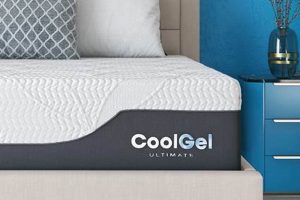
lucid gel memory foam mattress Conclusion
This exploration has provided a detailed examination of the construction, performance characteristics, and considerations relevant to purchasing a lucid gel memory foam mattress. From its conforming capabilities and temperature regulation attempts, to motion isolation, support provision, durability factors, pressure relief efficacy, and the critical role of density, each facet contributes to the overall sleep experience. Understanding these elements is paramount for informed decision-making.
The decision to invest in a specific sleep solution should be predicated on individual needs, preferences, and a rigorous assessment of available options. Prioritize thorough research, critical evaluation of product specifications, and consideration of long-term value to ensure the selected mattress adequately addresses personal requirements for restful and restorative sleep.
![Best Trifold Memory Foam Mattress [Deals] | Organic & Natural Mattress Buyer’s Guide: Non-Toxic Sleep Solutions](https://mattressworldpa.com/wp-content/uploads/2025/07/th-4168-300x200.jpg "Best Trifold Memory Foam Mattress [Deals] Organic & Natural Mattress Buyer’s Guide: Non-Toxic Sleep Solutions")
![Best Casper Cooling Select Memory Foam Mattress [Review] | Organic & Natural Mattress Buyer’s Guide: Non-Toxic Sleep Solutions](https://mattressworldpa.com/wp-content/uploads/2025/07/th-4165-300x200.jpg "Best Casper Cooling Select Memory Foam Mattress [Review] Organic & Natural Mattress Buyer’s Guide: Non-Toxic Sleep Solutions")