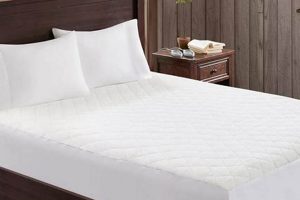
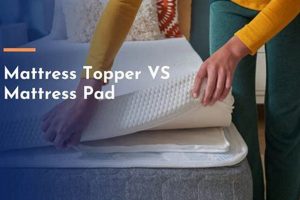
An overlayer designed to be placed atop a mattress, intended to mitigate discomfort and provide support, particularly for individuals experiencing skeletal or muscular aches in the dorsal region. These products are often constructed from materials such as memory foam, latex, or fiberfill, and vary in thickness and density. For instance, a model might be a 3-inch thick memory foam layer engineered to conform to the body’s contours, redistributing pressure and alleviating stress on the spine.
The use of such bedding accessories can be significant in promoting restful sleep and managing chronic discomfort. Historically, improvements in sleep surfaces have been linked to enhanced overall well-being. The capability to adapt to the body’s shape offers a personalized level of support, potentially reducing pressure points that exacerbate aches and contributing to a more restorative sleep cycle. This targeted support aims to minimize tossing and turning, leading to more uninterrupted rest.
The subsequent discussion will delve into the key factors to consider when selecting such a product, including material types, thickness options, support levels, and certifications. Furthermore, it will explore how these choices impact spinal alignment, pressure relief, and the overall sleep experience.
Guidance for Selecting Supportive Mattress Overlays
The selection of a suitable mattress overlay necessitates careful consideration of individual needs and product characteristics. The following points provide guidance in making an informed choice.
Tip 1: Prioritize Material Density. A higher density material, particularly in memory foam or latex, often equates to greater durability and sustained support over time. Consider a density of at least 3 pounds per cubic foot for memory foam to ensure adequate support and prevent premature sagging.
Tip 2: Evaluate Thickness Based on Body Weight. Individuals with greater body mass may require a thicker overlay to achieve adequate pressure relief and spinal alignment. A 3-4 inch overlay may be preferable for heavier individuals, while a 2-3 inch overlay may suffice for those of average weight.
Tip 3: Assess Support Zones. Certain overlays incorporate zoned support, providing firmer support in areas such as the lumbar region and softer support in the shoulders and hips. This design can promote optimal spinal alignment and pressure distribution.
Tip 4: Consider Material Breathability. Overlays constructed from materials with enhanced breathability, such as open-cell memory foam or latex with ventilation channels, can mitigate heat retention and promote a cooler sleep environment. Temperature regulation is crucial for achieving restful sleep.
Tip 5: Investigate Certifications. Seek out overlays that have earned certifications such as CertiPUR-US or OEKO-TEX. These certifications indicate that the product has been tested for harmful substances and meets established safety standards.
Tip 6: Check for Motion Isolation. For individuals sharing a bed, an overlay with good motion isolation properties can minimize disturbances caused by partner movement. Memory foam is generally effective at isolating motion.
Tip 7: Consider Spinal Alignment. Select an overlay that promotes proper spinal alignment based on the individual’s sleeping position. Side sleepers typically benefit from a softer overlay that conforms to the contours of the body, while back and stomach sleepers may require a firmer overlay to prevent excessive sinking.
By carefully considering these factors, individuals can increase the likelihood of selecting a mattress overlay that effectively addresses their specific needs and promotes improved sleep quality.
The following sections will cover cleaning and maintenance tips to maximize the lifespan and benefits of the selected product.
1. Material Density

Material density, in the context of a mattress overlay intended to alleviate dorsal discomfort, directly influences its capacity to provide sustained support and resist compression over time. A higher density material, such as memory foam or latex, generally demonstrates greater resistance to deformation under pressure. This characteristic is critical because an overlay’s ability to maintain its shape and support the spinal column directly impacts its effectiveness in reducing pressure points and promoting proper alignment. An overlay lacking sufficient density will degrade more rapidly, losing its supportive qualities and potentially exacerbating the initial discomfort. For example, an individual using a low-density memory foam overlay may initially experience relief, but over several months, the material can compress, leading to diminished support and a return of dorsal aches.
The correlation between material density and long-term performance highlights the economic and therapeutic significance of selecting overlays with appropriate density ratings. While higher density materials may command a greater initial investment, their extended lifespan and consistent support capabilities can result in a more cost-effective solution compared to frequently replacing lower density alternatives. Furthermore, the consistent support offered by high-density materials contributes to a more stable sleep surface, reducing the likelihood of shifting and uneven pressure distribution. This is particularly beneficial for individuals with chronic skeletal or muscular aches, as it minimizes the potential for further aggravating existing conditions.
In summary, material density represents a crucial parameter in the evaluation of mattress overlays designed for the mitigation of dorsal discomfort. The selection of an overlay with adequate density is essential for ensuring sustained support, promoting proper spinal alignment, and maximizing the product’s lifespan. Failure to consider this factor can lead to premature degradation of the overlay, diminished therapeutic benefits, and increased long-term costs. Therefore, individuals seeking relief from skeletal or muscular aches in the dorsal region should prioritize material density as a key selection criterion.
2. Thickness Options

Thickness options within mattress overlays directly impact the degree of spinal support and pressure redistribution experienced by an individual. Dorsal discomfort often arises from inadequate support, leading to spinal misalignment and concentrated pressure points. A thinner overlay, typically ranging from 1 to 2 inches, may provide minimal contouring but may not be sufficient for individuals requiring substantial pressure relief or those with significant spinal curvature. Conversely, thicker overlays, extending to 3 or 4 inches, offer greater potential for customized support and cushioning, conforming more closely to the body’s contours and potentially mitigating pressure on sensitive areas. For instance, an individual with scoliosis
might benefit from a thicker overlay to facilitate more complete spinal alignment and reduce muscular strain during sleep. A practical implication is that choosing an inappropriate thickness may render the overlay ineffective in alleviating skeletal or muscular aches in the dorsal region, potentially exacerbating the condition.
The selection of an appropriate thickness option should be contingent on factors such as body weight, sleeping position, and the firmness of the underlying mattress. Individuals with higher body mass typically require a thicker overlay to prevent bottoming out and ensure adequate support. Side sleepers often benefit from thicker overlays to accommodate the curvature of the spine and reduce pressure on the shoulders and hips. Furthermore, the firmness of the underlying mattress should be considered; a firmer mattress may necessitate a thicker, more conforming overlay to achieve optimal pressure relief. The interplay of these factors underscores the importance of carefully evaluating thickness options to ensure the selected overlay effectively addresses individual needs. For example, using a thin overlay atop a firm mattress might create new pressure points.
In conclusion, the thickness option of a mattress overlay is a critical determinant of its capacity to alleviate skeletal or muscular aches in the dorsal region. Selecting the correct thickness, in consideration of body weight, sleeping position, and mattress firmness, is essential for achieving optimal spinal alignment and pressure redistribution. Failure to carefully evaluate thickness options may result in an ineffective overlay, highlighting the practical significance of a nuanced understanding of this parameter in the selection process. Addressing these needs is crucial for achieving a comfortable and restorative sleep experience.
3. Support Zones

Within the context of mattress overlays designed to mitigate skeletal or muscular aches in the dorsal region, “support zones” refer to variations in firmness across different sections of the overlay. The underlying rationale is to provide targeted support to specific areas of the body, optimizing spinal alignment and pressure distribution. In instances of dorsal pain, this becomes particularly relevant because misalignment and concentrated pressure points can exacerbate discomfort. For example, an overlay might incorporate firmer support in the lumbar region to prevent excessive sinking and maintain proper spinal curvature, while offering softer support in the shoulder region to accommodate side sleeping and reduce pressure on the shoulder joint. A lack of differential support can lead to uneven weight distribution, potentially worsening existing aches.
The practical application of support zones translates directly into enhanced ergonomic performance. Individuals experiencing lower skeletal or muscular aches often find relief from overlays that provide increased support in the lumbar area, preventing hyperextension of the spine during sleep. Conversely, individuals with upper skeletal or muscular aches might benefit from softer support in the upper back and shoulder region, reducing compression of nerves and blood vessels. The effectiveness of support zones is contingent upon accurate mapping of pressure points and the strategic placement of varying firmness levels. Consider, for example, an athlete with muscle strain. The overlay should support and relax the muscles on specific spot.
In summary, support zones represent a critical design element in mattress overlays intended to alleviate skeletal or muscular aches in the dorsal region. Their strategic implementation promotes optimal spinal alignment and pressure distribution, thereby reducing discomfort and enhancing sleep quality. The effectiveness of support zones relies on a nuanced understanding of human anatomy and biomechanics, as well as the ability to translate this knowledge into practical product design. A comprehensive appreciation of support zones facilitates informed purchasing decisions and maximizes the potential therapeutic benefits of mattress overlays for individuals seeking relief from skeletal or muscular aches in the dorsal region.
4. Spinal Alignment
Spinal alignment plays a crucial role in the mitigation of skeletal or muscular aches in the dorsal region. A mattress overlay, or pad, intended for back skeletal or muscular aches management must effectively promote and maintain proper spinal posture during sleep to alleviate discomfort and promote restorative rest. The following aspects illustrate this connection.
- Neutral Spinal Curvature
A primary objective is to support the natural curves of the spine, preventing hyperextension or excessive flexion. A suitable pad will contour to the body, filling gaps and evenly distributing weight to maintain the spine’s inherent ‘S’ shape. For example, individuals with lordosis (an exaggerated inward curve of the lower back) require pads that provide adequate lumbar support to prevent further exacerbation of the condition.
- Pressure Redistribution
Misalignment often leads to concentrated pressure points, particularly in the shoulders, hips, and lower back. An effective pad redistributes this pressure, minimizing stress on individual vertebrae and surrounding tissues. Consider a side sleeper; a pad that does not adequately conform to the body’s contours will create pressure points on the shoulder and hip, potentially leading to discomfort and nerve compression.
- Muscle Relaxation
Proper alignment encourages muscle relaxation, reducing tension and spasm. When the spine is properly supported, the surrounding muscles are less likely to contract in an attempt to compensate for misalignment. An individual with chronic skeletal or muscular aches in the dorsal region may find that a supportive pad reduces morning stiffness and discomfort by allowing muscles to relax fully during sleep.
- Long-Term Spinal Health
Consistent maintenance of proper alignment contributes to long-term spinal health, preventing the development or progression of degenerative conditions. Chronic misalignment can accelerate wear and tear on the spinal discs and joints. A pad that promotes proper posture over time can help to minimize this stress and maintain spinal integrity. Using mattress pad may keep spinal’s healthy.
These facets illustrate that spinal alignment is not merely a theoretical concept, but a critical factor in the design and selection of mattress overlays for back discomfort. A pad that effectively addresses these elements can significantly improve sleep quality and reduce the severity of skeletal or muscular aches in the dorsal region, contributing to enhanced overall well-being.
5. Pressure Relief
Pressure relief is a paramount consideration in the context of mattress overlays designed for the management of skeletal or muscular aches in the dorsal region. Effective pressure relief mitigates concentrated force on sensitive areas, promoting comfort and facilitating restorative sleep. The subsequent discussion will delineate key facets of pressure relief as it pertains to this application.
- Contouring and Conformity
The capac
ity of a mattress pad to conform to the body’s unique contours is fundamental to pressure relief. Memory foam, for instance, exhibits viscoelastic properties that enable it to mold to the body’s shape, distributing weight more evenly across the surface area. A pad lacking adequate contouring will create pressure points, particularly in the shoulders, hips, and sacrum, leading to discomfort and potential circulatory restriction. An example would be an individual with fibromyalgia, who often experiences heightened sensitivity to pressure; a highly conforming pad can significantly reduce pain and improve sleep quality. - Material Elasticity and Responsiveness
Material elasticity dictates how readily a pad responds to changes in pressure and position. Highly elastic materials, such as latex, quickly regain their original shape upon removal of pressure, preventing the formation of impressions and maintaining consistent support. Conversely, materials with lower elasticity may compress over time, creating localized pressure points and reducing overall comfort. An individual who frequently changes sleeping positions requires a pad with good elasticity to ensure continuous pressure relief throughout the night.
- Zoned Support Systems
Zoned support systems, which incorporate varying levels of firmness across different regions of the pad, enhance pressure relief by providing targeted support to specific areas of the body. For example, a pad may feature softer support in the shoulder region to accommodate side sleeping and reduce pressure on the shoulder joint, while offering firmer support in the lumbar region to maintain proper spinal alignment. This approach optimizes pressure distribution and minimizes the risk of developing pressure points in vulnerable areas.
- Thickness and Density Considerations
The thickness and density of a mattress pad collectively influence its ability to provide effective pressure relief. Thicker pads generally offer greater cushioning and pressure redistribution capabilities, while higher density materials exhibit greater resistance to compression and maintain consistent support over time. An individual with a higher body mass will typically require a thicker, higher density pad to prevent bottoming out and ensure adequate pressure relief.
These facets collectively underscore the importance of pressure relief in the selection of mattress overlays for back skeletal or muscular aches. A pad that effectively addresses these elements can significantly reduce discomfort, improve sleep quality, and contribute to enhanced overall well-being. The choice of material, construction, and design features should be carefully considered to ensure optimal pressure relief and long-term therapeutic benefits.
6. Motion Isolation
Motion isolation, in the context of bedding, refers to the ability of a mattress or mattress overlay to absorb and minimize the transfer of movement across its surface. This characteristic is particularly relevant for individuals sharing a bed, as it reduces disturbances caused by a partner’s tossing, turning, or getting in and out of bed. For individuals experiencing skeletal or muscular aches in the dorsal region, compromised sleep quality due to motion transfer can exacerbate pain and hinder the restorative processes crucial for healing and pain management. A direct effect of poor motion isolation is fragmented sleep, leading to increased sensitivity to pain and reduced overall well-being.
The importance of motion isolation as a component of a mattress overlay intended for back pain lies in its potential to improve sleep quality. When an individual can sleep undisturbed by their partner’s movements, they are more likely to achieve deeper, more restorative sleep stages. These stages are essential for muscle relaxation, tissue repair, and the release of endorphins, natural pain relievers produced by the body. For example, a couple where one partner frequently shifts positions throughout the night may find that a mattress overlay with excellent motion isolation properties significantly reduces the other partner’s skeletal or muscular aches in the dorsal region by allowing for more consistent and uninterrupted rest. Materials such as memory foam and certain types of latex are known for their superior motion isolation capabilities.
In summary, motion isolation is a critical, though often overlooked, feature of mattress overlays designed to alleviate skeletal or muscular aches in the dorsal region. By minimizing sleep disruptions caused by partner movement, such overlays promote deeper, more restorative sleep, facilitating muscle relaxation, tissue repair, and pain management. The practical significance of understanding this connection lies in the ability to make informed purchasing decisions, selecting overlays with motion isolation properties that align with individual needs and contribute to improved sleep quality and overall well-being for those managing back pain. Challenges may include accurately assessing motion isolation capabilities prior to purchase, often requiring reliance on product reviews or in-store testing.
Frequently Asked Questions
The following section addresses common inquiries and misconceptions regarding mattress pads intended for back skeletal or muscular aches management. The information provided aims to offer clarity and inform purchasing decisions.
Question 1: Are all mattress pads equally effective for skeletal or muscular aches in the dorsal region?
No. The effectiveness of a mattress pad in mitigating skeletal or muscular aches in the dorsal region varies considerably based on factors such as material composition, thickness, density, and design features. A low-density foam pad, for example, may provide minimal support and pressure relief compared to a high-density memory foam or latex pad with zoned support.
Question 2: Can a mattress pad correct severe spinal misalignments?
A mattress pad is not a substitute for medical intervention or specialized orthopedic devices. While a supportive pad can improve spinal alignment and reduce pressure points, it cannot correct severe or structural spinal misalignments. Individuals with such conditions should consult with a healthcare professional for appropriate treatment options.
Question 3: How often should a mattress pad be replaced?
The lifespan of a mattress pad depends on its quality, material, and usage. Generally, a high-quality mattress pad can last for 3-5 years. However, signs of wear and tear, such as sagging, loss of support, or persistent odors, indicate the need for replacement. Regular cleaning and maintenance can extend the lifespan of the pad.
Question 4: Do thicker mattress pads always provide better support?
Not necessarily. While thickness can contribute to pressure relief and cushioning, the density and material composition are equally important. A thicker pad made of low-density foam may offer less support than a thinner pad made of high-density memory foam or latex. The ideal thickness depends on individual body weight, sleeping position, and mattress firmness.
Question 5: Are there any potential drawbacks to using a mattress pad?
Some individuals may experience increased heat retention with certain mattress pads, particularly those made of memory foam. This can be mitigated by selecting pads with cooling technologies or breathable materials. Additionally, adding a pad can alter the overall height of the bed, which may require adjustments to bedding or bed frame
s.
Question 6: Can a mattress pad eliminate the need for a new mattress?
A mattress pad can extend the lifespan of an aging mattress and improve its comfort level. However, if a mattress is severely worn, sagging, or no longer providing adequate support, a mattress pad may only offer a temporary solution. In such cases, replacing the mattress is often the more effective long-term solution.
In summary, mattress pads can be a valuable tool in managing skeletal or muscular aches in the dorsal region, but understanding their limitations and selecting a product that aligns with individual needs is crucial.
The subsequent section will explore cleaning and maintenance practices to maximize the lifespan and benefits of a mattress pad.
Conclusion
The preceding exploration has underscored critical factors influencing the effectiveness of a mattress pad for back pain. Material density, thickness options, support zones, spinal alignment promotion, pressure relief efficacy, and motion isolation properties collectively determine the suitability of a given product. Informed selection, considering individual needs and preferences, is paramount to realizing tangible therapeutic benefits.
Addressing back pain often necessitates a multifaceted approach. While a carefully chosen mattress pad can contribute significantly to improved sleep quality and reduced discomfort, individuals should recognize its role as one component of a broader strategy that may include medical consultation, physical therapy, and lifestyle modifications. Continued research and technological advancements promise further innovations in sleep surface design, potentially offering even more effective solutions for back pain management in the future.