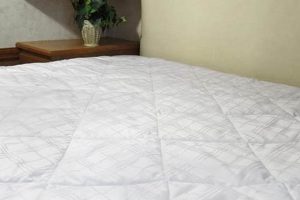
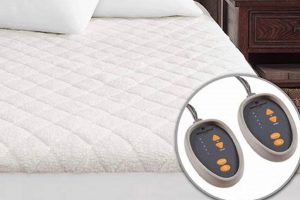
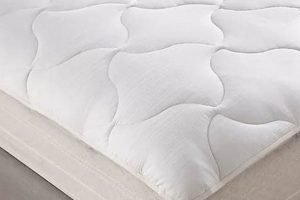
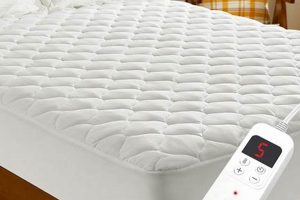
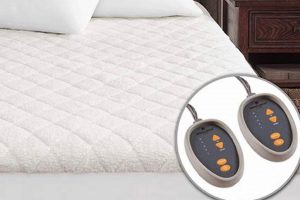
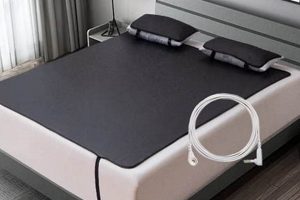
This bedding accessory enhances the comfort of sleeping surfaces within recreational vehicles. It is typically a layer of padding, often constructed from materials such as memory foam, latex, or quilted fabric, designed to be placed on top of an existing RV mattress. This addition can range in thickness and construction, impacting its overall effect on the sleeping experience.
The use of such a supplementary layer offers several advantages. It can improve the quality of sleep by providing enhanced cushioning and support, which is particularly valuable given that RV mattresses are frequently thinner or less comfortable than those found in residential settings. Moreover, it may extend the lifespan of the underlying mattress by protecting it from wear and tear. Historically, travelers have sought ways to improve sleeping arrangements while on the road, and this represents a contemporary solution to that ongoing need for comfort and support.
The following sections will explore various aspects related to this type of bedding, including material composition, size considerations, maintenance practices, and factors to consider when making a purchase. These details will provide a thorough understanding of how to choose the optimal product to meet individual requirements and ensure a more restful travel experience.
Tips for Selecting and Maintaining a Bedding Enhancer for Recreational Vehicles
The following guidelines provide valuable insights for effectively choosing and caring for a bedding enhancer used within a recreational vehicle, thereby maximizing comfort and longevity.
Tip 1: Consider Material Composition. Prioritize materials such as memory foam, latex, or high-density foam, known for their pressure-relieving properties and durability. Analyze the density and thickness specifications to ensure adequate support and comfort levels appropriate for individual needs.
Tip 2: Measure Dimensions Accurately. Precisely measure the existing mattress dimensions within the camper. The purchased bedding enhancer must correspond precisely to prevent slippage or overhang, which can compromise comfort and safety.
Tip 3: Evaluate Thickness and Density. Thicker, denser options generally provide greater support and comfort, but may also retain more heat. Account for personal preferences and the prevailing climate when selecting thickness and density specifications.
Tip 4: Assess Cover Material and Breathability. Opt for covers constructed from breathable fabrics such as cotton or bamboo. These materials promote airflow, reducing heat buildup and moisture retention, thereby enhancing sleeping comfort.
Tip 5: Inspect for Certifications. Examine labels and product descriptions for certifications such as CertiPUR-US, which indicates that the foam meets specific standards for content, emissions, and durability. This ensures a healthier sleeping environment.
Tip 6: Implement Regular Cleaning Procedures. Follow manufacturer’s instructions for cleaning and maintenance. Regularly vacuum the surface to remove dust and allergens. Spot-clean spills immediately to prevent staining and odors.
Tip 7: Rotate Periodically. Rotate the bedding enhancer every few months to distribute wear evenly. This practice can extend its lifespan and maintain consistent support across the entire surface.
Selecting and maintaining a bedding enhancer tailored for recreational vehicles necessitates careful consideration of material properties, dimensional accuracy, and routine maintenance practices. Adherence to these guidelines will ensure optimal comfort, support, and longevity.
The following section will delve into common issues and troubleshooting techniques associated with bedding enhancers used in recreational vehicles.
1. Material Composition

The material composition of a recreational vehicle bedding accessory directly influences its performance, durability, and overall comfort. The selection of materials determines factors such as support, breathability, and resistance to wear, all of which are critical in the confined and often variable conditions of a camper environment.
- Foam Density and Type
Foam density, whether referring to memory foam, latex, or polyurethane, dictates the level of support and contouring provided. Higher-density foams generally offer greater durability and resistance to compression over time, crucial for frequent use in a recreational vehicle. For example, a high-density memory foam variant will conform to the body’s shape, distributing weight evenly and reducing pressure points, while a lower-density foam may compress quickly, leading to discomfort. The choice depends on the intended user’s weight, sleeping preferences, and the expected lifespan of the bedding.
- Fabric Cover Properties
The composition of the fabric cover affects breathability, moisture management, and hygiene. Natural fibers like cotton or bamboo rayon offer enhanced breathability, facilitating airflow and reducing heat buildup, a significant advantage in the often-humid environment of a camper. Synthetic fabrics, while potentially more durable, may trap heat and moisture, leading to discomfort and promoting microbial growth. The cover material should also be hypoallergenic and easy to clean to maintain a sanitary sleeping surface.
- Fire Retardant Additives
Regulations often mandate the inclusion of fire retardant additives in mattress materials. The specific chemicals used can impact the overall safety and potential off-gassing of the bedding. Selecting options that utilize inherently fire-resistant materials or those with certifications indicating compliance with stringent environmental standards is prudent. For example, materials treated with PBDEs (polybrominated diphenyl ethers), now largely phased out, have been linked to health concerns, highlighting the importance of understanding the chemical composition of fire retardant treatments.
- Water Resistance and Waterproofing
In the context of a recreational vehicle, protection against moisture is paramount. The material’s inherent water resistance or the presence of a waterproof barrier layer can prevent spills, condensation, and other forms of moisture from penetrating the foam core, which can lead to mold growth and degradation of the material. Waterproofing, however, can compromise breathability. Balancing water resistance with adequate ventilation is a key consideration when evaluating material composition.
In conclusion, the material composition of a recreational vehicle bedding directly impacts its long-term suitability. Thoughtful consideration of foam density, cover properties, fire retardant additives, and water resistance is essential to ensure comfort, durability, and a healthy sleeping environment. The optimal material composition will align with the specific needs and usage patterns anticipated within the recreational vehicle context.
2. Size Conformance

The dimensional accuracy of a bedding accessory significantly impacts its performance and utility within a recreational vehicle. Precise size conformance ensures optimal coverage and prevents common issues such as slippage, bunching, and uneven support, which can compromise comfort and reduce the lifespan of both the accessory and the underlying mattress.
- Standard RV Mattress Dimensions
Recreational vehicles utilize specific mattress sizes that deviate from standard residential dimensions. Common RV mattress sizes include Twin, Full, Queen, and King, but variations exist based on the vehicle manufacturer and model. Bedding accessories must precisely match these dimensions to provide full coverage and prevent exposed areas of the mattress, which can accelerate wear and compromise hygiene. Inconsistent sizing can lead to discomfort and necessitate frequent readjustments.
- Custom and Non-Standard Sizes
Some RVs, particularly older or custom-built models, may feature non-standard mattress dimensions. In these instances, procuring a precisely fitting bedding accessory may require custom manufacturing. Accurate measurements are critical to ensure a proper fit and prevent the complications associated with ill-fitting accessories, such as reduced comfort and premature wear.
- Impact on Sleep Quality
The degree to which a bedding accessory conforms to the mattress dimensions directly influences sleep quality. An undersized accessory may leave sections of the mattress exposed, resulting in uneven support and pressure points. Conversely, an oversized accessory may bunch up, creating uncomfortable bulges and disrupting sleep. Optimal size conformance promotes consistent support and minimizes sleep disturbances.
- Installation and Retention Systems
Even with precise size conformance, securing the bedding accessory to the mattress is essential to prevent slippage during travel. Some accessories incorporate elastic straps, corner anchors, or non-slip backing materials to ensure they remain securely in place. These retention systems are particularly important in the confined spaces of an RV, where movement is often restricted, and the risk of dislodging the accessory is higher.
The importance of size conformance in the context of recreational vehicle bedding cannot be overstated. Accurate measurements and careful selection of accessories that precisely match the mattress dimensions are crucial for maximizing comfort, promoting sleep quality, and extending the lifespan of both the accessory and the underlying mattress. Ignoring size conformance can lead to a cascade of negative consequences, ultimately detracting from the overall travel experience.
3. Thickness Variability

The thickness of a camper mattress pad is a critical variable influencing comfort and practicality within the confined space of a recreational vehicle. Thicker pads inherently provide increased cushioning and pressure relief, potentially improving sleep quality. However, excessive thickness can lead to practical challenges, such as reduced headroom and increased difficulty in fitting existing bedding. Conversely, thinner pads may offer minimal comfort enhancement, negating the purpose of an additional layer. The interplay between comfort enhancement and space constraints dictates the optimal thickness selection.
For instance, a four-inch memory foam pad offers significant comfort improvements for many users but may render the sleeping area excessively high, especially in RVs with low ceilings or overhead storage. This added height can create claustrophobia and hinder movement. In contrast, a one-inch pad, while easier to accommodate within existing space, may not provide sufficient support for individuals with joint pain or those accustomed to thicker mattresses. Therefore, the specific needs and spatial limitations of the RV environment must be carefully weighed. A practical example would be a user with back problems choosing a three-inch pad, balancing support with spatial considerations to maintain headroom and ease of movement. Careful measurement of available space and consideration of individual comfort preferences are essential for informed decision-making.
In summary, thickness variability in camper mattress pads presents a trade-off between enhanced comfort and spatial practicality. The ideal thickness represents a compromise between these factors, aligning with the user’s physical needs, the RV’s spatial constraints, and the intended use case. Navigating this trade-off requires careful assessment and informed selection, ensuring the chosen pad effectively improves sleep quality without compromising usability or comfort within the recreational vehicle environment.
4. Breathability

Breathability is a critical attribute of bedding accessories used in recreational vehicles, directly impacting sleeping comfort and hygiene. In the confined space of a camper, where ventilation can be limited and temperature fluctuations are common, the breathability of a mattress pad plays a vital role in regulating heat and moisture, thereby enhancing the overall sleeping environment.
- Material Permeability and Airflow
The intrinsic permeability of the materials comprising the mattress pad dictates its capacity to facilitate airflow. Natural fibers like cotton and bamboo, as well as open-cell foam structures, inherently promote greater air circulation compared to dense, synthetic materials. Enhanced airflow allows for the dissipation of body heat and moisture, preventing the buildup of uncomfortable temperatures and humidity levels. For example, a mattress pad constructed with a breathable cotton cover and open-cell memory foam will mitigate heat retention and promote a cooler, drier sleeping surface, particularly beneficial in warm climates.
- Moisture Management and Evaporation
Effective breathability necessitates efficient moisture management. Materials that readily absorb and wick away moisture from the skin, followed by rapid evaporation, contribute significantly to comfort. The accumulation of moisture can lead to discomfort, skin irritation, and the growth of mold or mildew within the mattress pad. Therefore, materials with superior moisture-wicking capabilities are essential in maintaining a hygienic and comfortable sleeping environment. For example, a mattress pad incorporating moisture-wicking polyester fibers can effectively draw perspiration away from the body, promoting evaporation and minimizing dampness.
- Impact on Temperature Regulation
Breathability directly influences temperature regulation during sleep. The ability of a mattress pad to dissipate heat prevents overheating and promotes a stable sleep temperature. Conversely, materials with poor breathability trap heat, leading to discomfort and potential sleep disruptions. Selecting a mattress pad with adequate breathability is crucial for individuals who tend to sleep hot or in environments with limited climate control. As an illustration, a mattress pad with a breathable knit fabric and ventilated foam structure can effectively regulate temperature, preventing the accumulation of heat and contributing to a more restful sleep experience.
- Hygiene and Prevention of Mi
crobial GrowthThe relationship between breathability and hygiene is significant. Adequate airflow and moisture management inhibit the growth of bacteria, mold, and mildew within the mattress pad. These microorganisms thrive in warm, damp environments, potentially leading to unpleasant odors, allergic reactions, and respiratory problems. A breathable mattress pad minimizes the risk of microbial growth, promoting a healthier and more hygienic sleeping environment. To illustrate, a mattress pad with antimicrobial properties and enhanced breathability can effectively inhibit the proliferation of bacteria and fungi, maintaining a cleaner and more sanitary sleeping surface.
In conclusion, breathability is an indispensable characteristic of a recreational vehicle mattress pad. Its influence on temperature regulation, moisture management, and hygiene directly impacts sleep quality and overall comfort. The selection of materials with superior breathability is paramount in ensuring a healthy and restful sleeping environment within the confined spaces of a camper.
5. Durability
The durability of a camper mattress pad is a paramount consideration due to the inherent demands of the recreational vehicle environment. Camper mattress pads are subjected to frequent use, varying temperature conditions, potential exposure to moisture, and the stresses of travel. Consequently, the longevity and performance of these pads are directly linked to the quality of their construction and the resilience of the materials employed. Inadequate durability results in premature wear, compression, and degradation of comfort, rendering the pad ineffective and necessitating frequent replacement. For instance, a pad constructed with low-density foam may quickly lose its shape and support, particularly under the weight of frequent use, leading to an uncomfortable and unsatisfactory sleep experience. A durable pad, conversely, maintains its integrity and performance over an extended period, providing consistent support and comfort throughout numerous trips.
Material selection plays a critical role in determining durability. High-density foams, reinforced stitching, and resilient cover fabrics contribute significantly to the pad’s ability to withstand the rigors of camper life. The choice of materials should also account for resistance to moisture, UV degradation, and abrasion. For example, a pad with a waterproof or water-resistant cover is less susceptible to damage from spills and condensation, extending its lifespan. Similarly, UV-resistant fabrics prevent fading and deterioration when exposed to sunlight. The construction methods used also influence durability; reinforced seams and robust stitching prevent tearing and separation, particularly in areas subjected to high stress. The practical significance of durability is evident in the cost savings associated with reduced replacement frequency and the sustained comfort and support provided over time.
In summary, the durability of a camper mattress pad is a key determinant of its value and long-term effectiveness. Selecting pads constructed with high-quality, resilient materials and employing robust construction techniques ensures prolonged performance and sustained comfort, ultimately enhancing the recreational vehicle travel experience. While initial cost may be a factor, investing in a durable pad represents a more economical and practical choice in the long run, mitigating the need for frequent replacements and maintaining consistent sleep quality throughout the pad’s lifespan.
6. Portability
The portability of a camper mattress pad is a critical factor directly influencing its practicality and utility within the context of recreational vehicle travel. The inherent constraints of space within campers necessitate careful consideration of the pad’s weight, packed dimensions, and ease of handling. A highly comfortable mattress pad is rendered impractical if it is excessively bulky or difficult to transport and store. This characteristic significantly impacts the user’s ability to efficiently manage space and maintain an organized living environment within the camper. For instance, a memory foam pad that cannot be easily compressed or rolled for storage may consume a disproportionate amount of valuable storage space, hindering the ability to carry other essential items. This trade-off between comfort and portability requires a careful evaluation of individual needs and priorities.
The design and materials used in a mattress pad directly affect its portability. Lightweight materials, such as certain types of foam or inflatable constructions, contribute to easier handling and reduced weight. The ability to compress or roll the pad into a compact form is equally important. Some mattress pads incorporate features like integrated straps or carrying bags to facilitate transportation and storage. Real-world examples include inflatable pads designed to be deflated and rolled into small bundles, making them ideal for campers with limited storage. Similarly, lightweight foam pads that can be folded or compressed offer a practical alternative to bulkier, less portable options. The practical significance of portability is evident in the increased ease of setting up and breaking down the sleeping area, allowing for more efficient utilization of time and resources during travel.
In conclusion, the portability of a camper mattress pad is inextricably linked to its practicality within the recreational vehicle environment. Balancing comfort with ease of transport and storage is essential for optimizing the overall travel experience. Careful consideration of weight, packed dimensions, and integrated portability features is crucial for selecting a pad that effectively meets both comfort and space-saving requirements. Failure to address portability limitations can significantly detract from the convenience and enjoyment of camper travel, underscoring the importance of this often-overlooked attribute.
Frequently Asked Questions
The following section addresses common inquiries regarding mattress pads designed for use in recreational vehicles, providing clarity on essential aspects of their selection, utilization, and maintenance.
Question 1: What materials are most suitable for a camper mattress pad, considering temperature fluctuations and limited ventilation?
Optimal materials for a recreational vehicle mattress pad exhibit breathability, moisture resistance, and temperature regulation properties. Memory foam, while offering contouring support, can retain heat. Latex provides a more breathable alternative. Covers made of natural fibers like cotton or bamboo enhance airflow and reduce moisture accumulation.
Question 2: How does the thickness of a camper mattress pad impact comfort and practicality within a confined space?
Thickness directly influences comfort by providing varying degrees of cushioning. However, excessive thickness can reduce headroom and make bedding changes more difficult. The ideal thickness represents a balance between comfort enhancement and space constraints, typically ranging from two to four inches.
Question 3: What steps should be taken to maintain the hygiene of a camper mattress pad, given potential exposure to dust and moisture?
Regular vacuuming is essential to remove dust and allergens. Spot cleaning spills immediately prevents staining and mold growth. Utilizing a waterproof mattress protector provides an addition
al barrier against moisture. Periodically airing out the pad in direct sunlight can help eliminate odors and inhibit microbial growth.
Question 4: Are there specific certifications to look for when purchasing a camper mattress pad to ensure safety and quality?
Certifications such as CertiPUR-US indicate that the foam meets specific standards for content, emissions, and durability. Oeko-Tex Standard 100 certification ensures that the fabric components are free from harmful substances. These certifications provide assurance of product safety and quality.
Question 5: How should a camper mattress pad be stored when not in use to prevent damage or degradation?
The mattress pad should be thoroughly cleaned and dried before storage. It should be stored in a cool, dry environment, preferably in a breathable bag or container. Avoid placing heavy objects on top of the pad to prevent compression. Periodic airing out during storage can help maintain its freshness.
Question 6: Can a standard residential mattress pad be used in a camper, or are there specific considerations for RV applications?
While a standard residential mattress pad can be used, RV-specific pads are often designed with dimensions and material properties optimized for the unique demands of recreational vehicle travel. These pads may be lighter, more breathable, and easier to store, making them a more practical choice for camper applications.
Selecting and maintaining a camper mattress pad requires careful consideration of material properties, dimensions, and hygiene practices. Adherence to these guidelines will ensure optimal comfort, longevity, and a healthy sleeping environment within the recreational vehicle.
The subsequent section will explore common misconceptions surrounding camper mattress pads and provide clarifications based on factual evidence.
Camper Mattress Pad
This exposition has thoroughly examined various facets of the camper mattress pad. From material composition and size conformance to breathability, durability, and portability, each characteristic significantly impacts the comfort and practicality of this essential bedding accessory within the confined spaces of recreational vehicles. The optimal selection requires a careful balance between enhanced comfort and spatial considerations, aligning with individual needs and the specific constraints of the RV environment.
The diligent application of the principles outlined herein facilitates informed decision-making, ultimately improving the travel experience. Continued research and innovation in materials and design promise further advancements in camper mattress pad technology, potentially leading to enhanced comfort, durability, and portability. Prioritizing these qualities remains essential for manufacturers and consumers alike, ensuring a more restful and rejuvenating journey.