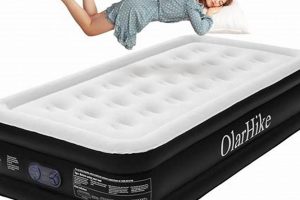
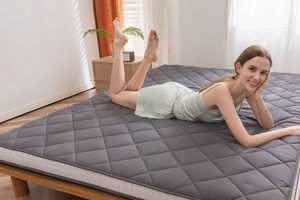
A sleeping surface designed to fit within a pull-out bed frame, typically situated beneath another bed, and accommodating a single occupant. These mattresses are commonly utilized to maximize space efficiency, providing an additional sleeping area when needed without permanently occupying floor space.
The use of such a sleeping solution offers a practical approach to accommodating guests or providing sleeping arrangements in smaller living spaces. Its design allows for convenient storage when not in use, helping to maintain a less cluttered environment. Historically, these under-bed arrangements have been employed in various settings, from children’s rooms to guest rooms, to efficiently manage space constraints.
The subsequent sections will delve into the various types of these mattresses available, focusing on their construction materials, dimensions, and considerations for optimal comfort and support. Furthermore, factors affecting pricing, durability, and suitability for different user needs will be examined in detail.
Essential Considerations for Maximizing the Utility of Under-Bed Sleeping Solutions
Selecting and maintaining a sleeping surface designed for under-bed frames requires careful consideration to ensure optimal comfort, longevity, and space efficiency. The following guidelines offer practical advice for navigating the selection and usage process.
Tip 1: Measure Available Space Accurately: Precise measurements of the trundle frame’s interior are paramount. Ensure the chosen mattress does not exceed these dimensions, allowing for smooth deployment and retraction of the under-bed unit.
Tip 2: Prioritize Mattress Thickness: While a thicker mattress may offer enhanced comfort, consider the limitations imposed by the trundle frame’s design. A thinner profile may be necessary to facilitate easy storage beneath the primary bed.
Tip 3: Assess Support Requirements: Evaluate the intended user’s weight and sleeping preferences. Firmer mattresses may be more suitable for individuals requiring additional support, while softer options may be preferred for those seeking enhanced cushioning.
Tip 4: Consider Material Composition: Different materials, such as innerspring, memory foam, or latex, offer varying levels of support, temperature regulation, and durability. Research the characteristics of each material to determine the most appropriate choice.
Tip 5: Protect Against Dust and Allergens: When stored beneath the primary bed, the mattress is susceptible to dust accumulation. Invest in a protective cover to maintain hygiene and minimize allergen exposure.
Tip 6: Rotate Regularly: To promote even wear and extend the mattress’s lifespan, periodic rotation is recommended. This practice helps prevent sagging and maintains consistent support across the entire surface.
Tip 7: Adhere to Weight Restrictions: Avoid exceeding the manufacturer’s specified weight limit for the mattress. Exceeding this limit can compromise structural integrity and accelerate wear and tear.
By adhering to these guidelines, individuals can ensure that their under-bed sleeping arrangement provides a comfortable, supportive, and space-efficient sleeping solution for years to come.
The next segment will address common misconceptions and frequently asked questions related to under-bed sleeping solutions.
1. Dimensions

The dimensions of a sleeping surface designed for a trundle bed are critical to its functionality. Incompatibility between the mattress’s dimensions and the trundle frame’s internal space renders the entire system inoperable. The length and width must precisely match the designated area, ensuring proper fit and preventing damage to either the frame or the sleeping surface during deployment and retraction.
Thickness is equally important. Insufficient thickness may compromise comfort and support, while excessive thickness can impede the trundle’s ability to slide smoothly under the primary bed. Many trundle frames have specific height limitations to allow for clearance. Failure to adhere to these limits can result in binding, scraping, or complete inability to store the trundle bed when not in use. Consider, for example, a standard twin-size bedframe. A twin trundle needs to perfectly match the dimensions of it in a stored position.
Therefore, meticulous measurement of the trundle frame’s interior space is paramount. Manufacturers typically provide dimensional specifications for both the trundle frame and recommended mattresses. Adhering to these specifications ensures proper fit, prevents damage, and maximizes the utility of the trundle bed system, optimizing space utilization within the designated room. Failure to properly consider dimensions can cause an otherwise high quality product, to not work as needed and have to return for a refund.
2. Thickness

Thickness, in the context of a twin trundle bed mattress, is a critical dimensional attribute dictating both comfort and functionality. The thickness must strike a balance; insufficient depth compromises support and cushioning, leading to discomfort for the occupant. Conversely, excessive thickness impedes the trundle bed’s ability to retract fully beneath the primary bed frame. The internal height of the trundle housing dictates the maximum allowable mattress thickness. For example, a trundle frame with an 8-inch vertical clearance necessitates a mattress of equal or lesser thickness to ensure seamless storage. Ignoring this dimensional constraint can result in operational difficulties, such as the trundle drawer failing to close completely.
The impact of thickness extends beyond mere storage considerations. It directly influences the type of materials that can be incorporated into the mattress’s construction. A thinner profile limits the available space for robust innerspring systems or thick layers of memory foam, potentially sacrificing support and pressure relief. Consequently, manufacturers may opt for alternative, less substantial materials to meet dimensional requirements. This can lead to a reduction in overall quality and longevity. Consider a scenario where a low-profile, high-density foam is chosen over a traditional innerspring. While the foam might meet the thickness constraint, it may not provide adequate support for heavier individuals or those with specific back alignment needs.
Therefore, understanding the interplay between thickness and other mattress characteristics is paramount. When selecting a twin trundle bed mattress, accurate measurements of the trundle frame’s internal dimensions are essential. Moreover, careful consideration should be given to the user’s weight, sleeping preferences, and any specific support requirements. Compromising on thickness solely for storage convenience may ultimately detract from the overall comfort and usability of the sleeping arrangement. Opting for a mattress that effectively balances thick
ness, material composition, and support characteristics is crucial for maximizing the functionality and value of the twin trundle bed system.
3. Material

The material composition of a twin trundle bed mattress is a primary determinant of its comfort, support, durability, and suitability for specific user needs. The selection of materials influences factors ranging from temperature regulation to resistance against allergens and the overall lifespan of the product.
- Foam Density and Type
Foam density directly correlates with the support and longevity of the mattress. High-density foams, such as memory foam or high-resilience polyurethane foam, offer enhanced support and resist compression over time, providing consistent comfort. Lower-density foams, while more cost-effective, tend to degrade more rapidly, leading to sagging and diminished support. For instance, a memory foam mattress conforms to the body’s contours, providing pressure relief and promoting spinal alignment, whereas a traditional polyurethane foam mattress offers a more generalized level of support. The type of foam chosen impacts the mattress’s ability to regulate temperature, with some foams, like gel-infused memory foam, designed to dissipate heat and maintain a comfortable sleeping temperature.
- Innerspring Coil Systems
Innerspring mattresses utilize a network of metal coils to provide support and responsiveness. The type and configuration of the coils significantly impact the mattress’s overall performance. Bonnell coils, an older technology, offer a firmer, more uniform feel but may transfer motion more readily. Pocketed coils, individually wrapped and encased in fabric, minimize motion transfer and conform more closely to the body’s contours, offering enhanced support and pressure relief. The gauge (thickness) of the coils determines their firmness and durability; thicker gauges provide firmer support and greater resistance to deformation. In the context of a twin trundle bed mattress, the innerspring system must be carefully selected to balance support, comfort, and overall mattress thickness, ensuring compatibility with the trundle frame.
- Fabric Cover Materials
The fabric cover of a twin trundle bed mattress plays a crucial role in its breathability, moisture-wicking properties, and resistance to allergens and dust mites. Natural fibers, such as cotton or bamboo, offer excellent breathability and moisture absorption, promoting a cooler and more comfortable sleeping environment. Synthetic fibers, such as polyester, are more durable and resistant to stains and wear. Some mattress covers incorporate hypoallergenic treatments to inhibit the growth of dust mites and bacteria, making them suitable for individuals with allergies or sensitivities. The weave and construction of the fabric also influence its durability and resistance to tearing or abrasion. For instance, a tightly woven cover provides greater protection against wear and tear than a loosely woven one.
- Fire Retardant Materials
All mattresses sold in the United States are required to meet flammability standards, necessitating the incorporation of fire retardant materials. Traditionally, chemical fire retardants were used, but concerns regarding their potential health effects have led to the development of alternative, non-toxic solutions. These alternatives include natural fibers, such as wool or silica, which possess inherent fire-resistant properties. Some manufacturers also utilize fire-retardant barriers made from treated cotton or cellulose. The selection of fire retardant materials is crucial for ensuring compliance with safety regulations while minimizing potential health risks. In the context of a twin trundle bed mattress, the fire retardant materials must not compromise the mattress’s comfort, support, or durability.
In conclusion, the selection of materials for a twin trundle bed mattress represents a series of trade-offs, balancing factors such as comfort, support, durability, cost, and safety. A comprehensive understanding of the properties and characteristics of different materials is essential for making an informed decision that aligns with specific user needs and preferences. The ideal material composition will optimize the mattress’s performance, longevity, and suitability for its intended use within a trundle bed system.
4. Support

Adequate support is a fundamental requirement for any sleeping surface, and a twin trundle bed mattress is no exception. The quality of support directly influences spinal alignment, pressure distribution, and overall sleep comfort. Insufficient support can lead to musculoskeletal discomfort, exacerbate pre-existing back problems, and disrupt sleep patterns. The design constraints inherent in trundle beds, particularly the limited thickness of the mattress, can present challenges in achieving optimal support. A mattress that is too thin may lack the necessary structural elements to adequately support the body weight, resulting in sagging and uneven weight distribution. For instance, individuals with higher body mass or those who prefer sleeping on their stomach require a firmer, more supportive mattress to prevent spinal misalignment.
The type of materials used in the construction of a twin trundle bed mattress significantly impacts its support characteristics. Innerspring mattresses offer support through a network of coils, with varying degrees of firmness and responsiveness depending on the coil gauge and configuration. Memory foam mattresses conform to the body’s contours, providing targeted support and pressure relief. Hybrid mattresses combine innerspring and foam layers to offer a balance of support and comfort. The choice of material should be guided by the user’s individual needs and preferences. For example, an individual with back pain may benefit from the pressure-relieving properties of memory foam, while an individual who prefers a firmer sleeping surface may opt for an innerspring mattress with a higher coil count.
Selecting a twin trundle bed mattress with appropriate support is crucial for promoting healthy sleep and preventing musculoskeletal problems. The design limitations of trundle beds necessitate careful consideration of mattress thickness, material composition, and the user’s individual needs. While the convenience and space-saving benefits of trundle beds are undeniable, it is essential to prioritize support and comfort to ensure a restful and restorative sleep experience. Failure to do so can negate the advantages of the trundle bed system and lead to long-term health consequences. The ultimate goal is to find a twin trundle bed mattress that harmonizes space efficiency with ergonomic support, facilitating a comfortable and healthful sleep environment.
5. Durability
The lifespan of a twin trundle bed mattress is intrinsically linked to its durability, representing a key factor in its long-term value and utility. The frequent storage and deployment cycles inherent in trundle bed use subject the mattress to stresses absent in stationary beds. Repeated compression during storage and potential abrasion against the trundle frame accelerate wear and tear. Material selection, construction techniques, and usage patterns collectively determine
the mattress’s resistance to these degrading forces. For instance, a mattress utilizing low-density foam and poorly reinforced seams will exhibit premature sagging and structural failure, diminishing its supportive qualities and necessitating replacement sooner than a more robustly constructed alternative.
A concrete example illustrates this point: a guest room equipped with a trundle bed sees intermittent use. A less durable mattress, chosen primarily for its lower initial cost, might exhibit noticeable sagging within a year of occasional use due to the constant compression from storage. In contrast, a mattress constructed with high-density foam, reinforced edges, and a resilient cover fabric could maintain its original form and support characteristics for several years, even with similar usage patterns. Moreover, the environmental conditions during storage, such as temperature and humidity, can influence material degradation. A humid environment, for example, can promote mold growth in susceptible materials, further compromising the mattress’s structural integrity and reducing its lifespan.
In summary, durability is not merely a desirable attribute of a twin trundle bed mattress; it is a critical determinant of its overall cost-effectiveness and suitability for its intended purpose. Selecting a mattress engineered for resilience, incorporating high-quality materials and robust construction techniques, ensures a longer service life, reduced replacement frequency, and sustained comfort and support. This understanding underscores the importance of considering durability as a paramount criterion in the selection process, balancing initial cost with long-term performance and value.
6. Storage
The defining characteristic of a twin trundle bed configuration lies in its inherent storage functionality. The design presupposes a primary bed frame and a secondary sleeping surface, the mattress for which is stored directly beneath the primary bed when not in use. This storage aspect is not merely incidental; it is integral to the concept, dictating dimensional constraints and influencing material selection. A twin trundle bed mattress must be capable of withstanding prolonged periods of compression and potential exposure to dust, allergens, and variations in temperature and humidity during storage. Therefore, the selection of a suitable mattress hinges on its ability to retain its shape, support characteristics, and hygienic integrity throughout its storage cycles.
Real-world scenarios underscore the importance of appropriate storage considerations. For instance, a mattress stored in a damp basement is susceptible to mold and mildew growth, rendering it unsuitable for use. Similarly, a mattress compressed under significant weight for extended periods may exhibit permanent deformation, compromising its comfort and support. The location and conditions of storage directly impact the mattress’s lifespan and usability. Protective measures, such as using a breathable mattress cover and ensuring adequate ventilation in the storage area, mitigate potential damage and maintain the mattress’s quality over time. Families with limited living space find that the storage offered by the under-bed area provides a location to house it so it is out of sight.
In conclusion, the relationship between storage and a twin trundle bed mattress is symbiotic. Effective storage practices are essential for preserving the mattress’s integrity, while the mattress’s design must accommodate the demands of storage. Challenges in this relationship arise from environmental factors and the potential for physical damage during storage. Understanding and addressing these challenges is paramount to maximizing the long-term value and functionality of the twin trundle bed system, ensuring a comfortable and hygienic sleeping solution when needed, while efficiently utilizing available space.
7. Cost

The financial investment associated with a twin trundle bed mattress constitutes a significant consideration for consumers. The purchase price encompasses a range of factors, reflecting variations in materials, construction quality, and brand reputation. A comprehensive understanding of these cost drivers enables informed decision-making and ensures optimal value within budgetary constraints.
- Material Composition and Manufacturing Complexity
The primary determinant of a mattress’s cost is its material composition. High-density memory foam, natural latex, and individually pocketed coils command higher prices due to their superior comfort, support, and durability. Complex manufacturing processes, such as hand-tufting or specialized quilting patterns, further contribute to the overall cost. For instance, a mattress featuring multiple layers of different foam types and an intricate coil system will invariably be more expensive than a basic innerspring model.
- Brand Recognition and Marketing Expenses
Established brands often command a premium due to perceived quality and reliability. Marketing and advertising expenses are factored into the final price, contributing to a higher cost compared to lesser-known brands. While brand recognition can provide assurance of quality, it is essential to compare specifications and features across different brands to determine whether the price premium is justified. Discount brands often have very little quality to them, making the investment not worth the initial cost savings.
- Retailer Markups and Sales Events
Retailer markups significantly influence the final purchase price. Brick-and-mortar stores typically have higher overhead costs, resulting in higher markups compared to online retailers. Seasonal sales events and promotional discounts can offer opportunities to purchase a mattress at a reduced price. However, it is crucial to research the original price and compare prices across different retailers to ensure a genuine discount.
- Shipping and Return Policies
Shipping costs can add a substantial expense, particularly for larger or heavier mattresses. Return policies also impact the overall cost, as some retailers charge restocking fees for returned items. Evaluating shipping costs and return policies is essential for accurately assessing the total cost of ownership. A seemingly lower initial price may be offset by high shipping fees or restrictive return policies. As well, mattresses that are difficult to return can have financial impacts, even beyond purchase price.
In conclusion, the cost of a twin trundle bed mattress is a multifaceted consideration, encompassing material quality, brand reputation, retailer markups, and logistical expenses. By carefully evaluating these factors and comparing prices across different sources, consumers can make informed purchasing decisions that align with their budgetary constraints and ensure long-term satisfaction with their investment. Neglecting proper due diligence may result in overspending on a product that does not meet their needs or expectations. Balancing cost with factors, such as durability and support is the key to a successful purchase.
Frequently Asked Questions About Twin Trundle Bed Mattresses
This section addresses common inquiries regarding twin trundle bed mattresses, providing concise and factual answers to assist consumers in making informed purchasing decisions.
Question 1: What are the standard dimensions for a twin trundle bed mattress?
A twin trundle
bed mattress typically measures 39 inches in width and 75 inches in length. Thickness varies, but generally ranges from 5 to 8 inches to accommodate the trundle frame’s clearance requirements. It is essential to verify the specific dimensions of the trundle frame before purchasing a mattress.
Question 2: What type of mattress is best suited for a twin trundle bed?
The optimal mattress type depends on individual preferences and needs. However, due to space constraints, thinner mattresses, such as memory foam or low-profile innerspring models, are commonly recommended. Consider factors such as support, comfort, and durability when making a selection.
Question 3: How does the thickness of a twin trundle bed mattress affect its performance?
Thickness directly impacts comfort and support. A thinner mattress may compromise support and pressure relief, while an excessively thick mattress may prevent the trundle from closing properly. The ideal thickness balances comfort with the trundle frame’s limitations.
Question 4: Are there specific weight restrictions for twin trundle bed mattresses?
Yes, most mattresses have weight restrictions to ensure structural integrity and prevent premature wear. Consult the manufacturer’s specifications for the maximum weight capacity of the selected mattress. Exceeding this limit can damage the mattress and void any warranty.
Question 5: How can the lifespan of a twin trundle bed mattress be extended?
Proper maintenance is crucial for extending the lifespan of a twin trundle bed mattress. Regularly rotating the mattress, using a protective cover, and avoiding excessive weight can help prevent sagging and wear. Additionally, storing the mattress in a dry, well-ventilated area when not in use minimizes the risk of mold and mildew growth.
Question 6: What should be considered regarding fire safety when selecting a twin trundle bed mattress?
All mattresses sold in the United States must meet federal flammability standards. Ensure that the selected mattress complies with these regulations. While chemical fire retardants have been traditionally used, consider mattresses that utilize non-toxic alternatives, such as wool or silica, for enhanced safety.
In summary, choosing the appropriate twin trundle bed mattress involves careful consideration of dimensions, thickness, material, support, weight restrictions, and fire safety. Prioritizing these factors ensures a comfortable, safe, and durable sleeping solution.
The subsequent section will provide guidance on selecting retailers and comparing mattress models.
Conclusion
The preceding analysis has provided a comprehensive examination of the “twin trundle bed mattress”, emphasizing key considerations for informed selection and usage. Dimensions, material composition, support characteristics, durability, storage requirements, and cost factors have been thoroughly explored to equip readers with the knowledge necessary to navigate the purchase process effectively. The interplay between these variables underscores the complexity of selecting a mattress optimized for the unique constraints of a trundle bed configuration.
Ultimately, the suitability of a “twin trundle bed mattress” hinges on a careful evaluation of individual needs and priorities. A commitment to thorough research and a nuanced understanding of the factors discussed herein will facilitate a well-informed decision, ensuring both comfort and long-term value. Further investigation into specific models and retailer offerings is encouraged to solidify the selection process and maximize satisfaction with the chosen sleeping solution.
![Best Twin Hospital Bed Mattress [Deals & Guide] | Organic & Natural Mattress Buyer’s Guide: Non-Toxic Sleep Solutions](https://mattressworldpa.com/wp-content/uploads/2025/07/th-5281-300x200.jpg "Best Twin Hospital Bed Mattress [Deals & Guide] Organic & Natural Mattress Buyer’s Guide: Non-Toxic Sleep Solutions")
![Best Bunk Bed Twin Mattress: Safe & Comfy [Guide] | Organic & Natural Mattress Buyer’s Guide: Non-Toxic Sleep Solutions](https://mattressworldpa.com/wp-content/uploads/2025/07/th-5279-300x200.jpg "Best Bunk Bed Twin Mattress: Safe & Comfy [Guide] Organic & Natural Mattress Buyer’s Guide: Non-Toxic Sleep Solutions")