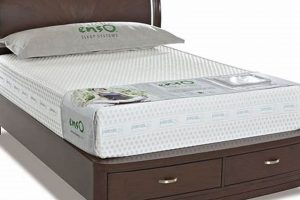
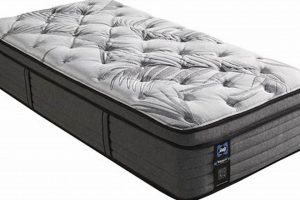
A standard-sized sleeping surface designed to fit the upper or lower frame of a bed constructed with one sleeping platform stacked atop another. This type of mattress commonly measures approximately 38 inches wide and 75 inches long. Its specific dimensions ensure compatibility with the structural supports of the aforementioned elevated bed arrangement, optimizing safety and space utilization within a given room.
These mattresses provide individual sleeping arrangements in shared living spaces, such as children’s rooms, dormitories, or vacation rentals. The compact footprint of this type of bed allows for maximizing floor area, while the mattress provides the necessary support for a comfortable night’s rest. Historically, these bed configurations were implemented in settings with limited space, offering a practical solution for accommodating multiple occupants in a single room.
The following sections will delve into considerations for selecting appropriate bedding, safety standards, and maintenance practices related to mattresses intended for use on elevated beds. The selection process should carefully weigh factors such as mattress thickness, material composition, and adherence to established safety guidelines.
Selection and Use Guidance for Bunk Bed Mattresses
The following guidelines address critical considerations when choosing and utilizing a mattress intended for a bunk bed. Adherence to these recommendations promotes safety, comfort, and longevity of the sleep system.
Tip 1: Height Restriction Compliance: Prioritize mattresses that, when combined with the bunk bed frame, adhere to the established safety height limit. Excessive mattress thickness reduces the safety rail’s effectiveness, increasing the risk of falls.
Tip 2: Firmness Considerations: Select a mattress offering appropriate firmness based on the user’s age and weight. Younger children generally benefit from firmer support to promote proper spinal alignment and reduce the risk of sinking into the mattress.
Tip 3: Material Safety Certification: Ensure the chosen mattress is certified by reputable organizations (e.g., CertiPUR-US) to be free from harmful chemicals, volatile organic compounds (VOCs), and other potentially hazardous substances. This safeguard protects the user’s health and indoor air quality.
Tip 4: Frame Compatibility Verification: Before purchase, confirm the mattress dimensions precisely match the bunk bed frame’s interior measurements. An ill-fitting mattress can create gaps or overhangs, compromising stability and safety.
Tip 5: Weight Capacity Adherence: Strictly observe the manufacturer-specified weight limit for both the bunk bed frame and the mattress. Exceeding these limits can lead to structural failure and potential injury.
Tip 6: Regular Inspection Protocol: Routinely inspect the mattress for signs of wear, damage, or sagging. Address any issues promptly to maintain optimal support and prevent further deterioration.
Tip 7: Rotation Schedule Implementation: Implement a mattress rotation schedule (e.g., every 3-6 months) to promote even wear and prolong its lifespan. Rotation helps distribute body weight and prevent localized compression.
Careful consideration of these factors will contribute to a safer and more comfortable sleep environment for occupants of bunk beds. These practices are integral to maximizing the utility and safety of this specific sleep system.
The subsequent sections will address supplementary facets of bunk bed mattress maintenance and potential upgrades to enhance overall sleep quality.
1. Dimensions

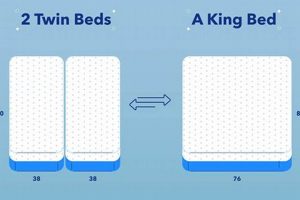
The dimensional specifications of a mattress designed for bunk bed use are paramount to its safe and effective integration within the bed frame. A standard twin size dictates a width of approximately 38 inches and a length of 75 inches. Deviations from these measurements, even minor ones, can produce hazardous conditions. For example, if the mattress is too narrow, gaps may form between the mattress edge and the bed frame, presenting a risk of entrapment or falls. Conversely, if the mattress is too long or wide, it may not fit properly, causing instability or obstructing the safety rails.
Precise dimensions directly influence the functionality of the bunk bed’s safety features. The height of the mattress is particularly critical. Exceeding the manufacturer’s recommended maximum mattress height reduces the effectiveness of the guardrails, potentially leading to falls from the upper bunk. Inadequate mattress thickness may compromise structural integrity by creating excess vertical space. This can result in a shifting sleeping surface and contribute to premature wear. Furthermore, ensuring dimensional accuracy minimizes stress on the bed frame, extending its lifespan and preserving its structural integrity.
In summary, dimensional adherence is not merely a matter of convenience, but a fundamental prerequisite for the safe and functional utilization of a twin mattress in a bunk bed setup. Close attention to these measurements is essential to mitigating safety risks and promoting a stable and secure sleeping environment. Neglecting this aspect can lead to potentially serious consequences, underscoring the importance of verifying mattress dimensions against the bunk bed frame’s specifications before purchase and use.
2. Thickness

The dimension of mattress thickness is a critical parameter when considering the integration of a twin mattress within a bunk bed system. Thickness directly influences safety, accessibility, and overall comfort, necessitating careful evaluation during the selection process.
- Guardrail Height Compliance
Bunk bed safety standards mandate specific guardrail heights to prevent falls from the upper bunk. Excess mattress thickness diminishes the effective height of the guardrail, increasing the risk of accidents. Manufacturers typically specify a maximum mattress thickness to ensure compliance with these safety regulations. Therefore, selecting a mattress that adheres to the prescribed thickness is paramount.
- Accessibility of Upper Bunk
The thickness of the mattress affects the ease with which occupants can access the upper bunk. An overly thick mattress can reduce the available headroom, making it difficult to sit upright or move around comfortably. This can be particularly problematic for older children or adults using the upper bunk, potentially leading to discomfort or even injury.
- Weight Distribution and Support
While thickness contributes to overall mattress support, it is not the sole determinant. Internal construction, materials, and coil count also play significant roles. However, an insufficient mattress thickness can compromise adequate support, leading to discomfort and potential spinal misalignment. Conversely, excessive thi
ckness may not necessarily equate to increased support and could primarily add unnecessary height. - Ladder or Stair Compatibility
Bunk beds often incorporate ladders or stairs for accessing the upper bunk. The mattress thickness can impact the positioning of these access devices. An overly thick mattress may necessitate adjusting the ladder or stairs to ensure proper alignment and ease of use. Failure to account for this can create awkward or unsafe climbing conditions.
In conclusion, mattress thickness represents a key consideration when selecting a twin mattress for a bunk bed. It directly affects safety features, accessibility, support, and compatibility with other components of the bunk bed system. Thorough assessment of thickness, in conjunction with other relevant factors, promotes a safe and comfortable sleeping environment for bunk bed occupants.
3. Support

Adequate support is a non-negotiable characteristic of any mattress, especially one intended for a bunk bed. Its influence extends beyond simple comfort, impacting spinal alignment, pressure distribution, and overall sleep quality. A mattress lacking sufficient support can lead to discomfort, pain, and potentially long-term musculoskeletal issues.
- Spinal Alignment
The primary function of a supportive mattress is to maintain proper spinal alignment throughout the night. When lying down, the natural curves of the spine should be gently supported, preventing excessive sinking or arching. In the context of a mattress for a bunk bed, often used by growing children and adolescents, maintaining correct spinal posture is essential for healthy development and preventing postural problems later in life. A too-soft mattress can cause spinal misalignment, while a too-firm mattress may not provide sufficient contouring for comfortable support.
- Pressure Distribution
A supportive mattress effectively distributes body weight, minimizing pressure points that can cause discomfort and disrupt sleep. These pressure points typically occur at the hips, shoulders, and knees. Inadequate pressure distribution can lead to tossing and turning, restless sleep, and even pain or numbness. A mattress providing appropriate support will contour to the body, evenly distributing weight and reducing localized pressure.
- Edge Support and Safety
Edge support refers to the stability of the mattress perimeter. Strong edge support is particularly important in a bunk bed scenario, as it provides a stable surface when sitting on the edge of the bed, preventing it from collapsing or tilting. This feature is crucial for safety, particularly for the upper bunk, where lack of edge support can increase the risk of falls. Additionally, strong edge support maximizes the usable sleeping surface area.
- Long-Term Durability
A mattress offering good support is generally more durable and resistant to sagging or deformation over time. The support core, whether composed of coils, foam, or a hybrid construction, plays a vital role in maintaining the mattress’s structural integrity. Inadequate support can lead to premature sagging, reducing its comfort and effectiveness. A durable, supportive mattress ensures a consistent sleep surface for years, offering a better long-term value.
The interplay of these facets demonstrates that support is not a singular property but a multifaceted characteristic. Choosing a twin mattress for a bunk bed requires careful consideration of spinal alignment, pressure distribution, edge support, and long-term durability to ensure a safe, comfortable, and healthy sleeping environment. Compromising on support can have significant negative consequences, making it a priority in the mattress selection process.
4. Safety Standards

Stringent safety protocols govern the design, manufacture, and use of mattresses intended for bunk beds. These standards aim to mitigate risks associated with elevated sleeping surfaces, including falls, entrapment, and fire hazards. Compliance with these regulations is paramount in ensuring the well-being of individuals using such bedding arrangements.
- Flammability Resistance
Mattresses must meet established flammability standards to reduce the risk of fire-related injuries. Regulations, such as those outlined in 16 CFR Part 1633, mandate that mattresses resist ignition from open flames and smoldering sources. The materials used in construction, including the ticking and internal components, are treated or selected to minimize flammability. Non-compliant mattresses pose a significant fire hazard in residential and institutional settings.
- Guardrail Height Compliance
The interplay between mattress thickness and guardrail height is a critical safety consideration. Safety standards stipulate minimum guardrail heights above the sleeping surface to prevent falls from the upper bunk. Excessive mattress thickness reduces the effective height of the guardrail, compromising its protective function. Manufacturers typically specify maximum mattress thickness limits to ensure adherence to these safety regulations. Failure to comply can result in an unsafe sleeping environment, particularly for children.
- Entrapment Prevention
Bunk bed design must address potential entrapment hazards, particularly between the mattress and the bed frame. Gaps exceeding specified dimensions can pose a risk of entrapment, leading to injury or asphyxiation. Safety standards mandate that gaps be minimized or eliminated to prevent such occurrences. Mattress dimensions must precisely match the interior dimensions of the bunk bed frame to avoid creating hazardous gaps. Regular inspection for any gaps that may develop over time is also essential.
- Material Safety and Toxicity
The materials used in mattress construction must be free from harmful chemicals and toxins. Certifications such as CertiPUR-US indicate that the foam components have been tested and found to be free from prohibited substances, including phthalates, heavy metals, and ozone depleters. This aspect of safety standards is crucial for protecting the health of individuals, especially children, who may be more susceptible to the effects of chemical exposure. Volatile organic compounds (VOCs) emitted from mattresses can also impact indoor air quality, further emphasizing the importance of material safety.
Adherence to these diverse safety standards is not merely a matter of regulatory compliance but a fundamental imperative for safeguarding the health and well-being of those using mattresses in bunk bed configurations. Thorough verification of compliance with relevant safety regulations is a vital step in the selection and use of such mattresses.
5. Material

The material composition of a mattress profoundly influences its suitability for use in a bunk bed environment. A mattress’s constituent materials affect its weight, flammability, support characteristics, and potential for off-gassing. These factors, in turn, directly impact safety, comfort, and the longevity of the sleep product. For instance, a heavy innerspring mattre
ss may exceed the weight capacity of the bunk bed frame, posing a safety risk. Conversely, a mattress constructed with untreated, highly flammable materials represents a significant fire hazard in the event of an emergency. The selection of appropriate materials is thus a critical determinant of a mattress’s performance and safety within a bunk bed setting.
Considerations extend beyond immediate safety concerns. The materials used in the mattress core, such as memory foam, latex, or innerspring coils, dictate the level of support provided to the sleeper. A low-density foam core may lack the necessary support for proper spinal alignment, particularly for growing children and adolescents. Similarly, the mattress cover material, often referred to as the ticking, affects breathability and moisture-wicking properties. A non-breathable cover can lead to overheating and discomfort. The presence of potentially allergenic materials, such as latex, necessitates careful consideration for individuals with sensitivities. Numerous manufacturers are increasingly focused on sustainable material sourcing practices, reducing environmental impact and providing consumers with healthier product choices.
In summary, material selection represents a cornerstone in the design and construction of a mattress suitable for bunk bed use. A comprehensive understanding of the properties and potential drawbacks of various materials empowers informed decision-making, mitigating risks and optimizing the sleep experience. Challenges remain in balancing material cost, performance characteristics, and environmental sustainability, requiring ongoing innovation within the mattress industry to refine material science and manufacturing processes. The proper utilization of appropriate materials in a twin mattress designed for bunk bed application enhances safety, comfort, and long-term satisfaction.
6. Weight Limit

The weight limit is a crucial safety parameter directly applicable to mattresses used in bunk bed configurations. This specification dictates the maximum load that the bunk bed frame and its associated components, including the mattress, can safely support without structural failure. Exceeding this limit can result in damage to the bed frame, potential injury to the occupant, and premature degradation of the mattress itself.
- Structural Integrity of the Bunk Bed Frame
The weight limit is fundamentally determined by the structural capacity of the bunk bed frame. Frames constructed from different materials (e.g., wood, metal) and using varying joinery techniques possess distinct load-bearing capabilities. Exceeding the specified weight limit can compromise the frame’s integrity, leading to bending, cracking, or even complete collapse. This risk is amplified when the load is unevenly distributed or subjected to dynamic forces, such as jumping or sudden movements on the bed.
- Mattress Composition and Support System
The composition and internal support system of the mattress contribute to its ability to distribute weight effectively. Mattresses with robust innerspring systems or high-density foam cores generally offer greater weight-bearing capacity compared to those with less substantial construction. Exceeding the weight limit can compress the mattress unevenly, leading to sagging, reduced support, and a compromised sleeping surface. This is particularly pertinent for mattresses intended for prolonged use by heavier individuals.
- Safety Rail Effectiveness and Fall Prevention
The weight limit indirectly influences the effectiveness of the safety rails on the upper bunk. An overloaded bed frame may exhibit instability, increasing the risk of falls from the elevated sleeping surface. Furthermore, excessive weight can deform the bed frame, potentially creating gaps between the mattress and the safety rails, presenting an entrapment hazard. Adhering to the weight limit is essential for maintaining the intended safety features of the bunk bed.
- Manufacturer Specifications and Liability
Manufacturers meticulously establish weight limits based on rigorous testing and engineering analysis. Exceeding these limits not only poses a safety risk but may also void warranties and absolve the manufacturer of liability in the event of an accident or injury. It is imperative to consult the manufacturer’s documentation and adhere strictly to the specified weight limit to ensure safe and responsible use of the bunk bed and mattress.
The weight limit, therefore, is not an arbitrary figure but a critical safety guideline directly linked to the structural integrity of the bunk bed frame, the support characteristics of the mattress, and the overall safety of the sleeping environment. Neglecting this parameter can have serious consequences, emphasizing the importance of informed selection and responsible usage of twin mattresses within bunk bed systems.
Frequently Asked Questions Regarding Twin Mattresses for Bunk Beds
The following section addresses common inquiries concerning the selection, use, and maintenance of mattresses designed for bunk bed applications. The information provided is intended to clarify key considerations and promote safe and informed decision-making.
Question 1: What mattress thickness is recommended for a bunk bed to ensure guardrail effectiveness?
The precise maximum mattress thickness varies depending on the specific bunk bed model and its corresponding guardrail height. The manufacturer’s instructions should be consulted to determine the allowable thickness. As a general guideline, the combined height of the mattress and bed frame should leave at least five inches of guardrail height to prevent falls.
Question 2: Are specific mattress types better suited for bunk beds than others?
Mattresses composed of innerspring, memory foam, or latex can all be appropriate for bunk beds, provided they meet safety and support requirements. Lighter mattresses may be easier to maneuver onto the upper bunk. The chosen mattress should offer adequate support and conform to the safety standards relevant to bunk bed use.
Question 3: How can the mattress weight limit be verified?
The weight limit for the bunk bed frame is typically specified by the manufacturer and can be found in the product documentation or on a label affixed to the bed frame itself. The combined weight of the mattress and the occupant should not exceed this limit.
Question 4: What certifications should be sought when purchasing a mattress for a bunk bed?
Certifications such as CertiPUR-US indicate that the foam components of the mattress have been tested for harmful chemicals and volatile organic compounds (VOCs). These certifications provide assurance that the mattress meets established safety and environmental standards.
Question 5: How frequently should a mattress be rotated or flipped when used on a bunk bed?
Rotating the mattress every three to six months can promote even wear and prolong its lifespan. Not all mattresses are designed to be flipped; therefore, the manufacturer’s recommendations should be followed. Regular rotation helps to prevent localized compression and maintain consistent support.
Question 6: What are the potential consequences of exceeding the maximum weight limit for a bunk bed mattress?
Exceeding the maximum weight limit can compromise the structural integrity of the bunk bed frame, potentially leading to bending, cracking, or complete collapse. Th
is can result in serious injury to the occupant. Overloading the mattress can also cause premature sagging and a diminished level of support.
Adherence to these guidelines promotes a safer and more comfortable sleep environment when utilizing mattresses within bunk bed systems. Ignoring these considerations can elevate the risk of accidents and compromise the longevity of the bedding.
The subsequent sections will examine advanced topics related to mattress technologies and future trends in the bunk bed industry.
Conclusion
The preceding discussion has elucidated critical aspects of a twin mattress for a bunk bed. Key considerations include dimensional accuracy, adherence to weight limits, compliance with safety standards, and appropriate material selection. Neglecting these factors can compromise the structural integrity of the bunk bed system and increase the risk of injury. Understanding the relationship between mattress thickness, guardrail height, and entrapment prevention is paramount for safeguarding occupants. The selection of a compliant and supportive mattress is therefore not merely a matter of comfort but a fundamental safety imperative.
Responsible purchasing and utilization of a twin mattress for a bunk bed necessitates diligent evaluation of manufacturer specifications and adherence to established safety guidelines. Continued vigilance in monitoring mattress condition and maintaining awareness of evolving safety standards remains crucial for ensuring a secure sleeping environment. The information presented is intended to empower consumers to make informed decisions and prioritize safety in bunk bed applications.

![Best Coleman Inflatable Mattress Twin: [Year] Review & Guide | Organic & Natural Mattress Buyer’s Guide: Non-Toxic Sleep Solutions](https://mattressworldpa.com/wp-content/uploads/2025/07/th-5241-300x200.jpg "Best Coleman Inflatable Mattress Twin: [Year] Review & Guide Organic & Natural Mattress Buyer’s Guide: Non-Toxic Sleep Solutions")