



![Best Latex Twin Mattress [Guide] For Sound Sleep](data:image/svg+xml;base64,PHN2ZyB4bWxucz0iaHR0cDovL3d3dy53My5vcmcvMjAwMC9zdmciIHdpZHRoPSI0NzQiIGhlaWdodD0iMTAwIiB2aWV3Qm94PSIwIDAgNDc0IDEwMCI+PHJlY3Qgd2lkdGg9IjEwMCUiIGhlaWdodD0iMTAwJSIgc3R5bGU9ImZpbGw6I2NmZDRkYjtmaWxsLW9wYWNpdHk6IDAuMTsiLz48L3N2Zz4= "Best Latex Twin Mattress [Guide] For Sound Sleep Organic & Natural Mattress Buyer’s Guide: Non-Toxic Sleep Solutions")
A mattress of a specific size, designed to fit a single sleeper and constructed using latex foam. This particular size is often selected for children’s rooms, guest rooms, or smaller living spaces where maximizing floor area is a priority. The construction material, derived from the sap of rubber trees, provides a unique feel compared to other mattress types.
The utilization of this material offers several potential advantages, including enhanced durability and resilience compared to conventional innerspring or polyurethane foam mattresses. Its natural origin often appeals to individuals seeking environmentally conscious products. Historically, the incorporation of this material in bedding represents a shift towards prioritizing comfort and sustainability in sleep solutions.
The subsequent sections will explore the specific properties of the construction material, the features that distinguish this type of mattress, the factors to consider when selecting one, and the proper care and maintenance to ensure its longevity. This exploration aims to provide a thorough understanding for informed decision-making.
Guidance on Selection and Care
The following guidance focuses on optimizing the experience with this specific type of bedding. Adherence to these recommendations can contribute to increased product lifespan and enhanced sleep quality.
Tip 1: Understand Latex Types: Distinguish between Dunlop and Talalay processes. Dunlop yields a denser, firmer product, while Talalay offers a softer, more consistent feel. Consider personal preference and sleeping position when choosing.
Tip 2: Assess Density and ILD: Density reflects the material’s weight per cubic foot and influences durability. Indentation Load Deflection (ILD) measures firmness; lower values indicate a softer surface. Evaluate these factors based on individual support requirements.
Tip 3: Consider Breathability: The open-cell structure inherent in the material promotes airflow. Ensure the mattress design incorporates ventilation channels or pinholes to further enhance breathability and minimize heat retention.
Tip 4: Inquire About Certifications: Look for certifications like Oeko-Tex or GOLS to verify the absence of harmful substances and ensure the material meets environmental standards.
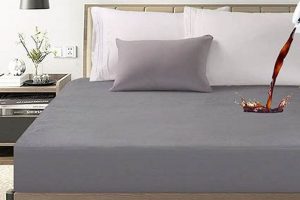
Tip 5: Use a Protective Cover: Employ a waterproof, breathable mattress protector to safeguard against spills, stains, and dust mites. This practice extends the lifespan of the mattress and maintains hygiene.
Tip 6: Rotate Regularly: Rotate the mattress 180 degrees every three to six months to promote even wear and prevent impressions. Some models may also benefit from flipping, if applicable.
Tip 7: Ensure Proper Support: Utilize a solid, supportive bed frame designed for the dimensions of the mattress. Slatted frames should have closely spaced slats to prevent sagging.
Implementing these guidelines fosters optimal utilization and longevity. Selecting a model aligned with individual needs and adhering to proper maintenance protocols are crucial for a satisfactory experience.
The subsequent section will provide a comprehensive overview of potential considerations before making a purchase.
1. Material Composition

The material composition of a latex twin mattress fundamentally dictates its performance characteristics, longevity, and environmental impact. The core component, latex, can be sourced naturally from rubber trees or produced synthetically. Natural latex, derived from the Hevea brasiliensis tree, exhibits superior resilience, breathability, and resistance to dust mites, making it a desirable, though potentially more expensive, option. Synthetic latex, typically styrene-butadiene rubber (SBR), offers a lower cost alternative but often compromises on durability and natural properties. The proportion of natural versus synthetic latex directly affects the mattress’s ability to conform to the body, regulate temperature, and withstand prolonged use. For example, a mattress composed entirely of natural Dunlop latex will generally provide firmer support and longer-lasting durability compared to one predominantly made of synthetic latex.
Beyond the primary latex source, the compounding ingredients incorporated during manufacturing also play a crucial role. Fillers, such as clay or calcium carbonate, are sometimes added to reduce costs and increase density, but may compromise the inherent elasticity and comfort of the material. Similarly, the curing process, whether Dunlop or Talalay, significantly alters the final texture and feel. Dunlop processing yields a denser, more uniform material, whereas Talalay involves vacuum sealing and flash freezing, resulting in a softer, more airy structure. Understanding these nuances in material composition enables consumers to make informed decisions aligned with their individual comfort preferences and budget constraints. The presence of certifications, such as GOLS (Global Organic Latex Standard), further validates the authenticity and purity of the natural latex used.
In summary, the material composition is a critical determinant of the quality, comfort, and overall value of a latex twin mattress. Careful consideration of the latex source, compounding ingredients, and curing process is essential for selecting a product that meets individual needs and expectations. Choosing a mattress with a higher percentage of natural latex, verified by relevant certifications, generally translates to enhanced durability, breathability, and a reduced environmental footprint. However, the optimal balance between natural and synthetic components often depends on budget considerations and desired firmness levels, highlighting the importance of informed decision-making.
2. Size Dimensions

Size dimensions constitute a fundamental aspect of a latex twin mattress, directly impacting its suitability for specific applications and environments. The standardized dimensions of a twin mattress, typically measuring approximately 38 inches in width and 75 inches in length, dictate its compatibility with standard twin-sized bed frames. This fixed dimension plays a causal role in determining the appropriate sleeping space for a single individual, especially children or adults in smaller rooms. For instance, a bedroom with limited square footage benefits significantly from the space-saving design of a twin-sized mattress. The dimensions, therefore, are not merely arbitrary measurements but crucial determinants of practicality and spatial efficiency.
The importance of accurate size dimensions extends beyond mere fitting into a bed frame. Deviation from standard twin size dimensions can lead to issues with bedding compatibility, requiring specialized or custom-made sheets and blankets. Furthermore, the surface area defined by these dimensions impacts comfort and support. A sleeper who regularly moves during sleep may find the width res
trictive, while a taller individual might experience discomfort if their feet extend beyond the length. The latex material, known for its conforming properties, must still adequately support the entire body within these defined dimensions to prevent pressure points and ensure proper spinal alignment. Consider, for example, a student residing in a dormitory; the standardized twin size assures seamless integration with provided furniture and bedding.
In conclusion, the size dimensions of a latex twin mattress are integral to its functionality and practicality. These dimensions directly influence its suitability for specific bed frames, the availability of compatible bedding, and the overall comfort experienced by the sleeper. Understanding the interplay between these dimensions and the characteristics of the latex material is essential for making an informed purchase decision. Though seemingly simple, the standardization and precision of size dimensions are critical for ensuring that the product fulfills its intended purpose effectively and provides a comfortable sleep environment. Deviation from the expected dimensions can lead to functional challenges and diminish the overall benefits of the latex mattress.
3. Firmness Options

Firmness options represent a critical variable in the selection of a latex twin mattress, directly influencing user comfort and spinal support. The inherent elasticity of latex allows for a spectrum of firmness levels, typically categorized as soft, medium, firm, and extra-firm. This spectrum caters to a diverse range of sleep preferences and body types. Individuals with lower body weights or those who prefer to sleep on their side often benefit from softer firmness levels, which allow for greater contouring and pressure relief. Conversely, individuals with higher body weights or those who primarily sleep on their stomach or back typically require firmer options to maintain proper spinal alignment and prevent excessive sinking. The selection of an appropriate firmness level directly impacts the ability of the mattress to effectively distribute body weight, minimize pressure points, and promote a comfortable and restorative sleep experience. For example, a child transitioning from a crib mattress to a twin mattress may find a medium-firm latex option provides adequate support without feeling excessively rigid.
The firmness of a latex twin mattress is determined by several factors, including the density of the latex foam, the manufacturing process (Dunlop vs. Talalay), and the incorporation of any additional comfort layers. Higher density latex generally results in a firmer feel, while the Talalay process, which introduces air into the latex, often produces a softer, more responsive surface. Manufacturers frequently combine different layers of latex, varying in density and firmness, to create mattresses that offer a balance of support and comfort. This layered construction allows for customization to meet specific firmness requirements. The presence of additional materials, such as memory foam or wool, can also influence the overall firmness profile of the mattress. Understanding these construction details enables consumers to make informed decisions regarding their individual needs. As an illustration, a latex twin mattress marketed as “medium-firm” might incorporate a firmer Dunlop latex core with a softer Talalay latex comfort layer to provide both support and pressure relief.
In conclusion, firmness options are an indispensable consideration when choosing a latex twin mattress. The selection of an appropriate firmness level is not merely a matter of personal preference but a crucial determinant of sleep quality and spinal health. Factors such as body weight, sleeping position, and individual comfort preferences should guide the selection process. Understanding how the density, manufacturing process, and construction of the mattress contribute to its overall firmness enables consumers to make informed decisions and ensure that they select a latex twin mattress that provides optimal support and comfort for their specific needs. Neglecting to consider firmness options can lead to discomfort, inadequate spinal support, and ultimately, a compromised sleep experience.
4. Support Structure

The support structure underlying a latex twin mattress significantly influences its overall performance, longevity, and suitability for diverse users. It provides the necessary foundation for the latex layers to effectively distribute weight and maintain spinal alignment. The chosen support system directly impacts the comfort, durability, and value proposition of the sleep solution.
- Foundation Type
The type of foundation employed beneath a latex twin mattress plays a pivotal role in its support. Options include solid platforms, closely spaced slats, and box springs (though less commonly recommended). A solid platform offers uniform support, preventing sagging and maximizing the lifespan of the mattress. Slatted foundations, when properly constructed with minimal spacing, can provide adequate support while allowing for increased airflow. Box springs, typically designed for innerspring mattresses, may not offer sufficient support for the denser latex material and could potentially diminish its longevity. The appropriate foundation type ensures that the latex layers function optimally, preventing premature wear and maintaining consistent comfort. For instance, using a platform bed with a solid surface beneath a latex twin mattress ensures even weight distribution and maximizes support, especially for heavier individuals.
- Internal Core Design
Within the mattress itself, the internal core design contributes significantly to the overall support structure. Some latex twin mattresses feature a single layer of uniform density latex, while others incorporate multiple layers with varying densities and firmness levels. Mattresses with zoned support, where specific areas are designed to provide targeted support to different body regions (e.g., lumbar support), can enhance spinal alignment and pressure relief. The internal core design also impacts the mattress’s ability to conform to the body’s contours and minimize motion transfer. A multi-layered design with strategically placed zones of varying firmness can accommodate different sleeping positions and body types more effectively than a single, uniform layer. For example, a mattress with a firmer latex core for lumbar support and a softer latex layer for shoulder and hip contouring provides tailored support for side sleepers.
- Edge Support Construction
The construction of the mattress’s edges is crucial for maintaining stability and preventing roll-off. Weak edge support can lead to a feeling of instability when sitting or sleeping near the edge of the bed and can gradually degrade the mattress’s overall shape. Some latex twin mattresses feature reinforced edges, often achieved through the use of higher-density latex or the incorporation of perimeter coils. This enhanced edge support maximizes the usable sleep surface and contributes to the mattress’s longevity. A mattress with robust edge support allows individuals to utilize the entire sleeping surface comfortably and prevents the edges from sagging over time, which is particularly beneficial for couples sharing a smaller bed. An example of effective edge support would be a high-density foam encasement around the perimeter of the latex core, providing a stable and supportive edge.
- Weight Distribution Properties
The capacity of a latex twin mattress’s support structure to effectively distribute weight directly influences its comfort and ability to alleviate pressure points. A well-designed support system ensures that the weight is evenly distributed across the surface, preventing localized pressure buildup that can lead to discomfort and disrupt sleep. The latex material itself contributes to weight distribution due to its conforming properties, but the underlying support structure is essential for preventing excessive sinking and maintaining proper spinal alignment. Mattresses with zoned support or multiple layers of varying densities are better equipped to distribute weight effectively. Proper weight distribution minimizes the likelihood of pressure points developing in areas such as the shoulders, hips, and knees, leading to a more comfortable and restorative sleep experience. For instance, a latex twin mattress with a combination of firm and soft latex layers strategically placed to distribute weight evenly can significantly reduce pressure points for individuals with chronic back pain.
The aforementioned aspects of support structure, foundation compatibility, internal core design, edge support, and weight distribution directly impact the overall performance and suitability of a latex twin mattress. Considering these elements ensures the selection of a sleep solution that provides optimal comfort, durability, and spinal support. The interaction between the latex material and the underlying support system is crucial for maximizing the benefits and longevity of the mattress. A comprehensive understanding of these considerations is essential for informed decision-making.
5. Certifications Standards

Certifications standards in the context of a latex twin mattress serve as verified indicators of product safety, material purity, and manufacturing practices. These certifications offer assurances to consumers regarding environmental impact, the absence of harmful substances, and the authenticity of claims made about the product’s composition and performance. Adherence to these standards fosters trust and transparency in the marketplace, guiding consumers towards informed purchasing decisions.
- GOLS (Global Organic Latex Standard)
This standard certifies that a latex product contains a minimum of 95% certified organic raw material. It verifies the organic status of the latex from the source and throughout the manufacturing process. GOLS certification ensures environmentally responsible practices, fair labor conditions, and the absence of harmful chemicals often found in conventional latex production. The implications for a latex twin mattress with GOLS certification include a reduced environmental footprint, a healthier sleep environment free from toxic residues, and support for ethical sourcing practices. For example, a mattress with this certification guarantees that the rubber trees were grown and harvested using sustainable methods, minimizing deforestation and promoting biodiversity.
- Oeko-Tex Standard 100
Oeko-Tex Standard 100 tests for harmful substances in textiles and latex products. It ensures that every component of the mattress, including the fabric cover, thread, and fillings, has been tested for a list of over 100 restricted chemicals. This certification verifies that the product is safe for direct contact with skin and reduces the risk of allergic reactions or other health concerns. For a latex twin mattress, Oeko-Tex Standard 100 certification indicates that the product has undergone rigorous testing and meets stringent safety requirements, minimizing exposure to potentially harmful substances such as formaldehyde, pesticides, and heavy metals. As an illustration, even the zipper used on the mattress cover must meet the same stringent criteria as the latex itself.
- Eco-Institut
Eco-Institut tests products for emissions of volatile organic compounds (VOCs) and other substances that can affect indoor air quality. This certification focuses on ensuring that a latex twin mattress does not release harmful chemicals into the sleeping environment. Low VOC emissions are particularly important for individuals with sensitivities to chemicals or allergies. Eco-Institut certification provides assurance that the mattress meets strict requirements for indoor air quality, contributing to a healthier and more comfortable sleep environment. This can be particularly important for those who are sensitive to odors or have respiratory problems, such as asthma or allergies. The certification confirms that the mattress is unlikely to off-gas harmful chemicals into the surrounding air.
- CertiPUR-US
CertiPUR-US certification applies to the foam components used in a latex twin mattress, including any polyurethane foam layers. It ensures that the foam has been tested and certified to meet specific standards for content, emissions, and durability. CertiPUR-US certified foam is made without ozone depleters, PBDEs, TDCPP or TCEP (“Tris”) flame retardants, mercury, lead, and other heavy metals. It also has low VOC emissions for indoor air quality. Though not specific to latex itself, CertiPUR-US certification provides assurance that any supplementary foam materials used in the mattress meet stringent safety and environmental standards. This is particularly relevant in hybrid designs combining latex with other foam types, providing a degree of quality control over all foam components. A mattress with CertiPUR-US certified foam ensures that even the non-latex components are produced in a responsible and safe manner.
These certifications offer valuable insights into the composition, manufacturing processes, and safety of a latex twin mattress. Consumers can use these standards as benchmarks for evaluating the quality and sustainability of different products, ensuring a more informed and confident purchasing experience. Selecting a mattress with recognized certifications contributes to a healthier sleep environment and supports ethical and environmentally responsible manufacturing practices, demonstrating the importance of certifications in the context of latex twin mattresses.
Frequently Asked Questions About Latex Twin Mattresses
The following questions address common concerns and misconceptions surrounding latex twin mattresses. The intent is to provide clarity and facilitate informed decision-making.
Question 1: What is the expected lifespan of a latex twin mattress?
A well-maintained latex twin mattress typically lasts between 8 to 15 years, depending on latex quality, density, and usage patterns. Proper support and regular rotation contribute to longevity.
Question 2: Are latex twin mattresses suitable for individuals with latex allergies?
While rare, latex allergies can pose a concern. Individuals with known latex allergies should consult a medical professional before purchasing. Mattresses made with synthetic latex or those with a substantial barrier layer may mitigate the risk.
Question 3: What is the difference between Dunlop and Talalay latex?
Dunlop latex is denser and firmer due to its manufacturing process. Talalay latex undergoes a vacuum-sealing and freezing process, resulting in a softer, more consistent feel. Selection depends on preferred firmness level.
Question 4: How does a latex twin mattress compare to a memory foam mattress?
Latex generally offers a more responsive and buoyant feel compared to memory fo
am, which conforms more closely to the body. Latex also tends to sleep cooler and offer better breathability.
Question 5: Are latex twin mattresses environmentally friendly?
Natural latex, derived from rubber trees, is a renewable resource. However, the environmental impact varies based on manufacturing processes and certifications. GOLS certification indicates adherence to organic standards.
Question 6: What type of foundation is recommended for a latex twin mattress?
A solid platform or closely spaced slatted foundation is generally recommended. This provides adequate support and prevents sagging, which can diminish the mattress’s lifespan.
Understanding the unique characteristics of latex and selecting a mattress that aligns with individual needs is crucial for a satisfactory sleep experience. Consider firmness, support, and potential allergies before making a purchase.
The subsequent section will delve into proper maintenance procedures and troubleshooting common issues.
Latex Twin Mattress
This exposition has explored the core characteristics, benefits, and considerations surrounding the latex twin mattress. It has addressed material composition, size dimensions, firmness options, support structure, and the importance of certification standards. A comprehensive understanding of these facets is essential for any individual seeking a durable, comfortable, and potentially environmentally sound sleep solution. The varied information presented emphasizes the importance of discerning consumerism in the bedding industry.
The acquisition of a latex twin mattress represents a significant investment in personal well-being and, potentially, environmental responsibility. Prospective buyers are urged to meticulously evaluate their individual needs, carefully scrutinize product specifications and certifications, and consider long-term value over initial cost. The informed selection of a latex twin mattress can lead to years of restful sleep and contribute to a more sustainable lifestyle, underscoring its significance beyond mere comfort.
![Best Twin Mattress with Adjustable Base [Value Option] | Organic & Natural Mattress Buyer’s Guide: Non-Toxic Sleep Solutions](https://mattressworldpa.com/wp-content/uploads/2025/07/th-5263-300x200.jpg "Best Twin Mattress with Adjustable Base [Value Option] Organic & Natural Mattress Buyer’s Guide: Non-Toxic Sleep Solutions")
![Best BJ's Twin Mattress [Deals & Reviews] | Organic & Natural Mattress Buyer’s Guide: Non-Toxic Sleep Solutions](https://mattressworldpa.com/wp-content/uploads/2025/07/th-5259-300x200.jpg "Best BJ's Twin Mattress [Deals & Reviews] Organic & Natural Mattress Buyer’s Guide: Non-Toxic Sleep Solutions")