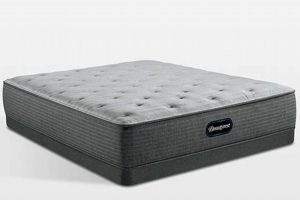
The central question concerns mattress compatibility between a larger queen-size and a smaller antique full-size bed frame. A queen mattress, measuring 60 inches wide by 80 inches long, significantly exceeds the dimensions of a standard full-size, or double, bed frame, which typically measures 54 inches wide by 75 inches long. Attempting to force a queen mattress onto a full bed frame will result in overhang and instability.
Properly supporting a mattress is crucial for both comfort and the longevity of the mattress itself. A mattress that is not adequately supported can sag, leading to discomfort and premature wear. Furthermore, attempting to use an improperly sized mattress on an antique bed frame may damage the frame, diminishing its value and structural integrity. The historical value of an antique bed frame also necessitates careful consideration and preservation.
Consequently, various options exist for achieving a comfortable and aesthetically pleasing sleep setup. This includes exploring solutions like custom mattress sizing, frame modifications, or selecting a mattress that appropriately fits the antique bed frame. The following sections will delve into these options in greater detail, outlining the pros and cons of each approach.
Guidance Regarding Mattress and Bed Frame Compatibility
Properly fitting a mattress to a bed frame is essential for support, comfort, and the preservation of both items. Considerations are amplified when dealing with antique bed frames. The following provides key guidance.
Tip 1: Measure Accurately. Prior to any mattress purchase, meticulously measure the interior dimensions of the antique full-size bed frame. This will provide a precise understanding of the available space and determine whether any mattress beyond a standard full-size could potentially be accommodated.
Tip 2: Assess Structural Integrity. Antique bed frames may exhibit wear or weakening over time. Before considering any modification to accommodate a larger mattress, a structural assessment is critical. Reinforcement may be necessary to support the additional weight and prevent damage.
Tip 3: Explore Custom Mattress Options. If a standard queen mattress is unsuitable, investigate the possibility of a custom-sized mattress. This allows for tailoring dimensions to precisely fit the antique full-size bed frame, ensuring optimal support and a seamless aesthetic.
Tip 4: Consider a Mattress Topper. As an alternative to changing mattresses, a mattress topper could add additional comfort level into the bed.
Tip 5: Modify the Frame Carefully. Altering an antique bed frame should be approached with extreme caution. If modifications are deemed necessary to fit a larger mattress, engage a qualified professional experienced in antique furniture restoration to minimize the risk of damage and preserve the frame’s historical value.
Tip 6: Prioritize Support. Regardless of the chosen mattress solution, ensure adequate support is provided. This may involve adding slats, a platform, or other structural elements to prevent sagging and maintain mattress integrity. The support system needs to accommodate and distribute the weight properly.
Tip 7: Evaluate Aesthetic Harmony. The overall aesthetic should be considered. A disproportionately large mattress on an antique frame can detract from its visual appeal. Strive for a balanced and harmonious look that complements the antique piece.
By considering these points, a comfortable and supportive sleep environment can be created while preserving the integrity and value of the antique bed frame. This approach prioritizes both functionality and aesthetic appeal.
The following sections will provide practical advice on how to proceed with each of these options, and offer a deeper insight into potential pitfalls.
1. Dimensions Incompatibility

The inquiry of whether a queen mattress can be placed on an antique full bed is fundamentally rooted in dimensional incompatibility. A standard queen mattress, measuring 60 inches in width and 80 inches in length, significantly exceeds the dimensions of a standard full mattress, which measures 54 inches in width and 75 inches in length. This discrepancy creates a tangible problem: the queen mattress will overhang the edges of the full-size bed frame. This overhang is not merely an aesthetic issue; it has practical implications for support, stability, and the longevity of both the mattress and the antique bed frame.
The cause-and-effect relationship is straightforward: the queen mattress’s larger size, the cause, leads to inadequate support when placed on the smaller full bed frame, the effect. The importance of recognizing this dimensional incompatibility is paramount, as it directly impacts the decision-making process regarding mattress selection for antique beds. For example, attempting to force the queen mattress onto the full frame can damage the antique wood, loosen joints, and compromise the structural integrity that may have been maintained for many decades. Furthermore, the unsupported edges of the mattress will sag, leading to uneven wear and reduced comfort.
In summary, dimensional incompatibility is a critical factor that precludes the direct placement of a queen mattress on an antique full bed. It directly influences support, stability, and preservation, demanding careful consideration of alternative solutions such as custom mattress sizing, frame modification (undertaken with extreme caution and professional expertise), or, most practically, selecting a properly sized full mattress. A thorough understanding of this dimensional mismatch ensures informed choices that prioritize both comfort and the preservation of valuable antique furniture.
2. Structural Concerns

The question of whether a queen mattress can be placed on an antique full bed raises critical structural concerns. Antique bed frames, not designed for the weight and dimensions of modern queen mattresses, may experience undue stress and potential damage. Careful assessment of the frame’s integrity is therefore paramount.
- Weight Distribution and Frame Stress
Antique full-size bed frames were engineered to support the weight of a full-size mattress and occupants of a specific era. Placing a heavier queen mattress on such a frame alters the intended weight distribution, concentrating stress on joints, side rails, and support structures. Over time, this can lead to warping, cracking, or even complete failure of the frame. For example, a seemingly sturdy antique frame might have weakened joints due to age and previous use, making it susceptible to damage under the increased load. A structural engineer’s evaluation could prove invaluable in determining the frame’s capacity.
- Joint Integrity and Material Fatigue
Antique furniture often features joinery techniques that differ from modern construction methods. These joints, while aesthetically pleasing, may not possess the same load-bearing capacity as contemporary designs. The constant pressure exerted by an oversized mattress can accelerate material fatigue, causing joints to loosen or break. Imagine an antique bed frame with mortise and tenon joints, where the tenon, weakened by age and dryness, is unable to withstand the added weight of the queen mattress, leading to joint separation.
- Slat or Support System Adequacy
The original slat or support system of an antique full bed may be inadequate for supporting the weight of a queen mattress. The spacing between slats might be too wide, or the material too thin, leading to sagging of the mattress and uneven weight distribution across the frame. A broken or warped center support beam will further exacerbate the problem, causing mattress degradation and a compromised sleeping surface.
- Potential for Irreversible Damage
Forcing a queen mattress onto an antique full bed poses a risk of irreversible damage to the frame. This damage can reduce the bed’s value and compromise its structural soundness. Repairs to antique furniture can be costly and may not fully restore the original integrity. The patina and historical character can also be negatively affected through ill-advised modifications.
These structural concerns underscore the importance of careful consideration before attempting to use a queen mattress on an antique full bed. Assessment of the frame’s condition, the weight-bearing capacity of its components, and the adequacy of the support system are crucial. A more cautious approach, such as using a properly sized full mattress or seeking professional advice, is advisable to prevent damage and preserve the integrity of the antique furniture. The long-term health and value of the antique bed will depend on adhering to these precautions.
3. Aesthetic Disharmony

The question of whether a queen mattress can be placed on an antique full bed extends beyond mere functionality and ventures into the realm of aesthetics. The incompatibility in size often creates an undesirable visual imbalance, resulting in aesthetic disharmony. This occurs when the larger queen mattress overwhelms the smaller antique frame, disrupting the intended proportions and design of the bed. The aesthetic consequence is not merely a matter of subjective taste; it directly impacts the perceived value and character of the antique piece.
The cause of this disharmony is the dimensional mismatch. An antique full bed, designed with specific proportions in mind, typically features delicate lines and carefully crafted details. A queen mattress, with its greater width and length, obscures these elements, masking the bed’s inherent beauty. For example, an antique bed frame with ornate headboard carvings would have a significant portion of its detailed design hidden or diminished by the overhanging mattress. In practical terms, the bed would appear unbalanced and less visually appealing, essentially detracting from the original artistry. This concern is particularly relevant given that antique furniture is often acquired as a statement piece, contributing significantly to a room’s overall design aesthetic. The larger, ill-fitting mattress effectively undermines this statement.
In conclusion, the potential for aesthetic disharmony is a critical consideration when evaluating the suitability of placing a queen mattress on an antique full bed. The resulting visual imbalance diminishes the antique frame’s aesthetic qualities, impacting its perceived value and its contribution to the room’s overall design. Addressing this concern requires careful attention to scale and proportion, necessitating exploration of alternatives such as custom mattresses or retaining a properly sized full mattress to preserve the intended aesthetic harmony of the antique bed.
4. Potential Damage

The core issue of whether a queen mattress is compatible with an antique full bed is inextricably linked to the potential for damage to the antique frame. This potential arises directly from the dimensional incompatibility and the resulting stress on the frame’s structure. The larger queen mattress, by exceeding the dimensions the full bed was designed to support, creates a series of risks that threaten the integrity and longevity of the antique piece. The weight distribution is altered, causing concentrated pressure on joints and support beams, potentially leading to warping, cracking, or complete structural failure. For instance, an antique bed with delicate inlay work could sustain irreparable damage to its decorative elements due to the increased strain from an improperly sized mattress. Potential damage represents a significant component of the broader compatibility question.
The consequences of disregarding potential damage extend beyond mere cosmetic issues. Structural damage can compromise the bed’s ability to provide adequate support, leading to discomfort and a reduced lifespan for both the mattress and the bed frame. Moreover, attempts to repair damage to antique furniture can be costly and may not fully restore the original integrity. The historical value and aesthetic appeal of the antique bed are diminished, representing a significant loss of cultural and monetary worth. Addressing this involves careful measurements, an assessment of the antique frames structural integrity, and a willingness to consider alternative solutions like a correctly sized mattress or professional modifications, if feasible and advisable.
In summary, the potential for damage serves as a central argument against placing a queen mattress on an antique full bed. The stress and structural strain resulting from the dimensional mismatch can lead to irreversible harm, reducing the value and functionality of the antique piece. While individual circumstances may vary, prioritizing the preservation of the antique bed’s integrity should guide any decision-making process. Addressing potential damage involves a proactive approach, utilizing careful planning, assessment, and adherence to best practices for antique furniture care. This ensures the longevity and continued enjoyment of the antique bed for generations to come.
5. Support Compromised

The scenario of placing a queen mattress on an antique full bed inherently leads to compromised support. This compromise stems directly from the dimensional mismatch between the mattress and the bed frame. A queen mattress, designed for a larger frame, will overhang the edges of a full-size antique bed, leaving portions of the mattress unsupported. This lack of adequate support creates uneven weight distribution, potentially leading to sagging in the unsupported areas. The effect of this uneven support can manifest as discomfort for the sleeper, reduced mattress lifespan, and even damage to the antique bed frame itself. For example, if the middle of the queen mattress is adequately supported by the full bed’s slats, while the edges are not, the mattress will likely sag along the sides, leading to an unlevel sleeping surface and accelerated wear in those areas. This undermines the primary function of a bed: providing a stable and supportive platform for sleep. Support compromised is not merely a secondary concern; it is a fundamental obstacle to the successful integration of a queen mattress with an antique full bed. Its importance lies in its direct influence on sleep quality, the longevity of the mattress, and the preservation of the antique bed frame.
The practical implications of compromised support are far-reaching. If a sleeper consistently uses a mattress with inadequate support, they may experience back pain, muscle stiffness, and other discomforts that negatively impact their overall health and well-being. Moreover, an unsupported mattress is more likely to develop indentations and lose its shape, significantly reducing its lifespan and requiring premature replacement. The financial implications of this should not be overlooked. The antique bed frame may also suffer from the uneven weight distribution. Over time, the constant pressure on specific points of the frame can cause warping, cracking, or joint failure, potentially diminishing its value and requiring costly repairs or restoration. A common example is the failure of side rails to support the weight as its weight bearing capacity does not match the queen mattress. An individual considering using a queen mattress on an antique full bed must carefully assess the potential consequences of compromised support and take steps to mitigate these risks. This may involve adding additional support structures to the bed frame or opting for a properly sized full mattress to ensure adequate support and prevent damage.
In summary, compromised support is a critical factor to consider when evaluating the compatibility of a queen mattress with an antique full bed. The dimensional mismatch inherently leads to inadequate support, with consequences ranging from discomfort and reduced mattress lifespan to potential damage to the antique bed frame. While creative solutions may be explored, the fundamental challenge of ensuring adequate support remains paramount. Ultimately, a informed decision will prioritize both comfort and the long-term preservation of valuable antique furniture. This consideration links directly to the broader theme of respecting the historical context and structural limitations of antique pieces while striving for modern comfort and functionality.
Frequently Asked Questions
The following addresses common queries regarding the compatibility of queen mattresses with antique full-size bed frames. These responses provide factual information to guide informed decisions.
Question 1: Is it physically possible to place a queen mattress on an antique full bed?
While physically possible to place the mattress on the frame, the queen mattress will overhang the full bed frame due to its larger dimensions (60 inches wide x 80 inches long versus 54 inches wide x 75 inches long). The degree of overhang depends on the exact dimensions of the antique full bed.
Question 2: What are the primary risks associated with using a queen mattress on an antique full bed?
The primary risks include structural damage to the antique bed frame due to uneven weight distribution and stress on joints, compromised mattress support leading to sagging and reduced lifespan, and aesthetic disharmony resulting from the size mismatch. The antique frames structural integrity may be negatively affected.
Question 3: Can modifications be made to the antique full bed frame to accommodate a queen mattress?
Modifications are possible, but they should be approached with extreme caution and undertaken by a professional experienced in antique furniture restoration. Improper modifications can damage the frame and diminish its value. A thorough assessment of the structural integrity is essential before any alterations.
Question 4: Does using a mattress topper mitigate the risks associated with using a queen mattress on an antique full bed?
A mattress topper addresses comfort but does not resolve the fundamental issues of structural support and weight distribution. It will not prevent the queen mattress from overhanging the frame or alleviate the stress on the antique bed.
Question 5: What are alternative solutions to using a queen mattress on an antique full bed?
Alternatives include using a standard full-size mattress, commissioning a custom-sized mattress to fit the antique frame precisely, or reinforcing the antique frame to safely support the larger queen mattress (though, as mentioned above, proceed with caution on this matter).
Question 6: How does the historical value of the antique bed factor into the decision?
The historical value of the antique bed should be a primary consideration. Any modifications or actions that could damage the frame or detract from its original character should be carefully weighed against the desire to use a queen mattress. Preservation should be prioritized whenever possible.
In summary, while physically possible, placing a queen mattress on an antique full bed presents significant risks and challenges. A careful assessment of these factors is essential to make an informed decision that prioritizes the preservation of the antique furniture and ensures adequate support and comfort.
The following article sections will explore various options and strategies in greater detail, providing practical advice and guidance for addressing this issue.
Concluding Assessment
The preceding analysis clarifies that placing a queen mattress on an antique full bed presents significant challenges. Dimensional incompatibility, structural strain, aesthetic disharmony, and the potential for irreversible damage to the antique piece collectively argue against this configuration. While modifications or alternative solutions exist, these require careful consideration and professional expertise. Prioritizing the preservation of the antique bed’s integrity remains paramount.
Ultimately, responsible stewardship of antique furniture necessitates informed decisions that balance modern comfort with the historical significance and structural limitations of these pieces. The exploration of mattress and bed frame compatibility should proceed with diligence, ensuring that any chosen solution preserves the antique’s value for future generations. Consultation with antique furniture specialists is strongly advised before undertaking any modifications.
![Best Simmons Full Mattress [Guide & Reviews] | Organic & Natural Mattress Buyer’s Guide: Non-Toxic Sleep Solutions](https://mattressworldpa.com/wp-content/uploads/2025/07/th-2917-300x200.jpg "Best Simmons Full Mattress [Guide & Reviews] Organic & Natural Mattress Buyer’s Guide: Non-Toxic Sleep Solutions")