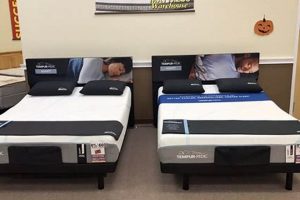
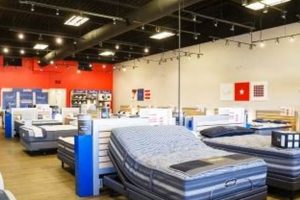
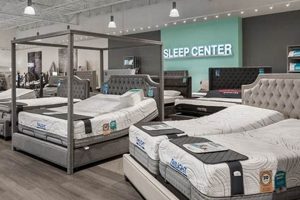
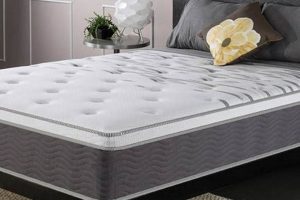
A retail outlet specializing in the sale of mattresses, often at significantly reduced prices, due to circumstances such as overstock, discontinued models, or minor cosmetic imperfections, can provide an economical option for consumers. These establishments typically acquire their inventory directly from manufacturers or major retailers seeking to clear warehouse space or offload product lines. Examples include businesses that purchase inventory from manufacturers who are phasing out a particular model or from retailers that have excess stock after a seasonal promotion.
The prevalence of these types of businesses benefits consumers seeking budget-friendly options without necessarily compromising on quality. Historically, these retailers filled a crucial role in the market by diverting usable merchandise from landfills and providing access to essential home goods for individuals and families with limited financial resources. Furthermore, they contribute to a more efficient supply chain by offering an outlet for goods that might otherwise be discarded.
The following discussion will delve into the common practices of such retail operations, the types of inventory they typically carry, and key considerations for consumers when evaluating purchase options. Topics such as warranty information, return policies, and quality assessments will be addressed in detail to provide a comprehensive understanding of this retail segment.
Engaging with a business specializing in mattress liquidation requires a strategic approach to ensure a satisfactory outcome. The following tips are designed to guide consumers through the process of purchasing from such establishments.
Tip 1: Assess Inventory Condition: Carefully examine each mattress for any visible defects, stains, or structural damage. Minor cosmetic imperfections are common, but any significant flaws should be cause for concern.
Tip 2: Inquire About the Reason for Liquidation: Understanding why the mattresses are being sold at a discount can provide valuable insight into their quality and potential longevity. Overstock is generally less concerning than discontinued models due to defects.
Tip 3: Scrutinize Warranty Information: Determine if the mattresses are covered by a manufacturer’s warranty or if the establishment offers its own limited warranty. Understand the terms and conditions before making a purchase.
Tip 4: Evaluate Return Policies: Clarify the return policy, including any restocking fees or conditions that may apply. A flexible return policy can offer peace of mind in case the mattress does not meet expectations.
Tip 5: Compare Prices: Research the original retail price of the mattresses to ensure that the liquidation price represents a genuine discount. Online price comparison tools can be beneficial.
Tip 6: Test Before Buying: Spend time testing different mattresses to assess comfort and support. If possible, simulate a typical sleeping position for several minutes on each mattress being considered.
Tip 7: Negotiate the Price: Liquidation stores often have some flexibility in pricing. Consider negotiating the price, especially if there are minor imperfections or if purchasing multiple items.
By adhering to these guidelines, consumers can increase the likelihood of securing a quality mattress at a reduced price. Careful evaluation and due diligence are essential to navigating the unique landscape of mattress liquidation.
The subsequent section will address specific mattress types commonly found in these retail environments, and explore methods for verifying product quality and authenticity.
1. Overstock Management

Overstock management plays a central role in the existence and operation of mattress liquidation outlets. The efficient handling of excess inventory by manufacturers and major retailers directly impacts the supply and pricing models of these liquidation businesses. Understanding the mechanisms behind overstock management is, therefore, crucial to grasping the dynamics of the mattress liquidation market.
- Causes of Mattress Overstock
Mattress overstock stems from several factors, including inaccurate demand forecasting, seasonal fluctuations in sales, and the introduction of new models rendering existing inventory obsolete. For example, a manufacturer might produce an excess of a particular mattress type in anticipation of a summer sales surge, only to find that consumer preferences have shifted, leading to unsold inventory. This surplus is then often channeled to liquidation retailers.
- Channels for Overstock Disposal
Manufacturers and retailers employ various strategies to dispose of overstock. While some may opt for deep discounts through their existing retail channels, others prefer to sell in bulk to liquidation companies to avoid brand dilution or competition with full-priced products. This process often involves agreements that restrict the liquidation company from advertising the mattresses using the original brand names, ensuring a clear separation from regular retail operations.
- Impact on Pricing and Inventory
The availability of overstock directly influences the pricing and inventory composition of mattress liquidation stores. These outlets can offer mattresses at significantly reduced prices due to the lower acquisition costs associated with overstock. However, inventory is often unpredictable and varies based on the fluctuating overstock levels from manufacturers and retailers. Consumers may find a wide range of mattress types and brands one week and a completely different selection the next.
- Quality Considerations in Overstock Mattresses
While overstock mattresses are typically new and unused, their storage conditions and age can impact their quality. Extended periods in warehouses may lead to compression, dust accumulation, or degradation of materials. Consumers should carefully inspect overstock mattresses for any signs of damage or wear, even if they are advertised as new. Warranties may also be affected by the fact that the mattresses are being sold through liquidation channels.
The interplay between these facets underscores the reliance of mattress liquidation stores on effective overstock management practices. The availability, pricing, and quality of mattresses in these outlets are directly tied to how manufacturers and retailers handle their surplus inventory. Consumers seeking discounted mattresses should, therefore, consider the origins and potential limitations of overstock products to make informed purchasing decisions.
2. Discounted Pricing

Discounted pricing is a foundational element of the mattress liquidation store model. The core function of these retail outlets
is to offer mattresses at prices significantly below those found in traditional retail environments. This pricing strategy is not merely a marketing tactic but the very basis upon which the business operates, attracting a specific segment of consumers seeking value-oriented purchasing options. The discounted prices are typically a direct result of the circumstances surrounding the mattresses, such as overstock situations, discontinued models, minor cosmetic imperfections, or closeout sales. For example, a mattress originally priced at $1,000 in a conventional retail setting may be available for $500 or less at a liquidation store due to a manufacturer clearing out last year’s models.
The importance of discounted pricing extends beyond simply attracting customers; it also influences the operational strategies of these stores. Lower profit margins necessitate higher sales volumes to maintain profitability. Consequently, mattress liquidation stores often rely on rapid turnover of inventory and streamlined operations to minimize overhead costs. The pricing structure also shapes consumer expectations and shopping behaviors. Customers visiting these stores typically prioritize price sensitivity, often willing to accept minor imperfections or limited warranty options in exchange for substantial savings. Real-world instances include families furnishing a new home on a budget or students seeking affordable sleeping solutions for dormitories.
In summary, discounted pricing is not just a feature of mattress liquidation stores; it is their defining characteristic. It dictates their business model, influences consumer behavior, and shapes the competitive landscape. Understanding this relationship is crucial for both consumers seeking cost-effective mattress solutions and businesses aiming to effectively participate in the mattress retail market. The model also presents challenges, such as managing customer expectations regarding quality and warranty, but the potential for significant savings remains a key driver for the continued prevalence of these liquidation outlets.
3. Inventory Variability
Inventory variability is an inherent characteristic of businesses specializing in mattress liquidation. This stems from the opportunistic nature of acquiring merchandise and significantly impacts the consumer experience.
- Unpredictable Stock Levels
The quantity of mattresses available at a liquidation store can fluctuate significantly. This is due to the reliance on overstock from manufacturers and retailers. A large shipment one week may be followed by a period of limited selection as the store awaits new acquisitions. This dynamic contrasts with traditional retail, where consistent stock levels are maintained.
- Inconsistent Product Mix
The range of mattress types, brands, and sizes available at any given time is subject to change. A liquidation store may have a surplus of innerspring mattresses one month and then primarily feature memory foam mattresses the next. Brand availability is similarly variable, often dependent on specific closeout deals. This variability demands adaptability from consumers.
- Age and Condition Disparities
The mattresses offered may vary in age, even if all are technically new. Some may have been recently manufactured, while others could have been in storage for an extended period. Minor cosmetic imperfections are also more prevalent in liquidation inventory. Consumers must carefully inspect items to assess their condition, as standardization is not guaranteed.
- Limited Restocking
Unlike typical retail establishments, mattress liquidation stores rarely restock specific models. Once an item is sold, it is unlikely to be replaced. This scarcity creates a sense of urgency for consumers interested in a particular mattress. It also necessitates making purchasing decisions based on immediate availability rather than anticipated future stock.
The variable nature of inventory at these stores requires consumers to approach the shopping experience with flexibility and a willingness to compromise. The potential for substantial savings must be balanced against the lack of predictability in selection and the possibility of minor imperfections. The business model inherently prioritizes cost-effectiveness over consistent product availability.
4. Limited Warranties

The association between limited warranties and establishments specializing in mattress liquidation is significant, stemming from the nature of their inventory and business model. Liquidated mattresses often originate from overstock, discontinued lines, or items with minor cosmetic defects. These factors directly impact the warranty terms offered to consumers. Manufacturers may be unwilling to provide full warranty coverage on products sold through liquidation channels, leading to either a reduced warranty period or a warranty that covers only specific types of defects. For example, a mattress sold at a standard retailer might carry a 10-year warranty covering structural defects, whereas the same mattress sold through liquidation might only have a 1-year warranty limited to manufacturing flaws.
Limited warranties are a crucial component of the mattress liquidation business model as they allow for reduced prices, offsetting the risk assumed by the consumer. The lack of comprehensive warranty coverage reflects the inherent uncertainty associated with liquidated goods. However, understanding the specifics of the warranty, even if limited, is paramount. A limited warranty might only cover defects in workmanship but exclude issues arising from normal wear and tear, stains, or improper use. In practical terms, this means that a consumer experiencing sagging or indentations after a few months might not be covered under the limited warranty, despite these being common mattress concerns. Conversely, if a mattress seam unravels shortly after purchase, the consumer might be eligible for repair or replacement under the warranty’s terms.
In conclusion, the prevalence of limited warranties in mattress liquidation scenarios represents a calculated trade-off between price and risk. Consumers benefit from lower costs, but accept the potential for reduced protection against defects or premature wear. Thoroughly scrutinizing the warranty terms and understanding their limitations is critical for mitigating potential financial losses and ensuring a satisfactory purchase. The challenge for consumers lies in weighing the potential savings against the increased risk of encountering issues not covered by the limited warranty, ultimately requiring careful consideration and informed decision-making.
5. Immediate Availability

Immediate availability constitutes a key differentiator for businesses operating within the mattress liquidation sector, distinguishing them from traditional retail models that often involve order lead times or custom configurations. The ability to acquire and take possession of a mattress without delay is a significant draw for specific consumer segments and directly influences the operational strategies of these establishments.
- Elimination of Waiting Periodsg>
Unlike conventional mattress retailers that may require customers to wait for several days or weeks for delivery, a mattress liquidation store typically offers immediate access to its inventory. This eliminates the waiting period and appeals to consumers who require a mattress urgently, such as those moving into a new residence or replacing a damaged mattress. This immediate access is a direct consequence of the store’s business model, which relies on readily available, pre-existing stock rather than made-to-order or backordered items.
- Spontaneous Purchasing Decisions
The immediate availability factor fosters spontaneous purchasing decisions. Consumers who were not initially planning to buy a mattress may be swayed by an attractive price and the prospect of taking the mattress home immediately. This impulse buying is more prevalent in liquidation settings due to the combination of discounted prices and immediate gratification. A consumer browsing a liquidation store might unexpectedly find a suitable mattress at a compelling price and decide to purchase it on the spot, driven by the limited-time availability and the avoidance of future shopping efforts.
- Reduced Logistics and Delivery Costs
The immediate availability model translates to reduced logistical burdens for both the retailer and the consumer. Customers typically transport the mattress themselves, eliminating the need for delivery services and associated costs. This self-service approach contributes to the overall cost savings associated with mattress liquidation stores. Retailers avoid the complexities of scheduling deliveries and managing a delivery fleet, while consumers save on delivery fees and gain immediate control over the timing of mattress acquisition.
- Inventory Management Implications
The emphasis on immediate availability necessitates efficient inventory management practices. Liquidation stores must have adequate storage space to accommodate incoming shipments and ensure that mattresses are readily accessible to customers. The rapid turnover of inventory, driven by discounted prices and immediate purchase incentives, requires a streamlined system for tracking stock levels and managing floor space. The focus shifts from managing customer orders to managing the physical flow of mattresses through the store.
The discussed facets highlight the profound impact of immediate availability on the mattress liquidation store business model and the consumer experience. The elimination of waiting periods, the encouragement of spontaneous purchasing, the reduction of logistical complexities, and the necessary focus on efficient inventory management collectively define the distinctive value proposition offered by these retail outlets. The convenience of taking immediate possession of a mattress, coupled with discounted pricing, constitutes a compelling incentive for a significant segment of mattress buyers.
6. Consumer Savings

Consumer savings represent a primary driver behind the appeal and viability of mattress liquidation stores. The ability to acquire mattresses at significantly reduced prices, compared to traditional retail channels, forms the core value proposition for a substantial segment of the market. These savings are not merely superficial discounts; they reflect fundamental differences in inventory sourcing, operational costs, and warranty provisions.
- Reduced Acquisition Costs
Mattress liquidation stores obtain their inventory through channels that offer substantial cost reductions, such as overstock purchases, closeout sales, and acquisitions of discontinued models. This lower cost of goods sold directly translates into lower prices for consumers. For example, a mattress originally retailed at $1,200 might be available for $600 at a liquidation store due to its status as overstock, allowing consumers to save 50% compared to purchasing it through conventional retail.
- Lower Operational Overhead
Liquidation stores often operate with lower overhead expenses compared to traditional retailers. They may have smaller storefronts, reduced staffing levels, and limited marketing budgets. These cost savings are, in turn, reflected in lower mattress prices. A traditional retailer might incur significant expenses on elaborate displays and extensive advertising campaigns, costs that are passed on to consumers. A liquidation store, by contrast, focuses on high-volume sales with minimal overhead, resulting in greater consumer savings.
- Acceptance of Limited Warranties
The reduced prices offered by mattress liquidation stores often come with the trade-off of limited warranty coverage. Consumers accept these limitations in exchange for significant cost savings. For instance, a traditional retailer might offer a 10-year warranty on a mattress, while a liquidation store might offer a 1-year warranty on the same model at a substantially reduced price. This trade-off allows consumers to prioritize immediate cost savings over long-term warranty protection, a decision that can be advantageous for those with limited budgets or those who anticipate replacing the mattress within a shorter timeframe.
- Negotiation Opportunities
Consumers may have greater opportunities to negotiate prices at mattress liquidation stores compared to traditional retail environments. The opportunistic nature of the business, coupled with the desire to rapidly move inventory, can create a climate where negotiation is encouraged. A consumer who identifies a minor cosmetic imperfection on a mattress might be able to negotiate an additional discount, further enhancing the overall savings. This negotiation flexibility is less common in traditional retail settings, where prices are often fixed.
These facets collectively underscore the central role of consumer savings in the mattress liquidation store model. The lower prices, driven by reduced acquisition costs, lower operational overhead, acceptance of limited warranties, and opportunities for negotiation, create a compelling value proposition for consumers seeking affordable mattress solutions. This economic advantage is a key factor in the continued prevalence and appeal of these retail outlets, particularly in price-sensitive markets.
Frequently Asked Questions Regarding Mattress Liquidation Stores
This section addresses common inquiries and concerns surrounding establishments specializing in the discounted sale of mattresses, often referred to as “mattress liquidation stores.” The information provided aims to offer clarity and assist consumers in making informed decisions.
Question 1: Are mattresses sold at liquidation stores used?
Mattresses sold at liquidation stores are typically new, though they may be overstock, discontinued models, or possess minor cosmetic imperfections. The specific condition should be verified through careful inspection prior to purchase. Used mattresses are generally not sold as part of liquidation events.
Question 2: What are the common reasons for mattresses being sold at reduced prices?
Primary reasons include manufacturer overproduction, seasonal clearance, discontinued product lines, minor cosmetic flaws (such as slight fabric discoloration), and retailer store closures leading to asset disposal.
Question 3: Are warranties offered on mattresses purchased from liquidation stores?
Warranty coverage varies. Some mattresses may retain the original manufacturer’s warranty, while others may be
sold with a limited warranty provided by the liquidation store itself. The warranty terms should be thoroughly reviewed prior to completing a purchase.
Question 4: How can the quality of a mattress from a liquidation store be assessed?
A thorough inspection is paramount. Examine the mattress for any visible defects, stains, or structural damage. Inquire about the mattress’s history and the reason for its liquidation. Test the mattress for comfort and support by lying on it in various sleeping positions.
Question 5: What return policies are typically in place at mattress liquidation stores?
Return policies can be restrictive or non-existent. It is essential to clarify the store’s return policy before purchasing, understanding any associated restocking fees or limitations. Many liquidation stores operate under a “final sale” policy due to the discounted pricing.
Question 6: Is the selection at mattress liquidation stores consistent?
Inventory is generally variable and unpredictable. Liquidation stores rely on opportunistic purchases of surplus inventory. Selection can change frequently, and the availability of specific models or brands cannot be guaranteed.
Key takeaways emphasize the importance of diligent inspection, warranty review, and policy clarification when considering a purchase from a mattress liquidation store. The potential for significant cost savings must be balanced against the possibility of limited warranties and restrictive return policies.
The subsequent section will explore the potential risks and benefits associated with purchasing mattresses from these types of establishments in more detail.
Considerations Regarding Mattress Liquidation Outlets
This exploration of the mattress liquidation store retail model has illuminated the core aspects of its operation, from inventory sourcing and pricing strategies to warranty limitations and inventory variability. The attractiveness of these establishments hinges on the potential for significant cost savings, balanced against the need for diligent inspection and an acceptance of potentially limited after-sales support.
Ultimately, engagement with a mattress liquidation store necessitates informed decision-making. Prospective purchasers must weigh the financial benefits against the inherent risks, understanding that reduced prices often correlate with reduced assurances. Whether the pursuit of savings justifies the acceptance of those risks remains a matter of individual evaluation and circumstance.