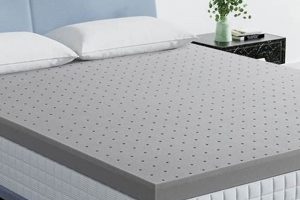
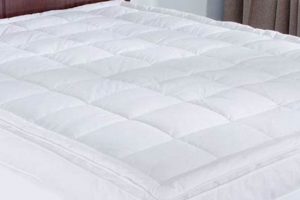
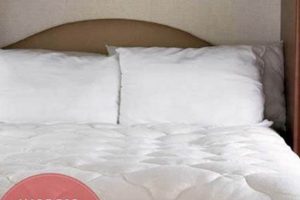
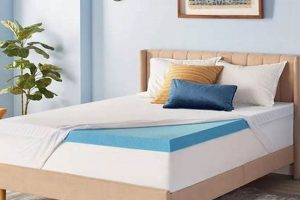
A bedding accessory designed to enhance sleep surfaces, this product incorporates natural materials to provide additional comfort and support. Typically placed atop a conventional mattress, it aims to modify the firmness or improve the overall feel of the sleep environment. The fill material, a blend of plumage and soft undercoating, contributes to its perceived luxury and plushness.
Such products offer several potential benefits, including improved pressure relief, temperature regulation, and increased mattress longevity. The incorporation of natural fills can contribute to breathability, reducing heat retention during sleep. Furthermore, the added layer may cushion the sleeper, alleviating stress on pressure points and promoting a more restful night. These items have evolved from simple mattress pads to more sophisticated designs that prioritize comfort and support.
The subsequent sections will delve into specific aspects of mattress toppers using natural fills, examining their construction, care requirements, and suitability for various sleep preferences. Attention will be given to the materials used, the impact on sleep quality, and factors to consider when making a purchasing decision.
Enhancing Sleep Quality
Optimizing the performance and lifespan of a feather and down mattress topper requires adherence to specific care and usage guidelines. The following tips aim to maximize the benefits derived from such bedding investments.
Tip 1: Utilize a Protective Cover: Employ a mattress protector designed for down-filled products. This barrier safeguards against stains, spills, and allergens, extending the topper’s cleanliness and overall lifespan.
Tip 2: Regular Fluffing: Distribute the fill evenly by fluffing the topper periodically. This prevents clumping and maintains loft, ensuring consistent support and comfort across the entire surface.
Tip 3: Air Out Regularly: Expose the topper to fresh air to dissipate moisture and odors. Avoid direct sunlight, which can degrade the down and feather fill. A shaded, well-ventilated area is preferable.
Tip 4: Professional Cleaning Recommended: Adhere to the manufacturers cleaning instructions. Due to the delicate nature of the fill, professional cleaning is often the most effective method for maintaining hygiene and preventing damage. Avoid washing machine unless instructed to do so.
Tip 5: Rotate the Topper: Rotate the topper periodically, end-to-end, to distribute wear and tear evenly. This minimizes compression and prolongs the lifespan of the fill material.
Tip 6: Consider Underlying Mattress Condition: Recognize that a topper enhances, but does not replace, the support of the underlying mattress. Evaluate mattress condition to ensure adequate support before purchasing a topper.
Tip 7: Monitor for Allergies: Though often treated, feather and down can be potential allergens. Employ hypoallergenic covers and monitor for any adverse reactions, consulting with a healthcare professional if necessary.
By diligently implementing these strategies, users can optimize the benefits and extend the serviceable life of their feather and down mattress topper, fostering a more comfortable and restorative sleep environment.
The concluding sections will address common misconceptions and provide a comprehensive overview of the long-term value proposition associated with these bedding accessories.
1. Material Composition

The material composition of a feather and down mattress topper significantly influences its overall performance, comfort, and durability. Understanding these components is crucial for assessing the topper’s suitability for individual sleep preferences and needs.
- Down Fill Power
Down fill power measures the loft and insulation capacity of the down clusters. Higher fill power indicates a greater volume of air trapped per unit of weight, resulting in a lighter, more insulating topper. A higher fill power in a down mattress topper translates to enhanced plushness and warmth. For example, a topper with 600 fill power will generally feel softer and more resilient than one with 400 fill power.
- Feather-to-Down Ratio
The ratio of feathers to down within the fill material impacts the topper’s softness and support. A higher down percentage typically results in a softer, more conforming feel, while a higher feather percentage can provide firmer support. The trade-off involves the potential for feather quills to poke through the fabric. A topper described as 75% down and 25% feathers will offer a softer surface compared to a 50/50 blend.
- Shell Fabric
The fabric encasing the feather and down fill affects breathability, durability, and allergen resistance. Tightly woven fabrics, often made of cotton or synthetic blends, prevent fill leakage and minimize allergen penetration. A high thread count cotton shell contributes to a smoother, more luxurious feel and enhanced durability. For instance, a 300 thread count cotton shell provides a balance of softness and resilience.
- Fill Distribution and Baffle Construction
The method of fill distribution and baffle construction influences the topper’s evenness and overall comfort. Baffle box construction, where the fill is contained within individual compartments, prevents shifting and clumping, ensuring consistent support across the entire surface. Channels or sewn-through designs can result in uneven fill distribution and potential cold spots. Toppers with baffle box construction offer more uniform support and prevent fill migration.
These material characteristics collectively determine the feel, performance, and longevity of a feather and down mattress topper. Evaluating each component allows for a more informed purchasing decision and ensures the topper meets individual sleep needs and preferences.
2. Loft and Support

The loft and support characteristics of a feather and down mattress topper are central to its functional value. Loft, the height or thickness of the topper, directly influences the level of cushioning and pressure relief it provides. Support, related to the fill’s density and construction, dictates how well the topper maintains spinal alignment and prevents sagging. A topper with insufficient loft may fail to provide adequate pressure relief for side sleepers, leading to discomfort in the hips and shoulders. Conversely, a topper lacking adequate support may compress excessively under body weight, negating its intended benefits and potentially contributing to back pain.
The interaction between loft and support is critical. For instance, a topper with high loft but minimal support might feel initially plush but quickly flatten under weigh
t, offering little long-term benefit. In contrast, a topper with lower loft but denser fill could provide firmer support but lack the desired plushness. The ideal balance depends on individual preferences and body weight. Heavier individuals may require toppers with higher density fill for adequate support, while lighter individuals might prioritize loft for enhanced cushioning. The construction method, such as baffle box design, also plays a significant role in maintaining loft and preventing fill migration, thereby ensuring consistent support across the entire sleep surface.
Ultimately, understanding the interplay between loft and support is essential for selecting a feather and down mattress topper that effectively enhances sleep quality. The key is to consider the individual’s body weight, sleeping position, and desired level of firmness. Addressing the interplay between loft and support in mattress topper design continues to be a central challenge for providing optimal sleep solutions, requiring innovative approaches to material science and construction techniques.
3. Temperature Regulation

Temperature regulation is a critical factor in sleep comfort, and the materials comprising a mattress topper can significantly impact its effectiveness. Natural fills, such as feathers and down, possess inherent properties that influence heat retention and breathability. The structure of down clusters creates air pockets, which act as insulators, trapping warmth during colder periods. Simultaneously, these air pockets allow for some level of air circulation, facilitating the dissipation of heat and moisture when temperatures rise. The effectiveness of this regulation depends on the quality and quantity of the fill, as well as the breathability of the outer shell fabric. An excessively dense or non-breathable topper can lead to heat buildup, disrupting sleep and causing discomfort. Conversely, a topper with insufficient fill may not provide adequate warmth in colder environments. Therefore, material selection and design are paramount in achieving optimal temperature regulation within a mattress topper.
The construction of the topper further modulates its thermal performance. Baffle box designs, which create individual compartments for the fill, promote even distribution and prevent clumping. This uniform distribution allows for consistent airflow throughout the topper, enhancing breathability. In contrast, sewn-through designs can compress the fill, reducing air circulation and potentially leading to localized heat buildup. Moreover, the shell fabric material plays a vital role. Tightly woven synthetic fabrics can impede airflow, while natural fibers like cotton are more breathable. To illustrate, a topper with a baffle box construction, filled with high-quality down and encased in a breathable cotton shell, is more likely to maintain a comfortable sleep temperature than a topper with a sewn-through design, synthetic fill, and a non-breathable shell.
In conclusion, the temperature regulation capabilities of a feather and down mattress topper are determined by a complex interplay of material properties and construction techniques. While natural fills offer inherent advantages in terms of insulation and breathability, careful attention must be paid to factors such as fill power, shell fabric, and construction design to optimize thermal performance. Understanding these factors is crucial for selecting a topper that promotes a comfortable and restful sleep environment, mitigating the impact of temperature fluctuations throughout the night.
4. Maintenance Requirements

The longevity and performance of a feather and down mattress topper are directly correlated with adherence to specific maintenance protocols. Neglecting these requirements can lead to a degradation of the fill material, diminished support, and a reduction in the product’s lifespan. These maintenance needs are not merely suggestions; they represent critical procedures designed to preserve the investment and ensure continued comfort. A failure to follow the manufacturer’s care instructions, for example, may void any warranty coverage, placing the burden of repair or replacement solely on the consumer.
Effective maintenance encompasses several key areas: regular fluffing to redistribute the fill and prevent clumping, airing out the topper to eliminate moisture and odors, and spot cleaning to address minor stains. For more significant soiling, professional cleaning services specializing in down and feather bedding are recommended, as conventional washing methods can damage the delicate fill. Protective measures, such as using a mattress protector, are equally important in preventing stains, spills, and allergen accumulation. Consider a scenario where a spill occurs on a topper lacking a protector; the liquid can penetrate the fill, leading to mildew growth and irreversible damage. In contrast, a protected topper allows for immediate cleanup, minimizing the risk of long-term degradation.
Proper maintenance is not simply about aesthetics; it is about preserving the structural integrity and hygienic properties of the mattress topper. Regular care ensures continued support and comfort, contributing to improved sleep quality and overall well-being. By understanding and adhering to the recommended maintenance requirements, users can maximize the lifespan and benefits of their feather and down mattress topper. The challenges often lie in the time commitment required for these maintenance tasks. Still, this investment pales compared to the cost of premature replacement or the discomfort associated with a poorly maintained bedding accessory.
5. Longevity Expectation
The expected lifespan of a feather and down mattress topper is a crucial consideration for consumers, representing a significant factor in the perceived value proposition of this bedding accessory. Longevity is inherently linked to material quality, construction methods, and adherence to recommended maintenance practices. Inferior materials or inadequate construction can drastically reduce the topper’s usable lifespan, leading to premature flattening, shifting of fill, and a loss of support. For instance, a topper constructed with low-quality down clusters or a thin, easily-torn shell fabric may only last a year or two, whereas a well-constructed topper using high-fill-power down and durable fabric could provide comfortable support for five years or more. Consequently, understanding the factors that influence longevity is essential for making an informed purchasing decision.
The impact of maintenance practices on the longevity of a feather and down mattress topper cannot be overstated. Regular fluffing, airing, and protective measures, such as the use of a mattress protector, can significantly extend the topper’s lifespan. Conversely, neglecting these maintenance procedures can accelerate the degradation of the fill material, leading to clumping, compression, and the proliferation of allergens. In one practical example, a family diligently following the manufacturer’s recommended care instructions for their topper experienced minimal fill compression over a four-year period, while a separate individual who disregarded these instructions observed a noticeable reduction in
loft and support after just one year. The discrepancy highlights the tangible effects of proper maintenance on product longevity.
In summary, the longevity expectation of a feather and down mattress topper is directly influenced by material quality, construction, and maintenance. Consumers should prioritize products constructed with durable materials and reinforced seams and be prepared to adhere to a regimen of regular maintenance to maximize the topper’s lifespan. While initial cost may be a primary consideration, factoring in the long-term value associated with increased durability and prolonged comfort is crucial for making an economically sound decision. Failure to understand this connection can result in diminished satisfaction and a premature need for replacement, ultimately undermining the intended benefits of this bedding investment.
Frequently Asked Questions
The following addresses common inquiries regarding feather and down mattress toppers, aiming to provide clarity and dispel misconceptions.
Question 1: What is the typical lifespan of a feather and down mattress topper?
The lifespan varies based on material quality, construction, and care practices. Expect 3-5 years with proper maintenance, but inferior products may degrade sooner.
Question 2: Can a feather and down mattress topper alleviate back pain?
While it can provide added cushioning and pressure relief, it is not a substitute for a supportive mattress. Its effectiveness depends on individual needs and pre-existing conditions. Consider consulting a healthcare professional for back pain issues.
Question 3: How often should a feather and down mattress topper be cleaned?
Spot clean as needed. Professional cleaning is recommended every 1-2 years, or as specified by the manufacturer’s instructions. Avoid harsh chemicals and excessive washing.
Question 4: Are feather and down mattress toppers suitable for individuals with allergies?
Feather and down can be allergenic. Look for hypoallergenic products with tightly woven covers to minimize allergen exposure. Consider using a mattress protector specifically designed for allergy sufferers. Individuals with known sensitivities to feathers or down should exercise caution.
Question 5: How does fill power impact the performance of a feather and down mattress topper?
Higher fill power indicates greater loft and insulation. It translates to enhanced plushness and warmth. A higher fill power generally denotes a higher quality product.
Question 6: What is the difference between a feather bed and a feather and down mattress topper?
A feather bed is typically thicker and designed to be the primary sleeping surface. A mattress topper is thinner and intended to enhance the comfort of an existing mattress.
Proper understanding and maintenance practices will maximize topper effectiveness. It is crucial to take note of information.
The ensuing section transitions to buying guide.
Conclusion
This exploration of the characteristics and considerations surrounding the product confirms its potential to enhance sleep surfaces, provided certain factors are addressed. Material composition, loft and support, temperature regulation, maintenance requirements, and longevity expectations collectively determine the overall value and suitability of the product. A thorough understanding of these elements empowers consumers to make informed decisions that align with their individual needs and preferences.
The sustained effectiveness of a feather and down mattress topper hinges on diligent adherence to recommended maintenance practices and a realistic assessment of its capabilities. While it can augment comfort and extend the lifespan of an existing mattress, it is not a substitute for a structurally sound foundation. The long-term benefits are contingent upon a proactive approach to care and a recognition of its inherent limitations. Further research and innovation within the bedding industry should continue to focus on enhancing durability, breathability, and allergen resistance to optimize the sleep experience.