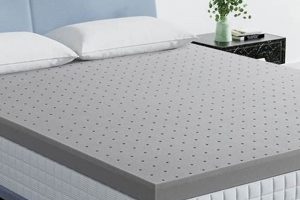
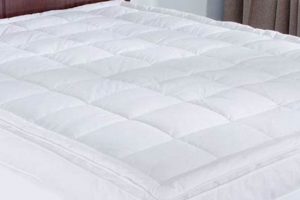
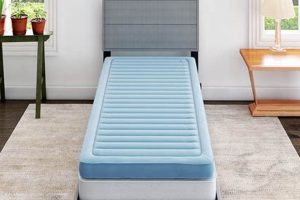
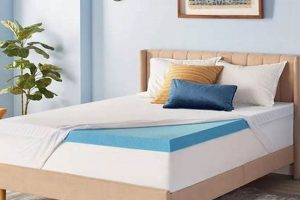
A bedding accessory designed to enhance sleep surfaces, it integrates the element copper into its construction. These products are typically placed atop a mattress to provide an additional layer of comfort and support. They vary in thickness, material composition, and copper infusion methods, ranging from copper-infused foam to copper threads woven into the fabric.
The integration of this element is primarily intended to offer several advantages. Copper is known for its antimicrobial properties, potentially reducing bacteria and allergens within the sleep environment. It may also contribute to temperature regulation, promoting a cooler and more comfortable sleep. Moreover, some proponents suggest that copper can alleviate muscle soreness and improve circulation. Historically, copper has been valued for its therapeutic properties, and its application in bedding represents a modern adaptation of these beliefs.
The selection of such an item necessitates careful consideration of factors such as desired firmness, cooling capabilities, and potential allergy sensitivities. Further discussion will explore the various types available, assess the scientific evidence supporting their purported benefits, and provide guidance on proper maintenance and care.
Copper Mattress Topper
The following tips provide guidance on selecting and maintaining a bedding accessory infused with copper, designed to enhance sleep surface qualities.
Tip 1: Evaluate Density and Thickness. Assess the density and thickness of the core material. A higher density foam generally provides greater support and durability. Thickness should align with individual comfort preferences, considering its impact on mattress firmness.
Tip 2: Examine Copper Infusion Method. Different manufacturers employ varying techniques for incorporating copper. Investigate whether the copper is infused directly into the foam or woven into the fabric. Direct infusion may offer more consistent and long-lasting antimicrobial properties.
Tip 3: Consider Temperature Regulation Properties. While copper is believed to aid in temperature regulation, evaluate the breathability of the topper’s materials. Open-cell foam structures promote better airflow and prevent heat retention.
Tip 4: Assess Antimicrobial Claims. While copper possesses inherent antimicrobial characteristics, verify the manufacturer’s claims regarding efficacy. Look for products with independent certifications or test results supporting these properties.
Tip 5: Check for Allergen Resistance. Determine if the product is hypoallergenic and resistant to common allergens such as dust mites. This is especially important for individuals with sensitivities or respiratory conditions.
Tip 6: Review Cleaning Instructions. Adhere strictly to the manufacturer’s recommended cleaning procedures. Avoid harsh chemicals or excessive moisture, as these can degrade the material and diminish the copper’s effectiveness.
Tip 7: Utilize a Protective Cover. Employ a mattress protector over the copper-infused addition. This prevents staining and general wear, extending its lifespan and maintaining its hygiene.
Proper selection and maintenance maximize the potential benefits of this product, contributing to a cleaner, more comfortable, and longer-lasting sleep environment.
The subsequent sections will address common misconceptions and explore alternative bedding solutions with similar properties.
1. Antimicrobial Properties

The incorporation of copper into bedding, specifically within a sleep surface enhancer, leverages the metal’s inherent antimicrobial attributes to potentially mitigate microbial presence and promote a cleaner sleep environment.
- Mechanism of Action
Copper ions disrupt microbial cell function through various pathways. These ions interfere with cellular respiration, damage DNA, and compromise cell membrane integrity, ultimately leading to microbial inactivation. This multifaceted mechanism offers a broad-spectrum antimicrobial effect.
- Reduction of Pathogens
Laboratory studies demonstrate copper’s efficacy against a range of pathogens, including bacteria, fungi, and viruses. Its incorporation into a sleep surface aims to reduce the concentration of these microorganisms, thus potentially lowering the risk of exposure and associated health concerns. Real-world examples include its use in hospital settings to reduce infection rates on surfaces.
- Odor Control
Many unpleasant odors associated with bedding are byproducts of microbial activity. By inhibiting microbial growth, copper may contribute to odor control, maintaining a fresher sleep environment. This contrasts with purely masking odors, as copper targets the root cause of odor generation.
- Longevity and Efficacy
The long-term efficacy of antimicrobial properties in a copper-infused product depends on the method of copper integration (e.g., infusion vs. coating) and the concentration of copper present. Durable integration methods ensure sustained release of copper ions over time, maintaining antimicrobial activity throughout the product’s lifespan. However, gradual wear and tear can reduce its efficacy.
The potential for diminished microbial presence within the sleep environment provided by copper infused foam, offers benefits beyond simple comfort. While not a substitute for proper hygiene practices, its antimicrobial functions can complement a comprehensive strategy for healthier rest.
2. Temperature Regulation

Temperature regulation is a critical factor influencing sleep quality. Maintaining a consistent and comfortable sleep environment, devoid of excessive heat or cold, is essential for optimal rest. The integration of copper into bedding accessories, such as a mattress topper, is often promoted as a means of enhancing temperature regulation during sleep.
- Thermal Conductivity of Copper
Copper possesses a high thermal conductivity relative to many other materials commonly used in bedding. This property enables rapid heat transfer, allowing the topper to dissipate heat away from the body and create a cooler sleep surface. The extent of the material’s thermal conductivity is quantified by its thermal conductivity value, which can be compared to other materials. Examples include copper heat sinks used in electronics for effective heat dissipation.
- Breathability of Supporting Materials
The effectiveness of copper in temperature regulation is intrinsically linked to the breathability of the materials it is combined with. Open-cell foam structures, for instance, facilitate airflow and prevent the trapping of heat. Conversely, dense, non-breathable materials can impede heat
dissipation, negating the potential benefits of copper. Examples are the use of breathable cotton covers to maintain airflow. - Moisture Wicking Properties
Beyond heat dissipation, the ability to manage moisture contributes to temperature regulation. Copper can assist in wicking away moisture from the body, thus preventing the build-up of humidity that can lead to discomfort and temperature fluctuations. The effectiveness relies on synergistic interaction with moisture-wicking textiles, such as those used in athletic wear.
- Impact on Sleep Cycles
Maintaining a stable core body temperature is essential for facilitating the transition through different sleep stages. By promoting temperature regulation, a copper-infused product potentially contributes to a more consistent and uninterrupted sleep cycle. Studies show consistent temperature can lengthen deep sleep cycles.
In conclusion, the incorporation of copper into a mattress topper aims to leverage the material’s thermal conductivity and moisture-wicking properties to create a more temperature-regulated sleep environment. The actual benefits experienced, however, are contingent upon the quality of surrounding materials, proper ventilation, and individual physiological factors. Further research continues to explore and validate the optimal application of copper within sleep products.
3. Pressure Relief
The purported pressure relief properties of a copper mattress topper are intrinsically linked to its material composition and design. These toppers, typically constructed from memory foam or latex infused with copper particles, aim to redistribute body weight across a broader surface area, thereby reducing concentrated pressure points. This effect is particularly relevant for individuals experiencing discomfort in areas such as the shoulders, hips, and back. For instance, a side sleeper may find that a mattress topper conforming to the body’s contours alleviates pressure on the shoulder and hip joints, promoting improved spinal alignment and reducing the likelihood of pain. The practical significance lies in the potential for enhanced sleep quality and reduced musculoskeletal discomfort.
The infusion of copper into the foam matrix is not directly responsible for pressure relief but may contribute indirectly. While the primary function of the copper is often cited as antimicrobial or temperature-regulating, its presence does not substantially alter the fundamental properties of the foam itself. The pressure-relieving capacity is determined by the foam’s density, indentation load deflection (ILD), and responsiveness to body weight. A higher density foam, for example, generally offers greater support and durability, while a lower ILD indicates a softer surface that conforms more readily to the body. Therefore, the effectiveness of the topper in providing pressure relief is more dependent on the inherent qualities of the foam rather than the inclusion of copper.
In conclusion, while a copper mattress topper may contribute to improved comfort and potentially reduce pressure points, its effectiveness relies predominantly on the characteristics of the underlying foam. The copper primarily serves other functions, such as antimicrobial action or temperature regulation. Consumers seeking pressure relief should prioritize toppers made from high-quality, conforming materials with appropriate density and ILD ratings. The practical implication is that marketing claims emphasizing copper for pressure relief should be viewed with skepticism, and consumers should focus on the foam’s inherent properties instead.
4. Material Density

Material density, defined as mass per unit volume, significantly impacts the performance and longevity of a copper mattress topper. The density of the core material, typically foam (memory foam or latex), directly correlates with its support capability and resistance to compression over time. Higher density implies a greater mass of material within a given volume, resulting in enhanced structural integrity. In a copper mattress topper, increased material density translates to improved weight distribution, minimizing localized pressure points and contributing to a more even sleep surface. As an example, a memory foam topper with a density of 5 pounds per cubic foot will generally provide more substantial support and resist sagging compared to a topper with a density of 3 pounds per cubic foot. This is crucial, as consistent support ensures proper spinal alignment and reduces the risk of discomfort or pain during sleep. Therefore, material density is a key factor influencing the functional lifespan and ergonomic benefits of the mattress accessory.
The copper infusion process can, in some instances, subtly affect the overall material density, although the impact is generally minor. The introduction of copper particles into the foam matrix may slightly increase the mass per unit volume, particularly if the copper concentration is relatively high. However, the primary determinant of density remains the base material (foam or latex) itself. Furthermore, manufacturers often adjust the foam formulation during the production process to account for the addition of copper, ensuring that the final product maintains the desired density range. From a practical standpoint, this means that consumers should prioritize the density specification provided by the manufacturer when evaluating a copper mattress topper, rather than relying solely on the presence of copper as an indicator of quality or performance. The density rating provides a more accurate assessment of the topper’s support characteristics.
In summary, material density is a critical parameter to consider when assessing a copper mattress topper. It directly influences the topper’s ability to provide adequate support, resist compression, and maintain its shape over time. While copper infusion may subtly affect the overall density, the base material and its inherent density properties remain the primary determinants of performance. Consumers should prioritize density specifications and consider them alongside other factors, such as the type of foam, copper infusion method, and overall thickness, to make an informed purchasing decision. The key challenge lies in accurately assessing density claims, as testing standards and reporting practices may vary across manufacturers. Ultimately, understanding the relationship between material density and performance ensures a more satisfactory and durable sleep surface.
5. Infusion Method

The method by which copper is integrated into a mattress topper significantly impacts its performance, longevity, and purported benefits. Different techniques yield varying degrees of copper distribution and efficacy, influencing the topper’s antimicrobial, thermal, and overall comfort characteristics.
- Copper-Infused Foam
This method involves incorporating copper particles directly into the foam matrix during the manufacturing process. The particles are typically dispersed throughout the foam, aiming for even distribution. This approach potentially offers consistent antimicrobial properties across the entire topper surface. However, the concentration of copper and the unifo
rmity of its distribution can vary significantly depending on the manufacturer’s techniques and quality control. Examples include the use of copper-infused memory foam, which aims to combine the pressure-relieving properties of memory foam with the antimicrobial benefits of copper. - Copper Thread Weave
This technique involves weaving fine copper threads into the fabric cover of the topper. While this method may provide a more concentrated surface exposure to copper, the antimicrobial effects are primarily limited to the surface layer. The density of the copper threads and the type of fabric used will influence the overall effectiveness. Furthermore, the threads can potentially wear down or break over time, reducing their efficacy. Examples include woven copper fabrics used in bedding to create a barrier against dust mites and bacteria.
- Copper Coating or Spray
This approach involves applying a copper-based coating or spray to the surface of the topper. While this may be a cost-effective method, the copper layer is often thin and susceptible to wear and tear, leading to a rapid decline in its antimicrobial properties. Moreover, the coating may not be evenly distributed, resulting in inconsistent performance across the topper surface. This method is less prevalent due to concerns regarding durability and potential for uneven coverage. An example might be seen in industrial applications where a copper spray is used for antimicrobial purposes, but its longevity in bedding is questionable.
- Zoned Infusion
This involves strategically infusing copper into specific zones of the topper, targeting areas that are prone to bacterial growth or require enhanced temperature regulation. This method aims to optimize the use of copper by concentrating it where it is most needed. However, the effectiveness depends on accurate identification of these zones and precise application of the copper infusion. An example could be a topper with copper focused around the shoulder and hip areas to support pressure relief and temperature balance in these locations.
The selection of a “copper mattress topper” should consider the infusion method employed, as it directly impacts the distribution, longevity, and overall effectiveness of the copper’s purported benefits. Understanding these differences allows consumers to make more informed decisions based on their individual needs and preferences. Further research and transparent manufacturer specifications are essential for validating claims regarding copper infusion techniques and their impact on product performance.
6. Allergen Resistance
The concept of allergen resistance in bedding is of significant importance, particularly in light of the increasing prevalence of allergies and respiratory sensitivities. Within the context of a copper mattress topper, allergen resistance refers to the topper’s ability to minimize the presence and proliferation of common allergens, such as dust mites, mold, and bacteria. These allergens can trigger allergic reactions, including respiratory issues, skin irritation, and sleep disturbances. The effectiveness of a topper in resisting allergens directly impacts the sleep environment and overall health of the individual using it. For instance, dust mites, microscopic organisms that thrive in bedding, are a major source of allergens. A topper that inhibits dust mite proliferation can reduce the exposure to these allergens, thus mitigating the risk of allergic reactions.
The connection between copper mattress toppers and allergen resistance primarily stems from copper’s inherent antimicrobial properties. Copper ions are known to disrupt the cellular processes of various microorganisms, including bacteria and fungi, thereby inhibiting their growth and reproduction. While copper is not directly an “anti-allergen” (it doesn’t eliminate pre-existing allergens), it can contribute to a reduction in the overall allergen load by preventing the growth of allergen-producing organisms. For example, by inhibiting the growth of mold within the topper material, the topper can reduce the release of allergenic mold spores into the sleep environment. However, the extent of this effect depends on the concentration of copper, the method of infusion, and the overall design of the topper, including its breathability and moisture-wicking capabilities. Furthermore, the efficacy of copper in allergen resistance may be influenced by environmental factors, such as humidity and temperature, which can impact microbial growth rates.
In summary, while a copper mattress topper may offer some degree of allergen resistance due to copper’s antimicrobial properties, it is not a complete solution for allergy control. The effectiveness depends on several factors, including the concentration and distribution of copper, the topper’s design, and environmental conditions. Individuals with severe allergies should consider additional strategies, such as using allergen-proof encasements, regularly washing bedding in hot water, and maintaining a clean sleep environment. The practical significance of this understanding lies in avoiding overreliance on copper as a singular solution and adopting a comprehensive approach to allergy management.
7. Maintenance Requirements

Adhering to specific maintenance protocols is essential to preserve the functional attributes and prolong the lifespan of a copper mattress topper. Neglecting proper care can diminish its purported antimicrobial properties, compromise its structural integrity, and ultimately reduce its effectiveness in enhancing sleep quality.
- Regular Vacuuming
Periodic vacuuming using an upholstery attachment is crucial for removing surface debris, dust mites, and accumulated skin cells. These particles can impede airflow, potentially trapping heat and diminishing the topper’s ability to regulate temperature. A vacuum with a HEPA filter is recommended to capture fine allergens effectively. Failure to vacuum regularly can lead to a buildup of organic matter, creating an environment conducive to microbial growth and negating the intended benefits of the copper infusion.
- Spot Cleaning Procedures
Promptly addressing spills and stains is imperative to prevent permanent damage and maintain hygiene. Employ a mild detergent diluted in water, and gently blot the affected area with a clean cloth. Avoid aggressive scrubbing, which can compromise the fabric or foam structure. Allow the area to air dry thoroughly before re-covering the topper. Ignoring stains can lead to discoloration and the potential for mold or mildew growth, counteracting the antimicrobial properties of the copper.
- Protective Cover Utilization
Employing a mattress protector encasement is highly recommended. This provides a barrier against spills, stains, and the accumulation of dust mites and allergens. The protector should be breathable to avoid impeding airflow and negating the topper’s temperature regulation capabilities. Periodic washing of the protector, according to the manufacturer’s instructions, further enhances hygiene and prolongs the lifespan of both the protector and the topper. The encasement serves as a sacrificial layer, protecting the topper from direct exposure to contaminants.
- Avoiding Harsh Chemicals
Exposure to harsh cleaning agents, such as bleach or strong
solvents, can damage the foam structure and potentially degrade the copper infusion. These chemicals can also leave residue that may be irritating to the skin or respiratory system. Always opt for mild, pH-neutral detergents specifically designed for bedding materials. Prioritize gentle cleaning methods to preserve the integrity of the topper’s materials and ensure its continued effectiveness.
Diligent adherence to these maintenance guidelines is essential for maximizing the benefits derived from a copper mattress topper. Neglecting these protocols can not only shorten the topper’s lifespan but also compromise its intended functionalities, ultimately impacting sleep quality and hygiene. Proper care represents an investment in both the product and the individual’s well-being.
Frequently Asked Questions
The following questions address common inquiries and misconceptions surrounding bedding accessories incorporating copper. This information aims to provide clarity on the benefits, limitations, and practical considerations associated with these products.
Question 1: Does a copper mattress topper eliminate allergies?
No. While copper possesses antimicrobial properties that may inhibit the growth of allergen-producing microorganisms, it does not eliminate pre-existing allergens. It is an adjunct to, not a replacement for, comprehensive allergy management strategies.
Question 2: How long do the antimicrobial properties of a copper mattress topper last?
The longevity of antimicrobial effects varies depending on the copper infusion method and concentration. Copper-infused foam generally offers more sustained release compared to surface coatings, but gradual wear and tear will inevitably reduce efficacy over time.
Question 3: Does a copper mattress topper guarantee cooler sleep?
While copper exhibits high thermal conductivity, its ability to regulate temperature is contingent on the breathability of surrounding materials. Dense, non-breathable foams can impede heat dissipation, negating the potential cooling benefits.
Question 4: What is the ideal density for a copper mattress topper intended for back pain relief?
The optimal density depends on individual weight and preference, but generally, higher density foams (above 4 lbs per cubic foot for memory foam) provide greater support and resistance to compression, promoting spinal alignment and potentially alleviating back pain.
Question 5: Can a copper mattress topper be cleaned using conventional methods?
Harsh chemicals, such as bleach, should be avoided. Spot cleaning with a mild detergent diluted in water is recommended. Regular vacuuming and the use of a mattress protector are essential for maintaining hygiene and prolonging the topper’s lifespan.
Question 6: Are there any contraindications for using a copper mattress topper?
Individuals with known copper sensitivities or allergies should exercise caution. While rare, skin irritation may occur. Consultation with a healthcare professional is advised for individuals with pre-existing medical conditions.
In conclusion, a copper mattress topper offers potential benefits, but its effectiveness depends on factors such as material quality, construction, and individual circumstances. Responsible purchasing decisions require careful consideration of these variables.
The subsequent section will explore alternative bedding options that offer similar or complementary functionalities.
Copper Mattress Topper
This exploration has examined various facets of the bedding accessory infused with copper, a “copper mattress topper,” encompassing its compositional elements, purported benefits, maintenance requisites, and prevalent inquiries. Analysis reveals that while copper integration may offer advantages such as antimicrobial action and temperature regulation, the extent of these benefits is contingent upon factors including material quality, infusion methodologies, and adherence to prescribed maintenance. Critical examination underscores the importance of discerning between unsubstantiated marketing claims and verifiable performance characteristics.
Informed purchasing decisions necessitate a holistic evaluation, incorporating consideration of individual needs, rigorous assessment of product specifications, and a realistic understanding of the topper’s capabilities. Continued research and standardized testing protocols are essential to further elucidate the long-term efficacy and potential limitations of copper-infused sleep surfaces, ultimately fostering consumer confidence and promoting responsible innovation within the bedding industry.