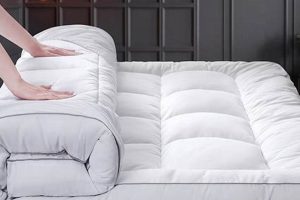
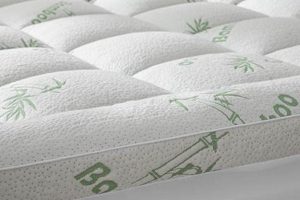
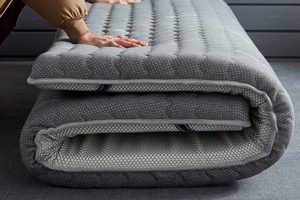
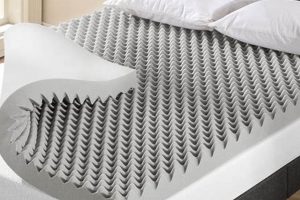
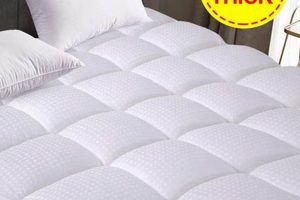
A bedding accessory designed to be placed atop a mattress to enhance comfort and support, measuring three inches in thickness, can significantly alter the sleep experience. These additions typically consist of materials like memory foam, latex, or down alternatives, offering varying degrees of firmness and pressure relief. For example, a three-inch memory foam product conforms to the body, distributing weight evenly and minimizing pressure points.
The importance of these thick mattress enhancements lies in their ability to improve sleep quality, extend the lifespan of a mattress, and address specific comfort needs. Benefits can include reduced back pain, improved spinal alignment, and temperature regulation. Historically, less substantial versions were used primarily for mattress protection, but advancements in materials and manufacturing techniques have led to the development of thicker, more sophisticated options focused on enhancing sleep comfort.
This article will delve into the various material compositions available, explore the associated advantages and disadvantages of each type, provide guidance on selecting the appropriate option based on individual preferences and sleep needs, and offer practical tips for maintenance and care to ensure longevity.
Tips for Optimizing a Three-Inch Mattress Enhancement
Maximizing the benefits of a three-inch mattress enhancement requires careful consideration of several factors, ranging from initial selection to ongoing maintenance. The following tips are designed to ensure optimal comfort, support, and longevity.
Tip 1: Select Material Based on Sleep Style: Different materials cater to different sleep positions. Memory foam is well-suited for side sleepers needing pressure relief, while latex provides greater support for back and stomach sleepers.
Tip 2: Assess Density for Durability: Higher density materials, particularly in memory foam, generally offer greater durability and resistance to compression over time. Consider density specifications before purchase.
Tip 3: Consider Breathability for Temperature Regulation: Materials such as latex or open-cell memory foam promote airflow and reduce heat retention, beneficial for individuals who tend to overheat during sleep.
Tip 4: Use a Mattress Protector: A waterproof mattress protector safeguards the investment from spills, stains, and allergens, prolonging its lifespan and maintaining hygiene.
Tip 5: Rotate Regularly: Rotating the enhancement every few months helps distribute wear evenly, preventing sagging or indentations in specific areas.
Tip 6: Follow Manufacturer Cleaning Instructions: Adhere to the manufacturer’s guidelines for cleaning to avoid damaging the materials or compromising their performance. Avoid harsh chemicals or excessive moisture.
Tip 7: Allow Adequate Time for Expansion: Upon unboxing, allow the enhancement to fully expand to its intended shape and thickness before use. This may take 24-72 hours, depending on the material.
Implementing these strategies can significantly enhance the value and longevity of a three-inch mattress enhancement, contributing to improved sleep quality and overall well-being.
These tips provide a practical framework for maximizing the investment in a three-inch mattress enhancement and ensuring its continued performance. The next section will address common concerns and frequently asked questions.
1. Thickness and support
The three-inch measurement directly influences the degree of support a mattress enhancement provides. This thickness allows for a substantial layer of material, enabling it to effectively contour to the body and alleviate pressure points. Inadequate thickness often results in insufficient support, negating the intended benefits. Conversely, excessive thickness may lead to a feeling of instability or disconnect from the underlying mattress. The three-inch dimension represents a balance that can significantly impact comfort and spinal alignment.
A real-world example is found in comparing a one-inch foam pad to a three-inch memory foam addition. While the former may provide minimal cushioning, the latter offers a more pronounced level of pressure relief and support, particularly for individuals experiencing back pain or discomfort. The enhanced thickness facilitates a more even distribution of weight, reducing strain on specific areas of the body. In practice, selecting an insufficient thickness results in an imperceptible difference in sleep surface feel, rendering the purchase ineffective.
In conclusion, the three-inch dimension is not merely an arbitrary measurement; it’s a critical factor directly governing the ability of the enhancement to provide adequate support. Understanding this connection is vital for consumers seeking to improve sleep quality and address specific comfort concerns, as insufficient thickness compromises the product’s functionality and intended purpose. Choosing the appropriate thickness based on body weight and preferred sleep position is paramount for achieving optimal comfort and support.
2. Material composition

The material composition of a three-inch mattress enhancement is paramount in determining its performance characteristics, encompassing factors such as comfort, support, temperature regulation, and durability. Different materials exhibit distinct properties that directly influence the sleep experience. The following points outline crucial aspects of material composition within the context of three-inch enhancements.
- Memory Foam
Memory foam, typically polyurethane-based, is known for its ability to conform to the body, providing pressure relief and motion isolation. Different densities of memory foam affect firmness and responsiveness. Higher-density foams tend to offer greater support and durability. For example, a three-inch memory foam product can alleviate pressure points for side sleepers, promoting spinal alignment. However, conventional memory foam can retain heat, potentially leading to discomfort for some individuals.
- Latex
Latex, derived from rubber trees, offers a resilient and supportive surface. Natural latex is more breathable and durable than synthetic latex. A three-inch latex enhancement provides a balance of comfort and support, making it suitable for various sleep positions. Dunlop latex is denser and firmer, while Talalay latex is lighter and more breathable. This option offers enhanced breathability compared to memory foam.
- Down Alternatives
Down alternative fillings, such as polyester fibers, provide a soft and plush feel, mimicking the properties of natural down. These options are hypoallergenic and typically more affordable than memory foam or latex. A three-inch down alternative enhancement offers cushioning but may lack the
targeted support provided by denser materials. Air circulation within the fill promotes breathability. - Gel-Infused Materials
Gel-infused memory foam or latex incorporates gel particles to enhance temperature regulation. The gel absorbs and dissipates heat, helping to maintain a cooler sleep surface. A three-inch gel-infused enhancement can mitigate the heat retention issues associated with conventional memory foam. However, the effectiveness of gel infusion can vary depending on the concentration and distribution of gel particles.
The choice of material composition for a three-inch mattress enhancement should align with individual preferences, sleep needs, and budget considerations. Memory foam offers pressure relief, latex provides support and breathability, down alternatives offer plushness and affordability, and gel-infused materials address temperature regulation. Each material possesses unique characteristics that impact the overall sleep experience.
3. Density and durability
Density and durability are intrinsically linked to the long-term performance and value of a three-inch mattress enhancement. Higher density typically correlates with enhanced durability and resistance to compression, directly affecting the lifespan and sustained comfort of the product. Conversely, lower density materials may exhibit premature wear and diminished support over time.
- Core Material Density and Support Retention
The density of the core material, such as memory foam or latex, dictates its ability to maintain structural integrity under repeated pressure. Higher density materials possess a greater mass per unit volume, enabling them to withstand compression without significant deformation. For instance, a high-density memory foam will resist body impressions and sagging more effectively than a lower-density counterpart in a three-inch mattress enhancement, thus preserving its support and comfort characteristics over years of use.
- Impact of Density on Edge Support
Edge support refers to the firmness and stability along the perimeter of a mattress enhancement. Higher density materials provide enhanced edge support, preventing premature sagging and facilitating easier entry and exit from the bed. A three-inch enhancement with insufficient edge support can result in a “roll-off” sensation, diminishing the usable surface area and compromising sleep quality. Higher density foams can prevent this.
- Density and Resistance to Wear and Tear
The density of the chosen material directly correlates with the degree of wear and tear it can withstand. Higher density materials are less susceptible to degradation from factors such as body oils, moisture, and repeated compression cycles. For example, a three-inch latex enhancement with a higher density rating will exhibit greater resilience to these factors, resulting in a longer lifespan compared to lower-density latex.
- Density and Temperature Sensitivity
Density also influences the temperature sensitivity of certain materials, particularly memory foam. Higher density memory foam tends to retain more heat, potentially leading to discomfort for some sleepers. However, manufacturers may incorporate gel infusions or open-cell structures to mitigate this effect. Therefore, selecting a three-inch enhancement with appropriate density and temperature regulation technologies is crucial for optimal comfort.
In summary, the density of the materials used in a three-inch mattress enhancement is a critical determinant of its durability and long-term performance. Higher density generally equates to greater support retention, enhanced edge support, increased resistance to wear and tear, and potentially greater heat retention (depending on the material). Consumers should carefully consider density specifications alongside other factors such as material type and temperature regulation technologies to ensure they select an option that aligns with their individual needs and preferences, promoting improved sleep quality and long product lifespan.
4. Temperature regulation

The thickness of a three-inch mattress enhancement directly impacts its thermal properties, influencing temperature regulation during sleep. Material composition interacts with this thickness to either exacerbate or mitigate heat retention. A denser material, necessary for support within the three-inch profile, can restrict airflow, potentially trapping heat. Consequently, individuals sensitive to temperature fluctuations during sleep must prioritize enhancements designed with cooling technologies or breathable materials. A practical example includes comparing a traditional memory foam product to one infused with gel particles; the latter theoretically dissipates heat more effectively, counteracting the inherent heat-retentive nature of the foam.
Understanding the interplay between material, density, and temperature regulation allows for informed consumer choices. Latex, for instance, offers inherent breathability compared to conventional memory foam, making it a suitable option for those prone to overheating. Similarly, open-cell memory foam structures promote airflow, reducing heat buildup. The absence of adequate temperature regulation in a three-inch mattress enhancement can lead to discomfort, night sweats, and disrupted sleep patterns. Selecting a product with demonstrable cooling properties, such as phase-change materials or enhanced ventilation, addresses this critical need.
In summation, temperature regulation is a non-negligible component of a three-inch mattress enhancement’s overall functionality. The three-inch thickness, while beneficial for support, necessitates careful material selection to avoid exacerbating heat retention. Products incorporating cooling technologies or inherently breathable materials provide a more comfortable sleep environment. Overcoming the challenges associated with thermal regulation within a three-inch profile is essential for achieving optimal sleep quality and realizing the full benefits of the mattress enhancement.
5. Pressure point relief
Pressure point relief is a critical function attributed to a three-inch mattress enhancement. It pertains to the reduction of concentrated force on specific areas of the body during sleep. The effectiveness of this relief directly influences sleep quality and overall comfort.
- Conforming to Body Contours
The ability of the material to conform to the body’s unique shape is fundamental to pressure point relief. Materials like memory foam excel in this regard, distributing weight evenly across the surface, thereby minimizing pressure on prominent areas such as shoulders, hips, and knees. This conformation prevents localized discomfort and promotes better circulation. For instance, a side sleeper may experience reduced shoulder pain due to the contouring properties of a memory foam enhancement.
- Impact of Material Density
Material density directly affects the degree of pressure point relief. Higher density materials generally offer enhanced support, pre
venting the body from sinking too deeply and maintaining spinal alignment. Conversely, lower density materials may compress excessively, negating the intended relief. A denser foam in a three-inch enhancement, for example, maintains its structure under pressure, ensuring consistent support and pressure redistribution. - Role of Thickness in Pressure Redistribution
The three-inch thickness is crucial for effective pressure redistribution. It provides sufficient material to cushion and support the body, preventing contact with the underlying mattress. Insufficient thickness compromises this function, rendering the enhancement ineffective in alleviating pressure points. The three-inch dimension allows for adequate compression and contouring, resulting in noticeable pressure reduction.
- Long-term Comfort and Support
Sustained pressure point relief is essential for long-term comfort and support. Materials that degrade or compress over time lose their ability to effectively distribute weight, leading to increased discomfort. Durable, high-quality materials maintain their structure and properties, ensuring consistent pressure relief throughout the lifespan of the three-inch enhancement. This sustained performance is critical for chronic pain management and improved sleep quality.
The combined effect of contouring, density, thickness, and durability determines the effectiveness of pressure point relief offered by a three-inch mattress enhancement. Selection criteria must prioritize these factors to ensure optimal comfort and sustained support. Individuals seeking significant pressure reduction should consider materials and designs specifically engineered for this purpose, as the benefits extend beyond mere comfort to include improved sleep quality and reduced physical discomfort.
6. Motion isolation
Motion isolation, within the context of a three-inch mattress enhancement, refers to the ability of the material to absorb and dampen movement, preventing it from transferring across the sleep surface. This characteristic is particularly relevant in shared sleeping arrangements, where disturbances caused by one individuals movements can disrupt the sleep of another. The composition and density of the enhancements materials directly influence its motion isolation capabilities. For example, a three-inch memory foam product, known for its viscoelastic properties, excels at absorbing movement, minimizing its transmission. Conversely, enhancements made of interconnected coil systems or less dense materials offer reduced motion isolation, potentially leading to sleep disturbances. Therefore, motion isolation becomes an important component for couples.
The practical significance of motion isolation extends beyond mere comfort. Consistent sleep disruption, even from minor movements, can negatively impact sleep quality, leading to reduced cognitive function, impaired mood, and diminished physical performance. Individuals who share a bed with restless sleepers or those who frequently change positions during the night benefit significantly from the improved motion isolation provided by certain three-inch mattress enhancements. Selecting an enhancement with proven motion isolation properties serves as a proactive measure to mitigate sleep disturbances and promote restorative sleep. The effective decoupling of motion offered by these enhancements translates to tangible improvements in overall well-being.
In summary, motion isolation is a crucial consideration when evaluating a three-inch mattress enhancement, particularly in shared sleeping environments. Material composition and density are key factors determining the degree of motion isolation achieved. By minimizing motion transfer, these enhancements contribute to improved sleep quality, reduced sleep disturbances, and enhanced overall well-being. The selection of an appropriate three-inch mattress enhancement with optimal motion isolation represents a practical strategy for promoting undisturbed and restorative sleep.
7. Size and dimensions

The physical size and dimensions of a three-inch mattress enhancement are primary considerations, directly impacting its functionality and suitability for a given bed. Accurate measurements are crucial to ensure proper fit and optimal performance. A mismatch in size can compromise comfort and negate the intended benefits.
- Standard Mattress Sizes
Mattress enhancements are manufactured to correspond with standard mattress sizes, including twin, twin XL, full, queen, king, and California king. Each size has defined width and length dimensions. For instance, a queen-size mattress typically measures 60 inches wide by 80 inches long, and a corresponding enhancement should match these dimensions. Deviation from standard sizes can lead to overhang, underhang, or improper fit, affecting comfort and support.
- Thickness Consistency
While the nominal thickness is three inches, variations in manufacturing processes can result in slight deviations. It is essential to verify that the enhancement maintains a consistent three-inch thickness across its entire surface. Inconsistent thickness can create uneven support and pressure distribution, diminishing the benefits of the enhancement. For example, a corner that is significantly thinner than the rest of the product may lead to localized discomfort.
- Edge-to-Edge Dimensions
The edge-to-edge dimensions of the enhancement should precisely match the corresponding mattress size to ensure full coverage. Gaps or overhangs along the edges can create discomfort and detract from the overall sleep experience. Accurate edge-to-edge dimensions are particularly important for enhancements designed to improve edge support.
- Weight Considerations
The size and dimensions of the enhancement also influence its weight. Larger enhancements, such as king-size models, will be heavier than smaller sizes. This factor can affect ease of handling, installation, and removal. The weight of the enhancement should be considered in relation to the user’s physical capabilities and the weight capacity of the bed frame.
The interplay between size, dimensions, and weight directly influences the effectiveness of a three-inch mattress enhancement. Accurate measurements and proper fit are paramount for optimal performance and comfort. Selecting an enhancement that precisely matches the dimensions of the underlying mattress ensures complete coverage, even support, and maximized benefits.
Frequently Asked Questions
The following addresses common inquiries concerning three-inch mattress enhancements, providing clarity on their functionality and optimal use.
Question 1: What is the expected lifespan of a 3 in mattress topper?
Lifespan varies depending on material composition and usage. High-density memory foam or latex options typically last 3-5 years with proper care. Lower-density materials may exhibit compression and diminished support within a shorter timeframe.
Question 2: Can a 3 in mattress topper correct a sagging mattress?
A three-inch mattress enhancement can provide temporary improvement, but it is not a permanent solution for a severely sagging mattress. It may mask minor imperfections but will not restore lost structural integrity. Addre
ssing the underlying issue is recommended.
Question 3: Are all 3 in mattress toppers hypoallergenic?
Not all materials are inherently hypoallergenic. Latex and down alternative options generally exhibit lower allergen retention compared to traditional memory foam. Consider materials with antimicrobial properties for enhanced protection against allergens.
Question 4: How should a 3 in mattress topper be cleaned?
Cleaning procedures vary depending on the material. Spot cleaning with mild detergents is generally recommended. Avoid harsh chemicals and excessive moisture. Some enhancements feature removable, washable covers for easier maintenance.
Question 5: Will a 3 in mattress topper make a bed too hot?
Certain materials, such as conventional memory foam, can retain heat. Choose options with gel infusions, open-cell structures, or breathable materials like latex to mitigate heat retention. Bedding choices also influence temperature regulation.
Question 6: What is the ideal density for a 3 in memory foam mattress topper?
Ideal density depends on individual preferences and body weight. Higher density foams (4-5 lbs per cubic foot) offer enhanced support and durability for heavier individuals. Lower density options (3 lbs per cubic foot) may be suitable for lighter individuals seeking softer comfort.
Proper material selection, maintenance, and realistic expectations contribute to maximizing the benefits and longevity of a three-inch mattress enhancement.
The subsequent section will explore the environmental impact of different mattress enhancement materials, considering sustainability and responsible disposal practices.
3 in Mattress Topper
This article has thoroughly examined the attributes and considerations surrounding a 3 in mattress topper. The analysis has encompassed material composition, density, temperature regulation, pressure point relief, motion isolation, and dimensional accuracy. Each of these factors plays a critical role in determining the effectiveness of the enhancement. Material choice dictates comfort and thermal properties, while density influences durability and support. Accurate sizing ensures optimal fit and function. Understanding these elements empowers consumers to make informed decisions based on individual needs and preferences.
The selection of a 3 in mattress topper represents a significant investment in sleep quality and overall well-being. The information presented herein underscores the importance of careful consideration and informed decision-making. While the immediate benefits may include enhanced comfort and support, the long-term advantages extend to improved sleep patterns, reduced physical discomfort, and increased mattress longevity. Further research and technological advancements in materials science promise to yield even more sophisticated and effective sleep solutions in the future. Continued diligence in evaluating product specifications and prioritizing individual needs will ensure optimal outcomes in the pursuit of restorative sleep.
![Best King Mattress Topper Nearby: [Comfort Boost!] | Organic & Natural Mattress Buyer’s Guide: Non-Toxic Sleep Solutions](https://mattressworldpa.com/wp-content/uploads/2025/07/th-6131-300x200.jpg "Best King Mattress Topper Nearby: [Comfort Boost!] Organic & Natural Mattress Buyer’s Guide: Non-Toxic Sleep Solutions")