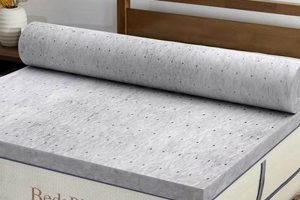
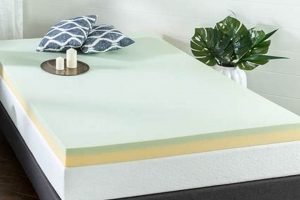
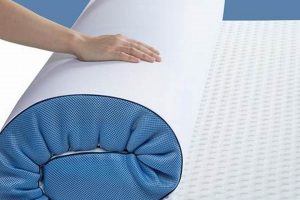
A bedding accessory designed to enhance the sleeping surface of a queen-sized mattress with a heightened level of support. This product aims to modify the feel of an existing mattress, primarily by adding rigidity and minimizing sinkage. For instance, individuals finding their current mattress too soft may seek this type of addition to improve spinal alignment during sleep.
The use of such additions can offer several advantages. Enhanced support may alleviate pressure points, potentially leading to reduced back pain and improved sleep quality. Historically, similar bedding modifications have been employed to tailor mattresses to individual comfort preferences. The firmness provided can also contribute to a more stable and consistent sleep surface, especially for individuals who share a bed.
The subsequent sections will delve into the materials commonly used in manufacturing these supportive bedding additions, the factors to consider when selecting one, and comparisons with alternative mattress solutions.
Essential Considerations for Selecting a Firm Queen Bedding Enhancement
The process of selecting a suitable firm queen-sized bedding enhancement requires careful consideration of individual needs and preferences. The following guidelines are intended to assist in making an informed decision.
Tip 1: Evaluate Existing Mattress Firmness: Prior to purchase, assess the firmness level of the current queen mattress. A bedding enhancement can only modify the existing feel to a certain extent. If the underlying mattress is significantly soft, achieving optimal firmness may necessitate a thicker, more substantial enhancement.
Tip 2: Consider Material Composition: Materials such as high-density memory foam, latex, or blended foams offer varying degrees of firmness and support. Research the properties of each material to determine which best aligns with individual requirements. Latex, for instance, generally provides a more responsive and resilient feel compared to memory foam.
Tip 3: Assess Thickness: The thickness of the bedding enhancement directly impacts the degree of firmness it provides. Thicker options typically offer greater support and a more noticeable change in the mattress’s overall feel. A thinner profile might be suitable for subtle adjustments.
Tip 4: Review Density Specifications: For foam-based products, density is a crucial indicator of durability and support. Higher density foams tend to be more resistant to compression and provide longer-lasting firmness. Inquire about density specifications before making a purchase.
Tip 5: Check for Certifications: Look for certifications such as CertiPUR-US, which indicates that the foam has been tested for harmful substances and meets specific standards for emissions, content, and durability. These certifications provide assurance of product safety and quality.
Tip 6: Read Customer Reviews: Customer reviews offer valuable insights into the actual performance and longevity of the bedding enhancement. Pay attention to reviews that specifically address firmness, support, and overall comfort.
Tip 7: Understand Return Policies: Ensure that the retailer offers a reasonable return policy or sleep trial period. This allows for testing the product in a home environment and returning it if it does not meet expectations regarding firmness and comfort.
By carefully evaluating existing mattress conditions, material properties, thickness, density, certifications, and customer feedback, one can make an informed decision and select a firm queen bedding enhancement that effectively addresses individual needs.
The next section will explore common misconceptions surrounding firm mattress enhancements and provide clarity on their intended use and limitations.
1. Supportive spinal alignment

A firm queen mattress topper directly influences spinal alignment during sleep. The enhanced rigidity provided by the topper mitigates excessive sinking into the mattress, which can lead to spinal misalignment and subsequent discomfort. The primary function of a firm topper is to create a more level and supportive sleep surface, encouraging the spine to maintain its natural curvature. The relationship is causal: the increased firmness leads to improved spinal alignment.
Without adequate spinal support, individuals may experience morning stiffness, back pain, or aggravated pre-existing spinal conditions. For example, an individual with a history of lower back pain using a soft mattress might find their symptoms worsening due to spinal misalignment. A firm topper can redistribute weight more evenly and reduce pressure on specific areas of the spine, alleviating these symptoms. Consider the common scenario of side sleepers; a too-soft mattress allows the spine to curve unnaturally, whereas a firm topper can help maintain a more neutral spinal position.
In summary, supportive spinal alignment is not merely a potential benefit but a foundational requirement for a properly functioning firm queen mattress topper. Failure to provide adequate spinal support negates the intended purpose of the product. The practical significance of understanding this connection lies in making informed purchasing decisions, ensuring that the selected topper effectively addresses individual needs for spinal support and contributes to improved sleep quality and overall well-being.
2. Enhanced sleep posture

A firm queen mattress topper can directly influence sleep posture. The primary function is to provide a more stable and less yielding sleep surface, reducing the degree to which the body sinks into the mattress. This stability facilitates the maintenance of a more neutral and anatomically correct spinal alignment throughout the night. A lack of support can lead to postural distortions, such as excessive spinal curvature, potentially resulting in muscle strain and joint stress. Enhanced sleep posture is therefore not merely a desirable outcome but an inherent component of what a firm topper is designed to achieve.
Consider individuals who habitually sleep in the fetal position. On a soft mattress, this position may exacerbate spinal curvature and restrict breathing. A firm topper, by reducing sinkage, can encourage a slightly straighter posture, potentially mitigating these issues. Similarly, for back sleepers, a firm topper can prevent excessive arching of the lower back, maintaining a more even distribution of weight and reducing pressure on the lumbar region. The effectiveness of the topper in promoting enhanced posture depends, however, on factors such as individual body weight and the underlying condition of the mattress. An excessively worn or sagging mattress may still compromise posture even with the addition of a firm topper.
In essence, the connection between enhanced sleep posture and a firm q
ueen mattress topper is one of direct cause and effect, though subject to modifying factors. Understanding this connection allows individuals to make informed decisions about selecting a topper that effectively supports optimal sleep posture and contributes to overall musculoskeletal health. The challenge lies in accurately assessing individual postural needs and selecting a topper with appropriate firmness and support characteristics. The practical significance is a reduction in sleep-related discomfort and potential long-term benefits for spinal health.
3. Extended mattress life

The incorporation of a firm queen mattress topper can contribute to the extended lifespan of the underlying mattress. The topper functions as a protective barrier, mitigating the direct impact of body weight and movement on the mattress’s surface. This protective layer reduces the rate of wear and tear, specifically addressing issues such as sagging, compression of internal materials, and the accumulation of body oils and fluids. The effect is one of indirect causation: the topper absorbs stress that would otherwise be borne by the mattress itself.
For instance, consider a scenario where a mattress is prone to developing body impressions over time, especially in areas where the body exerts the most pressure. The addition of a firm topper distributes weight more evenly across the mattress surface, reducing localized stress and minimizing the formation of these impressions. This is particularly relevant for mattresses constructed with lower-density foams or less resilient support systems. The topper also shields the mattress from potential stains and damage caused by spills or accidents, further contributing to its longevity. Furthermore, the topper can be replaced independently of the mattress, allowing for continued use of the mattress even if the topper itself begins to show signs of wear. However, the impact on mattress lifespan depends on factors such as the quality of the topper material, the weight of the individuals using the bed, and the overall care and maintenance practices employed.
In summary, the relationship between a firm queen mattress topper and extended mattress life is predicated on the topper’s ability to buffer the mattress from physical stress and contamination. While not a complete solution for preventing mattress degradation, a firm topper can significantly prolong the mattress’s usability, representing a potential cost-saving measure over time. Understanding this connection enables consumers to view mattress toppers not only as comfort enhancements but also as investments in the long-term preservation of their existing mattresses. Challenges exist in quantifying the precise extension of lifespan and selecting appropriate topper materials for specific mattress types, but the principle of protective buffering remains central.
4. Pressure point relief
Pressure point relief, in the context of sleep surfaces, pertains to the reduction of concentrated force exerted on specific areas of the body during sleep. A firm queen mattress topper can indirectly contribute to pressure point relief by modifying the overall surface characteristics of the mattress. The mechanism involves providing a more uniform distribution of body weight, thereby reducing the intensity of pressure on areas such as the hips, shoulders, and back. However, the effectiveness of a firm topper in alleviating pressure points is contingent upon its material composition and thickness. A topper that is too firm or lacks sufficient cushioning may exacerbate pressure point discomfort, while a properly designed firm topper aims to balance support with localized pressure reduction.
For example, an individual experiencing hip pain due to a mattress that allows excessive sinking may find that a firm topper redistributes weight, lessening the direct pressure on the hip joint. Conversely, a thin or overly rigid topper could transfer force directly to bony prominences, increasing discomfort. Individuals should note that firm does not equate to “hard” or unyielding. The term refers to the degree of resistance to compression, and an effective firm topper incorporates materials that conform to the body’s contours while maintaining a relatively high level of support. The precise level of firmness required is subjective and dependent upon individual body weight, sleeping position, and pre-existing conditions.
In conclusion, the relationship between a firm queen mattress topper and pressure point relief is complex and mediated by material properties and individual factors. While a firm topper can contribute to a more even distribution of weight and reduced pressure on specific areas, its effectiveness is contingent upon selecting a product that balances support with appropriate cushioning. The challenge lies in accurately assessing individual pressure point needs and choosing a topper that provides both firmness and localized comfort. The practical significance of understanding this connection is the ability to make informed purchasing decisions that address specific sleep-related discomforts and promote improved sleep quality.
5. Material density impact

The density of materials used in a firm queen mattress topper significantly influences its performance characteristics and overall longevity. Material density, defined as mass per unit volume, directly correlates with the topper’s firmness, support capability, and resistance to compression. Higher density materials exhibit greater resistance to deformation under load, providing a more stable and supportive sleep surface. Consequently, a firm queen mattress topper with a higher density core material will typically offer enhanced support and maintain its shape over a longer period compared to a lower density counterpart. For example, high-density memory foam or latex will provide a firmer feel and greater resistance to body impressions than low-density alternatives.
The choice of material density also affects the topper’s ability to regulate temperature and manage moisture. Denser materials tend to exhibit reduced airflow, potentially leading to heat retention. However, advancements in material design, such as open-cell foam structures, can mitigate this issue. Furthermore, the density of the topper influences its weight, impacting ease of handling and placement on the mattress. In practical application, individuals seeking maximum support and durability should prioritize higher density options, while those prioritizing breathability and ease of handling may opt for a balance between density and other material properties. Manufacturers often specify density ratings to allow consumers to make informed comparisons between products.
In conclusion, material density is a critical determinant of a firm queen mattress topper’s performance and lifespan. Understanding the impact of density on firmness, support, durability, and thermal properties is essential for selecting a product that meets individual needs and preferences. Challenges remain in accurately conveying the nuances of density to consumers and ensuring consistent quality control in manufacturing processes. Recognizing the significance of material density as a key component of a firm mattress topper allows for more informe
d purchasing decisions and a greater likelihood of achieving the desired sleep surface characteristics.
6. Improved weight distribution

Improved weight distribution is a significant outcome associated with the use of a firm queen mattress topper. The topper, when properly selected and utilized, acts as an intermediary layer between the sleeper and the mattress, modifying the pressure dynamics across the sleep surface. The mechanism through which this occurs involves a reduction in localized pressure points, achieved by spreading the body’s weight more evenly across the mattress. This redistribution mitigates the concentration of force on prominent areas such as the hips, shoulders, and spine, potentially leading to enhanced comfort and reduced musculoskeletal strain. The improved weight distribution is a direct consequence of the topper’s firmness and its ability to resist localized compression. Failure to achieve adequate weight distribution negates a key benefit associated with utilizing a firm mattress topper.
Consider an individual experiencing chronic back pain. A mattress that allows excessive sinking can exacerbate this condition by creating unnatural spinal curvature and concentrating pressure on specific vertebral segments. A firm topper, by providing a more level and supportive surface, reduces sinkage and encourages a more neutral spinal alignment. The uniform weight distribution afforded by the topper minimizes localized stress on the spine, potentially alleviating pain and promoting muscle relaxation. This effect is also beneficial for side sleepers, where a firm topper can help maintain a more even distribution of weight across the shoulder and hip, preventing excessive pressure and discomfort. It is important to note that improved weight distribution is not solely dependent on the topper’s firmness, but also on its ability to conform to the body’s contours, providing support without creating new pressure points.
In summary, improved weight distribution represents a crucial function of a firm queen mattress topper, contributing to enhanced comfort, reduced pain, and improved sleep quality. The effectiveness of the topper in achieving this outcome is contingent upon factors such as material properties, thickness, and individual body characteristics. The challenges lie in selecting a topper that provides both sufficient firmness to resist excessive sinking and adequate cushioning to prevent localized pressure. The practical significance of understanding this connection is the ability to make informed purchasing decisions that address specific sleep-related discomforts and contribute to overall musculoskeletal health and well-being.
7. Corrects Softness
The term “Corrects Softness” directly relates to the primary function of a firm queen mattress topper: to increase the firmness of a queen-sized mattress that is deemed too soft for the user’s preferences or needs. This function is essential when the existing mattress fails to provide adequate support, leading to discomfort or compromised sleep quality. The following facets detail the considerations and implications of this corrective action.
- Spinal Alignment Improvement
When a mattress is too soft, the sleeper’s body may sink excessively, resulting in spinal misalignment. A firm queen mattress topper counteracts this by providing a more rigid surface, promoting proper spinal alignment and potentially reducing back pain. For instance, an individual experiencing morning stiffness due to a sagging mattress can often alleviate these symptoms by adding a firm topper, encouraging a more natural spinal curvature during sleep.
- Pressure Point Redistribution
Excessive softness can exacerbate pressure points, as body weight concentrates on specific areas without sufficient support. A firm mattress topper redistributes this weight more evenly, reducing pressure on areas such as the hips and shoulders. A practical example is a side sleeper whose shoulder sinks too deeply into a soft mattress, leading to discomfort; a firm topper can elevate and support the shoulder, alleviating pressure.
- Enhanced Sleep Stability
A soft mattress often lacks stability, leading to motion transfer and disturbances during sleep, especially for couples. A firm queen mattress topper provides a more stable surface, minimizing the impact of movement from one side of the bed to the other. For instance, a partner who frequently tosses and turns may cause less disruption to their co-sleeper on a mattress enhanced with a firm topper.
- Increased Support for Heavier Individuals
Softer mattresses often fail to provide adequate support for individuals with higher body weights, leading to discomfort and potential mattress damage. A firm mattress topper can compensate for this lack of support, providing a more stable and resilient sleep surface. An example is an individual exceeding the recommended weight limit for a mattress; a firm topper can help distribute weight more effectively, preventing excessive sagging and extending the mattress’s lifespan.
In conclusion, the “Corrects Softness” function of a firm queen mattress topper is multifaceted, addressing issues ranging from spinal alignment and pressure point relief to sleep stability and support for heavier individuals. By modifying the surface characteristics of the existing mattress, a firm topper offers a practical solution for those seeking a firmer and more supportive sleep environment. These benefits illustrate the significance of selecting an appropriate topper to tailor the mattress to individual needs and preferences.
Frequently Asked Questions
This section addresses common inquiries and misconceptions regarding firm queen mattress toppers, providing clarity on their use, benefits, and limitations.
Question 1: What constitutes a “firm” designation in relation to a queen mattress topper?
The term “firm” in this context indicates a higher resistance to compression compared to standard or plush mattress toppers. A firm queen mattress topper is designed to minimize sinkage and provide enhanced support. The actual level of firmness can vary between manufacturers and models.
Question 2: Can a firm queen mattress topper completely compensate for a significantly sagging mattress?
While a firm queen mattress topper can improve the surface feel of a sagging mattress, it cannot fully restore the structural integrity of a severely compromised mattress. In cases of extensive sagging, mattress replacement may be a more effective solution.
Question 3: What materials are typically employed in the construction of a firm queen mattress topper?
Common materials include high-density memory foam, latex, and polyurethane foam. These materials are selected for their ability to provide support and resist compression. The specific blend and density of the materials will influence the overall firmness and durability of the topper.
Question 4: How does a firm queen mattress topper impact heat retention during sleep?
Some denser materials used in firm mattress toppers can reduce airflow, potentially leading to increased heat retention. However, advancements in material design, such as open-cell foam structures and cooling gel infusions, a
im to mitigate this issue. Individuals prone to overheating during sleep should consider toppers with enhanced breathability features.
Question 5: What is the expected lifespan of a firm queen mattress topper?
The lifespan of a firm queen mattress topper varies depending on factors such as material quality, usage frequency, and body weight. Generally, higher-density toppers tend to exhibit greater durability. Regular rotation and proper care can extend the topper’s lifespan. Expect quality toppers to last 3-5 years.
Question 6: Are there specific cleaning and maintenance requirements for a firm queen mattress topper?
Cleaning recommendations vary depending on the material composition of the topper. Spot cleaning with a mild detergent and water is generally recommended for minor stains. Some toppers may have removable, washable covers. Avoid using harsh chemicals or excessive moisture, as these can damage the topper’s materials.
Understanding these frequently asked questions provides a clearer perspective on the capabilities and limitations of firm queen mattress toppers.
The following section will explore case studies illustrating the application of firm queen mattress toppers in specific scenarios.
Conclusion
The preceding analysis has explored the characteristics, benefits, and considerations associated with the use of a firm queen mattress topper. The primary function of such an addition is to modify the sleeping surface of a queen-sized mattress, increasing firmness and providing enhanced support. Key aspects examined include the impact on spinal alignment, pressure point relief, mattress longevity, and material density considerations. The exploration also addressed common misconceptions and provided insights into selecting a suitable topper based on individual needs.
The adoption of a firm queen mattress topper should be viewed as a potential means of optimizing sleep quality and extending the lifespan of an existing mattress. The ultimate decision regarding its use hinges on a careful evaluation of individual sleep preferences, physical requirements, and the condition of the underlying mattress. Further research and careful consideration of product specifications are recommended prior to making a purchase, ensuring alignment with specific needs and expectations.