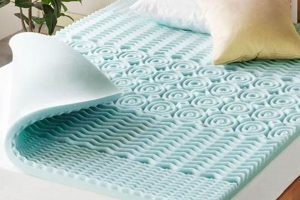
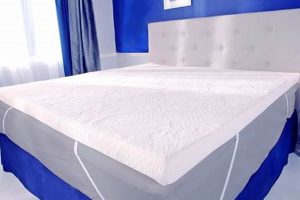
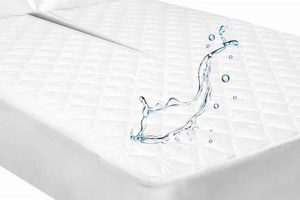
A sleep surface addition designed to enhance comfort and support on a larger bed, this product typically consists of a layer of material such as memory foam, latex, or down alternative. Measuring approximately 76 inches wide by 80 inches long, it conforms to the dimensions of the underlying sleeping platform, providing a supplemental cushion for improved rest. As an illustration, a purchaser might select a gel-infused option to alleviate pressure points and regulate temperature during the night.
The employment of such a product is significant due to its ability to revitalize an existing bed, extending its lifespan and postponing the need for a full replacement. Benefits include a more comfortable sleeping experience, potential relief from back pain, and improved spinal alignment. The development of these comfort layers has evolved from simple padding to sophisticated designs incorporating advanced materials and technologies, reflecting increasing consumer demand for personalized sleep solutions.
The subsequent sections will delve into various aspects, including different material types, factors to consider when selecting the appropriate comfort layer, installation and maintenance guidelines, and comparisons between different brands and models. Information pertaining to cost considerations and the impact on the overall sleep experience will also be provided.
Tips for Selecting a King Size Mattress Pillow Topper
Choosing the appropriate comfort layer for a king-sized bed requires careful consideration. The following tips provide guidance to ensure optimal comfort, support, and longevity.
Tip 1: Assess Existing Mattress Condition: Before purchasing, evaluate the current state of the bed. A severely worn mattress may benefit more from replacement than the addition of a comfort layer.
Tip 2: Determine Desired Firmness Level: Consider individual sleep preferences. Options range from soft and plush to firm and supportive. Select a comfort layer that complements the existing bed’s firmness.
Tip 3: Evaluate Material Options: Common materials include memory foam, latex, down alternative, and feathers. Each material offers unique properties related to comfort, support, and temperature regulation. Research the characteristics of each material to identify the best fit.
Tip 4: Consider Thickness: The thickness affects the overall feel. A thicker comfort layer generally provides more cushioning and support, while a thinner option offers a subtle enhancement.
Tip 5: Check for Certifications: Look for certifications such as CertiPUR-US, which indicates that the foam has been tested for harmful substances and emissions.
Tip 6: Inquire About Warranty and Return Policies: Reputable manufacturers offer warranties and return policies, providing recourse if the product does not meet expectations.
Tip 7: Read Customer Reviews: Research feedback from other purchasers to gain insights into product performance, durability, and customer satisfaction.
Careful evaluation of these factors will aid in selecting a product that enhances the sleeping experience and provides lasting comfort.
The subsequent sections will discuss the proper care and maintenance of king-size mattress pillow toppers to ensure their continued performance and longevity.
1. Material Composition

The material from which a king-size mattress pillow topper is constructed significantly impacts its performance and suitability. The composition directly determines the degree of comfort, support, durability, and temperature regulation provided. For instance, memory foam, characterized by its viscoelastic properties, conforms to the body’s contours, alleviating pressure points. This material choice can be beneficial for individuals seeking relief from joint pain. Conversely, latex, derived from rubber trees, exhibits a resilient and responsive feel, offering robust support and promoting spinal alignment. The selection of material is thus a foundational element in achieving the desired sleeping experience.
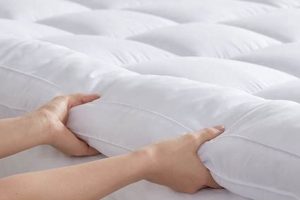
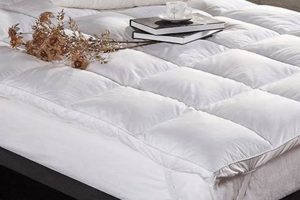
The material also influences the topper’s longevity and maintenance requirements. Higher-density memory foam tends to be more durable than lower-density alternatives, resisting compression and retaining its shape over time. Latex is naturally hypoallergenic and resistant to dust mites, making it a preferable option for individuals with allergies. Down and feather fillings provide a plush, luxurious feel but require regular fluffing and cleaning to maintain their loft and hygiene. The inherent properties of each material dictate the necessary care protocols and the expected lifespan of the product.
Ultimately, the material composition is a critical factor in determining the suitability of a king-size mattress pillow topper for individual needs. Understanding the specific characteristics of various materials allows consumers to make informed choices that align with their comfort preferences, support requirements, and maintenance expectations. Failure to consider material composition can result in a suboptimal sleeping experience and a diminished lifespan of the topper, highlighting the practical significance of this attribute.
2. Thickness Measurement

Thickness measurement, pertaining to a king size mattress pillow topper, is a primary determinant of the product’s comfort and support characteristics. Its precise value dictates the degree of cushioning and pressure relief afforded to the user, influencing the overall sleeping experience.
- Impact on Pressure Relief
A greater thickness generally correlates with enhanced pressure relief. Increased material volume allows for greater conformity to the body’s contours, distributing weight more evenly and reducing concentrated pressure on specific areas such as shoulders and hips. For example, a 4-inch memory foam topper provides significantly more pressure relief compared to a 2-inch model, particularly for side sleepers.
- Effect on Bed Height
The thickness of the topper directly adds to the overall height of the bed. This change can impact ease of entry and egress, particularly for individuals with mobility limitations. It also necessitates adjustment of bed linens and potentially changes in room aesthetics. A thicker option may render existing sheets incompatible, requiring the purchase of deeper-pocketed variants.
- Influence on Support and Spinal Alignment
While thickness contributes to comfort, it is not the sole determinant of support. Overly thick, but insufficiently dense, materials may lead to excessive sinking, compromising spinal alignment. The interplay between material density and thickness is critical. A firm latex topper, even with a moderate thickness, can provide superior support compared to a thick but low-density
memory foam alternative. - Considerations for Heat Retention
Increased thickness can exacerbate heat retention, particularly with memory foam. Greater material volume translates to reduced airflow, potentially leading to a warmer sleeping environment. Open-cell foam or gel-infused materials are often employed to mitigate this issue in thicker toppers, demonstrating the interplay between material composition and thickness in thermal regulation.
The thickness measurement of a king size mattress pillow topper is therefore a multifaceted consideration. While increased thickness generally enhances pressure relief, its impact on bed height, spinal alignment, and heat retention must be carefully evaluated to ensure the selected product aligns with individual needs and preferences. The interplay between thickness and other attributes, such as material density and composition, is critical for optimal performance.
3. Firmness Level

The firmness level of a king size mattress pillow topper exerts a direct and substantial influence on the sleeper’s experience. This characteristic, ranging from ultra-plush to extra-firm, determines the degree of support provided and the extent to which the topper conforms to the body’s contours. A too-soft topper may lack adequate support, leading to spinal misalignment and discomfort, particularly for individuals with back pain. Conversely, a too-firm topper might create pressure points, causing restlessness and disrupted sleep. For instance, a lightweight individual may find a medium-plush topper optimal, while a heavier person might require a firmer model to maintain proper spinal alignment.
Understanding the firmness level’s impact is critical for selecting a topper that addresses specific needs. Individuals with existing mattress firmness preferences should choose a topper that either reinforces or subtly alters that feel. A common application involves softening an overly firm mattress; in this case, a plush or medium-plush topper is often employed. Conversely, a firm topper can add support to a sagging mattress, though this solution is typically a temporary measure. The interplay between the topper’s firmness and the underlying mattress significantly affects the overall sleep surface.
Ultimately, the firmness level is a non-negotiable consideration when selecting a king size mattress pillow topper. A well-chosen firmness level can enhance comfort, improve spinal alignment, and extend the lifespan of the existing mattress. Conversely, a mismatch can exacerbate existing sleep problems and lead to premature wear of both the topper and the underlying mattress. Therefore, careful evaluation of individual needs and preferences, coupled with a clear understanding of firmness options, is crucial for successful selection.
4. Support Characteristics
The support characteristics of a king size mattress pillow topper are paramount in determining its effectiveness and suitability for diverse users. The level of support dictates how well the topper maintains spinal alignment, distributes weight, and alleviates pressure points. Inadequate support can exacerbate existing musculoskeletal issues, leading to discomfort and disrupted sleep. The material composition, density, and construction techniques all contribute to the overall support provided. For example, a high-density memory foam topper typically offers more robust support compared to a down alternative option, which primarily focuses on plushness. Individuals with back pain often require toppers with enhanced lumbar support to maintain proper spinal curvature during sleep.
The practical application of understanding support characteristics lies in the ability to select a topper that addresses specific needs and preferences. A side sleeper, for instance, benefits from a topper that provides targeted support to the shoulders and hips, preventing spinal misalignment. Conversely, a back sleeper requires consistent support across the entire sleeping surface to maintain the natural curvature of the spine. The effectiveness of a topper’s support characteristics can also influence the longevity of the underlying mattress. A well-supported sleep surface reduces stress on the mattress, preventing premature sagging and extending its lifespan. Consider the scenario where an older mattress is beginning to lose its support; a firm latex topper could provide the necessary reinforcement to prolong its usability.
In summary, the support characteristics are integral to the functionality of a king size mattress pillow topper. An informed selection process requires a thorough assessment of individual needs and a clear understanding of how different materials and construction methods contribute to the overall support provided. Failure to consider these factors can result in a suboptimal sleeping experience and potentially exacerbate existing health concerns. Recognizing the practical significance of support characteristics ensures that the selected topper effectively enhances comfort, promotes spinal alignment, and contributes to the longevity of the existing sleep system.
5. Temperature Regulation

Temperature regulation is a crucial factor in the design and selection of a king size mattress pillow topper. Maintaining a comfortable sleeping temperature minimizes sleep disruptions and enhances overall rest quality. The materials and construction of the topper significantly influence its thermal properties.
- Material Breathability
Material breathability dictates the extent to which air can circulate through the topper. Materials with high breathability, such as open-cell memory foam or latex, allow for greater airflow, reducing heat retention. Conversely, closed-cell memory foam tends to trap heat, potentially leading to discomfort. The selection of a breathable material is particularly important for individuals who tend to sleep hot.
- Heat Dissipation Technology
Heat dissipation technologies are incorporated into some toppers to actively regulate temperature. Gel-infused memory foam, for example, absorbs and dissipates heat, creating a cooler sleeping surface. Phase-change materials (PCMs) can also be used to regulate temperature by absorbing or releasing heat as needed. These technologies are designed to counteract the natural tendency of some materials to retain heat.
- Cover Fabric Considerations
The fabric used for the topper’s cover also plays a role in temperature regulation. Natural fibers like cotton and bamboo are breathable and moisture-wicking, promoting airflow and reducing humidity. Synthetic fabrics, on the other hand, may be less breathable and contribute to heat retention. The cover fabric should complement the topper’s core material to optimize temperature regulation.
- Thickness and Density Impact
The thickness and density of the topper can affect its thermal properties. Thicker, denser toppers may retain more heat due to reduced airflow. However, they also provide greater cushioning and support. The optimal balance between thickness, density, and material breathability depends on individual preferences and environmental conditions.
In conclusion, temperature regulation is a multifaceted consideration when evaluating a king size mattress pillow topper. Material breathability, heat dissipation technology, cover fabric, and topper thickness all interact to influence the sleeping temperature. Choosing a topper with appropriate thermal properties is essential for maximizing sleep comfort and minimizing temperature-related disruptions.
Frequently Asked Questions
The following addresses common inquiries regarding king size mattress pillow toppers, providing clear and concise information to aid in informed decision-making.
Question 1: What are the primary benefits of using a king size mattress pillow topper?
A king size mattress pillow topper can enhance comfort, improve spinal alignment, extend the lifespan of an existing mattress, and provide pressure relief. Specific benefits vary depending on the material and construction.
Question 2: How does the material of a king size mattress pillow topper affect its performance?
The material dictates comfort, support, temperature regulation, and durability. Memory foam conforms to the body, latex offers resilient support, and down alternative provides a plush feel. Each material possesses distinct properties suited to different needs.
Question 3: What thickness is recommended for a king size mattress pillow topper?
The recommended thickness depends on individual preference and the condition of the existing mattress. Thicker toppers generally offer more cushioning, while thinner options provide a subtle enhancement. Consider the impact on bed height and sheet compatibility.
Question 4: How does the firmness level of a king size mattress pillow topper impact sleep quality?
Firmness level influences spinal alignment and pressure point relief. Select a firmness that complements the existing mattress and aligns with individual sleep preferences. Mismatched firmness can lead to discomfort and disrupted sleep.
Question 5: What are the maintenance requirements for a king size mattress pillow topper?
Maintenance varies depending on the material. Regularly vacuuming is recommended for most toppers. Some may require professional cleaning. Always follow the manufacturer’s instructions to preserve the topper’s integrity.
Question 6: How long does a king size mattress pillow topper typically last?
The lifespan of a king size mattress pillow topper depends on the material, usage, and maintenance. High-quality materials and proper care can extend the topper’s lifespan to several years. Signs of wear and tear, such as flattening or loss of support, indicate the need for replacement.
Understanding these factors is essential for maximizing the benefits and longevity of a king size mattress pillow topper.
The subsequent section will delve into detailed comparisons of different brands and models of king size mattress pillow toppers.
King Size Mattress Pillow Topper
This examination has presented a detailed overview of the king size mattress pillow topper, emphasizing its various attributes and their consequential effects on the sleeping experience. Key factors such as material composition, thickness, firmness, support characteristics, and temperature regulation have been scrutinized to provide a comprehensive understanding of this product category. The evaluation has demonstrated the importance of aligning specific product features with individual needs and preferences to achieve optimal comfort and support.
The information provided serves as a resource for informed decision-making in the selection of a king size mattress pillow topper. Continued research and advancements in materials and construction are anticipated to further enhance the performance and longevity of these products. Therefore, ongoing evaluation of individual sleep needs and a commitment to informed purchasing practices are essential for maximizing the benefits derived from a king size mattress pillow topper.
![Best King Pillow Top Mattress Topper [Review] | Organic & Natural Mattress Buyer’s Guide: Non-Toxic Sleep Solutions](https://mattressworldpa.com/wp-content/uploads/2025/07/th-6122-300x200.jpg "Best King Pillow Top Mattress Topper [Review] Organic & Natural Mattress Buyer’s Guide: Non-Toxic Sleep Solutions")