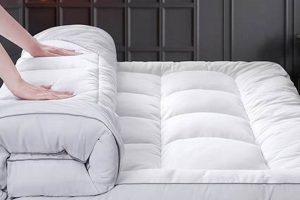
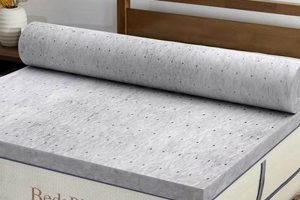
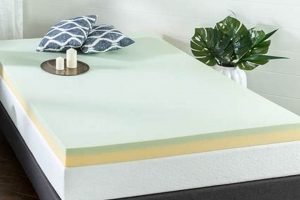
A customized sleeping surface enhancement, crafted by individuals using various materials and techniques, is intended to modify the feel of an existing mattress. Examples include padding made from memory foam, latex, or natural fibers encased in fabric and placed atop a standard mattress to provide added comfort or support. The construction process can vary greatly depending on the desired properties and available resources.
The creation of these customized mattress additions offers potential cost savings compared to purchasing a new mattress. Furthermore, it allows for a personalized adjustment of sleep surface characteristics, catering to specific needs such as pressure relief or firmness preference. Historically, individuals have employed readily available materials to modify their sleeping arrangements, evolving from simple padding to more sophisticated construction methods utilizing contemporary materials.
The subsequent sections will delve into the various materials commonly used in the construction of these customized sleep surface enhancements, explore different construction techniques, and provide guidance on selecting materials based on individual needs and preferences.
Tips for Constructing a Customized Mattress Overlay
The following suggestions are intended to aid in the successful creation of a customized mattress overlay, focusing on material selection, construction techniques, and considerations for long-term use.
Tip 1: Material Selection is Paramount: Prioritize materials based on desired comfort level, support requirements, and potential for off-gassing. Consider natural latex for resilience and breathability, memory foam for pressure relief, or cotton batting for a natural and cost-effective option. Evaluate material certifications to ensure low VOC emissions.
Tip 2: Accurately Measure Existing Mattress Dimensions: Precise measurements are crucial for a proper fit. Account for any existing mattress protectors or fitted sheets that may add slight bulk. Add a small allowance (approximately one inch) to each dimension to ensure ease of placement and prevent constriction.
Tip 3: Fabric Choice Impacts Performance: Select a fabric casing that complements the chosen filling material. Consider tightly woven cotton or linen for durability and breathability. For memory foam overlays, a stretchable knit fabric can allow for optimal contouring. Pre-wash all fabric to minimize shrinkage after construction.
Tip 4: Secure Filling Material Properly: Prevent shifting and clumping of filling material by employing quilting, tufting, or compartmentalization techniques. Baffle box construction is particularly effective for down or feather fills, ensuring even distribution and preventing cold spots.
Tip 5: Consider Edge Support: If enhanced edge support is desired, incorporate denser foam or reinforced stitching along the perimeter. This is particularly beneficial for individuals who tend to sleep near the edge of the mattress.
Tip 6: Prioritize Proper Ventilation: When using materials like memory foam, which can retain heat, incorporate breathable fabrics or ventilation channels to improve airflow and prevent overheating. Perforated foam or spaced quilting can also enhance ventilation.
Tip 7: Implement a Removable and Washable Cover: Prolong the lifespan of the customized mattress overlay by creating a removable and washable cover. This allows for easy cleaning and maintenance, preventing the buildup of dust mites and allergens.
These tips highlight the importance of careful planning, meticulous execution, and a focus on material properties to create a personalized sleep surface enhancement that meets individual needs and preferences.
The concluding section will offer guidance on maintenance and care, addressing common issues and providing recommendations for extending the lifespan of the customized mattress overlay.
1. Material Selection
The selection of materials is foundational to the performance and longevity of a customized mattress overlay. The chosen components directly influence the comfort, support, thermal regulation, and overall durability of the final product. Informed choices are essential for achieving desired sleep surface characteristics.
- Foam Density and Firmness
Foam, whether memory foam, latex, or polyurethane, is a common core material. Density dictates the foam’s support and durability; higher density foams generally offer greater resistance to compression and a longer lifespan. Firmness levels range from soft to extra-firm, affecting the level of contouring and support provided. For instance, a high-density memory foam topper is often selected to relieve pressure points, while a firmer latex option offers more responsive support. Incorrect density selection can result in premature sagging or inadequate support.
- Fiber Fill Properties
Natural fibers like cotton, wool, and down, or synthetic alternatives such as polyester fill, offer distinct properties. Cotton is breathable and absorbent but can compress over time. Wool provides temperature regulation and natural fire resistance. Down offers luxurious softness but may require specialized cleaning. Polyester fills are hypoallergenic and cost-effective but lack the breathability of natural fibers. The choice of fill material affects the topper’s ability to regulate temperature and contribute to overall comfort. Overfilling with a low-quality fiber can lead to uneven support and discomfort.
- Fabric Casing Characteristics
The fabric encasing the topper’s core influences breathability, moisture-wicking capabilities, and overall durability. Tightly woven cotton or linen offers durability and breathability. Bamboo-derived fabrics are known for their softness and moisture-wicking properties. Polyester blends are cost-effective but may lack breathability. A robust, breathable fabric casing protects the inner materials and contributes to a comfortable sleep environment. A poorly chosen fabric can trap heat and moisture, leading to discomfort and potential degradation of the core materials.
- Adhesive and Fastening Considerations
Adhesives and fastening methods used in construction impact the topper’s structural integrity and potential off-gassing. Water-based adhesives are preferable to solvent-based options due to lower VOC emissions. Durable stitching and secure fastening prevent shifting of internal materials. The selection of appropriate adhesives and fasteners ensures a stable and long-lasting construction. Improper adhesives can contribute to unpleasant odors and potential health concerns.
The interplay of these material properties dictates the ultimate success of a customized mattress overlay. Careful consideration of density, firmness, fiber characteristics, fabric composition, and construction materials ensures a comfortable, supportive, and durable sleeping surface. Improper material choices can lead to discomfort, premature wear, and potential health concerns, underscoring the importance of informed decision-makin
g.
2. Size Accuracy

The dimensional precision in constructing a customized mattress overlay directly affects its performance and usability. Inaccurate measurements during the construction phase can lead to a topper that either fails to adequately cover the existing mattress surface or creates undesirable bunching and shifting due to excessive material. A size discrepancy, even within a few inches, can compromise the topper’s intended function of providing uniform comfort and support. For example, a topper that is too small will leave exposed portions of the mattress, resulting in inconsistent sleep surface characteristics, whereas an oversized topper will require constant adjustment and may interfere with fitted sheets. The correlation between accurate size dimensions and the ultimate functionality of the personalized bedding addition is significant.
Achieving precise size is contingent upon accurate measurement of the underlying mattress. Utilizing a flexible measuring tape and recording dimensions at multiple points along the mattress’s length and width can mitigate potential errors. Furthermore, accounting for any existing mattress protectors or fitted sheets that might affect the overall dimensions is crucial. Failure to accurately measure the initial dimensions propagates throughout the construction process, increasing the likelihood of a poorly fitting and unsatisfactory final product. Patterns should be drafted based on these precise measurements and double-checked before cutting materials to minimize waste and ensure a proper fit.
In summary, dimensional accuracy serves as a cornerstone in the successful creation of a customized mattress overlay. Deviation from precise measurements results in functional compromise and diminished user satisfaction. Meticulous attention to detail during the measurement and pattern drafting stages is paramount to realizing the intended benefits of the customized bedding enhancement, contributing to improved sleep quality and overall comfort.
3. Fabric Breathability

Fabric breathability is a crucial characteristic in the context of customized mattress overlays, influencing temperature regulation, moisture management, and overall comfort. The choice of fabric directly impacts the sleep environment and the effectiveness of the overlay in enhancing the existing mattress.
- Air Permeability and Thermal Regulation
Air permeability, the ability of a fabric to allow air to pass through it, directly affects the topper’s ability to regulate temperature. Fabrics with high air permeability promote ventilation, dissipating body heat and preventing overheating. Examples include loosely woven cotton or linen. Conversely, synthetic fabrics with low air permeability can trap heat, leading to discomfort. When constructing a customized topper, selecting a fabric with appropriate air permeability is essential for maintaining a comfortable sleep temperature.
- Moisture-Wicking Properties and Hygiene
Fabrics with moisture-wicking capabilities draw perspiration away from the body, keeping the sleep surface dry and preventing the buildup of moisture that can promote bacterial growth and unpleasant odors. Materials like bamboo rayon or specialized performance fabrics excel at moisture management. This is particularly important for individuals prone to night sweats or those living in humid climates. Integrating a moisture-wicking fabric into the overlay design contributes to a more hygienic and comfortable sleep environment.
- Fiber Composition and Natural Ventilation
The composition of the fabric fibers plays a significant role in natural ventilation. Natural fibers, such as cotton, wool, and linen, inherently possess better breathability than many synthetic fibers. Wool, for instance, can absorb and release moisture, creating a microclimate that regulates temperature. Synthetic fibers often require specialized treatments to enhance breathability. The choice of fiber composition directly influences the overlay’s ability to promote airflow and maintain a comfortable sleep surface.
- Weave Density and Airflow
The weave density of the fabric impacts its airflow characteristics. Tightly woven fabrics restrict airflow, potentially trapping heat and moisture. Loosely woven fabrics promote ventilation but may be less durable. The ideal weave density balances breathability with durability. When selecting a fabric for a customized mattress overlay, consider the trade-offs between airflow and longevity to optimize comfort and performance.
These facets of fabric breathability collectively influence the overall performance of a customized mattress overlay. A well-chosen, breathable fabric complements the properties of the filling materials, contributing to a comfortable, hygienic, and temperature-regulated sleep environment, thus maximizing the benefits of the customized bedding enhancement.
4. Support Structure
The integral role of support structure in the context of customized mattress overlays directly influences the distribution of weight, the prevention of material migration, and the overall longevity of the finished product. Without a thoughtfully designed support system, internal components can shift, leading to uneven surfaces, localized pressure points, and a reduction in the overlays intended comfort level. Consider, for instance, a down-filled overlay lacking internal baffling; the down will inevitably migrate to the edges, leaving the center unsupported. The support structure serves as an architectural framework, maintaining the integrity of the materials and ensuring consistent performance.
Various construction techniques address the need for a robust support network. Quilting, for example, secures the outer fabric to the inner fill, creating channels that limit movement. Tufting, another approach, compresses and binds the layers together at specific points, although this can sometimes create areas of increased firmness. Baffle box construction is particularly effective for loose fills like down or feathers, creating individual compartments that prevent shifting. The selection of an appropriate support structure depends on the type of fill material, the desired level of firmness, and the anticipated usage patterns. For example, a memory foam overlay might benefit from a quilted pattern to maintain its shape, while a latex overlay might require less aggressive support due to its inherent density and resilience. Practical application hinges on understanding these material-specific needs.
In summary, the support structure within a customized mattress overlay functions as a critical determinant of performance and lifespan. Its design and execution should align with the chosen materials and desired comfort characteristics. A well-engineered support system mitigates material migration, ensures even weight distribution, and contributes to the long-term stability of the sleep surface. Neglecting this aspect can result in a compromised sleeping experience and premature degradation of the customized bedding addition.
5. Edge Reinforcement

Edge reinforcement within a customized mattress overlay, specifically, is a structural consideration that addresses perimeter support and stability. The absence of reinforced edges can lead to compression and deformation along the periphery of the sleep surface, reducing usable area and potentially impacting the sleeper’s stability, especially for those who sleep near the edge of the mattress. A lack of adequate edge support frequently results in a rolling-off-the-edge sensation and diminished overall comfort. For example, an overlay constructed solely of soft memory foam without any edge reinforcement will compress significantly under pressure, creating a noticeable slope towards the edge of the bed. This is often encountered by individuals using a customized mattress topper on an older mattress that already has compromised edge support.
Reinforcement techniques often involve the use of higher-density foam perimeters, strategically placed fabric supports, or reinforced stitching along the edges of the topper. High-density foam inserts offer enhanced resistance to compression, maintaining a more uniform surface across the entire mattress area. Reinforced stitching techniques, such as binding or serging, prevent edge fabric from fraying or tearing, thus contributing to the overall durability of the topper. A practical implementation of edge reinforcement might involve encasing the perimeter of a latex mattress topper with a dense foam border before securing it within the final fabric casing. This provides substantial edge support and prevents the latex core from deforming over time.
In summary, edge reinforcement in a customized mattress overlay contributes to a more stable and usable sleep surface. Its presence mitigates edge compression, enhances overall support, and extends the lifespan of the topper. Overlooking this structural element during the construction phase can compromise the functionality and long-term durability of the individualized bedding solution, highlighting the importance of considering edge support as a vital aspect of DIY mattress overlay design.
6. Maintenance Procedures

The long-term performance and hygiene of a do-it-yourself mattress topper are directly contingent upon the implementation of appropriate maintenance procedures. The absence of regular care can lead to the accumulation of dust mites, allergens, and moisture, compromising the sleep environment and potentially shortening the lifespan of the customized bedding item. For example, a topper filled with down feathers, if not properly aired and cleaned, can become a breeding ground for dust mites, leading to allergic reactions and a decline in loft. Conversely, consistent and careful maintenance practices preserve the integrity of the materials and ensure a more healthful and comfortable sleep surface. Therefore, maintenance is an integral component of DIY mattress topper ownership.
Specific maintenance procedures vary depending on the materials used in the topper’s construction. For memory foam toppers, regular vacuuming and spot cleaning are essential to remove dust and spills. Latex toppers can be cleaned with mild soap and water but should be thoroughly dried to prevent mold growth. Down and feather toppers require professional cleaning to maintain their loft and prevent clumping. Removable covers, if incorporated into the design, should be laundered frequently according to the manufacturer’s instructions. Ignoring these material-specific needs can lead to premature degradation, odors, and compromised comfort. A proactive maintenance schedule extends the life of the topper and protects the initial investment.
In summary, the connection between maintenance procedures and DIY mattress toppers is crucial for sustained performance and hygiene. Proper care practices mitigate the accumulation of allergens and moisture, preserve the structural integrity of the materials, and extend the lifespan of the customized bedding item. A neglect of these procedures, in contrast, compromises sleep quality, fosters unhygienic conditions, and diminishes the value of the initial effort invested in creating the do-it-yourself mattress topper. Understanding and implementing these maintenance steps are paramount to reaping the full benefits of the customized sleep surface.
Frequently Asked Questions
The following questions address common inquiries and concerns regarding the construction and use of customized mattress overlays, providing clarity and practical guidance.
Question 1: What is the typical lifespan of a self-constructed mattress enhancement?
The longevity of a DIY mattress topper is subject to material quality, construction techniques, and maintenance practices. High-density foam cores, durable fabric casings, and consistent cleaning contribute to extended use. However, these items may experience compression and wear more rapidly than professionally manufactured counterparts due to variations in skill and access to industrial-grade materials.
Question 2: What are potential health considerations associated with materials used in self-made sleeping surface additions?
Off-gassing from certain foam types and adhesives represents a primary health concern. Volatile organic compounds (VOCs) emitted from these materials can trigger respiratory irritation or allergic reactions in sensitive individuals. Selecting CertiPUR-US certified foams and water-based adhesives mitigates the risk of exposure to harmful chemicals.
Question 3: How does the cost of creating a customized sleeping surface compare to purchasing a commercially available product?
The economic advantage of constructing a DIY mattress overlay varies depending on material choices and project complexity. While basic projects utilizing readily available materials may present cost savings, sourcing specialty foams or high-end fabrics can negate any financial benefit. Labor costs, though not directly monetary, should also be factored into the overall value assessment.
Question 4: What tools and equipment are generally required for this type of project?
Essential tools typically include a measuring tape, fabric scissors, a sewing machine (for creating a casing), and potentially a foam cutter or electric knife for shaping foam cores. Additional equipment such as quilting frames or specialized sewing feet may be necessary depending on the intended construction techniques.
Question 5: How can issues such as shifting fill or uneven surfaces be addressed in self-constructed mattress overlays?
Employing techniques such as quilting, tufting, or baffle box construction is essential for preventing fill migration and maintaining a uniform surface. Securing internal components with durable stitching and distributing fill evenly during the construction process minimizes the likelihood of unevenness.
Question 6: What disposal considerations are relevant for self-constructed mattress enhancements at the end of their useful life?
Disposal options depend on the materials used. Foam components may be recyclable at specialized facilities, while fabric casings can often be repurposed or donated. Responsibly separating and disposing of materials according to local regulations minimizes environmental impact.
These responses highlight the key considerations involved in the creation and maintenance of DIY mattress toppers, empowering individuals to make informed de
cisions.
The subsequent article section will focus on advanced customization techniques, offering strategies for addressing specific comfort and support needs.
Conclusion
This exploration of the “diy mattress topper” domain has underscored critical aspects pertaining to material selection, construction methodologies, and maintenance protocols. The success of such a project hinges on a clear understanding of these factors and their interdependencies. Informed decision-making throughout the process is paramount to achieving the desired enhancement of the existing sleep surface.
The information presented serves as a foundation for those considering a customized bedding solution. Careful planning, meticulous execution, and diligent maintenance are essential for maximizing the benefits and extending the lifespan of the crafted sleeping surface. The pursuit of individualized comfort should be tempered with a realistic assessment of capabilities and resources to ensure a worthwhile endeavor.