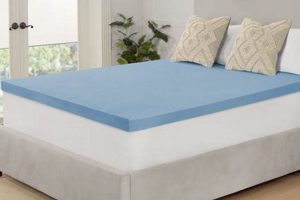
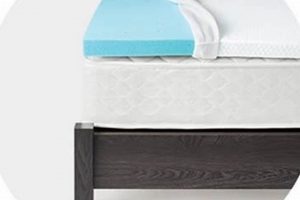
A covering designed to enhance comfort and support, specifically tailored to the dimensions of a California King bed (approximately 72 inches wide by 84 inches long). These additions are placed atop the existing mattress, modifying its feel. For example, individuals seeking a softer sleeping surface might select a plush memory foam variety. Conversely, those requiring increased firmness may opt for a latex model.
The significance of these bedding accessories lies in their capacity to extend the lifespan of a mattress, provide personalized comfort adjustments without the expense of replacing the entire sleep surface, and offer relief from pressure points. Historically, improvements in sleep quality have been linked to enhanced physical and mental well-being, making these accessories a worthwhile investment for many individuals.
The subsequent sections will delve into the various materials, construction methods, thickness options, and key considerations when selecting one to ensure optimal sleep and overall satisfaction. We will also explore the care and maintenance necessary to prolong its utility and hygiene.
Essential Selection and Maintenance Tips
The following guidelines address key considerations when choosing and maintaining a sleep surface enhancement for a California King bed, optimizing its performance and longevity.
Tip 1: Material Assessment. Evaluate different material typesmemory foam, latex, down alternativebased on desired firmness, temperature regulation, and potential allergen sensitivities. For example, memory foam conforms closely to the body, while latex offers greater breathability.
Tip 2: Thickness Consideration. Assess the optimal thickness based on individual comfort preferences and mattress condition. A thicker model may provide greater pressure relief and support, especially for older mattresses.
Tip 3: Density Evaluation. Consider the density of the filling material. Higher density typically equates to greater durability and support. Compare density ratings (e.g., pounds per cubic foot for foam) before making a selection.
Tip 4: Secure Fit Verification. Ensure the selected model securely fits the California King mattress. Verify dimensions prior to purchase and consider models with deep pockets or anchor bands to prevent shifting.
Tip 5: Protection and Cleaning. Use a mattress protector to shield against spills, stains, and dust mites. Regularly clean according to the manufacturer’s instructions, which may involve spot cleaning or professional laundering.
Tip 6: Rotation Practices. Rotate the accessory periodically (e.g., every three to six months) to promote even wear and prevent sagging in specific areas. This extends its useful lifespan.
Tip 7: Warranty Examination. Review the warranty terms and conditions prior to purchase, noting the coverage period and any limitations. This provides recourse in case of manufacturing defects.
Adhering to these recommendations will help ensure the acquisition of a suitable product, optimize its performance characteristics, and prolong its effective lifespan, resulting in improved sleep quality.
The following sections will delve into specific applications and considerations for various user groups and sleep conditions.
1. Material Composition

The material composition of a mattress topper intended for a California King bed directly dictates its performance characteristics and suitability for individual needs. Different materials exert varying degrees of influence on factors such as pressure relief, temperature regulation, and durability. For example, a memory foam topper conforms closely to the sleeper’s body, distributing weight and alleviating pressure points. This is particularly beneficial for individuals experiencing joint pain or discomfort. However, memory foam’s dense structure can retain heat, potentially leading to overheating during sleep. In contrast, a latex topper, derived from natural or synthetic rubber, offers a more responsive and breathable surface. Latex’s open-cell structure facilitates air circulation, mitigating heat buildup and promoting a cooler sleep environment. As a result, material selection represents a foundational decision influencing the overall sleep experience.
The choice of material also impacts the product’s lifespan and maintenance requirements. Latex, known for its resilience and natural elasticity, typically exhibits greater durability than memory foam, resisting compression and maintaining its shape over time. This translates to a longer lifespan and reduced need for replacement. Furthermore, certain materials possess inherent antimicrobial properties. Natural latex, for instance, inhibits the growth of bacteria and mold, contributing to a cleaner and more hygienic sleep surface. Conversely, memory foam may require specific cleaning procedures to prevent the accumulation of dust mites and allergens. Therefore, understanding the inherent properties of different materials is crucial for informed decision-making.
In summary, material composition is a critical determinant of a topper’s performance, lifespan, and maintenance requirements. Selecting a material aligned with individual sleep preferences and environmental considerations ensures optimal comfort and long-term value. Considerations include factors such as body temperature, preferred firmness, and potential allergies. The implications of this choice extend beyond mere comfort, influencing overall sleep quality and well-being.
2. Thickness Options

Thickness options for California King mattress toppers directly influence the level of comfort and support provided. A thicker topper, typically ranging from 3 to 4 inches, offers enhanced pressure relief and can significantly alter the feel of a mattress. For instance, an individual with a firm mattress seeking a softer sleeping surface might choose a thicker topper made of memory foam to contour to the body and alleviate pressure points on the hips and shoulders. Conversely, a thinner topper, usually 1 to 2 inches thick, provides a subtle adjustment to the mattress feel. This may be suitable for those who find their mattress slightly too firm or who want a minimal change in support.
The selection of thickness also correlates with the condition of the underlying mattress. A mattress that is already exhibiting signs of sagging may benefit from a thicker topper to provide additional support and minimize the effects of the worn mattress. However, a thicker topper on a new or relatively firm mattress may result in excessive softness, potentially compromising spinal alignment. Therefore, it is crucial to consider both the individual’s preferred sleeping position and the current state of the mattress when selecting the appropriate thickness. For example, side sleepers typically require thicker toppers to cushion the shoulders and hips, while back
sleepers may prefer a thinner topper to maintain proper spinal alignment.
In summary, thickness options are an essential consideration when selecting a topper designed for a California King bed. They directly impact the level of comfort, support, and overall sleep experience. Matching the topper’s thickness to individual preferences, sleeping habits, and the condition of the underlying mattress is vital for achieving optimal results and ensuring a restful night’s sleep. Disregarding this aspect could lead to discomfort and negate the intended benefits of the mattress topper.
3. Density Ratings

Density ratings, when applied to a California King mattress topper, indicate the weight of the material per unit volume, typically measured in pounds per cubic foot (lbs/ft). This metric serves as a primary indicator of the topper’s durability, support, and longevity. A higher density rating generally suggests a more robust and resilient material capable of withstanding prolonged use without significant degradation in performance. For instance, a memory foam topper with a density rating of 5 lbs/ft will typically offer greater support and resist compression better than one with a density of 3 lbs/ft. Consequently, the choice of density directly impacts the overall lifespan and long-term comfort of the topper.
The practical significance of understanding density ratings lies in its ability to inform purchase decisions and manage expectations regarding product performance. In the context of a California King mattress topper, which is intended to cover a substantial surface area, variations in density can lead to noticeable differences in support and comfort across the entire bed. A low-density topper may exhibit uneven support, causing localized sinking and discomfort. Conversely, an excessively high-density topper may feel overly firm and unresponsive. Therefore, consumers must carefully consider the interplay between density, material type (e.g., memory foam, latex), and personal comfort preferences to select a topper that effectively addresses their specific needs. For example, individuals seeking enhanced pressure relief may opt for a medium-density memory foam topper, while those prioritizing long-term support may prefer a high-density latex option.
In conclusion, density ratings constitute a critical factor in evaluating the quality and suitability of a California King mattress topper. It serves as a reliable indicator of durability, support, and overall performance, enabling consumers to make informed decisions aligned with their individual comfort needs and budget constraints. While higher density generally equates to superior quality, the optimal density rating ultimately depends on the specific material and desired feel of the topper. Neglecting this consideration may result in dissatisfaction with the purchase and a compromised sleep experience.
4. Support Provision
Support provision in a California King mattress topper is paramount to ensuring proper spinal alignment, pressure relief, and overall sleep quality. The effectiveness of support mechanisms within the topper directly influences the user’s comfort and physical well-being during sleep.
- Zonal Support Configurations
Zonal support configurations involve strategically varying the density or firmness of the topper material across different areas to accommodate the body’s contours. For example, a topper might incorporate firmer support zones beneath the lumbar region to maintain spinal alignment and softer zones under the shoulders and hips to alleviate pressure points. Improper zonal support can lead to localized discomfort and misalignment, negating the benefits of the topper.
- Material Density Gradient
The material density gradient within a topper influences the degree of support provided. A gradient ranging from higher density in the core to lower density at the surface can offer both support and cushioning. This is crucial in preventing the sleeper from “sinking” too far into the topper, which can compromise spinal alignment. Conversely, a uniform density may not adequately address the varying pressure points across the body.
- Core Composition and Reinforcement
The core composition of a topper and any reinforcement features directly contribute to its support capabilities. A core constructed from high-density foam or reinforced with internal support structures can enhance the topper’s ability to maintain its shape and provide consistent support over time. Without a stable core, the topper may compress unevenly, leading to sagging and diminished support.
- Edge Support Mechanisms
Edge support refers to structural features designed to prevent the sides of the topper from collapsing. Robust edge support maximizes the usable sleep surface and facilitates easier movement in and out of bed. A lack of adequate edge support can result in a feeling of instability and may reduce the overall lifespan of the topper.
These facets collectively determine the extent to which a topper effectively provides support. Choosing a topper that incorporates appropriate support mechanisms is critical for ensuring optimal spinal alignment and pressure relief. A poorly designed topper can exacerbate existing musculoskeletal issues and negatively impact sleep quality, underscoring the importance of evaluating support provision when selecting a topper designed for a California King bed.
5. Temperature Regulation

Temperature regulation is a critical attribute of a California King mattress topper, impacting sleep quality by maintaining a comfortable thermal environment. Overheating or excessive cooling can disrupt sleep cycles, leading to restlessness and reduced restorative sleep. The materials used in the topper’s construction significantly influence its ability to regulate temperature. For example, memory foam, known for its conforming properties, tends to retain heat due to its dense structure, potentially causing discomfort for individuals prone to night sweats. Conversely, materials such as latex, especially natural latex, possess an open-cell structure that promotes air circulation, facilitating heat dissipation and maintaining a cooler sleeping surface. Therefore, material selection is a primary determinant of a topper’s temperature-regulating capability.
The design and construction methods employed in manufacturing these accessories further contribute to their thermal performance. Some models incorporate specialized cooling technologies, such as gel infusions or phase-change materials, to actively absorb and release heat, creating a more balanced thermal environment. These features are particularly beneficial for individuals residing in warmer climates or those with elevated body temperatures during sleep. The thickness of the topper also plays a role; thicker toppers, while providing greater cushioning, may also trap more heat. Consequently, a balance must be struck between comfort and thermal regulation when selecting a California King mattress topper. For instance, an athlete recovering from intense training might prioritize a cooling topper to facilitate optimal sleep and muscle recovery.
In s
ummary, temperature regulation is an essential consideration when choosing a California King mattress topper. The selection of materials, construction techniques, and the inclusion of specialized cooling technologies all contribute to its ability to maintain a comfortable sleep environment. Prioritizing temperature regulation can significantly improve sleep quality, particularly for individuals sensitive to thermal fluctuations. Ignoring this aspect may result in discomfort and compromised sleep, undermining the intended benefits of the topper.
6. Lifespan Expectancy

Lifespan expectancy, in the context of a California King mattress topper, signifies the period during which the product maintains its intended functionality and performance characteristics. Several factors influence this duration, including the quality of materials used, the manufacturing processes employed, and the user’s care and maintenance practices. A topper constructed from high-density memory foam or natural latex, for example, typically exhibits a longer lifespan than one made from lower-quality synthetic materials. Similarly, manufacturing techniques that emphasize durability, such as reinforced stitching and robust bonding, contribute to an extended lifespan. Inadequate care, such as failing to use a mattress protector or neglecting regular cleaning, can significantly reduce the period of effective use. The consequence of a short lifespan expectancy is the need for more frequent replacement, incurring additional expense and environmental impact. Conversely, a topper with a prolonged lifespan expectancy provides better long-term value and reduces waste.
The importance of lifespan expectancy becomes particularly evident when considering the cost-benefit analysis of purchasing a California King mattress topper. While a less expensive topper may seem appealing initially, its shorter lifespan can ultimately result in a higher total cost of ownership compared to a more durable, albeit more expensive, option. Furthermore, a topper that degrades rapidly can compromise sleep quality and negate the intended benefits of enhanced comfort and support. Real-world examples demonstrate this principle: a high-density latex topper, properly maintained, can last for 7-10 years, while a low-density memory foam topper may only last 2-3 years before exhibiting significant compression and loss of support. Understanding the factors that influence lifespan expectancy allows consumers to make informed purchasing decisions, balancing upfront cost with long-term value and performance.
In summary, lifespan expectancy represents a critical attribute of a California King mattress topper, directly impacting its overall value proposition. Material quality, manufacturing processes, and user maintenance practices all contribute to this crucial aspect. Recognizing the importance of lifespan expectancy enables consumers to make well-informed choices, minimizing long-term costs and ensuring a consistent level of comfort and support throughout the product’s useful life. The primary challenge lies in accurately assessing lifespan expectancy before purchase, which requires careful evaluation of product specifications and consideration of user reviews. By prioritizing lifespan expectancy, consumers can maximize the benefits of a California King mattress topper and achieve a more restful and satisfying sleep experience.
Frequently Asked Questions
This section addresses common inquiries regarding California King mattress toppers, providing factual information to assist in informed decision-making.
Question 1: What is the expected lifespan of a California King mattress topper?
Lifespan expectancy varies depending on the materials, construction, and maintenance. High-density latex toppers may last 7-10 years, while lower-density memory foam toppers may last 2-3 years. Proper care, including using a mattress protector and regular cleaning, can extend the product’s lifespan.
Question 2: How does thickness affect the performance of a California King mattress topper?
Thickness influences the level of comfort and support. Thicker toppers (3-4 inches) provide more substantial pressure relief and can significantly alter the feel of a mattress. Thinner toppers (1-2 inches) offer a subtle adjustment to the mattress feel. The ideal thickness depends on individual preferences and the mattress condition.
Question 3: Can a California King mattress topper improve spinal alignment?
A properly selected topper can enhance spinal alignment by providing appropriate support and contouring to the body. Zoned support configurations and varying material densities contribute to spinal alignment. Improper support can exacerbate existing musculoskeletal issues.
Question 4: What are the key considerations for temperature regulation in a California King mattress topper?
Material selection significantly impacts temperature regulation. Latex is more breathable than memory foam. Cooling technologies, such as gel infusions, can further enhance temperature regulation. The thickness of the topper also influences heat retention.
Question 5: How does density influence the support and durability of a California King mattress topper?
Density (measured in lbs/ft) is a primary indicator of support and durability. Higher density generally equates to greater support and resistance to compression. Lower-density toppers may exhibit uneven support and a shorter lifespan.
Question 6: What is the best way to clean and maintain a California King mattress topper?
Use a mattress protector to prevent stains and dust mites. Spot clean as needed, following the manufacturer’s instructions. Some toppers may be professionally laundered. Regular rotation can promote even wear and prevent sagging.
Key takeaways include the importance of material selection, thickness, density, and proper maintenance for optimizing the lifespan and performance of a California King mattress topper.
The following section will explore specific applications of California King mattress toppers for individuals with different sleep needs and conditions.
cal king mattress topper
This article has explored the multifaceted aspects of the California King mattress topper, emphasizing the critical role of material composition, thickness, density, support provision, temperature regulation, and lifespan expectancy. These elements collectively determine the performance characteristics and overall value of the product.
The careful selection and proper maintenance of a California King mattress topper significantly influence sleep quality and long-term satisfaction. Individuals are encouraged to prioritize informed decision-making based on their unique needs and circumstances, ensuring an optimal investment in sleep and well-being.
![Best RV Mattress Queen Topper [Comfort Upgrade] | Organic & Natural Mattress Buyer’s Guide: Non-Toxic Sleep Solutions](https://mattressworldpa.com/wp-content/uploads/2025/07/th-6060-300x200.jpg "Best RV Mattress Queen Topper [Comfort Upgrade] Organic & Natural Mattress Buyer’s Guide: Non-Toxic Sleep Solutions")