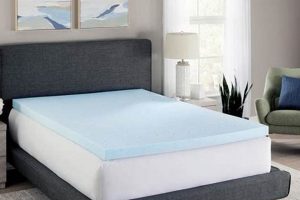
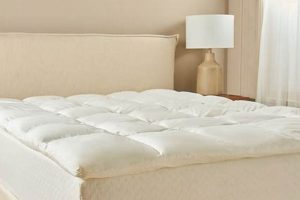
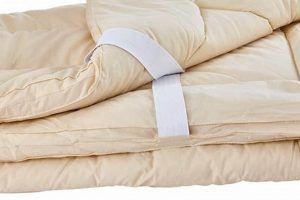
A bedding accessory designed to enhance comfort within the confined sleeping spaces of recreational vehicles, specifically tailored to fit the dimensions of a short queen-size bed. These items are generally constructed from materials such as memory foam, latex, or down alternatives, providing an additional layer of cushioning on top of the existing mattress. Their purpose is to modify the feel of the bed, either firming it up or making it softer, according to individual preferences.
The importance of selecting a suitable sleeping surface addition in an RV setting is underscored by the limited space and often less-than-ideal factory-installed mattresses. A thoughtfully chosen product can significantly improve sleep quality, alleviate pressure points, and even help regulate temperature during the night. Historically, RV owners often overlooked this aspect of outfitting their vehicles; however, awareness of the impact of sleep on overall travel experience has led to increased demand for specialized bedding solutions.
The subsequent discussion will delve into the various types of these enhancements available, factors to consider when making a purchase, and tips for maintaining them in good condition. Furthermore, the advantages and disadvantages of different materials will be examined, alongside a review of prominent brands and models commonly used in RVs.
Tips for Selecting a Suitable Mattress Topper for an RV Queen Bed
Optimal selection requires careful consideration of multiple factors to ensure enhanced comfort and longevity within the specific constraints of an RV environment.
Tip 1: Material Consideration: Evaluate material options based on individual preferences and environmental factors. Memory foam offers pressure relief, but may retain heat. Latex provides a balance of support and breathability. Down alternatives are lightweight and hypoallergenic, suitable for those with sensitivities.
Tip 2: Thickness Assessment: Assess thickness in relation to the existing RV mattress. Thicker options provide greater cushioning but may exacerbate space limitations. Ensure adequate headroom and ease of movement within the sleeping area.
Tip 3: Size Verification: Confirm dimensions match the RV queen bed precisely. A standard queen may not fit, as RV queen sizes are often slightly shorter. Accurate measurements prevent overhang or gaps, optimizing comfort and functionality.
Tip 4: Density Evaluation: Higher density foam typically equates to increased durability and support. Individuals requiring substantial support should opt for denser materials, while those seeking plushness may prefer lower densities.
Tip 5: Temperature Regulation: Consider materials designed to regulate temperature, particularly if traveling in varying climates. Gel-infused memory foam or breathable latex can mitigate heat retention, promoting cooler sleep.
Tip 6: Secure Fit Mechanism: Explore options with straps or corner anchors to secure to the RV mattress. Movement during travel can displace the topper, compromising comfort and potentially causing damage.
Tip 7: Weight Factor: Account for the additional weight, especially in smaller RVs or those with weight restrictions. Lighter materials minimize impact on fuel efficiency and overall vehicle load.
Selecting a suitable sleeping surface enhancement for an RV queen bed necessitates a strategic approach, balancing comfort requirements with practical limitations. Attention to material, dimensions, and features contributes to an improved sleep experience while on the road.
The next section will cover Maintenance practices to prolong its lifespan and preserve hygiene within the confined space.
1. Dimensions

The accurate measurement of “dimensions” is paramount when selecting an RV queen bedding enhancement, directly affecting the product’s functionality and comfort. RV queen beds are typically shorter and narrower than standard queen-size mattresses. A mismatch in dimensions leads to overhang, insufficient coverage, or bunching, all of which compromise sleep quality and can accelerate wear and tear of both the topper and the underlying mattress. For example, a topper intended for a standard queen size (60 inches wide by 80 inches long) will not fit properly on a typical RV queen (60 inches wide by 75 inches long), resulting in either an unsupported edge or requiring the user to fold or cut the product, which is often detrimental to its integrity. Improper fit not only reduces comfort but also poses a safety hazard by creating a tripping point or hindering movement within the confined space of the RV.
The dimensional accuracy requirement extends beyond length and width to include the topper’s thickness. A thicker topper, while potentially increasing comfort, can significantly reduce headroom within the RV. This limitation can be particularly problematic in RVs with overhead storage compartments or low ceilings. Furthermore, excessive thickness can strain the RV’s bed frame or lifting mechanisms, leading to premature failure. Conversely, a topper that is too thin may provide insufficient support, negating its intended purpose. Selecting a thickness that balances comfort enhancement with spatial constraints is therefore critical. Real-world examples involve RV owners who have replaced overly thick toppers due to discomfort and restricted movement within their sleeping quarters, highlighting the importance of dimensional awareness.
In summary, the connection between “dimensions” and the selection of an RV queen bedding enhancement is crucial. Correct measurements are essential for ensuring a comfortable, safe, and functional sleeping environment. Failure to account for the specific dimensions of an RV queen bed leads to suboptimal performance and potentially costly replacements. Accurately assessing the available space and matching the topper’s dimensions accordingly is a fundamental step in optimizing sleep quality while adhering to the spatial limitations inherent in recreational vehicle travel.
2. Material

The selection of material is a primary determinant in the performance and suitability of a bedding enhancement tailored for an RV queen-sized mattress. Material properties directly influence comfort, durability, temperature regulation, and overall user satisfaction within the confined and often variable conditions of recreational vehicle use.
- Memory Foam Composition
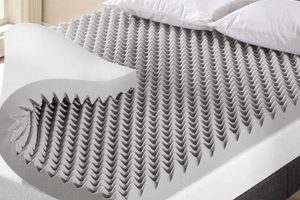
Memory foam, typically polyurethane-based, is widely utilized for its pressure-relieving qualities. Its viscoelastic nature allows it to conform to the body’s contours, distributing weight evenly and minimizing pressure points. However, traditional memory foam is known for heat retention, which can be exacerbated in the smaller, less ventilated sleeping areas of RVs. Gel-infused memory foam and open-cell structures attempt to mitigate this by promoting airflow, but effectiveness varies.
The density of memory foam also affects its support and longevity; higher densities offer greater support but can be less breathable. Real-world examples include users in warmer climates opting for alternative materials due to the heat retention of standard memory foam. - Latex Characteristics
Latex presents an alternative to memory foam, derived from either natural or synthetic sources. Natural latex, harvested from rubber trees, offers superior breathability and resilience compared to synthetic counterparts. It also possesses inherent antimicrobial properties. Dunlop and Talalay are two common processing methods affecting latex density and feel; Dunlop is denser and firmer, while Talalay is softer and more consistent. Latex is generally more expensive than memory foam, but its durability and temperature regulation benefits often justify the cost, particularly for full-time RVers. RV owners frequently cite the cooler sleeping surface of latex as a significant advantage during summer months.
- Down and Down Alternative Fillings
Down and down alternative fillings provide a softer, more plush feel compared to foam or latex. Down, derived from the plumage of ducks and geese, offers excellent insulation but can be problematic for allergy sufferers and is susceptible to moisture damage. Down alternatives, typically made from synthetic fibers like polyester, mimic the softness of down while being hypoallergenic and easier to clean. These options are lighter and more compressible, advantageous for RVs with limited storage space. However, they generally offer less support than foam or latex and may compress over time, reducing their effectiveness. Examples include RV owners with limited storage preferring down alternative toppers for their ease of packing and cleaning.
- Specialty Fabrics and Coatings
Beyond the core material, surface fabrics and coatings play a crucial role. Breathable fabrics like cotton or bamboo promote airflow and wick away moisture, enhancing comfort. Waterproof or water-resistant coatings protect the topper from spills and stains, extending its lifespan, particularly important in RVs where spills are more likely. Antimicrobial treatments can inhibit the growth of bacteria and mold, contributing to a healthier sleeping environment. These features are often marketed as value-added benefits, but their actual effectiveness depends on the quality of the materials and manufacturing processes. RV users with children or pets often prioritize toppers with waterproof coatings for added protection.
The ultimate selection hinges on balancing individual preferences with the practical constraints of RV travel. No single material is universally superior; instead, the optimal choice reflects a careful assessment of desired comfort levels, climate conditions, and lifestyle considerations. Users should weigh the pros and cons of each material type, considering factors such as temperature regulation, support, durability, and maintenance requirements to ensure a comfortable and hygienic sleeping environment within their recreational vehicle.
3. Thickness
Thickness is a critical attribute of a bedding enhancement for RV queen mattresses, directly influencing comfort, support, and spatial efficiency within the typically confined environment of a recreational vehicle. The selection of an appropriate thickness requires careful consideration to balance desired comfort improvements with the practical limitations of space and weight.
- Impact on Comfort and Support
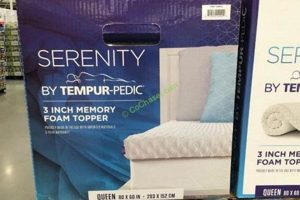
A thicker topper generally provides increased cushioning and pressure relief, which is particularly beneficial for individuals seeking to improve the comfort of a firm or worn RV mattress. For instance, a 3-inch memory foam topper can significantly reduce pressure points on the hips and shoulders compared to a 1-inch model. However, the relationship between thickness and support is not linear; excessively thick, low-density materials may compress excessively, negating their intended benefit. Therefore, material density must be considered in conjunction with thickness to ensure adequate support.
- Spatial Considerations Within RVs
The limited headroom in many RVs necessitates careful consideration of topper thickness. Adding several inches to the mattress height can significantly reduce the available space between the sleeping surface and the ceiling, potentially causing discomfort or restricting movement. This is especially relevant in RVs with overhead storage compartments or sleeping platforms. In such cases, a thinner topper, or one constructed from a lower-profile material like latex, may be a more practical choice.
- Weight Implications for Vehicle Load
Topper thickness directly correlates with weight, particularly for dense materials like memory foam. Increased weight can impact fuel efficiency and overall vehicle load capacity, which is a crucial consideration for RV travel. For example, a thick memory foam topper can add several pounds to the mattress, contributing to the total weight of the RV. Lighter materials, such as down alternatives or thinner latex layers, offer a compromise for weight-sensitive applications.
- Effect on Bedding Fit and Maintenance
The thickness of the topper influences the fit of standard bedding, such as fitted sheets. A thicker topper may require deep-pocket sheets to ensure proper coverage and prevent slippage. Additionally, thicker toppers can be more challenging to clean and maintain due to their increased size and weight. Thinner models are often easier to handle and may be more suitable for RV owners who prioritize ease of maintenance.
In summary, the thickness of a bedding accessory for an RV queen mattress is a multifaceted consideration that impacts comfort, spatial efficiency, vehicle load, and maintenance. Selecting the optimal thickness involves balancing desired comfort enhancements with the practical constraints of the RV environment. Therefore, a thorough assessment of individual needs and vehicle specifications is essential for making an informed decision.
4. Density
Density, measured in pounds per cubic foot (PCF), is a crucial attribute of a mattress topper designed for RV queen beds, directly influencing its support characteristics, durability, and overall lifespan within the often-constrained environments of recreational vehicles. Understanding density’s implications is essential for selecting a product that balances comfort and longevity.
- Support and Pressure Relief
Higher-density materials generally provide greater support and resistance to compression, crucial for individuals seeking relief from pressure points. For example, a 5 PCF memory foam topper will offer significantly more support than a 3 PCF model, preventing excessive sinking and maintaining spinal alignment. This enhanced support is particularly beneficial in RVs where the existing mattress may lack adequate support. Conversely, lower-density toppers may conform more readily to the body’s contours, providing a softer feel, but at the cost of reduced support and potentially faster degradation.
- Durability and Longevity
Density is directly correlated with a topper’s ability to withstand prolonged use and resist sagging or permanent deformation. Higher-density foams possess a more robust cell structure, ena
bling them to retain their shape and support characteristics over extended periods. A higher-density topper will generally maintain its original dimensions and comfort level for a longer duration than a lower-density alternative, representing a more cost-effective long-term investment, especially for full-time RVers. RV owners who frequently use their vehicles benefit from the increased lifespan afforded by higher-density materials. - Temperature Regulation
Material density impacts airflow and heat retention. Higher-density foams tend to restrict airflow, potentially trapping heat and leading to discomfort, particularly in warmer climates. In contrast, open-cell foam structures or materials like latex offer enhanced breathability, mitigating heat buildup. Lower density toppers may also allow for better air circulation, promoting a cooler sleeping environment. However, the impact of density on temperature regulation is often intertwined with the specific material composition and any incorporated cooling technologies, such as gel infusions.
- Weight and Handling
Density directly influences the weight of the topper, which can be a significant consideration in RVs due to weight restrictions and limited storage space. Higher-density toppers are typically heavier and more cumbersome to handle, making them less practical for RV owners who frequently move or reposition their bedding. Conversely, lower-density options are lighter and easier to maneuver, facilitating easier cleaning and storage. The weight of the topper should be balanced with the desired level of support and durability, considering the physical constraints of the RV and the user’s capabilities.
In summary, density serves as a critical indicator of a mattress topper’s suitability for an RV queen bed, affecting its support, durability, temperature regulation, and weight. Selecting the appropriate density requires a careful evaluation of individual needs and the specific characteristics of the RV environment, ensuring a balance between comfort, longevity, and practicality. A well-informed decision regarding density can significantly enhance the overall sleep experience during RV travel.
5. Support
In the context of a bedding enhancement designed for RV queen mattresses, the term “support” pertains to the degree to which the topper maintains proper spinal alignment and distributes body weight to minimize pressure points. Adequate support is crucial for promoting restful sleep and preventing musculoskeletal discomfort, particularly in the often-uncomfortable sleeping environments of recreational vehicles.
- Spinal Alignment Maintenance
The primary role of support is to maintain the natural curvature of the spine during sleep. A topper that offers insufficient support can cause the spine to sag or misalign, leading to back pain and stiffness. Conversely, a topper providing adequate support ensures that the spine remains properly aligned, reducing strain on the muscles and ligaments. For instance, a memory foam topper with a high density (4-5 PCF) offers superior spinal alignment compared to a low-density (2-3 PCF) alternative. This is especially important for individuals with pre-existing back conditions or those who spend extended periods sleeping in their RV.
- Pressure Point Reduction
Support also encompasses the distribution of body weight to minimize pressure on specific areas, such as the hips, shoulders, and knees. Excessive pressure on these points can restrict blood flow and cause discomfort, leading to tossing and turning during the night. A supportive topper conforms to the body’s contours, distributing weight evenly and reducing pressure on these sensitive areas. Latex toppers, known for their resilience and contouring abilities, are often recommended for their ability to alleviate pressure points. RVers who frequently experience joint pain may find significant relief from the pressure-reducing properties of a supportive topper.
- Edge Support and Stability
Edge support refers to the stability and support provided along the perimeter of the topper. Adequate edge support prevents the sleeper from rolling off the bed and maximizes the usable sleeping surface. In RVs, where space is often limited, maximizing the usable sleeping area is crucial. Toppers with reinforced edges or high-density foam along the perimeter offer enhanced edge support, providing a more stable and comfortable sleeping surface. This is particularly beneficial for couples sharing an RV queen bed.
- Material Density and Firmness
The density and firmness of the topper material directly impact its support characteristics. High-density foams and firmer materials offer greater resistance to compression, providing more substantial support for heavier individuals or those who prefer a firmer sleeping surface. Conversely, lower-density foams and softer materials conform more readily to the body’s contours, offering a plusher feel with less support. The optimal material density and firmness depend on individual preferences and body weight. RV owners should consider their personal comfort preferences and any specific support needs when selecting a topper for their RV queen bed.
The multifaceted nature of support underscores its importance in selecting an appropriate topper for an RV queen mattress. Proper spinal alignment, pressure point reduction, edge support, and appropriate material density collectively contribute to a comfortable and restorative sleep experience. By carefully considering these aspects, RV owners can enhance their sleep quality and overall well-being while traveling.
6. Durability
Durability, in the context of a “mattress topper rv queen,” represents the ability of the product to withstand the stresses of regular use and maintain its structural integrity and performance characteristics over an extended period. This attribute is particularly crucial for RV applications due to factors such as limited space, frequent transport, and variable environmental conditions.
- Material Resilience
The inherent resilience of the constituent materials directly impacts the overall durability. High-density memory foam or natural latex, for instance, exhibit greater resistance to compression and deformation compared to lower-density alternatives. This translates to a longer lifespan and sustained support capabilities. Examples include high-density memory foam maintaining its shape after prolonged use, while low-density foam may develop permanent indentations. The selection of inherently resilient materials is a primary determinant of longevity.
- Construction and Manufacturing Quality
The method of construction and the quality of manufacturing processes influence the topper’s ability to withstand stress and prevent premature failure. Reinforced stitching, secure seams, and robust bonding techniques contribute to structural integrity. Conversely, poorly constructed toppers may exhibit seam separation, material delamination, or uneven wear patterns, reducing their lifespan. A topper with reinforced edges, for example, will resist sagging or deformation at the perimeter, which is a common failure point.
- Resistance to Environmental Factors
RV environments often expose bedding accessories to temperature fluctuations, humidity, and potential spills or s
tains. A durable topper should exhibit resistance to these factors to prevent degradation and maintain hygiene. Waterproof or water-resistant coatings, antimicrobial treatments, and breathable fabrics contribute to enhanced resilience against environmental stressors. Toppers without such features may be more susceptible to mold growth, staining, or material breakdown, shortening their useful life. Material treatments that protect against UV degradation are also important for RVs parked in sunny locations. - Weight and Compression Resistance
The ability of the topper to withstand repeated compression from body weight is essential for maintaining its support and comfort characteristics over time. High-density materials and robust construction contribute to superior compression resistance. Toppers that exhibit excessive compression may lose their ability to provide adequate support and pressure relief, resulting in diminished comfort and potential discomfort. Consistent support and pressure relief are indicative of a durable topper that can withstand regular use without significant degradation.
Collectively, these facets of durability determine the long-term value and performance of a “mattress topper rv queen.” Choosing a product that prioritizes resilient materials, quality construction, environmental resistance, and compression resistance is essential for ensuring a comfortable and supportive sleep surface that withstands the rigors of RV travel.
Frequently Asked Questions
This section addresses common inquiries regarding bedding enhancements designed for recreational vehicle queen-sized mattresses, offering clarity on selection, maintenance, and performance expectations.
Question 1: Are RV queen mattresses the same size as standard queen mattresses?
No. RV queen mattresses typically measure 60 inches wide by 75 inches long, while standard queen mattresses measure 60 inches wide by 80 inches long. Purchasing a standard queen-size bedding enhancement for an RV queen bed results in improper fit and compromised comfort.
Question 2: What is the recommended thickness for a mattress topper in an RV?
Recommended thickness depends on available headroom and individual comfort preferences. Generally, a thickness between 2 and 4 inches provides adequate cushioning without significantly reducing headroom. Assess spatial constraints within the RV before making a selection.
Question 3: How does material density affect the performance of a mattress topper?
Higher density materials offer greater support and durability. However, they may also retain more heat. Lower density materials conform more readily to the body but may compress more quickly over time. Material density is a critical factor in determining the overall lifespan and comfort characteristics of the product.
Question 4: Can mattress toppers be cleaned?
Cleaning methods depend on the materials. Many models feature removable, machine-washable covers. The core material may require spot cleaning or professional cleaning services. Consult the manufacturer’s care instructions for specific guidance.
Question 5: How often should a mattress topper be replaced?
Replacement frequency depends on the material, density, and usage intensity. Generally, replacing the item every 3 to 5 years is recommended to maintain optimal support and hygiene. Visible signs of wear, such as sagging or permanent indentations, indicate the need for replacement.
Question 6: Does a mattress topper eliminate the need for a new mattress?
A mattress topper enhances comfort but does not rectify underlying structural issues with a deteriorated mattress. If the existing mattress is severely damaged or lacks adequate support, replacing the mattress is advisable. A topper provides an added layer of comfort but cannot compensate for a fundamentally flawed sleeping surface.
Selecting the appropriate bedding enhancement requires careful consideration of dimensions, material properties, and maintenance requirements. Adhering to manufacturer guidelines ensures optimal performance and extends the product’s lifespan.
The subsequent section offers a conclusion to this examination.
Conclusion
The preceding discussion has delineated the key attributes and considerations associated with selecting a “mattress topper rv queen.” Dimensions, material composition, thickness, density, support characteristics, and durability were identified as critical factors influencing performance and suitability within the specific context of recreational vehicle usage. The information presented serves to inform purchasing decisions, enabling RV owners to optimize their sleep environment while adhering to spatial and weight constraints inherent in RV travel.
The selection of a suitable sleeping surface enhancement represents a significant investment in comfort and well-being. Informed decision-making, grounded in an understanding of the product’s attributes and the unique demands of the RV environment, will contribute to improved sleep quality and overall travel satisfaction. Further research into specific brands and models is encouraged to tailor the selection to individual needs and preferences.