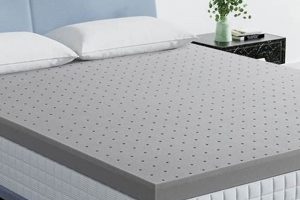
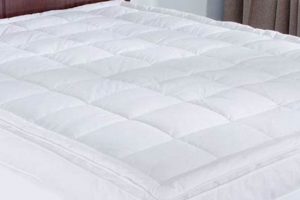
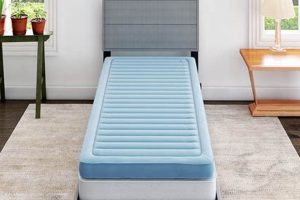
Thickness is a primary characteristic of a mattress topper, influencing its impact on comfort and support. The measurement, typically expressed in inches, dictates the degree of cushioning and pressure relief provided. For instance, a thinner option might offer subtle enhancement, while a thicker one presents a more significant alteration to the bed’s feel. Understanding this dimension is crucial when selecting a topper.
The chosen dimension significantly affects sleep quality by modulating support and alleviating pressure points. Thicker profiles are often preferred for enhanced comfort and can provide relief from conditions such as back pain. The specification emerged as a consumer consideration alongside the rise of memory foam and other specialized bedding materials, which underscored the need to customize sleep surfaces.
Considering the aforementioned role, an investigation of optimal thickness for different sleeping positions, body types, and existing mattress conditions follows. The subsequent sections will delve into these factors, enabling informed decisions regarding topper selection and ensuring a comfortable and supportive sleep environment.
Selecting the Right Topper Thickness
Selecting the appropriate topper thickness is crucial for optimizing sleep quality and addressing specific comfort needs. Consider these guidelines to inform the decision.
Tip 1: Assess Existing Mattress Firmness: Determine the current firmness of the mattress. If it’s overly firm, a thicker topper, ranging from 3 to 4 inches, can significantly soften the surface. A slightly firm mattress might only require a 2-inch topper for subtle enhancement.
Tip 2: Consider Sleeping Position: Side sleepers generally benefit from thicker toppers (3-4 inches) to cushion the shoulders and hips. Back and stomach sleepers often find that a medium thickness (2-3 inches) provides adequate support without excessive sinking.
Tip 3: Evaluate Body Weight: Heavier individuals may need a thicker topper (4+ inches) to prevent bottoming out and ensure sufficient support. Lighter individuals can often achieve desired comfort with a thinner option (2-3 inches).
Tip 4: Identify Pressure Points: Focus on areas where pressure is most prominent, such as the shoulders, hips, and knees. A topper thickness that adequately cushions these points is essential.
Tip 5: Account for Mattress Type: Innerspring mattresses, which tend to be firmer, may require a thicker topper than memory foam mattresses, which naturally provide more contouring.
Tip 6: Read Product Specifications: Carefully examine the manufacturer’s specifications regarding density and material composition, as these factors influence the feel of a topper, irrespective of the listed thickness.
Tip 7: Check your bed frame: A thicker topper may make your mattress too tall for your current bed frame. Be sure to measure and check the height limits to ensure the bed will be the correct height for you.
Prioritizing these factors ensures the chosen topper adequately addresses comfort and support needs, leading to improved sleep quality.
With a better understanding of selection considerations, the next step involves exploring specific topper materials and their impact on overall performance.
1. Mattress Firmness and Topper Thickness

Mattress firmness fundamentally influences the required topper thickness. A firm mattress, characterized by minimal give and limited contouring, necessitates a thicker topper to provide adequate pressure relief and cushioning. The goal is to compensate for the lack of compliance in the underlying mattress, softening the sleep surface and reducing pressure on prominent body parts. Conversely, a softer mattress, already offering a degree of contouring and sinkage, may only require a thinner topper for subtle comfort enhancement or targeted support. The existing mattress firmness, therefore, acts as the primary determinant for selecting an appropriate topper thickness.
Consider a practical example: an individual experiencing hip pain while sleeping on a firm innerspring mattress. In this scenario, a 3-4 inch memory foam topper could effectively redistribute weight and reduce pressure concentration on the hips, leading to pain relief. In contrast, placing the same topper on a plush pillow-top mattress might result in excessive sinkage and inadequate support, exacerbating discomfort. This illustrates the necessity of accurately assessing the mattress firmness prior to selecting a topper and its associated thickness.
In summation, the relationship between mattress firmness and topper thickness is inversely proportional. A firmer mattress typically calls for a thicker topper to enhance comfort and pressure relief, while a softer mattress generally requires a thinner topper for subtle adjustments. Understanding this interplay is essential for optimizing the sleep experience and achieving the desired balance of support and cushioning.
2. Sleeping position

Sleeping position is a critical determinant of optimal topper thickness, influencing spinal alignment, pressure distribution, and overall sleep comfort. Different sleeping positions necessitate varying levels of support and cushioning to maintain proper posture and alleviate pressure points.
- Side Sleeping and Topper Thickness
Side sleeping concentrates pressure on the shoulders and hips. A thicker topper (3-4 inches) is generally recommended to provide sufficient contouring and pressure relief in these areas. Inadequate thickness can lead to spinal misalignment and discomfort. The enhanced cushioning afforded by a thicker topper allows for deeper compression and better weight distribution, minimizing stress on joints and promoting proper spinal alignment.
- Back Sleeping and Topper Thickness
Back sleeping requires a balance of support and cushioning to maintain the natural curvature of the spine. A medium-thickness topper (2-3 inches) often provides adequate support without excessive sinkage. A topper that is too thick can cause the hips to sink excessively, leading to lower back pain. The goal is to provide gentle contouring while maintaining spinal alignment.
- Stomach Sleeping and Topper Thickness
Stomach sleeping is generally discouraged due to its potential to strain the neck and back. However, if this position is preferred, a thinner topper (1-2 inches) is advisable to minimize spinal curvature. A thicker topper can exacerbate the arching of the back, leading to discomfort. The emphasis is on providing a firm, supportive surface to maintain a more neutral spinal alignment.
- Combination Sleeping and Topper Thickness
Combination sleep
ers, who switch positions throughout the night, require a topper that accommodates various needs. A medium-thickness topper (2-3 inches) typically provides a reasonable compromise, offering adequate support for back sleeping and sufficient cushioning for side sleeping. Selecting a topper with zoned support, featuring varying densities in different areas, can further enhance comfort for combination sleepers.
These considerations demonstrate the direct relationship between sleeping position and recommended topper thickness. By aligning topper selection with individual sleep preferences, one can optimize comfort, support, and spinal alignment, leading to improved sleep quality. The impact of body weight on this relationship should also be factored in, and will be addressed in the following section.
3. Body Weight and Topper Thickness

Body weight is a significant factor in determining the appropriate topper thickness. A heavier individual exerts more pressure on the mattress, necessitating a thicker topper to prevent bottoming out and ensure adequate support. Conversely, a lighter individual requires less thickness to achieve the desired level of cushioning and pressure relief. The principle is that the topper must possess sufficient material to compress and conform to the body’s contours without collapsing under the applied weight.
For instance, an individual weighing over 250 pounds may require a 4-inch or thicker topper to prevent the underlying mattress from being felt through the topper. Without sufficient thickness, the individual may experience discomfort and inadequate support, negating the benefits of the topper. A lighter individual, weighing under 150 pounds, might find a 2-inch or 3-inch topper provides sufficient cushioning and pressure relief. The practical significance of this understanding lies in optimizing comfort and extending the lifespan of both the mattress and the topper by preventing premature wear and compression.
In summary, body weight directly influences the required topper thickness. Selecting a topper that aligns with an individual’s weight ensures adequate support, pressure relief, and overall comfort. Failing to account for this relationship can lead to discomfort, reduced support, and premature degradation of the bedding components. Prioritizing this aspect contributes to a more restful sleep experience and maximizes the investment in sleep-related products.
4. Pressure Relief
Pressure relief is a primary function of a mattress topper, achieved by distributing body weight across a wider surface area, thereby reducing concentrated stress on specific points. The effectiveness of pressure relief is intrinsically linked to the topper’s thickness; greater thickness generally correlates with improved pressure distribution.
- Thickness and Immersion
A thicker topper allows for greater immersion of body contours, particularly around bony prominences like shoulders and hips. This immersion reduces the force exerted on these areas, mitigating discomfort and promoting circulation. For example, a side sleeper may experience reduced shoulder pain with a 4-inch topper compared to a 2-inch topper, due to the enhanced immersion and pressure redistribution.
- Material Density and Support
While thickness is a crucial factor, material density also plays a significant role. A high-density material, even at a moderate thickness, can provide substantial pressure relief by offering firmer support and preventing excessive sinkage. Conversely, a low-density material, regardless of thickness, may compress completely under pressure, offering minimal relief. Choosing a material that balances density and thickness is imperative.
- Sleeping Position Specifics
The ideal thickness for pressure relief varies depending on sleeping position. Side sleepers generally benefit from thicker toppers to accommodate the pressure points on the shoulders and hips. Back sleepers may require a medium thickness to support the natural curvature of the spine. Stomach sleepers may prefer a thinner option to avoid excessive arching of the back. Matching the thickness to the sleeping position is crucial for optimizing pressure relief.
- Addressing Pre-existing Conditions
Individuals with conditions such as arthritis or fibromyalgia often require enhanced pressure relief to minimize pain and discomfort. In such cases, a thicker topper with a conforming material like memory foam or latex can be highly beneficial. The increased thickness provides a greater buffer between the body and the underlying mattress, reducing pressure on sensitive areas and promoting restful sleep.
The interplay between topper thickness, material density, and sleeping position dictates the level of pressure relief achieved. Selecting a topper that adequately addresses these factors is essential for maximizing comfort and minimizing pain, ultimately enhancing sleep quality.
5. Material Density and Topper Thickness
Material density, measured in pounds per cubic foot (PCF), significantly influences the perceived firmness and support provided by a mattress topper, directly affecting the ideal thickness selection. Higher density materials, even at a moderate thickness, offer greater resistance to compression, resulting in a firmer feel and enhanced support. Conversely, lower density materials compress more readily, requiring greater thickness to achieve comparable support and pressure relief. Understanding this relationship is crucial for selecting a topper that meets individual comfort preferences and support needs. For example, a 5 PCF memory foam topper with a 3-inch thickness may provide similar support to a 4 PCF memory foam topper with a 4-inch thickness, depending on individual weight and sleeping position.
The interplay between material density and thickness dictates the longevity and performance of the topper. Higher density materials, due to their inherent resistance to compression, tend to maintain their shape and support characteristics for a longer duration compared to lower density counterparts. This durability is particularly important for individuals with higher body weights or those who experience significant pressure points. Conversely, a lower density material may degrade more rapidly, requiring more frequent replacement. The practical application of this knowledge lies in making informed purchasing decisions that balance initial cost with long-term value and performance.
In summary, material density and thickness are interconnected factors that collectively determine the overall comfort and support characteristics of a mattress topper. Selecting a topper that balances these two variables, based on individual weight, sleeping position, and comfort preferences, ensures optimal performance and longevity. Ignoring material density when considering thickness can lead to dissatisfaction and premature topper degradation, highlighting the importance of considering both factors in tandem.
6. Height Limits

Height limits, specifically concerning bed frames and bedroom space, are critical considerations when determining appropriate mattress topper thickness. Overlooking these constraints can lead to functional and aesthetic issues within the sleeping environment.
- Bed Frame Compatibility
Many bed frames have specific height limitations to accommodate the mattress and bedding. Adding a thick topper can exceed these limits, causing the mattress to sit too high. This can make entering and exiting the bed difficult and may compromise the bed frame’s structural integrity. Careful measurement of the existing frame and planned topper is essential to ensure compatibility.
- Headboard Obstruction
Excessive mattress height, resulting from a thick topper, can obstruct the visibility of the headboard. A headboard serves both aesthetic and functional purposes; a partially or fully obscured headboard diminishes the room’s design and potentially reduces its usability as a backrest. Calculating the combined height of the mattress and topper is important to preserve the headboard’s visual impact.
- Bedroom Space Constraints
Smaller bedrooms may be overwhelmed by an excessively tall bed. The visual dominance of a high mattress can make the room appear cramped and disproportionate. A thinner topper might be a better choice in such spaces, balancing comfort with spatial considerations. The dimensions of the room should be factored into the selection process to maintain a sense of balance and openness.
- Safety Considerations
An excessively high bed, particularly when combined with a slick topper surface, can pose a safety risk, especially for children or individuals with mobility limitations. The increased distance from the floor elevates the risk of falls. Selection of a topper thickness that maintains a manageable bed height is crucial to mitigate this risk.
Considering these factors related to height limits alongside comfort and support requirements ensures that the chosen topper enhances, rather than detracts from, the overall sleep environment. Balancing the desired feel with practical limitations is key to a successful topper selection process.
Frequently Asked Questions
The following questions address common concerns regarding mattress topper thickness selection.
Question 1: What is the thinnest mattress topper that still provides noticeable comfort?
A 1-inch topper may offer subtle comfort enhancement, primarily softening the initial feel of the mattress. Its impact is most noticeable on mattresses that are only slightly firmer than desired.
Question 2: Can a mattress topper be too thick?
Yes. An excessively thick topper can cause spinal misalignment, make getting in and out of bed difficult, and potentially exceed bed frame height limits. Individual circumstances must be considered when choosing a topper.
Question 3: How does topper thickness affect temperature regulation?
Thicker toppers may trap more heat, particularly if composed of dense materials like memory foam. Individuals prone to overheating should consider thinner options or toppers made with breathable materials like latex or open-cell foam.
Question 4: Is a thicker topper always better for pressure relief?
Not necessarily. Material density is also critical. A moderately thick, high-density topper may provide superior pressure relief compared to a very thick, low-density topper.
Question 5: How does topper thickness relate to mattress lifespan?
A thicker topper, by absorbing more impact, can help protect the underlying mattress from wear and tear, potentially extending its lifespan. However, an improperly chosen topper can accelerate mattress degradation.
Question 6: Should the topper thickness vary between different sides of the bed for couples with different needs?
While dual-sided toppers with differing thicknesses are uncommon, individual toppers can be used on each side of the bed to accommodate differing preferences or needs. Careful consideration of overall bed height is still warranted.
In summary, appropriate topper thickness requires a holistic assessment of mattress firmness, body weight, sleeping position, and material properties. There is no one-size-fits-all solution.
The next section explores specific mattress topper materials and their impact on thickness selection.
Determining Optimal Topper Thickness
This exploration of how thick should a mattress topper be reveals that the ideal dimension is not a fixed value but a variable dependent on a confluence of factors. Mattress firmness, sleeping position, body weight, material density, and existing height limitations all contribute to the determination. A thorough assessment of these elements is paramount to selecting a topper that adequately addresses individual needs.
The implications of this analysis extend beyond mere comfort. The appropriately sized topper serves as a facilitator of proper spinal alignment, pressure relief, and extended mattress lifespan. Individuals are encouraged to carefully consider these factors to make an informed decision and optimize their sleep environment for long-term well-being.