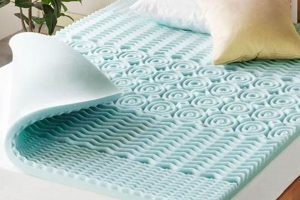
A convoluted foam pad, typically made of memory foam or polyurethane foam, designed to be placed atop a conventional mattress to enhance comfort. Its distinctive surface resembles an egg carton, featuring raised peaks and recessed valleys. This design is intended to improve air circulation and distribute weight more evenly than a flat mattress surface.
The unique configuration provides several potential advantages. The increased airflow can help regulate temperature, reducing overheating during sleep. The contoured surface may alleviate pressure points, potentially minimizing discomfort for individuals experiencing joint pain or stiffness. Furthermore, it offers a cost-effective method to upgrade an existing sleep surface without replacing the entire mattress. This type of bedding addition became increasingly popular in the late 20th century as foam manufacturing techniques advanced, offering a readily accessible avenue for enhanced sleep quality.
The following sections will delve into the specific materials used in production, examining the variations in density and their impact on durability and support. Subsequently, the discussion will address cleaning and maintenance procedures essential for preserving its longevity and hygiene. Finally, a comparative analysis will explore available options and their suitability for diverse sleeping preferences and needs.
Considerations for Egg Topper Mattress Usage
The following are guidelines to maximize the benefits and longevity of a convoluted foam mattress addition.
Tip 1: Material Selection: Examine the density of the foam. Higher density materials typically provide greater support and increased lifespan. However, they may also retain more heat. Evaluate the trade-off based on individual preferences and climate.
Tip 2: Size Compatibility: Ensure the dimensions align precisely with the underlying mattress. Overhang or insufficient coverage compromises support and may lead to premature wear at the edges.
Tip 3: Support Base Assessment: The effectiveness is contingent upon the condition of the existing mattress. A severely sagging or damaged mattress will negate many of the benefits. Address significant structural issues before implementation.
Tip 4: Proper Ventilation: Allow the foam to air out thoroughly upon initial unboxing and periodically thereafter. This mitigates off-gassing and prevents moisture buildup, which can promote mold growth.
Tip 5: Protective Covering: Utilize a mattress protector specifically designed to accommodate the textured surface. This safeguards against spills, stains, and dust mites, extending the product’s useful life.
Tip 6: Rotation Strategy: Rotate the component regularly, ideally every month. This promotes even wear and prevents localized compression, thereby maintaining consistent support across the entire surface.
Tip 7: Cleaning Protocol: Spot clean spills immediately with a mild detergent and water. Avoid harsh chemicals or excessive moisture. For deep cleaning, consider professional mattress cleaning services.
Adherence to these recommendations promotes optimal performance and prolongs the functionality of a convoluted foam sleep surface enhancement.
The concluding section will provide a summary of key considerations and suggest potential alternatives.
1. Material Density
Material density is a critical determinant of the performance characteristics of a convoluted foam mattress enhancement. It significantly influences factors such as support, durability, and overall comfort. The density rating, typically measured in pounds per cubic foot (PCF), directly correlates with the amount of material packed into a given volume, impacting its ability to withstand compression and maintain its shape over time.
- Support and Pressure Distribution
Higher density foam provides greater resistance to compression, resulting in improved support for the sleeper. This enhanced support facilitates more even weight distribution, minimizing pressure points on sensitive areas such as the shoulders and hips. Conversely, low-density foam compresses more readily, potentially leading to inadequate support and increased pressure point discomfort. Real-world examples include individuals with back pain benefiting from high-density options that maintain spinal alignment, while lighter individuals may find lower-density variants sufficient.
- Durability and Longevity
Density directly affects the lifespan. High-density foam is more resistant to breakdown and deformation under repeated stress, extending the product’s useful life. Lower density foam is prone to quicker degradation, resulting in sagging and loss of support over time. For example, a 5 PCF foam will generally outlast a 2 PCF foam under similar usage conditions. Frequent use requires a higher density to avoid premature replacement.
- Temperature Regulation
Density can impact temperature regulation. Denser foams tend to retain more heat due to reduced airflow. This can be a disadvantage for individuals who sleep hot. Lower density foams, with their increased airflow, may offer better temperature control. However, the convoluted design already enhances airflow compared to solid foam, mitigating this issue somewhat. Consider selecting materials with open-cell structures to promote breathability.
- Cost and Quality
There is a correlation between density and price. Higher density foams typically command a higher price point due to the increased material usage and often superior manufacturing processes. While a lower-density option may seem more economical initially, the reduced lifespan and compromised support may result in higher costs in the long run due to the need for more frequent replacements. A balance between cost and performance must be considered.
In conclusion, material density is a pivotal factor to evaluate when selecting a convoluted foam mattress overlay. A higher density generally translates to superior support, durability, and pressure relief but may also contribute to increased heat retention and higher cost. Understanding the implications of density allows consumers to make informed decisions that align with their individual needs and budgets, maximizing the benefits and longevity of their sleep surface enhancement.
2. Peak Height

Peak height, in the context of a convoluted foam mattress overlay, refers to the vertical distance between the apex of the raised protrusions and the base of the recessed valleys in its distinctive egg carton-like surface. This dimension is a critical determinant of several performance characteristics, influencing air circulation, pressure distribution, and overall comfort.
- Air Circulation and Temperature Regulation
Increased peak height creates la
rger channels for air to flow between the topper and the sleeper. This enhanced ventilation facilitates heat dissipation, reducing the likelihood of overheating during sleep. Higher peaks promote greater airflow, making it a beneficial feature for individuals who tend to sleep hot or reside in warmer climates. Conversely, lower peaks offer less pronounced airflow, which may be preferable in cooler environments or for those who prefer a warmer sleep surface. Real-world examples include the use of toppers with high peaks in tropical climates to improve sleep comfort and the selection of toppers with lower peaks for winter use in colder regions. - Pressure Redistribution and Support
The height of the peaks directly influences the degree to which the topper conforms to the body’s contours. Higher peaks allow for greater compression and deflection, potentially offering more effective pressure relief on sensitive areas like the shoulders, hips, and spine. This can be especially advantageous for side sleepers who experience concentrated pressure on these areas. However, excessively high peaks may compromise overall support, leading to a sinking sensation. The ideal peak height provides a balance between pressure relief and adequate spinal alignment. Orthopedic applications often benefit from carefully calibrated peak heights for customized pressure relief.
- Motion Isolation and Transfer
Peak height contributes to motion isolation, mitigating the transfer of movement from one side of the bed to the other. Higher peaks, due to their increased compressibility, can absorb and dampen motion more effectively, reducing disturbances for sleeping partners. This is particularly relevant for couples where one partner is a restless sleeper. Lower peaks offer less motion isolation. However, the material composition, such as memory foam versus polyurethane foam, also plays a significant role in motion isolation. The interaction between peak height and material properties determines the overall motion isolation performance.
- Durability and Compression Resistance
The longevity of the topper can be affected by the peak height, particularly in conjunction with material density. Higher peaks are potentially more susceptible to compression and flattening over time, especially if the foam is of lower density. This compression can reduce the effectiveness of air circulation and pressure relief. Lower peaks, while offering less initial conformance, may exhibit greater resistance to long-term compression. High-density foam combined with moderate peak height generally provides the best balance of comfort and durability. Regular rotation of the topper can also help to mitigate localized compression and extend its lifespan.
In summation, peak height is a significant design parameter that influences the performance and suitability of a convoluted foam mattress. A careful assessment of individual sleeping preferences, body type, and environmental factors is crucial for selecting a topper with the optimal peak height to achieve the desired balance of comfort, support, and durability. The interplay between peak height and other factors, such as material density and firmness, determines the overall effectiveness and long-term satisfaction with the sleep surface enhancement.
3. Air Circulation
Air circulation is a critical factor influencing comfort and sleep quality when considering a convoluted foam mattress overlay. The unique design inherently promotes airflow, differentiating it from flat foam surfaces. This ventilation plays a vital role in temperature regulation and moisture management.
- Convoluted Surface Geometry
The defining characteristic of this bedding accessory is its egg-crate-like topography, featuring raised peaks and recessed valleys. This undulating surface creates channels that facilitate air movement between the sleeper’s body and the mattress. These channels enable convective heat transfer, allowing warm air to dissipate and cooler air to circulate, reducing the potential for overheating during sleep. Examples include individuals experiencing night sweats finding relief due to improved airflow preventing moisture accumulation.
- Material Permeability
The type of foam used significantly impacts air permeability. Open-cell foam structures allow for greater airflow compared to closed-cell foams. Open-cell memory foam, while conforming to the body, still allows for some degree of ventilation. In contrast, traditional closed-cell memory foam tends to trap heat. The selection of foam type, therefore, should be based on individual temperature preferences and environmental conditions. Products advertised as “cooling” often utilize open-cell foam and may incorporate gel infusions to further enhance heat dissipation.
- Moisture Management
Adequate air circulation prevents moisture buildup within the mattress and topper. Trapped moisture creates an environment conducive to microbial growth, potentially leading to unpleasant odors and allergic reactions. Improved airflow helps to wick away perspiration and maintain a drier sleep surface. This is particularly important in humid climates or for individuals prone to excessive sweating. A dry sleeping environment contributes to both hygiene and comfort.
- Impact on Sleep Quality
Temperature regulation is intrinsically linked to sleep quality. Maintaining a comfortable body temperature throughout the night is crucial for achieving restful sleep. Overheating can disrupt sleep cycles, leading to restlessness and reduced sleep duration. By promoting efficient air circulation, the convoluted design helps to regulate body temperature and minimize sleep disturbances caused by thermal discomfort. Studies have shown a correlation between improved sleep temperature and enhanced sleep quality.
In conclusion, the design and material composition of a convoluted foam mattress are crucial determinants of its air circulation capabilities. Superior ventilation promotes temperature regulation, moisture management, and ultimately, enhanced sleep quality. Prospective purchasers should carefully consider these factors to select a product that aligns with their individual needs and preferences.
4. Pressure Relief
Pressure relief, in the context of convoluted foam mattress overlays, is a primary benefit stemming from the design and material properties of the product. Its effectiveness hinges on the capacity of the topper to redistribute weight, minimizing concentrated pressure on specific areas of the body.
- Convoluted Surface Distribution
The defining egg-crate structure of the topper inherently promotes pressure distribution. The raised peaks and recessed valleys allow for localized compression, conforming to the body’s contours and reducing pressure on prominent bony areas such as the hips, shoulders, and spine. This contrasts with a flat mattress surface, where weight is more uniformly distributed, potentially leading to pressure point discomfort. For instance, side sleepers often experience reduced shoulder and hip pain due to the contouring support of the convoluted surface.
- Material Conformability
The type of foam used is crucial in determining the pressure-relieving capabilities. Memory foam, viscoelastic in nature, excels at conforming
to the body’s shape and evenly distributing weight, thereby minimizing pressure concentration. Polyurethane foam, while less conforming, can still provide adequate pressure relief depending on its density and firmness. The choice of foam should align with individual preferences and pressure relief needs. Individuals with fibromyalgia or arthritis may benefit significantly from the enhanced conformability of memory foam. - Impact on Spinal Alignment
Effective pressure relief contributes to improved spinal alignment during sleep. By reducing pressure points, the topper allows the body to assume a more natural posture, minimizing strain on the spine and surrounding muscles. Proper spinal alignment is essential for reducing back pain and promoting overall musculoskeletal health. Individuals with pre-existing spinal conditions should consult with a healthcare professional to determine the suitability of a convoluted foam mattress for their specific needs.
- Influence on Circulation
Excessive pressure on certain areas of the body can impede blood circulation, potentially leading to discomfort, numbness, and tingling sensations. By distributing weight more evenly, the topper can alleviate pressure on blood vessels, promoting improved circulation throughout the night. This is particularly beneficial for individuals with circulatory issues or those who spend extended periods in bed. Enhanced circulation can also contribute to reduced inflammation and improved tissue oxygenation.
The facets of pressure relief underscore the inherent advantages of a convoluted foam mattress. The capacity to redistribute weight, conform to body contours, and promote proper spinal alignment and circulation significantly impacts sleep quality and overall comfort. These benefits are most pronounced when the correct material and design are selected based on individual needs and preferences.
5. Mattress Protection
Mattress protection, as it relates to convoluted foam mattress overlays, encompasses strategies and products employed to safeguard both the overlay and the underlying mattress from damage, wear, and hygiene concerns. The unique structure and material composition of these overlays necessitate specific protective measures to ensure their longevity and maintain a sanitary sleep environment.
- Barrier Against Spills and Stains
A primary function of mattress protection is to create a barrier against liquids and stains. Convoluted foam, particularly memory foam, is susceptible to absorbing spills, which can lead to permanent staining and potential microbial growth. Waterproof or water-resistant mattress protectors prevent liquids from penetrating the foam, preserving its integrity and appearance. Real-world applications include the use of protectors in households with children or pets, where spills are more likely. Furthermore, a stain-free surface promotes a cleaner and more hygienic sleep environment.
- Mitigation of Wear and Tear
Mattress protectors also serve to mitigate wear and tear on the convoluted foam itself. The peaks and valleys of the surface are vulnerable to compression and abrasion over time, particularly from body weight and friction against bedding. A protective layer distributes pressure more evenly, reducing localized stress on the foam and extending its lifespan. For example, a protector can prevent the flattening of peaks in areas that experience frequent pressure. This is relevant given the potential for uneven wear to diminish the topper’s pressure-relieving and air circulation properties.
- Control of Allergens and Dust Mites
Mattress protectors are effective in controlling allergens and dust mites, common irritants that can accumulate within mattresses and overlays. These protectors create a barrier that prevents dust mites from colonizing the foam and reduces exposure to allergens, contributing to improved respiratory health. Hypoallergenic protectors are particularly beneficial for individuals with allergies or asthma. By minimizing allergen exposure, mattress protection promotes a healthier and more comfortable sleep environment.
- Maintenance of Hygiene and Odor Control
A clean mattress protector contributes to overall hygiene and odor control. Protectors are easily removable and washable, allowing for regular cleaning to eliminate dirt, sweat, and other contaminants. This prevents the buildup of unpleasant odors and maintains a sanitary sleep surface. In contrast, cleaning the convoluted foam directly can be challenging and may damage the material. Therefore, a protector serves as a practical and effective means of maintaining cleanliness and preventing odor accumulation.
In summary, mattress protection is an integral component of maintaining the integrity and hygiene of a convoluted foam mattress overlay. The use of appropriate protectors safeguards against spills, wear, allergens, and odors, extending the topper’s lifespan and promoting a healthier sleep environment. Selecting a protector specifically designed to accommodate the textured surface is essential for optimal performance and protection.
6. Longevity Expectancy

The lifespan of a convoluted foam mattress is a significant consideration for potential purchasers. Several factors contribute to determining how long one of these toppers can maintain its intended functionality and comfort levels.
- Material Composition and Density
The type of foam used and its density are primary determinants of the product’s lifespan. Higher density foams, whether memory foam or polyurethane, generally exhibit greater resistance to compression and degradation over time, leading to a longer usable life. Lower density foams are more prone to sagging and loss of support, thus shortening the longevity. For example, a high-density memory foam topper may last 5-7 years with proper care, while a low-density polyurethane option may only provide 2-3 years of adequate performance. The choice of material and its density should align with the user’s expectations regarding durability.
- Usage Patterns and Body Weight
The frequency of use and the weight of the individual(s) sleeping on the topper directly impact its lifespan. Toppers used daily by heavier individuals will experience greater compression and wear compared to those used occasionally or by lighter individuals. The constant pressure exerted on the foam can lead to accelerated breakdown, reducing its ability to provide adequate support and pressure relief. Regular rotation of the topper can help to distribute wear more evenly and prolong its usable life. However, high body weight combined with frequent use will inevitably shorten the topper’s lifespan.
- Maintenance and Care Practices
Proper maintenance and care are essential for maximizing the lifespan of a convoluted foam mattress topper. Regular cleaning, the use of a mattress protector, and avoidance of harsh chemicals can all contribute to its longevity. Mattress protectors prevent spills and stains from penetrating the foam, while regular cleaning removes dust mites and allergens. Harsh chemicals can degrade the foam, reducing its structural integrity. Neglecting these maintenance practices can significantly shorten the topper’s lifespan. Diligent care and adherence to manufacturer r
ecommendations are crucial for extending its useful life. - Manufacturing Quality and Construction
The quality of manufacturing processes and construction techniques used in the creation of the topper also play a role in its longevity. A well-constructed topper with reinforced seams and durable materials is more likely to withstand wear and tear. Poorly constructed toppers may exhibit premature seam failure or foam degradation. Purchasing from reputable manufacturers with established quality control standards can increase the likelihood of obtaining a product with a longer lifespan. Examining reviews and seeking recommendations can help to assess the manufacturing quality and construction of different topper options.
These factors collectively influence the longevity. Considering the material density, usage patterns, maintenance practices, and manufacturing quality enables consumers to make informed decisions that align with their needs and budget, optimizing the value and duration of their investment.
Frequently Asked Questions
The following section addresses common inquiries regarding the selection, use, and maintenance of convoluted foam mattress overlays, commonly referred to as “egg topper mattress.”
Question 1: What is the ideal density for an convoluted foam mattress that offers both support and durability?
The optimal density typically falls within the range of 3 to 5 pounds per cubic foot (PCF). Densities within this range provide a balance between adequate support for spinal alignment and resistance to compression over time. Lower densities may offer initial softness but are more prone to sagging and reduced lifespan. Higher densities, while extremely durable, may feel excessively firm.
Question 2: How does the peak height affect the performance of an egg topper mattress?
The height of the peaks directly impacts air circulation and pressure distribution. Higher peaks promote greater airflow, which helps regulate temperature and prevent overheating. They also allow for greater contouring and pressure relief, particularly for side sleepers. However, excessively high peaks may compromise overall support. A moderate peak height, typically between 1 to 2 inches, generally provides a good balance.
Question 3: What cleaning methods are recommended for convoluted foam mattress overlays?
Spot cleaning with a mild detergent and water is recommended for minor spills. Avoid harsh chemicals or excessive moisture, as these can damage the foam. For deep cleaning, professional mattress cleaning services are advisable. Regular vacuuming can help to remove dust and allergens. Always allow the topper to air dry thoroughly after cleaning to prevent mold growth.
Question 4: Does a egg topper mattress improve the support of an old or sagging mattress?
While a convoluted foam mattress can enhance comfort, it is not a substitute for a supportive mattress. It can provide a degree of pressure relief and contouring, but it cannot correct significant sagging or structural issues in the underlying mattress. Addressing the fundamental support problems of the existing mattress is essential for optimal sleep quality.
Question 5: How often should an convoluted foam mattress be replaced?
The lifespan is contingent upon material density, usage patterns, and maintenance practices. As a general guideline, a high-quality topper with proper care can last 3 to 5 years. Signs of degradation, such as sagging, loss of support, or persistent odors, indicate that replacement is necessary.
Question 6: Are there alternatives to convoluted foam mattress for individuals with latex allergies?
Indeed. Alternatives include convoluted toppers crafted from memory foam, polyurethane foam (ensure it is CertiPUR-US certified), or down alternatives. Selecting a material entirely devoid of natural latex is critical to prevent allergic reactions.
Understanding the properties and best practices associated with convoluted foam mattress ensures a well-informed decision process and enhanced sleep experience.
The following section will provide a glossary of terms related to “egg topper mattress.”
Conclusion
The preceding analysis has explored various facets of the egg topper mattress, encompassing its design, benefits, considerations, and maintenance. The discussion addressed material properties, the influence of peak height, and the importance of air circulation and pressure relief. It also examined the role of mattress protection in preserving the topper’s integrity and prolonging its lifespan. The provided information aims to equip consumers with a comprehensive understanding of this bedding accessory.
Careful consideration of the information presented will enable informed purchasing decisions, optimizing comfort and promoting long-term satisfaction. The suitability of a convoluted foam mattress addition is dependent upon individual needs and preferences. However, understanding its attributes is a crucial step in optimizing the sleep experience.
![Best King Pillow Top Mattress Topper [Review] | Organic & Natural Mattress Buyer’s Guide: Non-Toxic Sleep Solutions](https://mattressworldpa.com/wp-content/uploads/2025/07/th-6122-300x200.jpg "Best King Pillow Top Mattress Topper [Review] Organic & Natural Mattress Buyer’s Guide: Non-Toxic Sleep Solutions")