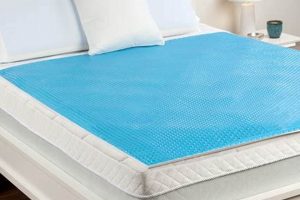
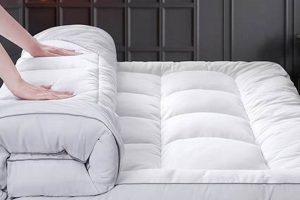
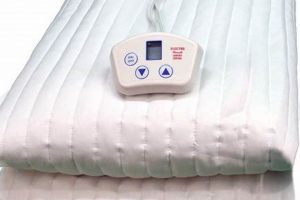
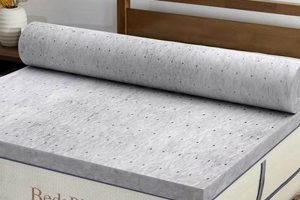
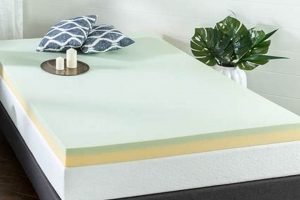
An overlay designed to enhance the comfort and support provided by a hospital bed surface is commonly utilized. This specialized bedding accessory is placed directly on the existing mattress to modify its properties. For instance, a pressure redistribution overlay can alleviate pressure points for patients at risk of developing pressure ulcers.
The implementation of such devices serves multiple purposes within the healthcare setting. These include improved patient comfort, pressure ulcer prevention, and enhanced sleep quality. Historically, advancements in materials science have led to the development of overlays incorporating features like memory foam, gel infusions, and advanced fabric technologies, improving patient outcomes and aiding in the healing process.
The subsequent sections will elaborate on various types available, their specific features and benefits, proper selection criteria, maintenance protocols, and the clinical considerations involved in their utilization within a hospital environment.
Optimizing the Selection and Use of Hospital Bed Overlays
The following guidance outlines critical considerations for the effective implementation of these supportive surfaces, contributing to improved patient care and outcomes.
Tip 1: Material Selection: Evaluate the patient’s specific needs. Memory foam offers conforming support, while gel-infused options aid in temperature regulation, both addressing distinct comfort parameters.
Tip 2: Pressure Redistribution: Prioritize overlays featuring zoned construction or advanced materials engineered to minimize pressure points, especially for patients with limited mobility or compromised skin integrity.
Tip 3: Size and Fit: Ensure the chosen overlay precisely matches the dimensions of the hospital bed frame. An ill-fitting overlay can compromise support and increase the risk of instability.
Tip 4: Infection Control: Select models with waterproof and antimicrobial properties. Implement rigorous cleaning protocols between patient uses to prevent cross-contamination and maintain a sanitary environment.
Tip 5: Weight Capacity: Adhere strictly to the manufacturer’s specified weight limit. Exceeding this limit may compromise the structural integrity and effectiveness of the overlay, potentially leading to patient injury.
Tip 6: Regular Inspection: Conduct routine inspections for signs of wear and tear, such as tears, indentations, or compromised seams. Replace any overlay exhibiting damage to ensure consistent support and safety.
Tip 7: Clinical Assessment: Integrate the selection and application of this type of equipment into a comprehensive patient care plan, considering factors such as Braden Scale scores, existing medical conditions, and individual comfort preferences.
Adherence to these principles enhances the effectiveness of these surfaces, promoting pressure ulcer prevention, improved comfort, and optimized patient outcomes within the hospital setting.
The concluding section will provide a comprehensive overview of the key considerations presented, reinforcing best practices for the informed use of hospital bed overlays.
1. Material Composition

The selection of materials for overlays directly impacts their functionality and suitability for hospital environments. Material attributes influence pressure redistribution, infection control, and patient comfort.
- Foam Density
Foam density determines the overlay’s ability to conform to the patient’s body and distribute pressure evenly. Higher density foams offer greater support and durability but may retain more heat. Lower density foams are more breathable but may compress more quickly, reducing their long-term effectiveness. Consideration must be given to patient weight and risk factors for pressure ulcers.
- Cover Fabric Properties
The cover fabric serves as a barrier against fluids and contaminants. Waterproof materials, such as polyurethane-coated fabrics, are essential for infection control. Breathability is also important to prevent moisture buildup and maintain skin integrity. Some fabrics incorporate antimicrobial agents to further inhibit bacterial growth.
- Gel Infusion Technology
Gel-infused foams are designed to regulate temperature and enhance comfort. The gel absorbs and dissipates heat, reducing the risk of overheating, particularly for patients who are bedridden for extended periods. The quantity and distribution of gel within the foam matrix affect its thermal performance.
- Memory Foam Characteristics
Memory foam provides conforming support by molding to the patient’s body contours. This reduces pressure points and promotes blood circulation. The responsiveness of memory foam, or its ability to return to its original shape after compression, affects its long-term performance and durability.
The interplay between these material characteristics dictates the overall performance. For instance, a high-density foam with a breathable, waterproof cover and gel infusion could offer a balance of support, infection control, and temperature regulation. The selection process necessitates a clear understanding of the patient’s specific needs and risk factors, along with a thorough evaluation of material properties.
2. Pressure Redistribution
Pressure redistribution is a critical function of hospital bed overlays, addressing the localized concentration of weight that can lead to pressure ulcers in immobile or limited-mobility patients. The design and material composition of these surfaces are key determinants of their effectiveness in alleviating pressure.
- Zoned Construction
Zoned overlays incorporate varying densities and contours to target specific body regions. For example, softer zones beneath the heels and sacrum minimize pressure on bony prominences, while firmer zones provide support to the torso. This strategic variation optimizes pressure distribution across the entire contact surface.
- Alternating Air Cells
Some overlays utilize alternating air cells that cyclically inflate and deflate. This dynamic process shifts pressure away from vulnerable areas, promoting blood flow and preventing prolonged tissue compression. The cycle duration and pressure settings are adjustable to meet individual patient needs and risk factors.
- Memory Foam Properties
Memory foam conforms to the patient’s body shape, distributing weight over a larger surface area. This characteristic reduces peak pressures on bony prominences. The density and responsiveness of the memory foam affect its ability to maintain consistent pressure redistribution over time.
- Gel Infusion
EffectsGel-infused materials enhance pressure redistribution by conforming to the body’s contours and dissipating heat. The gel’s viscoelastic properties minimize shear forces, which can contribute to pressure ulcer development. The distribution and concentration of gel within the overlay affect its overall performance.
Effective pressure redistribution is essential for preventing pressure ulcers in vulnerable patients. The choice of overlay should be guided by a comprehensive assessment of the patient’s risk factors, mobility status, and overall health. The characteristics described above, particularly relating to zoned construction, alternating air cell technology, memory foam properties, and gel infusion effects, should factor into the selection process to optimize patient outcomes.
3. Infection Control

Infection control is a paramount concern in healthcare environments, and the selection and maintenance of hospital bed overlays play a critical role in minimizing the risk of pathogen transmission and healthcare-associated infections (HAIs). The design, materials, and cleaning protocols associated with these overlays directly impact their effectiveness in maintaining a sanitary patient environment.
- Waterproof Barriers
Impermeable surfaces are essential for preventing the penetration of bodily fluids, such as blood, urine, and wound exudate, into the overlay’s core. Materials like polyurethane-coated fabrics provide an effective barrier against contamination. The integrity of these barriers must be maintained through regular inspection and prompt replacement of damaged overlays. Seam construction is also critical, as poorly sealed seams can serve as entry points for pathogens.
- Antimicrobial Properties
Some overlays incorporate antimicrobial agents, such as silver ions or quaternary ammonium compounds, into their fabric or foam matrix. These agents inhibit the growth of bacteria, fungi, and other microorganisms on the overlay’s surface. The efficacy of antimicrobial treatments varies depending on the specific agent and the manufacturer’s application process. Regular cleaning is still necessary, even with antimicrobial overlays, to remove organic matter that can impede their effectiveness.
- Cleanability and Disinfection
The ease with which an overlay can be cleaned and disinfected is a key factor in infection control. Smooth, non-porous surfaces are easier to wipe down and disinfect than textured or porous materials. Healthcare facilities must establish and adhere to standardized cleaning protocols that include the use of appropriate disinfectants and contact times. The manufacturer’s instructions for cleaning and disinfection should always be followed to avoid damaging the overlay.
- Material Durability
Overlays must withstand repeated cleaning and disinfection cycles without degradation. The use of harsh chemicals can compromise the integrity of the cover fabric and the foam core, leading to cracks, tears, and other damage that can harbor pathogens. Durable materials, such as reinforced vinyl or high-performance polyurethane, are better suited for the demands of a hospital environment. Routine inspection and prompt replacement of worn or damaged overlays are essential for maintaining infection control.
The multifaceted approach to infection control in hospital bed overlays requires careful consideration of materials, design, and maintenance practices. The selection of overlays with waterproof barriers, antimicrobial properties, and cleanable surfaces, coupled with rigorous cleaning protocols and routine inspections, is crucial for minimizing the risk of HAIs and ensuring patient safety. A proactive infection control strategy regarding hospital bed overlays is an important component of a comprehensive infection prevention program within healthcare facilities.
4. Size Compatibility
The term “size compatibility,” when linked to hospital bed overlays, denotes the alignment between the overlay dimensions and those of the underlying hospital bed frame and mattress. Incompatibility in size can negate the intended therapeutic benefits of the overlay, potentially causing instability and pressure concentration on the supporting mattress. As an example, an overlay that is too narrow leaves unprotected areas of the mattress exposed, creating uneven pressure distribution that elevates the risk of pressure ulcer formation. Conversely, an overlay that is too wide may buckle or overhang, posing a safety hazard to both the patient and caregivers.
The significance of accurate size matching is further underscored by the clinical need for effective pressure redistribution. A correctly sized overlay provides uniform contact with the patient’s body, optimizing the distribution of pressure and minimizing peak loads on bony prominences. This effect is diminished or entirely lost if the overlay is either too small or too large. In practical terms, hospital staff must meticulously verify the overlay’s dimensions before placement, ensuring that it fully covers the mattress surface without extending beyond the bed frame’s perimeter. Failure to verify compatibility leads to compromised clinical efficacy.
Therefore, confirming the proper size compatibility is not merely a procedural step but an integral component of effective patient care. Improperly sized overlays introduce mechanical risks, compromise pressure redistribution capabilities, and potentially accelerate skin breakdown. Addressing this issue requires hospitals to implement standardized procedures for overlay selection, including dimensional verification against bed frame specifications, to ensure optimal functionality and patient safety. Size compatibility, therefore, is essential for achieving the intended outcomes of using a hospital bed overlay.
5. Weight Capacity
Weight capacity is a fundamental design parameter for hospital bed overlays. This specification delineates the maximum load the overlay can support without compromising its structural integrity or therapeutic effectiveness. Exceeding the stated weight capacity can result in compression of the support materials, diminishing pressure redistribution capabilities and potentially accelerating the development of pressure ulcers. A real-world example involves a bariatric patient exceeding the weight limit of a standard overlay, leading to bottoming out and subsequent skin breakdown due to concentrated pressure points.
The relationship between weight capacity and overlay performance is directly proportional. Overlays engineered for higher weight capacities incorporate denser foam, reinforced construction, or alternative materials to maintain support and pressure redistribution. Furthermore, alternating air overlays designed for bariatric use typically feature higher-volume air bladders and more robust inflation systems to accommodate increased loads. Regular monitoring and adherence to the manufacturer’s specified weight limits are crucial for ensuring patient safety and prolonging the overlay’s lifespan.
Ignoring weight capacity limitations introduces both clinical and liability risks. Overlays subjected to excessiv
e weight can exhibit premature wear, material fatigue, and compromised infection control due to damaged surfaces. In summary, understanding and respecting weight capacity specifications is not merely a guideline but a clinical imperative that protects patient well-being and ensures the long-term effectiveness of the hospital bed overlay as a therapeutic intervention.
6. Support Surface
The term “support surface,” in the context of hospital bed overlays, refers to the interface between the patient and the bed. Its characteristics significantly influence pressure distribution, microclimate control, and overall patient comfort, making it a critical consideration in the selection and utilization of these medical devices.
- Pressure Redistribution Capabilities
The primary function of a support surface is to redistribute pressure away from bony prominences, reducing the risk of pressure ulcer development. Materials like memory foam and gel conform to the patient’s body, increasing the contact area and minimizing peak pressures. Conversely, a support surface lacking effective pressure redistribution may concentrate weight on vulnerable areas, exacerbating the risk of skin breakdown. An example includes a patient with limited mobility lying on a standard mattress without an overlay, leading to sustained pressure on the sacrum and heels.
- Microclimate Management
The support surface’s ability to manage moisture and temperature, often referred to as microclimate control, is crucial for maintaining skin integrity. Materials with enhanced breathability, such as specialized fabrics and open-cell foams, promote air circulation and reduce moisture accumulation. Excessive moisture can weaken the skin, making it more susceptible to damage from pressure and friction. For instance, a patient experiencing diaphoresis on a non-breathable support surface may develop maceration, increasing the risk of pressure ulcers.
- Shear Reduction Properties
Shear forces, which occur when the skin moves in one direction while underlying tissues remain stationary, can contribute to pressure ulcer formation. Support surfaces with low-friction or shear-reducing properties minimize the effects of these forces. Materials like silicone-coated fabrics allow the skin to glide more easily, reducing the risk of tissue damage. Consider a patient repositioning on a support surface with high friction, potentially leading to shear-induced injury to the underlying tissues.
- Cleanability and Infection Control
The support surface must be easily cleanable and compatible with hospital-grade disinfectants to prevent the spread of healthcare-associated infections. Impermeable materials, such as vinyl and polyurethane, prevent fluid penetration and facilitate effective cleaning. Porous or absorbent surfaces can harbor bacteria and other pathogens, increasing the risk of contamination. An example is an overlay with damaged seams or tears, which can trap fluids and microorganisms, even after cleaning.
The effectiveness of a hospital bed overlay as a therapeutic intervention is directly tied to the characteristics of its support surface. Careful consideration of pressure redistribution, microclimate management, shear reduction, and cleanability is essential for optimizing patient outcomes and minimizing the risk of complications. The ideal support surface balances these factors to create a comfortable, safe, and hygienic environment for the patient.
7. Patient Comfort
Patient comfort, a subjective yet crucial element of healthcare, is directly influenced by the properties of the support surface provided by hospital bed overlays. The design and material composition of these overlays play a significant role in mitigating discomfort and promoting a more restful healing environment.
- Pressure Ulcer Prevention
Reduced pressure ulcer incidence correlates positively with enhanced patient comfort. Overlays engineered to redistribute pressure minimize localized pressure points that can cause pain and discomfort, particularly for patients with limited mobility. For example, memory foam overlays conform to the patient’s body, dispersing weight evenly and alleviating pressure on bony prominences. This not only prevents tissue damage but also improves the patient’s overall sense of well-being.
- Temperature Regulation
Maintaining an optimal thermal environment is essential for patient comfort. Overlays incorporating gel-infused materials or breathable fabrics help regulate body temperature, preventing overheating and excessive sweating. Patients experiencing fever or prolonged bed rest are particularly susceptible to thermal discomfort. By promoting airflow and dissipating heat, these overlays contribute to a more comfortable and less stressful experience.
- Reduction of Shear and Friction
Shear and friction forces can cause skin irritation and discomfort, especially during repositioning or movement. Overlays with low-friction surfaces minimize these forces, reducing the risk of skin damage and enhancing patient comfort. Silicone-coated fabrics, for example, allow the skin to glide more easily, preventing rubbing and chafing. This is particularly beneficial for patients with fragile skin or those requiring frequent assistance with movement.
- Noise Reduction
Certain overlay designs, particularly those with air bladders, can generate noise that disrupts sleep and increases patient anxiety. Quieter overlay models contribute to a more restful and comfortable environment. Manufacturers are increasingly incorporating noise-dampening technologies to minimize these disturbances. A quieter environment promotes relaxation and enhances the patient’s perception of care quality.
The interplay between these factors underscores the significance of thoughtfully selected hospital bed overlays in promoting patient comfort. While subjective, patient comfort is inextricably linked to objective clinical outcomes, including reduced pain, improved sleep, and enhanced overall well-being. The careful consideration of pressure ulcer prevention, temperature regulation, shear reduction, and noise reduction contributes to a more positive and therapeutic hospital experience.
Frequently Asked Questions
This section addresses common inquiries regarding specialized overlays for hospital beds, providing clarity on their purpose, functionality, and proper utilization within a healthcare setting.
Question 1: What is the primary function of a hospital bed mattress topper?
The central purpose is to enhance the comfort and support of the existing hospital bed mattress. This is typically achieved through pressure redistribution, reducing the risk of pressure ulcers and improving patient comfort during extended periods of bed rest.
Question 2: How does a hospital bed mattress topper contribute to pressure ulcer prevention?
Specialized materials, such as memory foam or gel-infused foams, conform to the patient’s body contours, increasing the surface area of contact and minimizing concentrated pressure on bony prominences. Alternating air overlays periodically shift pressure points to prevent prolonged tissue compression.
Question 3: Are all hospital bed mattress topper
s waterproof?
Not all overlays are inherently waterproof; however, those intended for hospital use typically feature a waterproof or fluid-resistant cover to prevent contamination and facilitate cleaning. Impermeable materials like polyurethane-coated fabrics are commonly employed.
Question 4: How is a hospital bed mattress topper properly cleaned and disinfected?
Cleaning protocols vary depending on the overlay material. Generally, surfaces should be wiped down with hospital-grade disinfectants approved for use on medical equipment. Specific cleaning instructions provided by the manufacturer must be followed to avoid damaging the material.
Question 5: What factors should be considered when selecting a hospital bed mattress topper for a specific patient?
Key considerations include the patient’s weight, risk factors for pressure ulcers (e.g., Braden Scale score), mobility level, existing medical conditions, and any specific comfort requirements. Size compatibility with the hospital bed is also essential.
Question 6: Is there a weight limit for hospital bed mattress toppers?
Yes, each overlay has a specified weight capacity. Exceeding this limit can compromise the overlay’s structural integrity, reduce its effectiveness in pressure redistribution, and potentially create a safety hazard for the patient. The manufacturer’s weight specifications must be adhered to.
The information provided clarifies the fundamental aspects of hospital bed mattress toppers, emphasizing their role in patient care and the importance of informed decision-making in their selection and use.
The subsequent section provides a detailed glossary of terms related to hospital bed overlays, offering a comprehensive reference for understanding key concepts and terminology.
Hospital Bed Mattress Topper
This exploration has elucidated the significant role of the hospital bed mattress topper within the healthcare environment. From mitigating pressure ulcers and managing microclimates to ensuring patient comfort and facilitating infection control, the selection and proper utilization of these supportive surfaces are paramount. Considerations of material composition, weight capacity, size compatibility, and cleanability directly impact their effectiveness in promoting positive patient outcomes.
The ongoing evolution of materials science and engineering holds the promise of further advancements in overlay technology. Continued research and rigorous adherence to established clinical guidelines remain essential to maximizing the therapeutic benefits and minimizing the risks associated with hospital bed mattress topper use. Prioritizing patient safety and well-being through informed selection and meticulous maintenance will ultimately contribute to improved care quality and enhanced healing environments.