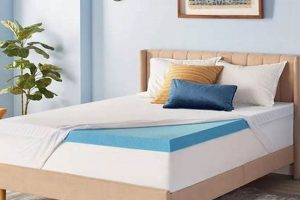
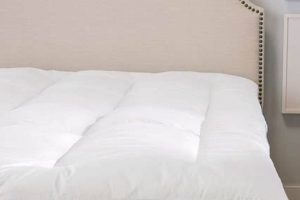
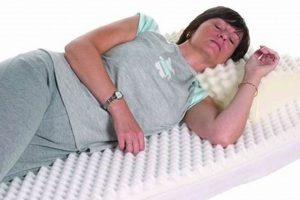
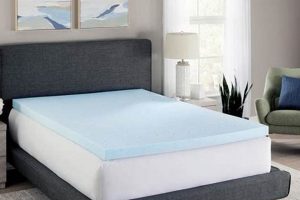
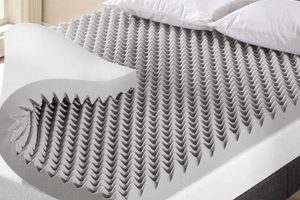
A cushioning layer designed to be placed atop an existing futon mattress aims to enhance comfort and support. These additions are typically constructed from materials such as memory foam, latex, or fiberfill, providing an extra level of padding to the often firmer surface of a futon. As an example, consider a dense memory foam layer that contours to the body, alleviating pressure points during sleep or relaxation.
The implementation of such an enhancement can significantly improve the overall sleeping or sitting experience. Benefits include increased comfort, reduced motion transfer, and prolonged lifespan of the underlying futon mattress. Historically, individuals have sought ways to modify the comfort levels of their sleeping surfaces, and these supplementary layers represent a modern solution to address specific needs for increased softness or support.
The following sections will delve into the various types of materials used in construction, factors to consider when selecting a suitable option, and maintenance guidelines to ensure longevity.
Essential Considerations
The selection process requires careful evaluation to optimize comfort and prolong the lifespan of the futon and its enhancement.
Tip 1: Material Composition. Assess the core material based on desired firmness and support. Memory foam provides contouring, latex offers resilience, and fiberfill delivers a softer feel. Consider material density for durability.
Tip 2: Thickness Evaluation. Determine the appropriate thickness based on the futon’s existing firmness. A thicker option may be necessary for thin or worn futons.
Tip 3: Size Compatibility. Ensure precise measurements to guarantee a proper fit. Overhang or undersizing can diminish effectiveness and aesthetic appeal.
Tip 4: Cover Material Assessment. Examine the cover’s fabric for breathability and ease of cleaning. Hypoallergenic materials are advisable for sensitive individuals.
Tip 5: Support Requirements. Consider specific needs. For back pain, a firmer, more supportive material may be preferable. Side sleepers may benefit from a softer, contouring option.
Tip 6: Budgetary Constraints. Establish a budget prior to purchase. Prices vary significantly based on material, thickness, and brand. Prioritize long-term value over initial cost.
Tip 7: Maintenance Protocols. Review cleaning instructions. Regular vacuuming can prevent dust and allergen accumulation. Spot cleaning is recommended for spills.
Adherence to these guidelines promotes informed decision-making, ultimately resulting in increased comfort and satisfaction.
The concluding sections will summarize key points and provide further guidance on long-term care.
1. Material Composition

The material composition of a mattress topper directly dictates its performance and suitability for use on a futon. Different materials offer varying degrees of support, comfort, and durability, influencing the overall sleeping or seating experience. For example, a memory foam option, composed of viscoelastic polyurethane foam, conforms to the body’s contours, distributing weight evenly and reducing pressure points. This characteristic can be particularly beneficial for individuals seeking relief from back pain or joint discomfort when using a futon. Conversely, a latex composition, whether natural or synthetic, provides a more resilient and springy feel, offering greater support and responsiveness. The internal structure of latex allows for better airflow, mitigating heat buildup and promoting a cooler sleep environment.
The choice of material extends beyond comfort considerations to encompass practical aspects such as longevity and maintenance. Latex, for instance, exhibits superior durability compared to memory foam, resisting compression and maintaining its shape over extended periods. However, latex options generally command a higher price point. Fiberfill, often a blend of polyester or other synthetic fibers, presents a cost-effective alternative, providing a softer and more plush surface. While fiberfill delivers immediate comfort, its tendency to flatten over time necessitates more frequent replacement. Furthermore, the presence of hypoallergenic properties in materials such as natural latex can be a significant factor for individuals with allergies or sensitivities, mitigating the risk of allergic reactions.
In summation, the material composition represents a critical determinant in selecting a mattress topper for a futon. The interplay between desired comfort levels, support requirements, budgetary constraints, and maintenance considerations guides the optimal choice. Understanding the inherent properties of various materials empowers informed decision-making, ensuring that the selected addition enhances the overall functionality and comfort of the futon without compromising long-term value or user well-being. The ideal material balances immediate comfort with lasting durability and practical maintenance requirements.
2. Thickness Variance

Thickness variance in mattress toppers directly influences the perceived comfort and support provided when placed atop a futon mattress. The selection of an appropriate thickness is contingent upon the existing firmness of the futon, the user’s weight, and individual preferences for sleep surface characteristics. Therefore, a thorough understanding of how thickness affects the overall feel is paramount.
- Impact on Pressure Relief
A thicker topper, typically ranging from 3 to 4 inches, provides greater cushioning, particularly beneficial for alleviating pressure points at the shoulders, hips, and knees. This is especially relevant for futons, which often possess a firmer, less conforming surface. A greater material depth allows for more significant compression and distribution of body weight, reducing localized stress.
- Effect on Support and Spinal Alignment
While increased thickness generally enhances comfort, it is essential to maintain adequate support. Excessively thick, soft toppers can lead to a lack of spinal support, resulting in misalignment and potential back pain. A balanced approach is necessary, opting for a topper with a supportive core, even when selecting a thicker profile, to ensure proper posture during sleep.
- Influence on Futon Longevity
The thickness of the topper contributes to the protection of the underlying futon mattress. A thicker topper absorbs a greater portion of the daily wear and tear, including compression and impact. This can extend the lifespan of the futon by preventing the premature breakdown of its internal materials. Conversely, a very thin topper offers minimal protection.
- Considerations for Storage and Transport
Thicker mattress toppers are inheren
tly less compressible and more difficult to store or transport than thinner alternatives. This is a significant consideration for futons, which are often selected for their versatility and ease of relocation. Therefore, the added bulk of a thicker topper may diminish the futon’s portability.
In summary, thickness variance in mattress toppers profoundly affects the comfort, support, protection, and portability associated with futon mattresses. A nuanced understanding of these factors is critical for selecting a topper that optimizes both sleep quality and the practical advantages of using a futon.
3. Size Compatibility
Size compatibility is a fundamental attribute when selecting a mattress topper for a futon. A mismatch in dimensions directly undermines the intended benefits, resulting in compromised comfort and diminished lifespan for both the topper and the underlying futon mattress. The dimensions of the topper must precisely align with those of the futon frame in its deployed, flat position. Inadequate coverage can lead to uneven support, causing sagging and premature wear in unprotected areas. Conversely, excessive overhang presents a tripping hazard, obstructs folding mechanisms, and accelerates wear along the edges of the topper.
The standardized sizing conventions for futon mattresses, mirroring those of conventional mattresses (twin, full, queen, king), provide a framework for ensuring proper fit. However, slight variations in manufacturing tolerances among different futon brands and models necessitate accurate measurements prior to purchase. For instance, a “full-size” futon mattress may deviate by an inch or two from the standard dimensions, requiring a correspondingly sized topper to achieve optimal coverage. The material composition of the topper itself can further exacerbate the issue; memory foam toppers, due to their conforming nature, may be more forgiving of minor size discrepancies compared to firmer latex or fiberfill options. Consider a scenario where a queen-sized topper is placed on a slightly undersized futon frame. The resulting overhang not only looks aesthetically displeasing but also creates a leverage point that can accelerate edge degradation, particularly if the futon is frequently used in its upright, sofa configuration.
In conclusion, size compatibility is not merely a cosmetic consideration but a critical functional requirement. Prioritizing accurate measurements and adhering to standardized sizing guidelines ensures that the mattress topper effectively enhances the comfort and longevity of the futon. Failure to address this aspect can negate the benefits of the topper and potentially damage the underlying futon mattress. The investment in a precisely fitted topper represents a prudent measure for optimizing both the sleep experience and the overall lifespan of the futon.
4. Cover Breathability
Cover breathability, in the context of a mattress topper for a futon, directly affects temperature regulation and overall user comfort. A non-breathable cover impedes air circulation, trapping heat and moisture. This can lead to elevated skin temperature, increased perspiration, and a potentially uncomfortable sleeping or seating experience. The effect is amplified on futons, which often lack the advanced ventilation systems found in conventional mattresses. For example, a topper encased in a vinyl or tightly woven synthetic fabric will retain heat, creating a warm microclimate that disrupts sleep and may promote the growth of microorganisms. In contrast, a topper featuring a cover made from natural fibers like cotton or bamboo allows air to circulate, dissipating heat and wicking away moisture.
The importance of cover breathability extends beyond immediate comfort. Prolonged exposure to heat and moisture can degrade the internal materials of the mattress topper, particularly memory foam, which is susceptible to softening and reduced supportiveness in humid environments. A breathable cover helps maintain the structural integrity of the topper, extending its lifespan. Moreover, adequate ventilation mitigates the risk of allergen accumulation and dust mite infestation. Consider a topper used in a humid climate. Without a breathable cover, moisture becomes trapped within the topper’s core, creating an ideal breeding ground for mold and dust mites. This poses a significant health risk, especially for individuals with allergies or respiratory sensitivities. Implementing a breathable cover can significantly reduce this risk, promoting a healthier sleep environment.
In summary, cover breathability is a critical, often overlooked, component of a mattress topper for a futon. It directly influences temperature regulation, user comfort, topper longevity, and hygiene. Choosing a topper with a breathable cover, such as one made from natural fibers or engineered performance fabrics, is essential for maximizing its effectiveness and promoting a healthy and comfortable sleep or seating experience. The selection process should prioritize materials known for their ventilation properties, ultimately leading to a product that remains cool, dry, and hygienic over extended use.
5. Support Level

The support level provided by a mattress topper is a primary determinant of its effectiveness when used on a futon. This characteristic governs the degree to which the topper mitigates pressure points, maintains spinal alignment, and contributes to overall comfort. The optimal support level is contingent upon the individual’s weight, sleeping position, and any pre-existing musculoskeletal conditions.
- Spinal Alignment Maintenance
An appropriate support level ensures the spine maintains its natural curvature during sleep. Insufficient support results in spinal misalignment, potentially exacerbating back pain and discomfort. Conversely, excessive support can create unnatural pressure points. A medium-firm topper is often suitable for maintaining spinal alignment for individuals of average weight, while heavier individuals may require a firmer option.
- Pressure Point Reduction
The support level dictates the extent to which the topper distributes body weight, reducing concentrated pressure on areas such as the hips, shoulders, and knees. Memory foam toppers, known for their contouring properties, excel at pressure point reduction. However, the density of the foam influences the level of support provided. A higher-density memory foam offers greater resistance to compression, providing more consistent support over time.
- Firmness and Sleeping Position
The ideal support level is intrinsically linked to preferred sleeping position. Side sleepers typically benefit from a softer topper that allows the shoulder and hip to sink in, maintaining spinal alignment. Back sleepers generally require a medium-firm topper to support the natural curvature of the spine. Stomach sleepers often need a firmer topper to prevent excessive sinking of the midsection, which can lead to lower back pain.
- Impact on Futon Longevity
A supportive topper can extend the lifespan of the underlying futon mattress by absorbing a portion of the weight and stress. This is particularly relevant for
older or less supportive futon mattresses. However, the topper’s effectiveness in prolonging mattress life is dependent on its ability to maintain its own structural integrity over time. A poorly constructed or insufficiently supportive topper may compress and degrade quickly, offering minimal protection.
In conclusion, the support level represents a critical factor when selecting a mattress topper for a futon. It directly influences spinal alignment, pressure point reduction, sleeping comfort, and the longevity of the futon mattress. A careful assessment of individual needs and preferences, in conjunction with an understanding of the various support levels available, is essential for maximizing the benefits of a mattress topper. The interplay between these factors guides the optimal selection.
6. Cost Efficiency

Cost efficiency, when considering mattress toppers for futons, pertains to the balance between initial investment and long-term benefits derived from the product. A cost-efficient option not only offers an affordable purchase price but also delivers sustained comfort, durability, and potentially prolongs the lifespan of the existing futon mattress. Therefore, a comprehensive evaluation transcends the sticker price to encompass the product’s overall value proposition.
- Initial Investment vs. Longevity
The initial cost of a mattress topper can vary significantly based on material composition, thickness, and brand reputation. While lower-priced options may seem appealing, their longevity and performance often fall short, necessitating more frequent replacements. A higher initial investment in a durable topper constructed from quality materials such as dense memory foam or natural latex can yield substantial savings over time by delaying the need for futon mattress replacement. Consider two scenarios: one involves purchasing a low-cost topper that compresses within a year, requiring replacement, while the other entails investing in a higher-quality topper that maintains its form and function for several years. The latter, despite the higher upfront cost, proves more cost-efficient in the long run.
- Impact on Futon Mattress Lifespan
A mattress topper acts as a protective layer, shielding the underlying futon mattress from direct wear and tear, spills, and compression. This protective function extends the usable life of the futon mattress, postponing the expense of replacement. The degree of protection depends on the topper’s thickness and material density. A thicker, denser topper absorbs more impact and distributes weight more evenly, providing superior protection. For instance, a futon mattress used daily without a topper might require replacement within three years, whereas the same mattress paired with a quality topper could last five years or more. This difference in lifespan translates directly into cost savings.
- Comfort Enhancement vs. Alternative Solutions
A cost-efficient mattress topper provides a practical and economical alternative to replacing an entire futon mattress. If the primary issue is discomfort due to a worn or overly firm mattress, a well-chosen topper can significantly enhance sleep quality without incurring the expense of a new mattress. The cost of a high-quality topper is typically a fraction of the price of a replacement futon mattress. This approach is particularly advantageous when the futon frame is still in good condition and only the mattress requires improvement. Comparing the cost of a new futon mattress (e.g., $500-$1000) to that of a quality topper (e.g., $150-$300) underscores the economic benefit of opting for a topper.
- Maintenance and Replacement Costs
The cost efficiency equation also encompasses maintenance and potential replacement costs. Toppers with removable, washable covers simplify cleaning and extend the product’s lifespan. Conversely, toppers requiring professional cleaning incur additional expenses. The durability of the materials used in the toppers construction directly affects its lifespan and, consequently, the frequency of replacement. A topper constructed from high-quality materials that resist compression and degradation will require less frequent replacement, contributing to long-term cost savings. Evaluating the expected lifespan and maintenance requirements is essential for determining the true cost efficiency of a given option. A topper that requires replacement every year, despite a low initial price, is ultimately less cost-efficient than a more durable option that lasts for several years.
In conclusion, determining the cost efficiency of a mattress topper for a futon necessitates a holistic assessment encompassing the initial investment, impact on futon mattress lifespan, the value of enhanced comfort compared to replacement options, and ongoing maintenance and replacement expenses. By considering these factors, consumers can make informed decisions that maximize long-term value and minimize overall costs. The most cost-efficient option is not always the cheapest initially but rather the one that delivers the greatest benefits over the longest period, contributing to both financial savings and improved sleep quality.
7. Maintenance Ease

Maintenance ease significantly influences the long-term value and practicality of a mattress topper for a futon. A topper requiring extensive or specialized cleaning protocols detracts from its convenience, potentially leading to neglect and accelerated degradation. The selection of a topper should therefore prioritize materials and designs that facilitate straightforward maintenance, preserving both hygiene and longevity. A key factor is the presence of a removable, machine-washable cover, as this allows for regular cleaning to remove dust, allergens, and stains. Toppers lacking this feature may necessitate spot cleaning or professional laundering, incurring additional costs and effort.
The material composition of the topper itself also affects maintenance ease. Memory foam, while offering comfort and support, can be challenging to clean if directly exposed to spills. In contrast, latex is more resistant to moisture and easier to wipe clean. Furthermore, the construction of the topper influences its ability to air out and dry thoroughly. Toppers with open-cell structures promote better ventilation, reducing the risk of mold and mildew growth. For example, consider a scenario where a spill occurs on a memory foam topper lacking a waterproof cover. The absorbent nature of memory foam will make stain removal difficult and may require extensive drying time to prevent bacterial growth. Conversely, a latex topper with a water-resistant cover can be quickly wiped clean, minimizing the risk of lasting damage or odors.
In conclusion, maintenance ease is a critical, yet often overlooked, aspect of selecting a mattress topper for a futon. Opting for a topper with a removable, washable cover, a moisture-resistant material, and a well-ventilated design ensures both hygiene and longevity. The additional investment in a topper with these features can result in significant savings in time, effort, and replacement costs over the product’s lifespan. Prioritizing maintenance ease enhances the practicality and overall value of the mattress topper for long-term use.
Frequently Asked Questions
The following section addresses common inquiries related to mattress toppers specifically designed for futon use.
These answers provide essential information for consumers seeking to enhance the comfort and longevity of their futons.
Question 1: How does the selection of a mattress topper material impact its suitability for futons?
Material composition dictates comfort, support, and durability. Memory foam conforms to the body, latex offers resilience, and fiberfill provides a softer feel. Evaluate based on individual preferences and requirements.
Question 2: What considerations govern the appropriate thickness of a mattress topper for a futon?
Thickness influences pressure relief and overall comfort. Thicker options compensate for thinner or worn futons. Assess the existing firmness of the futon and the desired level of cushioning.
Question 3: How critical is accurate sizing when purchasing a mattress topper for a futon?
Precise sizing is essential for optimal performance. An improperly sized topper can lead to uneven support, premature wear, and potential safety hazards. Exact measurements of the futon are required.
Question 4: What are the advantages of a breathable cover on a mattress topper intended for a futon?
Breathable covers promote air circulation, regulating temperature and preventing moisture buildup. This enhances comfort and minimizes the risk of allergen accumulation and mold growth.
Question 5: How does the support level of a mattress topper affect its functionality on a futon?
The support level influences spinal alignment and pressure point reduction. Select a topper that aligns with individual sleeping preferences and addresses any existing musculoskeletal conditions.
Question 6: What factors should be considered when assessing the cost efficiency of a mattress topper for a futon?
Evaluate the initial investment, expected lifespan, impact on futon mattress longevity, and maintenance requirements. A cost-efficient option balances affordability with long-term value and durability.
These responses aim to clarify key decision points related to enhancing a futon’s comfort through the addition of a supplemental layer. Prioritizing informed choices maximizes satisfaction and product longevity.
The subsequent section will summarize the key points discussed throughout this exposition.
Conclusion
This exposition has illuminated the salient characteristics and considerations pertinent to the selection and utilization of a mattress topper for futon mattresses. Key points include the significance of material composition, thickness variance, size compatibility, cover breathability, support level, cost efficiency, and maintenance ease. Each of these aspects contributes to the overall effectiveness and value proposition of the product.
The informed application of these principles enables individuals to optimize the comfort, longevity, and hygiene of their futon mattresses. Careful evaluation and adherence to these guidelines are essential for maximizing satisfaction and ensuring a worthwhile investment. The correct mattress topper for futon usage represents a strategic enhancement, not merely an accessory.