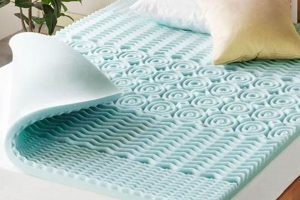
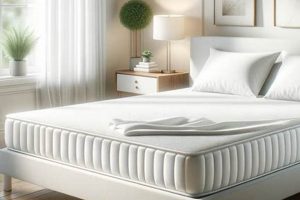
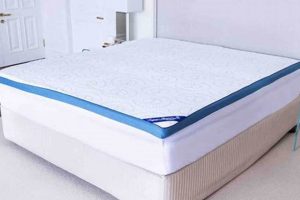
An additional layer of cushioning designed to enhance the comfort of convertible couches, provides supplementary support and padding. This product typically consists of materials like memory foam, latex, or down alternatives, and is placed atop the existing mattress to improve sleep quality. As an example, a person with a firmer sofa bed mattress might utilize a memory foam variant to alleviate pressure points and achieve a softer sleeping surface.
The use of supplemental padding on convertible couches offers several advantages. Primarily, it increases the overall comfort level, making the sleeping experience more restful. This is particularly beneficial for individuals who frequently use the sofa bed or for guests. Furthermore, it can extend the lifespan of the existing mattress by reducing wear and tear. Historically, improvised solutions like blankets were used, but dedicated products now offer superior comfort and durability.
Understanding the various types of materials, dimensions, and features available is crucial in selecting the most suitable option. Considerations such as thickness, density, and material composition play a significant role in determining the level of comfort and support provided. The following sections will delve into these aspects in more detail.
Tips for Optimal Use
Selecting and utilizing supplemental padding effectively can significantly improve the sleeping experience on convertible couches. Consider the following recommendations for maximizing comfort and longevity.
Tip 1: Prioritize Material Compatibility. Select a material that complements the existing sofa bed mattress. For instance, a memory foam option may be paired with a firmer innerspring mattress to introduce contouring support.
Tip 2: Measure Dimensions Accurately. Ensure the dimensions of the chosen product precisely match the sofa bed’s surface area. Overhang or insufficient coverage can diminish comfort and stability.
Tip 3: Evaluate Density and Thickness. Higher density generally equates to greater support and durability. Thickness should be selected based on individual comfort preferences, with thicker options offering enhanced cushioning.
Tip 4: Consider Breathability. Opt for materials that promote airflow, such as latex or open-cell memory foam, to regulate temperature and minimize heat retention during sleep.
Tip 5: Assess Cleaning and Maintenance Requirements. Review the manufacturer’s instructions for cleaning and care. A removable, washable cover can simplify maintenance and extend the product’s lifespan.
Tip 6: Investigate Firmness Options. Determine the ideal firmness level based on sleep preferences and body weight. Softer options provide pressure relief, while firmer options offer more substantial support.
Tip 7: Check for Certifications. Look for certifications such as CertiPUR-US, which indicates that the foam has been tested for harmful substances and meets strict standards for content, emissions, and durability.
By carefully considering these factors, one can make an informed decision and significantly enhance the comfort and usability of a sofa bed.
The subsequent sections will explore specific product recommendations and address common concerns regarding installation and storage.
1. Material Composition

The selection of materials is paramount in determining the performance and suitability of supplemental padding for convertible couches. The composition directly influences factors such as comfort, support, durability, temperature regulation, and hygiene. Therefore, understanding the characteristics of various materials is essential for making an informed purchasing decision.
- Memory Foam
Memory foam, typically polyurethane-based, conforms to the body’s contours, providing pressure relief and spinal alignment. Its viscoelastic properties distribute weight evenly, reducing stress on pressure points. However, traditional memory foam can retain heat, potentially leading to discomfort. Newer formulations incorporate gel infusions or open-cell structures to improve breathability. Examples include variations in density and the presence of additives like charcoal for odor control. Improper material choice can affect the sleep.
- Latex
Latex, derived from the sap of rubber trees, offers a resilient and responsive sleeping surface. It is naturally hypoallergenic and resistant to dust mites, making it suitable for individuals with allergies. Two types of latex are commonly used: Dunlop and Talalay. Dunlop is denser and more durable, while Talalay is softer and more breathable. The open-cell structure of latex promotes airflow, helping to regulate temperature. Material choice impact to heat retention.
- Down Alternatives
Down alternatives, typically made from synthetic fibers like polyester, mimic the softness and fluffiness of natural down. They are hypoallergenic and easy to clean, making them a practical choice for sofa beds. However, down alternatives may not provide the same level of support and durability as memory foam or latex. Examples include clusters of microfiber. Down alternatives doesn’t offer same support.
- Hybrid Combinations
Hybrid options combine multiple materials to leverage their respective benefits. For instance, a topper may feature a layer of memory foam for pressure relief and a layer of latex for support and breathability. These combinations aim to provide a balanced sleeping surface that addresses a wider range of individual preferences and needs. For example, a topper might combine gel-infused memory foam with a breathable cover for enhanced cooling. Hybrid options are balanced for a various ranges of need.
The interplay between these materials significantly impacts the overall performance and longevity of padding for convertible couches. Ultimately, the ideal choice depends on individual factors such as sleeping position, body weight, and personal preferences. Thoughtful consideration of these materials can significantly improve the sleeping experience of sofa bed.
2. Thickness Options

The selection of supplemental padding for convertible couches necessitates careful consideration of thickness. This dimension directly influences the level of cushioning and support provided, impacting sleep quality and overall comfort. Thicker options generally offer greater pressure relief, particularly for individuals with higher body weights or those who prefer a softer sleeping surface. For example, a 4-inch memory foam provides substantial pressure relief for a side sleeper compared to a 2-inch variant, which may bottom out under pressure. Conversely, thinner options might be preferred for firmer mattresses or by individuals who prefer a more supportive feel, preven
ting excessive sinkage and maintaining spinal alignment.
The chosen thickness also affects the practicalities of using a sofa bed. Excessively thick padding can make folding the sofa bed difficult, or even impossible, hindering its primary function. Conversely, insufficient thickness may fail to provide adequate comfort, negating the benefits of adding a supplemental layer. Therefore, evaluating the folding mechanism and available space within the sofa bed’s design is crucial when selecting padding thickness. As an example, a trifold sofa bed might accommodate a thinner option more readily than a bifold mechanism. These considerations are crucial for long-term comfort and utility.
Ultimately, the ideal thickness represents a compromise between comfort enhancement and functional practicality. It requires a careful assessment of individual preferences, body weight, the characteristics of the existing sofa bed mattress, and the folding mechanism. Misjudging this balance can render the entire purchase ineffective or even detrimental.
3. Density Levels
Density, measured in pounds per cubic foot (PCF), signifies the amount of material packed into a given volume. In the context of supplemental padding for convertible couches, this attribute directly correlates with support, durability, and overall performance. Higher density levels generally indicate a more substantial and resilient product, while lower densities may offer a softer initial feel but compromise long-term support.
- Support and Pressure Relief
Higher density materials provide greater resistance to compression, distributing weight more evenly and reducing pressure points. A high-density memory foam option, for instance, will conform to the body’s contours while preventing excessive sinkage, maintaining spinal alignment and reducing discomfort. Conversely, low-density options may compress quickly, offering minimal support and exacerbating pressure points, particularly for heavier individuals. For example, for sofa bed which needs to support a weight, a higher-density is preferred over lower-density.
- Durability and Longevity
Density directly impacts the lifespan of the padding. Higher density materials withstand compression and repeated use more effectively, retaining their shape and support over time. Lower density options are more prone to sagging, indentations, and overall degradation, requiring more frequent replacement. Sofa beds that are used regularly will benefit from a higher-density variant, extending the product’s useful life. The higher, the longer the padding will last.
- Temperature Regulation
Density can influence airflow and heat retention within the padding. Denser materials may restrict airflow, trapping heat and leading to discomfort during sleep. Open-cell structures and gel infusions can mitigate this effect in high-density options. Lower density options generally allow for greater airflow, but this can come at the expense of support and durability. A latex topper, for example, naturally promotes airflow due to its open-cell structure, even at higher densities.
- Cost and Value Proposition
Density is often a significant factor in pricing. Higher density materials generally command a premium due to their superior performance characteristics and extended lifespan. However, the higher initial cost may be offset by the increased durability and long-term value. Lower density options represent a more budget-friendly alternative, but may require more frequent replacement, ultimately increasing the overall cost of ownership. A cost and value proposition will eventually affect the owner of the product.
In summary, density levels play a crucial role in determining the suitability of supplemental padding for convertible couches. The ideal density depends on individual factors such as body weight, sleeping position, budget, and desired level of support and durability. Careful consideration of these factors is essential for selecting a product that provides optimal comfort and long-term value.
4. Size Accuracy
The dimensional conformity of supplemental padding relative to the convertible couch’s sleeping surface is a critical determinant of both comfort and functional efficacy. Deviations from precise measurements can negate the intended benefits, rendering the product either ineffective or detrimental to the sofa bed’s operational capabilities.
- Comfort Distribution
Accurate sizing ensures uniform support and cushioning across the entire sleeping area. Padding that is too small leaves portions of the original, often less comfortable, sofa bed mattress exposed, creating uneven pressure distribution. Conversely, oversized padding may bunch or fold, leading to localized pressure points and discomfort. For example, a queen-sized topper on a full-sized sofa bed would create an unstable and uncomfortable sleeping surface. Precise sizing guarantees uniform comfort, preventing uneven support and potential discomfort arising from ill-fitting dimensions.
- Secure Placement
Properly sized padding remains securely in place during use, preventing shifting or sliding that can disrupt sleep. Undersized options are prone to movement, particularly with active sleepers. Oversized options may overhang the edges of the sofa bed, creating a tripping hazard and increasing the risk of damage to the product. For instance, supplemental padding that consistently slides off the sofa bed necessitates frequent adjustments, disrupting sleep and increasing the risk of material wear and tear. Dimensionally correct padding is crucial for secure placement, minimizing movement and ensuring uninterrupted sleep throughout the night.
- Operational Integrity
Precise dimensions are essential for maintaining the sofa bed’s folding and unfolding mechanisms. Padding that is too thick or too large can obstruct the mechanism, making it difficult or impossible to convert the sofa into a bed or vice versa. This not only compromises the sofa bed’s functionality but can also lead to damage to the mechanism itself. As an example, a bulky topper may prevent the sofa bed from fully retracting into its seating configuration, rendering it unusable as a sofa. Maintaining operational integrity requires dimensionally appropriate padding to avoid obstructing folding mechanisms and preserving sofa bed functionality.
- Aesthetic Integration
Accurate sizing contributes to the overall aesthetic appeal of the sofa bed. Properly fitted padding presents a clean and finished appearance, enhancing the visual integration of the topper with the sofa bed. Ill-fitting options can appear sloppy and detract from the overall look of the furniture. As an example, a topper that significantly overhangs the edges of the sofa bed creates an unkempt and visually unappealing appearance. Aesthetic integration is enhanced by dimensionally accurate padding, contributing to a polished and visually cohesive furniture piece.
These interconnected factors underscore the critical importance of precise sizing when selecting supplemental padding for convertible couches. Accurate measurements ensure optimal comfort, secure placement, functional integrity, and aesthetic harmony. The ramifications of neglecting this aspect can extend from compromised sleep quality to damage to the sofa bed mechan
ism, underscoring the need for careful attention to dimensional conformity.
5. Support Capabilities

The capacity of supplemental padding to provide adequate support is a primary consideration in evaluating its suitability for use on convertible couches. Support capabilities directly influence spinal alignment, pressure distribution, and overall sleep comfort. These characteristics are particularly relevant given the often-compromised mattress quality found in many sofa beds.
- Spinal Alignment Maintenance
Support capabilities are crucial for maintaining proper spinal alignment during sleep. Insufficient support can lead to spinal misalignment, resulting in back pain, neck pain, and stiffness. A topper with adequate support ensures the spine remains in a neutral position, reducing stress on the musculoskeletal system. For example, a high-density memory foam topper can conform to the body’s contours while preventing excessive sinking, thereby promoting healthy spinal alignment. The ability to maintain spinal alignment is essential for long-term comfort and orthopedic health.
- Pressure Point Reduction
Effective support facilitates the distribution of body weight, minimizing pressure on specific areas such as the hips, shoulders, and knees. Reduced pressure points alleviate discomfort and improve circulation, leading to a more restful sleep. A latex topper, for instance, offers responsive support that adapts to changes in body position, redistributing pressure and reducing the likelihood of localized pain. Redistribution of pressure enhances sleep quality by minimizing discomfort and promoting better circulation.
- Edge Support and Stability
The level of edge support directly impacts the usable sleeping surface and overall stability of the topper. Inadequate edge support can cause the edges to compress or collapse, reducing the available sleeping area and increasing the risk of rolling off the bed. A topper with reinforced edges provides a more stable and secure sleeping surface, particularly for individuals who tend to sleep near the edge of the bed. Stable edges are crucial for maximizing the usable sleep area and enhancing the overall stability.
- Weight Distribution and Load Capacity
A topper’s support capabilities are inherently linked to its ability to distribute weight effectively. Options with higher load capacities are better suited for individuals with higher body weights, providing the necessary support without bottoming out. Inadequate weight distribution can lead to uneven support, pressure points, and premature wear and tear. For example, a high-density memory foam topper can support a higher weight and distribute it, with low weight the topper bottom out. Effective weight distribution ensures that the topper provides adequate support and maintains its structural integrity over time.
These facets of support capabilities are interwoven, collectively determining the overall effectiveness and suitability of supplemental padding for convertible couches. An evaluation of these attributes is essential for selecting a product that promotes restful sleep, reduces pain, and maintains its structural integrity over time, addressing the inherent limitations of many sofa bed mattresses.
6. Breathability Factor

The breathability of supplemental padding significantly impacts the sleep environment established atop convertible couches. Inadequate airflow can lead to heat retention and moisture accumulation, resulting in discomfort and potentially affecting hygiene. Evaluating the breathability factor is therefore crucial when selecting a product for improving sleep quality on a sofa bed.
- Material Permeability
The inherent structure of the material dictates its capacity for airflow. Open-cell foams, such as latex and certain memory foam formulations, permit greater air circulation compared to closed-cell structures. This enhanced permeability facilitates the dissipation of heat and moisture, preventing the buildup of uncomfortable sleeping conditions. For example, latex toppers naturally exhibit higher breathability, reducing heat retention compared to conventional memory foam. Material permeability directly affects temperature regulation during sleep.
- Ventilation Channels and Design
Manufacturers often incorporate design features to enhance airflow within supplemental padding. These may include ventilation channels, perforated layers, or specialized surface textures. Such design elements promote the movement of air throughout the topper, dissipating heat and moisture more effectively. As an example, a memory foam topper with integrated ventilation channels offers improved breathability compared to a solid, non-ventilated design. Design considerations play a crucial role in mitigating heat retention and improving comfort.
- Moisture Wicking Properties
Certain materials exhibit moisture-wicking properties, drawing moisture away from the body and facilitating its evaporation. This helps to maintain a dry and comfortable sleeping surface, minimizing the risk of discomfort and microbial growth. For instance, fabrics like Tencel or bamboo, often used in topper covers, possess excellent moisture-wicking capabilities, enhancing overall breathability. The ability to wick moisture contributes to a more hygienic and comfortable sleep environment.
- Impact on Sleep Quality
The breathability factor directly influences sleep quality by regulating temperature and moisture levels. Overheating can disrupt sleep cycles, leading to restlessness and fragmented sleep. By promoting airflow and minimizing heat retention, breathable toppers create a more comfortable and conducive environment for restful sleep. A breathable topper can lead to improved sleep quality. The regulation of temperature and moisture levels is essential for achieving optimal sleep comfort and minimizing sleep disruptions.
These factors collectively underscore the importance of breathability in supplemental padding for convertible couches. Selecting a product that prioritizes airflow and moisture management can significantly improve sleep quality and contribute to a more comfortable and hygienic sleep environment. Options with open-cell materials, ventilation channels, and moisture-wicking properties provide a demonstrably superior sleeping experience compared to less breathable alternatives.
7. Maintenance Ease

The aspect of maintenance ease is a critical consideration when selecting supplemental padding for convertible couches. The practicality of cleaning and maintaining these items directly impacts their longevity, hygiene, and overall value proposition. A topper that is difficult to clean or maintain may quickly become unhygienic and necessitate premature replacement.
- Removable and Washable Covers
The presence of a removable and washable cover significantly simplifies the cleaning process. Covers constructed from durable, machine-washable fabrics allow for the periodic removal of surface contaminants and allergens.
This helps to maintain a hygienic sleeping surface and extend the lifespan of the topper. As an example, a zippered cover made of a cotton-polyester blend can be easily removed, laundered, and replaced, preventing the accumulation of dust mites and stains within the topper core. Removable covers are indispensable for easy and hygienic maintenance. - Spot Cleaning Capabilities
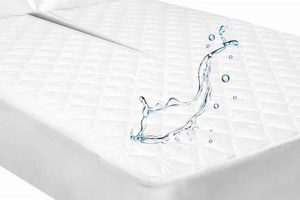
The ability to effectively spot clean minor spills and stains is also an important consideration. Materials that resist staining and can be easily cleaned with mild detergents offer a practical advantage. Toppers that require professional cleaning for even minor spills can be inconvenient and costly to maintain. A waterproof or stain-resistant treatment on the topper’s surface can further enhance its cleanability. Prompt and effective spot cleaning capabilities are essential for preserving the appearance and hygiene of supplemental padding.
- Material Resistance to Dust Mites and Allergens
Materials that naturally resist dust mites and allergens, such as latex and certain synthetic fibers, require less frequent and intensive cleaning. These materials create an inhospitable environment for dust mites, reducing the risk of allergic reactions and improving the overall hygiene of the sleeping surface. As an example, a latex topper inherently inhibits dust mite growth, minimizing the need for frequent vacuuming or allergen-specific cleaning treatments. Selecting hypoallergenic materials minimizes maintenance demands and promotes a healthier sleep environment.
- Care Label Instructions and Cleaning Requirements
Clear and concise care label instructions are essential for proper maintenance. These instructions should provide guidance on cleaning methods, detergent types, and drying procedures. Toppers with complex or overly demanding cleaning requirements may prove impractical for regular use. Conversely, a topper with straightforward and easily followed care instructions simplifies maintenance and ensures that the product is properly cleaned and cared for. Easily understandable and implementable care instructions are vital for effective and sustainable maintenance practices.
The interconnectedness of these factors emphasizes the significance of prioritizing maintenance ease when selecting supplemental padding for convertible couches. A topper that is easy to clean, resistant to stains and allergens, and accompanied by clear care instructions offers a practical and hygienic solution for enhancing sleep quality on a sofa bed. The long-term value and usability of these products are directly linked to the practicality of their maintenance requirements.
Frequently Asked Questions
The following addresses common inquiries and concerns regarding the selection, use, and maintenance of supplemental padding intended to improve the comfort of convertible couches. This information aims to provide clarity and facilitate informed purchasing decisions.
Question 1: What is the typical lifespan of a supplemental mattress designed for convertible couches?
The lifespan varies significantly depending on the materials used, the density of those materials, and the frequency of use. High-density memory foam or latex options, with proper care, may last five to seven years. Lower-density options may only provide adequate support for one to three years before requiring replacement. Material quality remains the most influential factor.
Question 2: Can a supplemental mattress improve the support of an excessively soft sofa bed mattress?
Yes, a firmer option, such as a high-density foam or latex model, can add support to an overly soft surface. It is important to select a thickness and density that provides sufficient resistance to prevent sinking, thereby promoting proper spinal alignment.
Question 3: What are the best materials for managing heat retention in convertible couch supplemental mattresses?
Latex and open-cell memory foam offer superior breathability compared to traditional memory foam. Gel infusions can also assist in dissipating heat. Choosing a cover fabric with moisture-wicking properties, such as bamboo or Tencel, further enhances temperature regulation.
Question 4: How does the thickness of supplemental mattress impact the folding mechanism of a sofa bed?
Excessive thickness can impede the folding mechanism, potentially preventing the sofa bed from fully retracting into its seating configuration. Measuring the available space within the folded sofa bed is crucial to ensure compatibility with the chosen topper thickness. Thinner options generally pose less risk of obstructing the mechanism.
Question 5: What steps should be taken to prevent supplemental mattresses from sliding on a sofa bed?
Options with non-slip backing or straps that secure the topper to the sofa bed frame offer increased stability. Additionally, using a fitted sheet over the topper can help to minimize movement. Ensuring the topper is properly sized to the dimensions of the sofa bed is also essential.
Question 6: Is it possible to clean supplemental mattress effectively to eliminate odors and allergens?
Options with removable, machine-washable covers facilitate regular cleaning to remove allergens and surface contaminants. Spot cleaning with mild detergents can address minor spills. For persistent odors, professional cleaning may be necessary, although this should be considered cautiously based on the topper’s materials and care instructions.
In conclusion, the optimal choice requires careful consideration of material properties, dimensions, and individual needs. Evaluating these factors will maximize the likelihood of selecting a product that effectively enhances comfort and longevity while remaining practical for use on a convertible couch.
The subsequent section will offer specific product recommendations based on these criteria, providing further guidance for consumers seeking to improve the sleeping experience on their sofa beds.
Conclusion
The foregoing analysis has illuminated the multifaceted considerations involved in selecting an appropriate mattress topper for sofa bed. Material composition, density, thickness, size accuracy, support capabilities, breathability, and maintenance ease each contribute significantly to the overall performance and longevity of these products. Prudent evaluation of these attributes is essential for maximizing comfort and ensuring a restful sleep experience on convertible couches.
Given the diverse range of options available, thorough research and informed decision-making are paramount. While the ideal choice is contingent upon individual needs and preferences, a comprehensive understanding of the aforementioned factors will empower consumers to select a mattress topper for sofa bed that effectively addresses the inherent limitations of many sofa bed mattresses, providing a sustained improvement in both comfort and support.
![Best King Pillow Top Mattress Topper [Review] | Organic & Natural Mattress Buyer’s Guide: Non-Toxic Sleep Solutions](https://mattressworldpa.com/wp-content/uploads/2025/07/th-6122-300x200.jpg "Best King Pillow Top Mattress Topper [Review] Organic & Natural Mattress Buyer’s Guide: Non-Toxic Sleep Solutions")