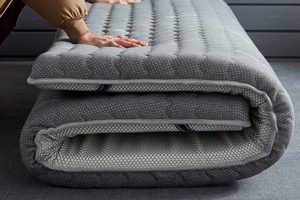
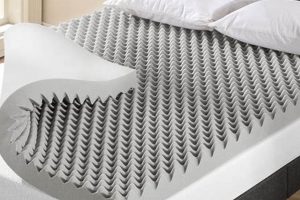
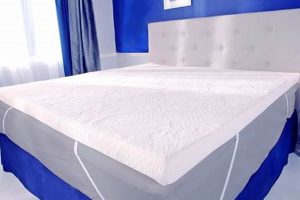
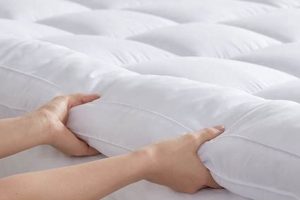
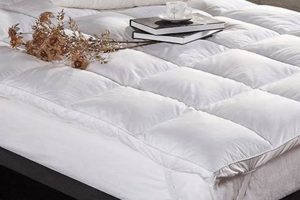
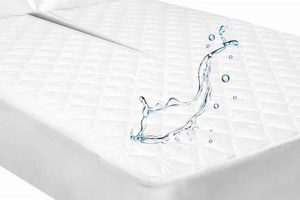
The fabric layer designed to cover and protect an additional comfort layer placed atop a mattress is typically made from materials like cotton, polyester, or blends thereof. This covering secures the supplementary layer and contributes to overall hygiene. A common example is a fitted covering used to encase a memory foam addition intended to soften a firm sleeping surface.
The implementation of such a covering extends the lifespan of both the comfort layer and the mattress itself by preventing direct contact with body oils, sweat, and potential spills. Historically, simple cloths were used for similar protective purposes, but modern materials offer improved breathability, durability, and ease of cleaning. The utilization of these coverings also simplifies the process of maintaining a clean and sanitary sleep environment.
This protective element is therefore an integral part of the sleep system. Understanding its functionality and selecting appropriate materials are important considerations. The following sections will further detail aspects such as material variations, sizing considerations, cleaning guidelines, and common problems encountered in its use.
Selecting and Maintaining Mattress Topper Coverings
The following guidelines will assist in choosing the appropriate covering and ensuring its longevity.
Tip 1: Measure Accurately: Before purchasing, precisely measure both the mattress and the supplementary layer. This ensures a snug fit, preventing slippage and maintaining even surface tension.
Tip 2: Material Selection: Consider the properties of different materials. Cotton offers breathability, while polyester provides durability and resistance to wrinkles. Blends can offer a balance of both characteristics.
Tip 3: Consider Thread Count: A higher thread count generally indicates a finer, more durable fabric. Opt for a thread count suitable for regular washing and wear.
Tip 4: Wash Regularly: Adhere to the manufacturer’s cleaning instructions. Regular washing removes accumulated oils and allergens, contributing to a hygienic sleep environment.
Tip 5: Use a Laundry Bag: Place it in a laundry bag during washing to prevent damage, especially if the fabric is delicate or has elastic components.
Tip 6: Avoid Harsh Chemicals: Refrain from using bleach or harsh detergents, as these can degrade the fabric and affect its integrity over time.
Tip 7: Check for Damage: Regularly inspect it for tears or holes. Promptly repair any damage to prevent further deterioration and maintain its protective function.
Proper selection and maintenance enhance the performance and lifespan of both the comfort layer and the mattress itself. Consistent adherence to these guidelines promotes a clean and comfortable sleep surface.
The subsequent sections will explore potential problems and troubleshooting strategies.
1. Fabric Composition

The selection of fabric composition is paramount in determining the comfort, durability, and overall performance characteristics of a mattress topper sheet. The chosen material directly influences breathability, temperature regulation, and the lifespan of both the protective covering and the underlying mattress topper.
- Cotton Varieties and Blends
Cotton, known for its breathability and softness, is a common choice. Different cotton varieties, such as Egyptian or Pima, offer varying degrees of luxury and durability. Blends, often combining cotton with polyester, aim to balance comfort with increased resistance to wrinkles and shrinkage. The specific blend ratio significantly impacts the final product’s feel and maintenance requirements.
- Synthetic Fibers: Polyester and Microfiber
Polyester and microfiber offer enhanced durability and water resistance compared to natural fibers. These synthetics are often more affordable and less prone to shrinking. Microfiber, in particular, is valued for its soft texture and hypoallergenic properties, making it suitable for individuals with sensitivities. However, synthetics may lack the breathability of natural materials, potentially leading to increased heat retention.
- Specialty Fabrics: Bamboo and Tencel
Bamboo and Tencel (Lyocell) are derived from natural sources but undergo processing to create fabrics with unique properties. Bamboo is lauded for its antibacterial and moisture-wicking capabilities, while Tencel excels in temperature regulation and smoothness. These specialty fabrics often command a higher price point but offer enhanced comfort and performance characteristics appreciated by discerning consumers.
- Performance Considerations: Weave and Finish
Beyond the fiber type, the weave and finish significantly influence the fabric’s texture, drape, and resistance to wear. Percale and sateen weaves, for example, offer distinct surface feels. Finishes, such as wrinkle-resistant treatments, can improve ease of care. Understanding these performance considerations enables informed selection of a material that aligns with specific needs and preferences.
The interplay between fiber type, weave, and finish determines the overall suitability of the fabric used in a mattress topper sheet. Informed selection, considering factors such as budget, desired comfort level, and maintenance requirements, ensures optimal performance and longevity of both the mattress topper and its protective layer.
2. Thread Count
Thread count, measured as the number of horizontal (weft) and vertical (warp) threads per square inch of fabric, is a commonly cited metric for assessing the perceived quality and feel of textiles. In the context of a mattress topper sheet, thread count purportedly influences softness, durability, and overall comfort.
- Perception of Softness and Luxury
A higher thread count is often associated with a softer and more luxurious feel. Denser weaving ostensibly results in a smoother surface against the skin. However, this correlation is not always definitive. Fabrics made from superior materials with lower thread counts can sometimes outperform those with higher counts but inferior fiber quality. The subjective sensation of softness remains a critical, albeit qualitative, factor for consumer satisfaction.
- Impact on Durability and Longevity
While not the sole determinant of durability, thread count can contribute to the fabric’s resistance to wear and tear. A denser weave may withstand more friction and laundering cycles before showing signs of degradation. The type of fiber used, however, is equally, if not more, important. Stronger fibers, such as long-staple cotton or certain synthetic blends, will generally offer superior longevity regardless of thread count.
- Influence
on Breathability and Temperature RegulationExcessively high thread counts can potentially reduce breathability. A tightly woven fabric may restrict airflow, leading to increased heat retention and discomfort, particularly for individuals who sleep hot. Fabrics with moderate thread counts and looser weaves often provide better ventilation, promoting a more comfortable sleeping environment. The specific weave pattern significantly impacts air permeability.
- Marketing and Consumer Misconceptions
Thread count has become a prominent marketing tool, often overemphasized to influence purchasing decisions. Consumers should be aware that extremely high thread counts (e.g., above 800) may be misleading or achieved through multi-ply yarns, which are not necessarily indicative of higher quality. A holistic evaluation, considering fiber type, weave, and overall construction, provides a more accurate assessment of value and performance.
In conclusion, thread count is a relevant, but not absolute, indicator of the quality and performance characteristics of a mattress topper sheet. While a higher count may contribute to a softer feel and improved durability, it is crucial to consider other factors, such as fiber type, weave, and overall construction, to make an informed purchasing decision. An overreliance on thread count as the sole metric can lead to inaccurate perceptions of quality and potential dissatisfaction.
3. Pocket Depth
Pocket depth, a critical dimension in the design of mattress topper sheet, dictates the ability of the covering to securely and effectively encase both the mattress and the supplemental comfort layer. Insufficient pocket depth results in slippage and compromised performance, while excessive depth introduces slackness and potential discomfort.
- Accommodation of Mattress and Topper Thicknesses
The primary function of pocket depth is to accommodate the combined height of the mattress and any topper in use. Accurate measurement is essential to ensure a snug fit. A covering with a depth that is too shallow will fail to fully enclose both layers, leading to the edges riding up and the covering detaching during use. Conversely, excessive depth results in loose fabric, which can bunch and create uneven sleeping surfaces. Standard pocket depths typically range from 8 to 18 inches, catering to varying mattress and topper combinations. The selection must align with the specific dimensions of the bedding configuration.
- Elasticity and Fit Security
Pocket depth interacts directly with the elasticity of the fitted perimeter. Adequate depth allows the elastic to exert consistent tension, preventing the covering from shifting during sleep. Insufficient depth compromises the elastic’s ability to grip the mattress edges, leading to frequent adjustments and potential damage to the fabric. High-quality elastic, combined with appropriate pocket depth, contributes significantly to the overall fit and stability of the mattress topper sheet.
- Impact on Comfort and Sleep Quality
An improperly fitted covering, resulting from an incorrect pocket depth, can negatively impact sleep quality. Loose or bunched fabric creates pressure points and disrupts the smooth surface of the mattress. Conversely, a too-tight covering can compress the topper, reducing its intended comfort and support. Selecting a covering with the correct pocket depth is therefore crucial for maintaining the desired sleep experience.
- Material Properties and Pocket Depth Interactions
The material properties of the mattress topper sheet influence the required pocket depth. Stretchy or pliable fabrics can accommodate slightly smaller depths, while more rigid materials necessitate precise measurements. The weight of the fabric also plays a role; heavier fabrics may require deeper pockets to ensure adequate support and prevent slippage. Careful consideration of the material’s characteristics is essential for optimizing the fit and performance of the covering.
The interplay between pocket depth, elasticity, and material properties dictates the overall suitability of a mattress topper sheet. Precise matching of pocket depth to the combined thickness of the mattress and topper ensures a secure, comfortable, and stable sleep surface. Failure to address this critical dimension compromises the intended benefits of the topper and the overall sleep experience.
4. Elasticity
Elasticity, as a material property, plays a critical role in the functionality and performance of a mattress topper sheet. It governs the ability of the fabric to stretch and conform to the dimensions of the mattress and topper, ensuring a snug and secure fit that impacts comfort and longevity.
- Secure Fit and Conformability
Elasticity enables the covering to stretch and adapt to varying mattress and topper thicknesses. This conformability is essential for maintaining a smooth, wrinkle-free surface, preventing slippage, and ensuring consistent contact with the sleeping surface. Without sufficient elasticity, the covering may bunch, creating discomfort and disrupting sleep quality. Examples include fitted sheets with elastic perimeters that stretch to accommodate different mattress heights.
- Durability and Resistance to Wear
Elasticity allows the fabric to withstand the stresses associated with regular use and laundering. The ability to stretch and recover its original shape prevents permanent deformation and reduces the risk of tearing or ripping. Higher elasticity contributes to increased durability and extends the lifespan of the mattress topper sheet. Elastic fibers woven into the fabric provide resilience against stretching forces.
- Ease of Use and Installation
The elastic nature simplifies the process of installing and removing the covering. Stretchable fabrics conform easily to the mattress and topper, facilitating quick and effortless fitting. This ease of use enhances convenience and reduces the likelihood of damage during handling. Elastic corner bands are a practical example, allowing users to easily secure the covering around the mattress corners.
- Material Composition and Elasticity
The elasticity of a mattress topper sheet is directly influenced by its material composition. Fabrics containing elastic fibers, such as Spandex or Lycra, exhibit superior stretch and recovery properties. Natural fibers, like cotton, can be blended with synthetics to enhance their elasticity. The choice of material dictates the overall stretch and conformability of the covering and its ability to maintain its shape over time. Blended fabrics provide a balance between comfort and elastic performance.
In summary, elasticity is a fundamental attribute that significantly impacts the fit, durability, and ease of use of a mattress topper sheet. The proper balance of elasticity and material composition ensures optimal performance and contributes to a comfortable and restful sleep environment. Understanding the interplay between these factors is crucial for selecting a suitable covering.
5. Washability

Washability constitutes a critical attribute of a mattress topper sheet, influencing hygiene, longevity, and overall user experience. The ease and effectiveness with which a covering can be cleaned directly impacts the maintenance of a sanitary sleep environment and the lifespan of the product. Consequently, understanding the facets of washability is essential for informed selection and care.
- Material Composition and Washability
The fabric composition significantly determines washability. Certain materials, such as cotton and polyester blends, are generally machine washable and dryable, offering convenience in cleaning. However, delicate materials like silk or specific types of memory foam require specialized cleaning methods, such as spot cleaning or professional laundering, to avoid damage. The care label provides essential guidance on recommended cleaning procedures to preserve material integrity.
- Frequency of Washing and Hygiene
Regular washing removes accumulated body oils, sweat, dust mites, and allergens, contributing to a hygienic sleep environment. The recommended frequency depends on individual factors, such as perspiration levels and allergen sensitivities. Generally, washing every one to two months is advisable. Infrequent washing can lead to the buildup of contaminants, potentially impacting respiratory health and overall sleep quality. Consistent adherence to a washing schedule is therefore important.
- Washing Machine Compatibility and Drying Methods
The size and weight of the mattress topper sheet must be compatible with the capacity of the washing machine. Overloading the machine can result in ineffective cleaning and potential damage to both the covering and the machine. Drying methods are equally important. High heat can shrink or damage certain materials; therefore, air drying or low-heat tumble drying is often recommended. Following the manufacturer’s instructions ensures optimal results and prevents premature wear.
- Stain Resistance and Treatment
Some mattress topper sheets are treated with stain-resistant finishes to repel liquids and prevent permanent discoloration. However, even with these treatments, prompt stain removal is crucial. Blotting spills immediately and using appropriate cleaning agents can minimize staining. Harsh chemicals, such as bleach, should be avoided as they can damage the fabric and compromise its integrity. Pre-treating stains before washing improves the likelihood of successful removal.
These aspects of washability are intertwined with the selection and maintenance of a mattress topper sheet. Prioritizing materials and designs that facilitate easy and effective cleaning procedures contributes significantly to a sanitary and prolonged product lifespan. Ultimately, mindful attention to washing practices ensures a healthier and more comfortable sleep environment.
6. Zipper inclusion
Zipper inclusion in a mattress topper sheet presents a critical design element directly influencing ease of use and maintenance. The presence of a zipper facilitates the removal of the covering from the inner fill material, allowing for separate cleaning of the fabric encasement. This feature is particularly relevant for toppers utilizing fills like memory foam or down alternatives, which are often not easily washable. Without a zipper, cleaning the entire assembly necessitates specialized equipment or professional services, increasing maintenance complexity and cost. A practical example is a memory foam topper prone to collecting body oils and sweat; a zippered cover allows for routine laundering to maintain hygiene and extend the topper’s lifespan.
The type and quality of the zipper employed also warrant consideration. Durable zippers constructed from materials like metal or heavy-duty plastic offer increased resistance to breakage and wear. A concealed zipper design minimizes interference with the sleeping surface and reduces the likelihood of snagging or abrasion. Conversely, flimsy zippers or exposed designs may compromise the integrity of the covering and diminish user comfort. The location of the zipper is another influential factor; a zipper spanning multiple sides allows for easier removal and re-insertion of the fill material compared to a single-sided opening. Therefore, the selection of a zipper that complements the overall construction and intended usage patterns is vital. For instance, a topper frequently requiring cleaning benefits from a full-perimeter, heavy-duty zipper.
In summary, zipper inclusion enhances the practical functionality and maintenance aspects of a mattress topper sheet. It provides a means of separating the fabric covering from the fill material for independent cleaning, contributing to improved hygiene and extended product life. The selection of a robust and appropriately positioned zipper is essential for maximizing user convenience and minimizing potential issues. A well-designed zipper system demonstrates thoughtful engineering, recognizing the practical needs of regular upkeep and sanitation. Ignoring this design element results in a product that is challenging to maintain and, therefore, less desirable from a user perspective.
Frequently Asked Questions
The following questions and answers address common concerns regarding mattress topper sheets, their selection, and maintenance. These guidelines are intended to provide clarity and facilitate informed decision-making.
Question 1: What materials are commonly used in mattress topper sheets, and how do they differ?
Common materials include cotton, polyester, and blends thereof. Cotton offers breathability, while polyester provides durability. Blends aim to combine the advantages of both. Specialty fabrics such as bamboo and Tencel offer enhanced moisture-wicking and temperature regulation properties.
Question 2: How does thread count affect the quality of a mattress topper sheet?
Thread count, representing the number of threads per square inch, influences the perceived softness and durability. Higher thread counts are generally associated with finer fabrics, but fiber quality is equally important. Extremely high thread counts can sometimes impede breathability.
Question 3: What is pocket depth, and why is it important in a mattress topper sheet?
Pocket depth refers to the depth of the fitted sheet’s corners. It is crucial for accommodating both the mattress and the topper’s combined thickness. Insufficient pocket depth leads to slippage, while excessive depth results in loose fabric.
Question 4: How often should a mattress topper sheet be washed, and what cleaning methods are recommended?
Washing frequency depends on individual factors, but generally, every one to two months is advisable. Follow the manufacturer’s instructions, and use gentle detergents. Avoid harsh chemicals like bleach, which can damage the fabric. Tumble drying on low heat or air drying is often recommended.
Question 5: What are the signs that a mattress topper sheet needs to be replaced?
Signs include visible tears, excessive wear, thinning of the fabric, and persistent odors despite regular washing. A loss of elasticity in the fitted corners also indicates the need for replacement.
Question 6: Can a mattress topper sheet protect against allergens and dust mites?
While it offers a degree of protection, it is not a complete barrier. Regular washing is essential for removing a
llergens and dust mites. Consider using allergen-resistant fabrics for enhanced protection. A mattress encasement provides a more comprehensive solution.
In summary, a properly selected and maintained mattress topper sheet enhances sleep hygiene and extends the lifespan of both the topper and the mattress. Attention to material, thread count, pocket depth, and cleaning practices is crucial.
The following section will delve into troubleshooting common issues encountered with mattress topper sheets.
Conclusion
This exploration has illuminated the multifaceted considerations surrounding the utilization and maintenance of a mattress topper sheet. From the intricacies of material selection and thread count to the pragmatic aspects of pocket depth and washability, each element contributes significantly to the product’s overall performance and lifespan. Addressing these factors directly impacts the user’s comfort, sleep hygiene, and the long-term protection of the underlying mattress and topper.
Therefore, informed decision-making is paramount. A rigorous assessment of individual needs and preferences, coupled with a thorough understanding of the available options, will result in a more satisfactory and enduring investment. Continued awareness of evolving material technologies and maintenance practices will ensure optimal utilization and maximize the benefits derived from this essential bedding component.