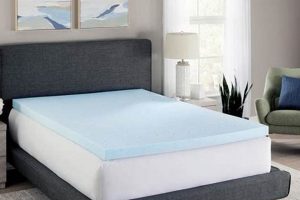
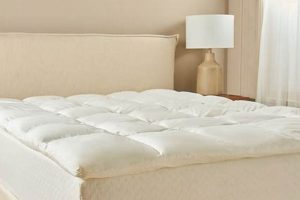
A cushioning layer designed to be placed atop a standard mattress aims to mitigate concentrated force against the body. These products modify the sleep surface, often utilizing materials with viscoelastic properties to contour and distribute weight more evenly. For example, a conforming foam pad placed on a firm innerspring mattress can alleviate pressure points that might otherwise cause discomfort.
The significance of such additions lies in their potential to enhance sleep quality and reduce physical stress. By minimizing areas of high contact between the body and the sleeping surface, these products may contribute to improved circulation and decreased musculoskeletal strain. Historically, advancements in material science have led to increasingly effective and durable solutions designed to promote restful sleep.
The following sections will elaborate on the materials commonly used in these products, examine the varying levels of firmness available, and provide guidance on selecting the most suitable option based on individual needs and preferences.
Optimizing the Use of Pressure-Reducing Mattress Overlays
The effective utilization of a conforming mattress overlay necessitates careful consideration of several factors to ensure optimal comfort and support.
Tip 1: Assess Existing Mattress Condition. Before acquiring an overlay, evaluate the underlying mattress. A severely worn or sagging mattress may negate the benefits of even the highest-quality overlay. Address significant mattress deficiencies prior to investing in a supplementary layer.
Tip 2: Select Appropriate Material Density. Different materials offer varying degrees of support and conformity. Higher-density foams typically provide more robust support, while lower-density options prioritize plushness. Consider body weight and preferred sleeping position when making a selection.
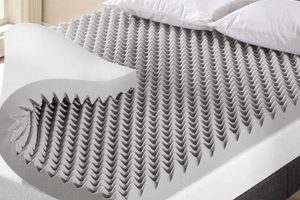
Tip 3: Consider Thickness and Profile. The thickness of the overlay directly impacts its ability to alter the feel of the mattress. A thicker overlay provides more substantial contouring. Profiled surfaces, such as those with zones or dimples, may enhance airflow and further distribute pressure.
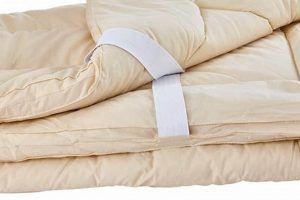
Tip 4: Ensure Proper Fit and Security. The overlay should fit snugly on the mattress without shifting or bunching. Models with elastic straps or fitted skirts can help secure the overlay in place. An ill-fitting overlay can create uneven surfaces and reduce its effectiveness.
Tip 5: Account for Temperature Sensitivity. Certain materials, such as some viscoelastic foams, can retain heat. Individuals prone to overheating during sleep should consider overlays with enhanced ventilation or those made from temperature-regulating materials, like gel-infused foams or those with open-cell structures.
Tip 6: Implement Proper Maintenance. Regularly clean the overlay according to the manufacturer’s instructions. Many overlays are not machine washable and require spot cleaning or professional cleaning services. Maintaining cleanliness prolongs the lifespan and hygiene of the product.
Tip 7: Allow for Adjustment Period. It may take several nights to adapt to the altered sleep surface. New materials can exhibit initial off-gassing, which typically dissipates within a few days. If discomfort persists, re-evaluate the selected material density and thickness.
By carefully considering these guidelines, individuals can maximize the potential benefits of a pressure-reducing mattress overlay, fostering improved sleep quality and overall well-being.
The subsequent sections will delve into specific product recommendations and comparative analyses, providing further assistance in making informed purchasing decisions.
1. Material Density

Material density plays a crucial role in determining the effectiveness of a pressure relief mattress topper. It is a fundamental characteristic that dictates how well the topper conforms to the body, distributes weight, and provides support, thus influencing overall sleep comfort and pressure reduction.
- Support and Conformity
Higher density materials generally offer firmer support and are better suited for individuals requiring greater spinal alignment. They resist compression, preventing the sleeper from sinking too deeply into the topper. Conversely, lower density materials offer a softer, more plush feel, conforming closely to the body’s contours. This close conformity can alleviate pressure points by evenly distributing weight across a larger surface area. An example would be a high-density memory foam topper offering robust support for a heavier individual, while a low-density latex topper might provide gentle contouring for a lighter person.
- Durability and Longevity
Material density directly correlates with the longevity of a pressure relief mattress topper. Higher density materials tend to be more resistant to wear and tear, maintaining their shape and supportiveness over time. Lower density materials are more prone to compression and breakdown, resulting in a shorter lifespan and reduced pressure relief capabilities. A high-density topper, while potentially more expensive initially, may offer a better long-term value due to its increased durability. In real life, low-density foam may sag and lose support within a year or two of regular use.
- Pressure Redistribution Effectiveness
The ability of a topper to effectively redistribute pressure hinges significantly on its material density. Higher density materials, while offering firm support, may not contour as readily to the body, potentially creating pressure points in sensitive areas. Lower density materials excel at conforming but may lack the support needed to prevent bottoming out, thus failing to effectively redistribute pressure for heavier individuals. A medium-density material often strikes a balance, providing both adequate support and sufficient contouring for optimal pressure relief.
- Temperature Regulation
Material density can influence the temperature regulation properties of a mattress topper. Denser materials tend to trap more heat, potentially leading to discomfort for sleepers who are prone to overheating. Lower density materials, particularly those with open-cell structures, allow for greater airflow, promoting cooler sleep. This aspect is relevant for individuals who live in warmer climates or who tend to sleep hot; selecting a lower density topper with enhanced breathability can mitigate heat retention.
In conclusion, material density is a critical factor in the performance of a pressure relief mattress topper, affecting its support, durability, pressure redistribution capabilities, and temperature regulation. Selection should be based on individual preferences, body weight, sleeping position, and any specific pressure relief requirements.
2. Thickness Variation

Thickness variation in a pressure relief mattress topper directly influences its capacity to modify the sleep surface and redistribute pressure. The degree to which a topper alters the feel and support of an existing mattress is primarily determined by its thickness.
- Conformity Enhancement
Thicker toppers provide a greater degree of conformity to the body’s contours. An increased material depth allows for more substantial compression and cradling, thereby minimizing pressure points. For instance, a 4-inch topper will generally offer more significant contouring than a 2-inch model, leading to enhanced pressure relief, particularly for side sleepers.
- Support Modification
The thickness of a topper contributes to its ability to modify the overall support characteristics of the underlying mattress. A thicker topper can effectively soften a firm mattress, while a thinner topper may provide only subtle changes. A person seeking to alleviate pressure on their hips and shoulders may opt for a thicker topper to add a layer of plushness to a too-firm mattress.
- Motion Isolation
Thickness affects the motion isolation properties of the topper. Thicker materials tend to absorb and dampen movement more effectively than thinner ones. This can be beneficial for couples, as it reduces the transfer of motion from one side of the bed to the other. A substantial topper can minimize disturbances caused by a partner’s movements during the night.
- Longevity and Compression Resistance
While not always directly proportional, thickness can contribute to the longevity of a topper. Thicker toppers generally have more material to compress before losing their supportive qualities. However, material density and quality are also critical factors. A thinner, high-density topper may outlast a thicker, low-density counterpart.
The appropriate topper thickness is contingent upon individual needs and preferences. Factors such as body weight, sleeping position, and the condition of the existing mattress should be considered when selecting a pressure relief mattress topper with a specific thickness. The interplay between thickness, density, and material composition dictates the ultimate effectiveness of the product.
3. Contour Adaptability

Contour adaptability represents a critical performance characteristic of any pressure relief mattress topper. It directly influences the topper’s capacity to conform to the unique contours of the human body, thereby minimizing concentrated pressure points. Inadequate contouring results in uneven weight distribution, leading to discomfort, disrupted sleep, and potentially exacerbating existing musculoskeletal issues. For example, a topper that fails to adapt to the natural curvature of the spine may create pressure on the hips and shoulders for side sleepers, leading to pain and restricted blood flow. Therefore, a pressure relief mattress topper must exhibit a high degree of contour adaptability to achieve its intended purpose.
Materials with viscoelastic properties, such as memory foam and certain latex formulations, are often employed to enhance contour adaptability. These materials respond to both pressure and temperature, allowing them to mold to the body’s shape over time. The effectiveness of contouring is also influenced by the topper’s thickness and density, as a thicker and less dense material will generally offer greater adaptability. The application of zoning techniques, where specific areas of the topper are engineered with varying levels of firmness, further refines contour adaptability. A zoned topper may provide firmer support in the lumbar region while offering greater cushioning in the shoulder and hip areas, catering to the different pressure relief needs of each body part.
In conclusion, contour adaptability is not merely a feature, but an essential function of a pressure relief mattress topper. Its presence dictates the degree to which the topper can effectively redistribute weight and alleviate pressure. Challenges remain in optimizing contour adaptability for diverse body types and sleeping positions, but advancements in material science and engineering continue to improve the performance of these products, offering tangible benefits in sleep quality and overall well-being.
4. Heat Dissipation
Heat dissipation is a critical factor in the overall performance and comfort of a pressure relief mattress topper. The ability of a topper to effectively dissipate heat directly impacts the sleeper’s thermal regulation throughout the night. Materials used in these toppers, particularly viscoelastic foams, often exhibit a tendency to retain heat due to their dense structure and limited airflow. This heat retention can lead to discomfort, night sweats, and disrupted sleep, negating the intended pressure relief benefits. For instance, a memory foam topper without adequate ventilation may trap body heat, causing the sleeper to feel excessively warm, even in a climate-controlled environment. Therefore, effective heat dissipation is not merely a desirable feature but a necessary component for optimizing the user experience with pressure relief mattress toppers.
Several strategies are employed to enhance heat dissipation in these products. Open-cell foam structures allow for increased airflow, facilitating the removal of heat and moisture. Gel infusions, often incorporated into memory foam, can provide a cooling effect by drawing heat away from the body. Additionally, the use of breathable cover materials, such as cotton or bamboo, further contributes to improved heat management. Conversely, closed-cell foam structures and synthetic cover fabrics tend to impede airflow, exacerbating heat retention issues. Practical application dictates that individuals prone to overheating should prioritize toppers with enhanced ventilation features and temperature-regulating materials. For example, a latex topper with pinhole ventilation, combined with a breathable cotton cover, represents a configuration designed to maximize heat dissipation.
In summary, heat dissipation is inextricably linked to the effectiveness of a pressure relief mattress topper. The accumulation of heat can compromise sleep quality and diminish the benefits of pressure redistribution. While material selection and design innovations have led to advancements in heat management, challenges remain in achieving optimal thermal regulation for all sleepers. Further research and development are necessary to create toppers that effectively balance pressure relief with superior heat dissipation, ensuring a comfortable and restful sleep environment.
5. Support Durability
The longevity and consistent performance of a pressure relief mattress topper are inextricably linked to its support durability. This attribute refers to the topper’s capacity to maintain its original shape, firmness, and pressure-redistributing properties over extended use. Diminished support durability directly compromises the topper’s efficacy in alleviating pressure points, potentially leading to increased discomfort and sleep disturbances.
The correlation stems from the degradation of the materials used in construction, primarily through compression and fatigue. A topper with inadequate support durability may initially provide adequate cushioning but gradually lose its ability to contour to the body, resulting in localized pressure and reduced spinal alignment. An illustrative example involves a low-density memory foam topper that, after a few months of use, exhibits significant sagging in the areas where the body exerts the most pressure, rendering it ineffective for pressure relief. Therefore, support durability is a fundamental component of a functional and long-lasting pressure relief mattress topper.
Several factors contribute to a pressure relief mattress topper’s support durability. High-density materials, such as latex or high-density memory foam, typically exhibit greater resistance to compression and deformation compared to lower-density alternatives. Construction techniques, such as reinforced edges and multi-layered designs, can also enhance the topper’s ability to withstand repeated stress. Regular rotation of the topper, if feasible, can distribute wear more evenly and extend its lifespan. Furthermore, the topper’s ability to recover its shape after compression, known as its resilience, is indicative of its potential for long-term support durability. The selection of a topper with demonstrated resilience is crucial for ensuring consistent performance over time. Consider a scenario where a high-resilience latex topper consistently returns to its original form after each use, maintaining its support and pressure-relieving capabilities for years, as opposed to a lower-quality option that gradually flattens and loses its contouring ability.
In conclusion, support durability is not merely a desirable attribute but an essential performance characteristic of a pressure relief mattress topper. Its presence ensures that the topper continues to effectively redistribute weight and alleviate pressure points over its intended lifespan. While material selection and construction techniques play critical roles in determining support durability, consumers should also consider factors such as the topper’s resilience and recommended maintenance practices. Prioritizing support durability ensures a sustained improvement in sleep quality and a worthwhile investment in long-term comfort and well-being.
6. Size Compatibility

The dimensions of a pressure relief mattress topper must correspond precisely to the dimensions of the underlying mattress. Any deviation from this correspondence compromises the intended function of the topper, potentially leading to discomfort, uneven support, and accelerated wear. Size compatibility is, therefore, a primary consideration in the selection and implementation of these products.
- Dimensional Accuracy
Precise dimensional matching ensures the topper covers the entire sleep surface without overhang or gaps. Overhang creates an unstable edge, increasing the risk of slippage and premature wear. Gaps, conversely, result in inconsistent support, negating the pressure relief benefits in those areas. For instance, a queen-size topper placed on a full-size mattress will overhang, creating an unstable and uncomfortable edge. Accurate measurement of the existing mattress is crucial before selecting a topper.
- Fitted Sheet Accommodation
The combined height of the mattress and topper must be considered to ensure standard fitted sheets will properly fit. An excessively thick topper can increase the overall height of the bed, rendering existing sheets unusable. Conversely, a topper that is too thin may not sufficiently alter the sleep surface to warrant a change in sheet size. Evaluating the pocket depth of existing or new fitted sheets is essential to ensure a secure and comfortable fit over the combined mattress and topper.
- Bed Frame Compatibility
Adding a pressure relief mattress topper increases the overall height of the bed, which may impact its compatibility with certain bed frames, particularly those with headboards or footboards. Increased bed height can obstruct the visual aesthetic or make it more challenging to get in and out of bed. Measuring the existing bed frame and accounting for the added height of the topper ensures the final assembly remains functionally and aesthetically appropriate.
- Weight Distribution Considerations
An improperly sized topper can lead to uneven weight distribution across the mattress surface. Overhang or gaps create localized pressure points, counteracting the intended pressure relief benefits. Even distribution of weight is crucial for maintaining spinal alignment and minimizing discomfort. A correctly sized topper promotes uniform support, facilitating optimal pressure redistribution and enhancing sleep quality.
In summary, size compatibility is paramount to the effective implementation of a pressure relief mattress topper. Failure to ensure accurate dimensional matching can negate the benefits of the topper, leading to discomfort and compromised sleep quality. Careful consideration of dimensional accuracy, fitted sheet accommodation, bed frame compatibility, and weight distribution ensures the topper functions as intended, providing optimal pressure relief and enhancing the overall sleep experience.
7. Surface Texture

Surface texture, in the context of a pressure relief mattress topper, refers to the tactile qualities of the topper’s uppermost layer. This characteristic influences several aspects of the sleep experience, including airflow, friction, and perceived comfort. The texture can range from smooth and uniform to patterned and uneven, each offering distinct advantages and disadvantages.
- Airflow Modulation
Surface texture plays a role in modulating airflow across the topper’s surface. A textured surface, such as one with dimples or channels, can create pathways for air circulation, thereby facilitating heat dissipation and reducing moisture accumulation. This is particularly relevant for materials like memory foam, which tend to retain heat. For example, a topper with a convoluted surface may allow for greater airflow than a smooth, flat surface, promoting a cooler sleep environment and minimizing the likelihood of night sweats.
- Friction Coefficient
The surface texture directly affects the friction coefficient between the topper and the sleeper’s body, as well as any bedding materials. A higher friction surface can limit movement and contribute to a feeling of being “stuck” in place. Conversely, a smoother surface allows for easier repositioning during sleep. The selection of surface texture should, therefore, consider individual preferences for ease of movement and potential limitations for individuals with mobility issues. A tightly woven, smooth surface may reduce friction compared to a coarser, knitted texture.
- Perceived Comfort and Tactile Sensation
Surface texture contributes significantly to the overall perceived comfort and tactile sensation of the topper. Some individuals prefer the smooth, even feel of a tightly woven surface, while others may find the subtle massage-like sensation of a textured surface more appealing. The perception of comfort is subjective, and the ideal surface texture will vary based on individual preferences. A plush, quilted surface may provide a
different sensory experience than a firm, smooth surface, influencing the overall satisfaction with the sleep surface. - Pressure Point Distribution
While the material composition of the topper is primarily responsible for pressure relief, surface texture can subtly influence pressure point distribution. A textured surface may create micro-adjustments in pressure distribution, potentially alleviating localized pressure points. However, an excessively uneven surface could also create new pressure points if the underlying material lacks sufficient conformity. The effectiveness of surface texture in enhancing pressure relief depends on its interaction with the overall material properties of the topper. A dimpled surface on a conforming foam may further distribute pressure, while the same surface on a rigid material may create localized discomfort.
In conclusion, surface texture is an important, albeit often overlooked, aspect of a pressure relief mattress topper. Its influence on airflow, friction, perceived comfort, and pressure point distribution contributes significantly to the overall sleep experience. The optimal surface texture is contingent upon individual preferences and should be considered in conjunction with other factors, such as material composition and topper thickness, when selecting a pressure relief solution.
Frequently Asked Questions
The following questions address common concerns and misconceptions regarding pressure relief mattress toppers, providing objective information to assist in informed decision-making.
Question 1: What is the primary function of a pressure relief mattress topper?
The primary function is to redistribute body weight across a wider surface area, minimizing concentrated pressure on specific points such as hips, shoulders, and spine. This reduction in pressure can alleviate discomfort and improve sleep quality.
Question 2: How does material density impact the performance of a pressure relief mattress topper?
Material density dictates the level of support and conformity offered. Higher-density materials generally provide firmer support and greater durability, while lower-density materials offer softer contouring and may be more suitable for lighter individuals.
Question 3: Does the thickness of a pressure relief mattress topper influence its effectiveness?
Thickness directly impacts the degree to which the topper alters the feel of the existing mattress. A thicker topper provides more substantial contouring and support, while a thinner topper offers a more subtle modification. The optimal thickness depends on individual needs and preferences.
Question 4: Are pressure relief mattress toppers effective for all sleeping positions?
The effectiveness varies depending on the sleeping position and the specific characteristics of the topper. Side sleepers generally benefit from toppers that offer significant contouring to relieve pressure on the shoulders and hips, while back sleepers may require more uniform support to maintain spinal alignment. Stomach sleepers may find that any added cushioning exacerbates poor spinal alignment.
Question 5: How can heat retention be mitigated in pressure relief mattress toppers?
Heat retention can be mitigated through the use of materials with open-cell structures, gel infusions, and breathable cover fabrics. These features promote airflow and facilitate heat dissipation, preventing excessive warmth and discomfort.
Question 6: What factors should be considered when determining the appropriate size of a pressure relief mattress topper?
The topper must correspond precisely to the dimensions of the underlying mattress. Inaccurate sizing can lead to uneven support, slippage, and accelerated wear. Additionally, the combined height of the mattress and topper should be considered to ensure compatibility with existing bed frames and fitted sheets.
In summary, pressure relief mattress toppers function by redistributing weight and alleviating pressure points. Material density, thickness, and surface texture are key factors influencing their performance. Careful consideration of individual needs and preferences is essential for selecting an appropriate topper.
The subsequent sections will explore specific product recommendations and provide guidance on maintaining the longevity of pressure relief mattress toppers.
Conclusion
This exposition has examined the properties and performance characteristics of the pressure relief mattress topper. Critical factors such as material density, thickness variation, contour adaptability, heat dissipation, support durability, size compatibility, and surface texture have been delineated. These attributes collectively determine the effectiveness of the topper in alleviating pressure points and enhancing sleep quality.
The selection of an appropriate pressure relief mattress topper necessitates careful evaluation of individual needs and preferences. Consideration of body weight, sleeping position, and existing mattress condition is paramount. Prioritizing informed decision-making ensures optimal benefits from this sleep surface modification.