The action of repairing a puncture or tear in an inflatable sleeping surface to prevent air leakage is the core concept. This involves identifying the location of the breach, preparing the surrounding area, and applying a suitable adhesive or patch to restore the integrity of the mattress. For example, locating a small leak and applying a vinyl patch with adhesive would constitute an instance of this action.
Effectively executing this repair extends the lifespan of the product, preventing premature disposal and reducing waste. It also offers a cost-effective alternative to purchasing a new replacement. Historically, methods for mending inflatable items have evolved from basic glues and fabrics to specialized repair kits containing durable patches and high-strength adhesives, reflecting advancements in material science and manufacturing processes.
The following sections will detail the necessary materials, step-by-step procedures, and preventative measures to ensure a successful and long-lasting repair. This includes identifying the leak, cleaning the area, applying the adhesive, and properly curing the repair to maximize its effectiveness.
Tips for Effective Repair
The following tips provide guidance for maximizing the success and longevity of inflatable sleeping surface repairs.
Tip 1: Accurate Leak Detection. Submerge the inflated mattress section by section in water to observe for air bubbles emanating from the puncture. Mark the precise location of the leak for accurate patch placement.
Tip 2: Surface Preparation is Key. Thoroughly clean the area surrounding the puncture with isopropyl alcohol to remove any dirt, oils, or debris. A clean surface ensures optimal adhesive bonding.
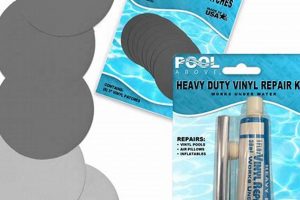
Tip 3: Utilize Appropriate Patch Materials. Select a patch made of vinyl or a comparable material compatible with the air mattress’s composition. Incompatible materials may result in inadequate adhesion and eventual failure.
Tip 4: Apply Adhesive Sparingly. A thin, even coat of adhesive is preferable to a thick glob. Excessive adhesive can compromise the bond strength and extend curing time.
Tip 5: Controlled Curing Environment. Allow the adhesive to cure completely in a well-ventilated area, free from direct sunlight or extreme temperatures. Adhering to the manufacturer’s recommended curing time is crucial for optimal performance.
Tip 6: Apply Pressure During Curing. Place a weight, such as a book, on top of the patch during the curing process to ensure consistent contact between the patch, the adhesive, and the mattress surface.
Tip 7: Test Before Full Inflation. After the adhesive has fully cured, partially inflate the air mattress to check for any signs of leakage before fully inflating. This prevents unnecessary stress on the repaired area.
Adhering to these guidelines enhances the probability of a durable and airtight repair, extending the service life of the inflatable sleeping surface.
The subsequent section will address preventative measures designed to minimize the occurrence of punctures and prolong the overall integrity of the mattress.
1. Leak Detection

Effective mitigation of damage to an inflatable sleeping surface necessitates precise identification of the compromised area. This process, known as leak detection, is the foundational step in executing a durable repair. Without accurate identification, any subsequent attempts at sealing a breach will likely prove ineffective.
- Submersion Testing
Submersion testing involves inflating the mattress and gradually immersing sections in water. The emergence of air bubbles indicates the location of the leak. This method is particularly effective for identifying minute punctures that are not readily visible to the naked eye. The absence of bubbles in areas surrounding the identified leak point reinforces the accuracy of the detection process.
- Acoustic Detection
Acoustic detection relies on amplifying the sound of escaping air. This can be achieved through the use of specialized listening devices or, in simpler scenarios, by closely listening near the surface of the inflated mattress. The hissing sound of escaping air pinpoints the location of the damage. This technique is advantageous in environments where submersion is impractical or impossible.
- Soapy Water Solution
Application of a soapy water solution onto the inflated mattress creates surface tension that reveals leaks. Air escaping through the breach will cause bubbles to form in the soapy film, marking the puncture site. This method is readily accessible and can be implemented with common household materials. The persistence and concentration of the bubbles correlate with the size and severity of the leak.
- Visual Inspection
A thorough visual examination of the mattress surface, particularly along seams and areas prone to wear and tear, can reveal larger tears or punctures. This involves carefully scrutinizing the material for any visible signs of damage. While less effective for pinpointing small leaks, visual inspection serves as a preliminary step in the detection process and may uncover significant damage requiring immediate attention.
The successful deployment of any repair strategy hinges upon the accuracy of leak detection. Each of these methodologies offers distinct advantages depending on the size and location of the breach, as well as the available resources. Ultimately, precise identification of the compromised area is paramount to ensuring a durable and effective repair to inflatable sleeping surfaces.
2. Surface Preparation

Surface preparation constitutes a critical phase in the effective execution of any repair to an inflatable sleeping surface. It directly influences the adhesion of the repair material and, consequently, the longevity of the mended area. Improperly prepared surfaces compromise the integrity of the bond, leading to premature failure and air leakage.
- Cleaning the Area
Removal of contaminants from the surface surrounding the puncture is paramount. This involves the elimination of dirt, oils, and any residual debris that could impede the adhesive’s ability to form a secure bond. Isopropyl alcohol is frequently employed as a cleaning agent due to its ability to dissolve grease and evaporate without leaving a residue. For instance, if an air mattress is used outdoors, accumulated dirt and plant matter must be meticulously removed prior to applying the repair patch. Failure to adequately clean the surface can result in a weak bond and subsequent air leakage.
- Abrasive Treatment (If Applicable)
In certain instances, particularly with specific mattress materials or
adhesive types, light abrasion of the surface may be necessary to enhance adhesion. This involves gently roughening the area to create a more textured surface for the adhesive to grip. A fine-grit sandpaper can be used for this purpose. For example, if the mattress material is particularly smooth or glossy, light abrasion can significantly improve the bond strength. However, it is crucial to exercise caution to avoid damaging the material further. - Drying the Surface
After cleaning, complete drying of the surface is imperative. Any residual moisture can interfere with the adhesive’s ability to bond effectively. The surface should be allowed to air dry completely before proceeding with the repair. For example, if isopropyl alcohol is used for cleaning, the drying process is typically rapid. However, if water is used, a longer drying time may be required. Ensuring a dry surface is essential for achieving a durable and airtight seal.
- Degreasing Considerations
Some air mattress materials, especially those containing PVC, may exhibit residual surface oils that hinder adhesive bonding. In such cases, a dedicated degreasing agent, specifically designed for plastics, may be necessary to remove these oils effectively. For example, some vinyl repair kits include a degreasing wipe as part of the surface preparation process. The application of a degreasing agent ensures a clean and receptive surface for the adhesive to adhere to, maximizing the likelihood of a successful and lasting repair.
The convergence of these surface preparation techniquescleaning, abrasion (when applicable), drying, and degreasing (if necessary)establishes the groundwork for a robust and enduring repair to an inflatable sleeping surface. These meticulously executed steps collectively optimize the adhesive’s bonding capacity, thereby mitigating the risk of subsequent air loss and extending the operational lifespan of the mattress.
3. Patch Material

The selection of appropriate patch material is paramount to the success of any effort to seal a breach in an inflatable sleeping surface. The materials compatibility with the air mattress and the adhesive used directly influence the durability and longevity of the repair.
- Vinyl Composition
Vinyl patches are frequently utilized due to the widespread use of vinyl in air mattress construction. These patches exhibit good flexibility and adhesion properties when paired with compatible vinyl adhesives. For example, a heavy-duty vinyl patch is suitable for tears in the main body of a standard vinyl air mattress, providing a durable and airtight seal. Employing a vinyl patch on a non-vinyl mattress, however, may lead to inadequate adhesion and subsequent failure.
- Thermoplastic Polyurethane (TPU) Options
TPU patches offer enhanced durability and resistance to abrasion compared to traditional vinyl. These patches are often employed for high-stress areas, such as seams or corners. As an illustration, a TPU patch could be used to reinforce a repaired seam on an air mattress subjected to frequent use. The increased resilience of TPU minimizes the risk of the repair failing under repeated stress. Incompatibility with certain adhesives should be noted.
- Fabric-Reinforced Patches
Fabric-reinforced patches incorporate a woven fabric layer embedded within the patch material, providing added strength and resistance to tearing. These patches are suitable for larger punctures or tears where increased reinforcement is required. A common application is the repair of a large gash in the side of an air mattress, where the fabric reinforcement distributes stress and prevents the patch from tearing. These patches are often thicker and less flexible than vinyl or TPU options.
- Adhesive-Backed Patches vs. Separate Adhesive
Patch materials are available with pre-applied adhesive or requiring separate adhesive application. Adhesive-backed patches offer convenience but may exhibit reduced bond strength compared to patches using a separate, high-quality adhesive. An example is a self-adhesive patch used for a minor puncture, providing a quick but potentially less durable repair. The use of a separate, specialized adhesive, such as a cyanoacrylate or vinyl cement, typically results in a stronger and more reliable bond, albeit requiring more careful application.
The appropriate patch material is thus dictated by the composition of the air mattress, the size and location of the damage, and the desired level of durability. Mismatched or substandard materials can compromise the repair, negating the effort to seal the breach and potentially leading to further damage to the mattress.
4. Adhesive Application

Adhesive application represents a pivotal stage in the process of sealing a breach in an inflatable sleeping surface. The effectiveness of the seal is directly proportional to the quality and precision of the adhesive application, determining the longevity and reliability of the repair.
- Selection of Appropriate Adhesive
The choice of adhesive must align with the materials of both the air mattress and the patch. Vinyl adhesives, for instance, are formulated for vinyl mattresses, while specialized adhesives are required for thermoplastic polyurethane (TPU) or fabric-reinforced materials. Employing an incompatible adhesive results in a weak or nonexistent bond. The selection criteria should consider the adhesive’s flexibility, water resistance, and long-term durability. For example, using a standard household glue on a vinyl air mattress will not yield a satisfactory seal and will likely fail under pressure.
- Proper Application Technique
The adhesive should be applied in a thin, even layer to both the patch and the prepared surface of the air mattress. An overly thick application can lead to prolonged curing times and a weaker bond due to incomplete drying. Conversely, an insufficient application results in inadequate contact between the surfaces. Utilizing a small brush or applicator can facilitate even distribution. Allowing the adhesive to become tacky before joining the surfaces, a process known as open time, often enhances the bond strength. Deviating from the recommended open time can compromise the adhesion.
- Addressing Air Pockets and Bubbles
During patch placement, care must be taken to eliminate air pockets or bubbles between the patch and the air mattress surface. These imperfections create weak points in the seal, increasing the risk of leakage. Applying firm, even pressure to the patch, working from the center outwards, helps to expel trapped air. A roller or smooth, rounded object can be used to further ensure uniform contact. The presence of air pockets undermines the structural integrity of the repair and diminishes its ability to withstand pressure.
- Curing Time and Environmental Factors
Adhesive manufacturers specify a curing time, which represents the duration required for the adhesive to fully harden and achieve its maximum bond strength. Adhering to this timeframe is crucial for a durable repair. Environmental factors, such as temperature and humidity, can influence the curing process. High humidity levels may prolong curing times, while extreme temperatures can either accelerate or inhibit the process. Mainta
ining a controlled environment during curing, as per the manufacturer’s recommendations, optimizes the adhesive’s performance. Premature use of the repaired air mattress before complete curing can disrupt the bond and lead to failure.
The nuances of adhesive application, encompassing adhesive selection, application technique, air pocket mitigation, and curing time adherence, collectively determine the success of sealing a hole in an air mattress. Deviation from best practices at any stage of this process diminishes the likelihood of a durable and reliable repair.
5. Curing Time

The duration designated for an adhesive to achieve its maximum bond strength, referred to as curing time, constitutes a critical variable in the successful execution of a repair to an inflatable sleeping surface. Insufficient curing compromises the adhesive’s capacity to establish a durable bond between the patch and the mattress material. This inadequacy manifests as premature failure of the repair, resulting in air leakage and rendering the mending effort ineffectual. For instance, if a vinyl patch is affixed to an air mattress with vinyl adhesive but the recommended 24-hour curing period is truncated to only a few hours, the bond may appear adequate initially. However, upon inflation and subsequent use, the stress on the insufficiently cured bond will likely cause it to separate, leading to air loss. Conversely, strict adherence to the prescribed curing time allows the adhesive to fully polymerize, forming a robust and lasting seal capable of withstanding the pressures exerted during inflation and use.
The practical significance of understanding curing time extends beyond mere adherence to instructions. Environmental factors, such as ambient temperature and humidity, influence the curing process. Elevated humidity levels can prolong curing times, while deviations from optimal temperatures, whether excessively high or low, can impede the polymerization process. Therefore, achieving an effective seal necessitates adapting the curing environment to the adhesive manufacturer’s specifications. A real-world example involves repairing an air mattress in a humid basement. The increased moisture content in the air could extend the curing time significantly, potentially requiring 36 hours or more to achieve full bond strength. Monitoring the ambient conditions and extending the curing period accordingly is paramount in such situations.
In conclusion, the curing time is not merely a passive waiting period but an active component in the repair process. Its proper management, encompassing adherence to recommended durations and consideration of environmental influences, is essential for ensuring a durable and reliable repair. A failure to respect the curing time negates the effort invested in surface preparation, patch selection, and adhesive application, ultimately undermining the objective of sealing the breach and restoring the functionality of the inflatable sleeping surface. The integration of this understanding is key to prolonging the lifespan of the mattress.
6. Pressure Application
Pressure application, in the context of sealing a puncture in an inflatable sleeping surface, directly influences the adhesive bond’s integrity. Consistent and uniform pressure applied during the adhesive curing phase optimizes contact between the patch, the adhesive, and the mattress material. This ensures maximal surface area adhesion, minimizing air pockets and promoting a robust, airtight seal. Inadequate pressure leads to inconsistent bonding, weakening the repair and increasing the likelihood of subsequent air leakage. For instance, failing to apply sufficient pressure to a patch on a textured air mattress surface may result in the adhesive only bonding to the raised areas, leaving gaps and compromising the seal. Therefore, pressure application is not a supplementary step but an integral component of the sealing process.
The duration and magnitude of the applied pressure are critical. Prolonged pressure, maintained throughout the curing period, prevents patch displacement and ensures intimate contact between the adhesive and the mating surfaces. The level of pressure should be sufficient to compress the materials without causing distortion or damage. A practical example involves using a flat weight, such as a book, placed directly on the patch after adhesive application. The book distributes the weight evenly, preventing localized stress points that could hinder the bond. Alternatively, specialized clamps or rollers can be used for more complex repairs or larger surface areas, ensuring uniform pressure distribution. Neglecting to maintain consistent pressure allows for patch migration or air pocket formation, significantly reducing the repair’s lifespan.
Effective pressure application, therefore, is not merely about exerting force but about optimizing contact and promoting a stable curing environment. It directly contributes to the durability and longevity of the repair, mitigating the risk of future air loss and extending the useful life of the inflatable sleeping surface. Integrating this understanding ensures a more successful and cost-effective repair, underlining its importance in the broader framework of inflatable mattress maintenance.
7. Post-Repair Testing

Post-repair testing represents a crucial validation step in the process of sealing a breach in an inflatable sleeping surface. It confirms the efficacy of the repair, ensuring an airtight seal and preventing subsequent air leakage, thereby safeguarding the investment of time and resources expended on the mending process. Its importance is highlighted by the potential for subtle defects that may not be immediately apparent.
- Inflation Monitoring
Inflation monitoring involves inflating the repaired mattress to its recommended pressure and observing for any pressure loss over a defined period. This test assesses the repair’s ability to withstand sustained inflation. For instance, after sealing a puncture, the mattress can be inflated and left undisturbed for 24 hours. A significant pressure drop during this period indicates a compromised seal requiring further attention. Successful inflation monitoring confirms the repair’s structural integrity.
- Soapy Water Application
Applying a soapy water solution along the repaired area allows for visual detection of minute air leaks. The formation of bubbles indicates escaping air, pinpointing areas where the seal is not airtight. As an example, after patching a tear, a soapy solution is brushed over the repair site. The appearance of even small bubbles suggests an imperfect seal, necessitating re-application of adhesive or additional patching. This method reveals leaks undetectable by mere visual inspection or inflation monitoring.
- Weight Testing
Weight testing subjects the repaired area to a load similar to what it would experience during normal use. This evaluates the repair’s capacity to withstand stress without failing. Placing a predetermined weight, such as a person, on the repaired section simulates real-world conditions. A failure of the repair under this load indicates inadequate bonding or patch strength. Successful weight testing validate
s the repair’s robustness and suitability for regular use. - Seam Integrity Verification
Seam integrity verification focuses specifically on repairs made along seams, which are often areas of stress concentration. This involves carefully inspecting the seam for any signs of separation or weakness. Manually stressing the seam, by gently pulling or twisting, can reveal subtle defects. For example, if a seam repair begins to separate under light pressure, the adhesive bond is insufficient and requires reinforcement. This targeted testing ensures the long-term durability of seam repairs.
These post-repair testing methodologies, when implemented comprehensively, offer a robust assessment of the success of any attempt to seal a hole in an inflatable sleeping surface. They serve as a crucial safeguard, minimizing the risk of unexpected failures and maximizing the lifespan of the repaired mattress. The data gathered from these tests provides quantifiable metrics to prove the success of an air mattress repair.
Frequently Asked Questions
The following section addresses frequently encountered queries regarding the repair of inflatable sleeping surfaces, providing detailed insights into best practices and potential challenges.
Question 1: What is the most effective method for locating a small leak in an air mattress?
Submersion testing offers a highly effective solution. Inflating the mattress and gradually submerging sections in water allows for the observation of air bubbles emanating from the puncture. Alternatively, applying a soapy water solution to the inflated surface can reveal leaks through bubble formation.
Question 2: What type of adhesive is recommended for repairing a vinyl air mattress?
Vinyl adhesives, specifically designed for flexible PVC materials, are the preferred choice. These adhesives offer superior bonding strength and flexibility compared to general-purpose glues. Ensure the adhesive is compatible with both the mattress and patch materials.
Question 3: How should the surface be prepared prior to applying a patch?
Thorough cleaning of the area surrounding the puncture is essential. Isopropyl alcohol is recommended to remove dirt, oils, and debris. Light abrasion with fine-grit sandpaper may also be beneficial to enhance adhesion, particularly on smooth surfaces.
Question 4: What is the appropriate curing time for most air mattress adhesives?
Curing times vary depending on the adhesive formulation. Adhering to the manufacturer’s specified curing time is crucial for achieving maximum bond strength. Typically, a curing period of 24 to 48 hours is recommended.
Question 5: Is it possible to repair a large tear in an air mattress?
While small punctures are readily repairable, large tears require specialized techniques. Fabric-reinforced patches or multiple overlapping patches may be necessary. Consider consulting a professional repair service for extensive damage.
Question 6: How can future punctures be prevented?
Preventative measures include using a mattress protector, ensuring the sleeping surface is free from sharp objects, and avoiding over-inflation. Proper storage in a cool, dry place also minimizes the risk of material degradation and puncture.
Proper adherence to these guidelines significantly improves the likelihood of a successful and long-lasting repair. Neglecting these principles can compromise the integrity of the mending and decrease the lifespan of the inflatable sleeping surface.
The following section addresses preventative measures to minimize punctures and extend the air mattress’s lifespan.
Conclusion
The preceding exposition has detailed the multifaceted process of how to seal a hole in an air mattress, encompassing leak detection, surface preparation, material selection, adhesive application, curing protocols, and post-repair verification. Diligent execution of these steps maximizes the probability of a successful and durable repair, effectively extending the operational lifespan of the inflatable sleeping surface.
Mastery of this process is essential for responsible ownership of inflatable bedding. By embracing these techniques, individuals mitigate waste, conserve resources, and uphold the functionality of a valuable asset. Continued vigilance and adherence to established best practices will yield sustained benefits, minimizing the need for premature replacement and maximizing long-term value.