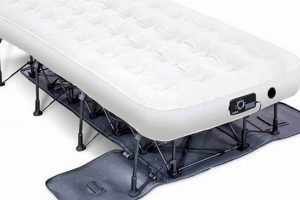
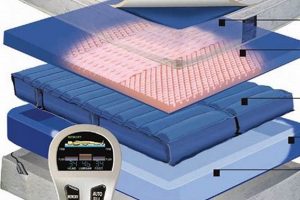
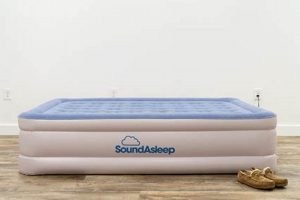
An apparatus designed to inflate and, in some cases, deflate inflatable sleeping pads is essential for their practical use. These devices utilize a mechanical or electrical process to force air into or extract it from the mattress, enabling it to achieve the desired firmness for sleep or compact storage. A typical example includes a hand-operated bellows or an electrically powered compressor.
The significance of such inflation mechanisms lies in their contribution to portability and convenience. Inflatable sleeping pads offer a comfortable sleeping surface without the bulk and weight of traditional mattresses, but require a means of achieving this inflated state. Their historical context is rooted in camping and outdoor recreation, where lightweight and compact equipment is paramount. The ongoing development of these devices has led to improvements in inflation speed, ease of use, and power source options, enhancing the overall user experience.
The following sections will delve into the various types of these inflation devices available, their specific features, and factors to consider when selecting the most appropriate option. This will cover manual, electric, and battery-operated models, alongside aspects such as inflation speed, noise level, and compatibility with different mattress valve types.
Essential Considerations for Air Mattress Inflation
Selecting and utilizing the appropriate inflation mechanism ensures optimal performance and longevity of inflatable sleeping pads. Adherence to these guidelines will improve user experience and prevent potential damage.
Tip 1: Match the Valve Type. Verify compatibility between the inflation device nozzle and the mattress valve to ensure an airtight seal. Forceful insertion into incompatible valves can cause damage.
Tip 2: Monitor Inflation Pressure. Avoid over-inflation. Exceeding the recommended pressure, typically indicated on the mattress itself, can lead to seam failure and irreversible damage.
Tip 3: Select an Appropriate Power Source. For electric models, ensure the available power source (AC outlet, DC adapter, or battery) matches the device’s requirements. Using an incorrect voltage can damage the device or pose a safety hazard.
Tip 4: Store in a Dry Environment. Moisture can damage both manual and electric inflation devices, leading to corrosion and malfunction. Store in a dry, protected area when not in use.
Tip 5: Maintain Cleanliness. Regularly clean the inflation nozzle and any associated filters. Debris can obstruct airflow and reduce efficiency.
Tip 6: Consider Inflation Speed. For larger mattresses or situations requiring rapid inflation, select a high-volume model capable of delivering a substantial airflow rate.
Tip 7: Be Aware of Noise Levels. Electric models can generate significant noise during operation. Consider the noise level, particularly in shared sleeping environments or campgrounds.
Following these recommendations promotes responsible use and extends the lifespan of both the inflation device and the inflatable sleeping pad itself, resulting in a more reliable and comfortable sleeping experience.
The subsequent sections will discuss troubleshooting common issues and exploring advanced features available in modern inflation devices.
1. Inflation Method

The choice of inflation method represents a fundamental aspect of selecting an appropriate apparatus for inflatable sleeping pads. The available inflation mechanisms directly impact convenience, speed, and portability, influencing the overall user experience.
- Manual Inflation
Manual inflation relies on human power, utilizing devices like foot pumps or hand bellows. These models offer the advantage of independence from electrical power sources, making them suitable for remote locations. However, manual inflation is typically slower and requires greater physical exertion compared to electric alternatives.
- Electric Inflation
Electric inflation employs motorized devices to generate airflow. These models significantly reduce inflation time and physical effort. However, electric inflators require access to a power source, such as an AC outlet, a DC adapter (car charger), or batteries, limiting their applicability in environments without power infrastructure. Noise levels generated by electric models should also be considered.
- Battery-Operated Inflation
Battery-operated units offer a compromise between manual and electric options. These models provide the convenience of electric inflation without the need for a direct power connection, relying instead on rechargeable or disposable batteries. Battery life and charging time are critical considerations, as is the potential for reduced power output as the battery discharges.
- Integrated Inflation Systems
Some inflatable sleeping pads feature integrated inflation systems, often involving a built-in foot pump or a valve compatible with a separate inflation bag. These systems offer a compact and self-contained solution, eliminating the need to carry a separate inflation device. However, integrated systems may be less efficient or durable compared to dedicated inflation mechanisms.
The selection of an appropriate inflation method should be guided by the intended use case and the available resources. Camping scenarios may favor manual or battery-operated options, while home use may benefit from the speed and convenience of electric inflation. Understanding the trade-offs associated with each method is essential for making an informed decision.
2. Power Source

The power source is a critical determinant in selecting and operating a device designed to inflate or deflate inflatable sleeping pads. The available power options dictate portability, convenience, and operational contexts.
- AC Power (Mains)
AC-powered inflation devices require a standard wall outlet. These models typically provide consistent and high-volume airflow, suitable for rapid inflation of larger mattresses. Their use is constrained to locations with access to mains electricity, making them unsuitable for camping or remote scenarios. Examples include many household electric models. The implication is a dependency on infrastructure but offers efficiency.
- DC Power (Automotive)
DC-powered devices utilize a 12V connection, commonly found in vehicles. These models offer mobility, enabling inflation at campsites or during travel. Airflow rates may be lower compared to AC-powered models. Compatibility with vehicle electrical systems is crucial, and prolonged use can drain the vehicle’s battery. Many portable electric models incorporate this option. This provides mobility albeit with potential limitations on power.
- Battery Power (Rechargeable)
Rechargeable battery-powered devices offer cordless operation and portability. Battery capacity and charging time are key considerations. Some models use proprietary battery packs, while others utilize standard battery formats. Output power may decrease as the battery discharges. This design is common in higher-end portable units. Portability is greatly enhanced but operational duration becomes a concern.
- Battery Power (Disposable)
Devices using disposable batteries (e.g., AA, D cells) provide readily available power, particularly in areas lacking charging infrastructure. Battery life is finite, and replacement costs can accumulate. Output power can diminish with battery depletion. This option is less common due to environmental concerns and operational cost. It offers short-term power independence but is not sustainable in the long run.
The choice of power source is a key factor in determining the practicality of an inflation device for a specific situation. A balance must be struck between convenience, portability, and performance based on the intended use of the inflatable sleeping pad.
3. Valve Compatibility
Valve compatibility is a fundamental aspect when selecting a device for inflating or deflating inflatable sleeping pads. The interface between the apparatus and the mattress must be precisely matched to ensure an airtight seal and efficient airflow. Incompatibility results in air leakage, extended inflation times, or, in some cases, the inability to inflate the mattress altogether. This is a direct cause-and-effect relationship: an incorrect valve interface nullifies the utility of the inflation device. The selection of an appropriate device must, therefore, begin with a thorough understanding of the valve type present on the inflatable sleeping pad.
Different manufacturers employ various valve designs, including Boston valves, pinch valves, and newer, proprietary valve systems. For instance, a high-volume electric inflation device intended for use with a mattress equipped with a small pinch valve will prove largely ineffective. Conversely, attempting to force an inappropriate nozzle into a valve can damage the valve itself, rendering the mattress unusable. Adaptors are sometimes available to bridge the gap between mismatched valve types, but their effectiveness and reliability can vary. These adapters often introduce points of potential air leakage, reducing overall inflation efficiency. It is often better to ensure the device is a direct fit.
In summary, valve compatibility constitutes a critical consideration when choosing an inflation apparatus for inflatable sleeping pads. Ensuring a proper match prevents frustration, optimizes inflation efficiency, and safeguards the integrity of both the inflation device and the inflatable sleeping pad. Understanding this relationship is not merely a matter of convenience but a prerequisite for the effective use of these systems.
4. Inflation Speed

Inflation speed is a critical performance metric of any apparatus designed for inflating inflatable sleeping pads. It quantifies the time required to fully inflate a mattress to its operational pressure, directly influencing user convenience and overall satisfaction. A device with a low inflation speed can be particularly problematic in situations demanding rapid setup, such as camping in inclement weather or accommodating unexpected guests. The relationship between the inflation mechanism and the resulting inflation speed is governed by factors such as the device’s airflow rate (measured in cubic feet per minute, CFM, or liters per minute, LPM) and the mattress’s volume. Devices with higher CFM/LPM ratings generally achieve faster inflation speeds. However, the valve design and seal integrity of the mattress also play a significant role in determining the actual inflation time. For example, a high-output apparatus paired with a small or poorly sealed valve will result in a lower-than-expected inflation speed. Therefore, understanding both the device’s capabilities and the mattress’s characteristics is essential for predicting and optimizing inflation time.
Consider a scenario where a family arrives at a campsite late in the evening. The need to quickly inflate multiple sleeping pads becomes paramount. A manual foot would prove time-consuming and physically demanding, potentially delaying sleep and increasing fatigue. An electric inflation device, on the other hand, could inflate the mattresses in a fraction of the time, allowing the family to settle in more efficiently. Conversely, in a backpacking context where weight and size are critical considerations, a lightweight manual may be the preferred choice despite its slower inflation speed. The trade-off between inflation speed and other factors, such as portability and power requirements, is a central aspect of selecting an appropriate inflation mechanism. These considerations extend beyond mere convenience. In emergency situations, a rapid inflation speed could be vital for providing immediate sleeping arrangements or shelter.
In summary, inflation speed is a key performance characteristic of an inflation device, impacting user satisfaction and practical utility. The relationship between the device’s airflow rate and the mattress’s volume and valve design determines the actual inflation time. Selecting an appropriate device requires a careful evaluation of the trade-offs between inflation speed, portability, power requirements, and the intended use case. The understanding of inflation speed limitations and how to optimize inflation speed is essential for an adequate use of inflatable sleeping pads.
5. Portability

The concept of portability is inextricably linked to the utility of apparatuses designed for inflating or deflating inflatable sleeping pads. The inherent advantage of an inflatable sleeping pad lies in its ability to be compressed into a compact form for transport and storage. However, this benefit is contingent upon the associated inflation/deflation mechanism also exhibiting a degree of portability. The effectiveness of an inflatable sleeping system as a whole is diminished if the inflation apparatus is bulky, heavy, or requires a non-portable power source. For example, an electric device that requires an AC outlet severely limits its applicability in scenarios such as backpacking or wilderness camping, directly undermining the intended portability of the inflatable sleeping pad itself. Thus, portability of the inflation mechanism is not merely a desirable feature, but a functional requirement for realizing the full potential of inflatable sleeping solutions.
Consider the real-world example of a long-distance hiker preparing for a multi-day trek. The hiker prioritizes minimizing weight and maximizing pack space. While an inflatable sleeping pad offers a comfortable sleeping surface compared to sleeping directly on the ground, the hiker must carefully consider the implications of selecting an inflation device. A heavy, AC-powered apparatus would be entirely impractical. Instead, the hiker would likely opt for a lightweight manual inflation system or a compact, battery-operated model. The hiker might also select a sleeping pad with an integrated inflation sack, which furthe
r minimizes the weight and bulk associated with the inflation process. The hiker’s selection is driven by the need to maintain a high level of portability, which is directly proportional to the hiker’s ability to cover distance and navigate challenging terrain efficiently. The choice is a practical trade-off between comfort and convenience. The hiker would determine whether the benefits of the product exceed its weight and size.
In summary, portability constitutes a core performance attribute of devices used to inflate or deflate inflatable sleeping pads. The overall effectiveness of an inflatable sleeping system hinges upon the inflation mechanism’s ability to be easily transported and operated in diverse environments. Achieving optimal portability requires careful consideration of factors such as weight, size, power source requirements, and integration with the sleeping pad itself. The challenge lies in balancing portability with other desirable characteristics such as inflation speed and ease of use. The broader theme is optimizing the entire sleeping system as a portable entity, where the inflation apparatus plays a crucial supporting role.
Frequently Asked Questions
This section addresses common inquiries regarding devices employed to inflate inflatable sleeping pads, commonly referred to as air mattresses. It aims to provide clear and concise answers to facilitate informed decision-making.
Question 1: What is the typical lifespan of an electric inflation device?
The longevity of an electric inflation mechanism is contingent upon several factors, including frequency of use, build quality, and storage conditions. With regular maintenance and appropriate storage, a well-constructed electric may endure for several years. However, excessive use or exposure to moisture can significantly reduce its lifespan.
Question 2: Is it possible to over-inflate an air mattress using an electric apparatus?
Yes. Over-inflation can result in seam failure and irreversible damage to the air mattress. It is imperative to monitor inflation pressure and adhere to the manufacturer’s recommended pressure levels. Some electric models feature auto-shutoff mechanisms to prevent over-inflation. The existence of this feature does not override the importance of careful monitoring during the inflation process.
Question 3: Can automotive (DC) be used with household (AC) power outlets?
Direct use is not permissible. Automotive models are designed for a 12V DC power supply. Connecting such a device directly to a household AC outlet (typically 120V or 240V) will likely result in immediate and irreparable damage to the device. The employment of a suitable AC-to-DC converter is required.
Question 4: What is the difference between a single-action and a double-action manual apparatus?
Single-action devices inflate only on one stroke (either the upstroke or the downstroke), while double-action models inflate on both strokes. Double-action devices generally provide faster inflation, but may require greater physical exertion.
Question 5: How does cold weather affect the performance of battery-operated units?
Cold temperatures can significantly reduce the performance and lifespan of batteries. This is particularly true for lithium-ion batteries. In cold weather, the output power of battery-operated models may decrease, resulting in slower inflation speeds. Storing batteries in a warm environment prior to use can help mitigate this effect.
Question 6: Is it possible to repair a leaking air mattress valve?
The feasibility of repairing a leaking mattress valve depends on the nature and extent of the damage. Minor leaks can sometimes be sealed using specialized repair kits. However, severe damage may necessitate valve replacement, which may or may not be a practical option depending on the mattress design.
In summary, selecting and maintaining the appropriate device requires careful consideration of various factors, including power source compatibility, inflation pressure, and environmental conditions. Adherence to manufacturer guidelines is crucial for ensuring optimal performance and prolonging the lifespan of both the inflation device and the inflatable sleeping pad.
The subsequent sections will explore advanced features available in modern inflation devices, such as integrated pressure sensors and automatic shut-off functions.
Concluding Remarks on Air Mattress Inflation Mechanisms
This exploration has clarified the essential role of a pump for air mattress in facilitating the practical use of inflatable sleeping pads. From manual bellows to electric compressors, the selection of a suitable device hinges upon factors such as valve compatibility, power source availability, inflation speed requirements, and portability constraints. Understanding these parameters is paramount for optimizing the user experience and ensuring the longevity of both the inflation device and the mattress itself. Improper selection or usage can lead to inefficiency, damage, or complete failure of the inflation process.
The ongoing evolution of inflation technology promises further advancements in efficiency, convenience, and integration. Responsible selection, operation, and maintenance of a pump for air mattress not only enhance comfort but also contribute to sustainable practices by extending the lifespan of inflatable products and minimizing waste. Continued awareness and informed decision-making are crucial for maximizing the benefits and minimizing the drawbacks associated with these essential tools.