The process of releasing air from an inflatable sleeping surface is essential for storage and portability. This task involves creating an escape route for the contained air, allowing it to exit the mattress and reduce its volume. Effective completion minimizes space requirements and eases transportation.
Proper execution extends the lifespan of the inflatable. Allowing complete air removal before storage prevents material stretching and potential damage from trapped moisture. Historically, simpler valves often required more forceful methods, while modern designs prioritize ease and efficiency in air expulsion.
The following information details the various methods available to accomplish this task, offering a comprehensive guide to assist users with different mattress types and valve mechanisms.
Essential Considerations for Air Removal
Optimizing the efficiency and effectiveness of the deflation process requires attention to several key factors. The following tips provide guidance for ensuring a complete and damage-free outcome.
Tip 1: Identify the Valve Type: The mattress may incorporate a screw valve, a one-way valve, or an electric pump with a deflation setting. Recognizing the type allows for appropriate method selection.
Tip 2: Ensure a Clean Environment: Before initiating the process, clear the surrounding area of sharp objects that could puncture the material as it deflates.
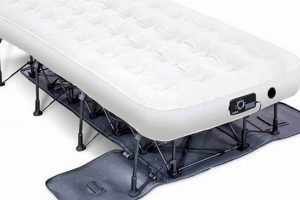
Tip 3: Utilize the Built-In Pump (if applicable): Many mattresses feature an integrated pump with both inflation and deflation capabilities. Employing this feature, when available, provides the most efficient and controlled means of air removal.
Tip 4: Open the Valve Fully: For manual valves, ensure it is completely open to maximize airflow. Some valves may require depressing an internal mechanism to release the seal.
Tip 5: Apply Gentle Pressure: Distributing weight evenly across the surface aids in forcing air out of the mattress. Avoid concentrated pressure that could damage seams or the valve.
Tip 6: Implement a Vacuum (for specific valves): Certain valves allow for the attachment of a vacuum cleaner hose. This expedites air removal, particularly for larger mattresses.
Tip 7: Roll Tightly and Secure: After initial deflation, tightly roll the mattress starting from the end opposite the valve. Secure it with straps or tape to maintain the compressed state.
These considerations enable a swift and thorough deflation, minimizing storage space and preventing potential damage to the inflatable surface.
The subsequent section will address troubleshooting common challenges encountered during this procedure.
1. Valve Identification
The initial step in effectively deflating an air mattress involves accurate valve identification. The valve mechanism dictates the appropriate method for air expulsion, thereby directly influencing the success and speed of the deflation process. Different valve designs, such as screw valves, one-way valves, or integrated electric pumps, necessitate distinct approaches. Failure to correctly identify the valve can lead to inefficient air removal, potential damage to the valve itself, or even complete inability to deflate the mattress.
For example, attempting to deflate a screw valve mattress by simply pressing on it, as might be effective with a one-way valve, will prove largely ineffective. Conversely, forcing a tool into a one-way valve not designed for manual deflation can damage the seal, rendering the mattress unusable. Modern air mattresses often incorporate electric pumps with designated deflation settings; overlooking this feature and attempting manual deflation would be significantly less efficient. Correct valve identification is therefore not merely a preliminary step, but a critical determinant of the deflation outcome.
In summary, valve identification serves as the foundation for successful air mattress deflation. It prevents damage, maximizes efficiency, and ensures the mattress can be effectively stored and transported. A lack of understanding regarding valve types can lead to frustration, wasted effort, and potential financial loss due to mattress damage, highlighting the practical significance of this often-overlooked aspect of air mattress care.
2. Pressure Application

Strategic pressure application is a crucial element in the efficient and complete deflation of an air mattress. It serves to actively assist the expulsion of air from the sealed chamber, maximizing deflation speed and minimizing residual air content.
- Distribution of Force
Uniform distribution of pressure across the surface of the mattress ensures even displacement of air towards the exit valve. Concentrated pressure in one area may create localized resistance, hindering the overall deflation process. Even weight distribution optimizes the force applied to all internal air pockets, facilitating a more thorough and faster deflation.
- Directed Pressure Towards the Valve
Applying pressure strategically from the end opposite the valve directs the airflow towards the designated exit point. This methodology leverages the internal geometry of the mattress to funnel air efficiently. Proper implementation minimizes the potential for trapped air pockets and ensures maximum air expulsion.
- Gentle and Controlled Compression
Controlled compression prevents damage to the internal structure of the air mattress. Excessive or abrupt force can compromise the seams, baffles, and valve assembly, potentially leading to leaks or complete failure. Gentle, sustained pressure offers an optimal balance between deflation speed and structural integrity.
- Vacuum Assistance with Targeted Pressure
When utilizing a vacuum cleaner attachment, strategic hand pressure around the valve interface enhances the seal and maximizes suction efficiency. Applying gentle, localized pressure ensures the vacuum extracts the maximum amount of air possible. This combined approach yields the most complete and rapid deflation achievable with supplemental vacuum assistance.
These techniques, when implemented correctly, contribute significantly to a faster, more complete, and safer deflation process, ensuring that the mattress is prepared for storage or transportation in a space-efficient manner. Improper application of pressure can lead to inefficient deflation, mattress damage, or valve malfunction, highlighting the importance of understanding and applying these principles effectively.
3. Rolling Technique

The rolling technique constitutes a critical phase in the complete expulsion of air from an inflatable mattress. Its implementation directly influences the volume reduction achieved, subsequently affecting storage efficiency. Inadequate execution results in residual air pockets, impeding compact storage and potentially fostering conditions conducive to mold growth during prolonged periods of disuse. The correlation is therefore causative: proper rolling facilitates complete air removal, leading to desired outcomes, whereas negligence in technique compromises these objectives.
Consider the practical scenario of preparing an air mattress for transport after camping. A haphazardly rolled mattress occupies significantly more space in a vehicle compared to one meticulously rolled to expel all remaining air. Furthermore, professional movers frequently employ advanced rolling and compression techniques to minimize cargo volume. Similarly, improper rolling can compromise the mattress integrity. For instance, rolling from the incorrect end, rather than initiating at the end opposite the valve, traps air, placing undue stress on seams and potentially leading to eventual structural failure.
In conclusion, the rolling technique is not merely a final step but an integral component of the overall air mattress deflation process. Mastery of this technique is essential for achieving maximum volume reduction, preventing potential material degradation, and facilitating convenient storage or transportation. Neglecting proper rolling effectively negates the benefits of previous deflation efforts, emphasizing the practical significance of its correct execution.
4. Pump Utilization

The utilization of an integrated or external pump significantly influences the efficiency and completeness of air mattress deflation. Many modern air mattresses are equipped with built-in electric pumps, often featuring both inflation and deflation functionalities. Activating the deflation setting on such pumps creates a pressure differential, drawing air out of the mattress more rapidly and thoroughly than manual methods. This active extraction method is particularly advantageous for larger mattresses where manual deflation can be laborious and time-consuming.
For mattresses lacking integrated pumps, external electric or manual pumps can serve the same purpose. Some manual pumps are designed to both inflate and deflate by reversing the airflow. Electric pumps, especially those intended for inflatable pools or boats, often possess sufficient power to quickly evacuate the air from an air mattress. The effectiveness of pump utilization depends on a proper seal between the pump nozzle and the mattress valve. A secure connection prevents air leakage, maximizing suction power and ensuring complete deflation. The absence of a proper seal diminishes the pump’s effectiveness, prolonging the deflation process and potentially leading to incomplete air removal.
In conclusion, pump utilization constitutes a valuable technique for expediting and enhancing air mattress deflation. The choice of pump, whether integrated or external, electric or manual, depends on mattress design and user preference. Achieving a secure seal between pump and valve is paramount for optimal performance. The judicious application of pump technology streamlines the deflation process, improving storage efficiency and mitigating the risk of moisture accumulation within the mattress. The absence of a pump necessitates reliance on manual methods, often resulting in less complete deflation and increased physical effort.
5. Complete Expulsion

Complete air expulsion represents the ultimate objective when deflating an air mattress, and its achievement profoundly impacts storage volume, material longevity, and sanitation. Insufficient air removal results in a bulky, unwieldy object, negating the space-saving benefits an air mattress is intended to provide. Furthermore, residual air often traps moisture, creating an environment conducive to mold and mildew growth, which degrades the mattress material and poses potential health risks. The relationship is thus causative: implementing effective deflation techniques directly precipitates complete air expulsion and its attendant advantages, whereas neglecting these techniques leads to incomplete deflation and its detrimental consequences. For example, storing a partially deflated air mattress in a humid environment invites the proliferation of microorganisms, shortening the mattress lifespan and potentially requiring premature replacement.
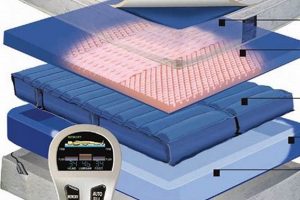
The practical significance of complete air expulsion extends beyond mere storage convenience. Consider a scenario where an air mattress is used for temporary bedding during a home renovation project. Incomplete deflation hampers movement within the workspace, creating an obstruction and increasing the risk of accidental damage. In a medical setting, where air mattresses are employed for pressure relief, complete deflation is essential for proper cleaning and disinfection between patients, preventing cross-contamination and ensuring a hygienic environment. Effective deflation techniques, such as utilizing a vacuum cleaner to extract remaining air, or employing a methodical rolling process to force air toward the valve, become critical for maintaining cleanliness and preventing the spread of infection.
Achieving complete air expulsion presents challenges, particularly with mattresses featuring complex internal structures or malfunctioning valves. However, overcoming these challenges is paramount for reaping the full benefits of air mattress use. By mastering deflation techniques and prioritizing thorough air removal, users can extend the lifespan of their mattresses, optimize storage space, and mitigate health risks associated with moisture and microbial growth. This understanding links directly to the broader theme of responsible product usage and highlights the importance of attending to seemingly minor details in order to maximize utility and minimize adverse consequences.
6. Secure Storage

Secure storage is intrinsically linked to proper air mattress deflation. The degree to which a mattress is deflated directly influences its suitability for compact, protected storage. Insufficient deflation creates a bulky, unwieldy item, susceptible to damage during handling and storage. Conversely, complete air removal allows for tight rolling or folding, minimizing the mattress’s footprint and facilitating storage in confined spaces. A correlation exists: effective deflation precedes secure, space-efficient storage, while inadequate deflation compromises storage options and increases vulnerability to punctures or tears. A partially deflated mattress stored under other items experiences concentrated pressure points, potentially leading to leaks or seam separation over time.
The practical implications extend to various scenarios. Consider a camper storing an air mattress within a backpack; a fully deflated mattress occupies minimal space, allowing room for other essential gear. Conversely, a poorly deflated mattress may necessitate a larger backpack, increasing the camper’s burden. Similarly, in a domestic setting, a guest room closet benefits significantly from the compact storage afforded by a completely deflate
d air mattress. Conversely, a bulky, partially deflated mattress consumes valuable closet space, hindering its utility. Secure storage also entails protection from environmental factors. A deflated mattress stored in a damp basement, even when rolled tightly, remains susceptible to mold and mildew growth. Proper storage incorporates a dry, climate-controlled environment, coupled with a protective bag or container to shield the mattress from dust, pests, and physical damage.
In conclusion, secure storage is not a standalone practice but an integral component of responsible air mattress care, directly dependent on effective deflation techniques. Achieving complete air removal enables compact, protected storage, extending the mattress’s lifespan and preserving its functionality. Challenges may arise from valve malfunctions or limited user strength, but the underlying principle remains constant: prioritizing thorough deflation is paramount for ensuring secure, long-term storage. This understanding reinforces the broader theme of proactive maintenance, emphasizing the importance of attending to details to maximize product longevity and minimize potential issues.
Frequently Asked Questions
This section addresses common inquiries regarding the process of releasing air from inflatable mattresses, providing clarity on best practices and troubleshooting potential issues.
Question 1: Is it necessary to completely deflate an air mattress before storing it?
Complete deflation is highly recommended. Residual air contributes to increased storage volume, potential material stretching, and a higher risk of mold or mildew growth due to trapped moisture.
Question 2: Can forceful methods be used to accelerate deflation?
Forceful methods, such as applying excessive weight or sharp objects near the valve, are discouraged. These actions can damage the valve, seams, or internal baffles, potentially rendering the mattress unusable.
Question 3: What is the optimal method for dealing with a malfunctioning valve?
A malfunctioning valve requires careful assessment. If possible, consult the manufacturer’s instructions or seek professional repair. Attempting to force open a damaged valve may exacerbate the problem.
Question 4: Are vacuum cleaners safe to use for air mattress deflation?
Certain air mattress valves accommodate vacuum cleaner attachments. However, it is crucial to ensure compatibility. Overly powerful vacuums or improper attachments can damage the valve or the mattress material. Use low suction settings and monitor the process carefully.
Question 5: How frequently should an air mattress be cleaned after deflation?
Routine cleaning is recommended, especially if the mattress has been used in a humid environment or by multiple individuals. Wipe down the surface with a mild detergent solution and allow it to dry completely before storing it.
Question 6: What are the risks associated with storing a damp air mattress?
Storing a damp air mattress significantly increases the risk of mold and mildew proliferation within the mattress’s internal structure. This contamination compromises the material integrity, creates unpleasant odors, and poses potential health hazards. Thorough drying is imperative.
Proper deflation techniques and storage practices are essential for maximizing the lifespan and utility of inflatable mattresses.
The subsequent section will detail common challenges and troubleshooting strategies.
Conclusion
This exploration of how to deflate an air mattress has detailed the essential steps and considerations for achieving optimal results. Proper valve identification, strategic pressure application, meticulous rolling techniques, and the judicious utilization of pumps are all critical components of the deflation process. Complete air expulsion is paramount for efficient storage, material preservation, and preventing unsanitary conditions.
Proficient execution of these deflation methods ensures extended product lifespan and user satisfaction. Consistent adherence to these best practices minimizes the risk of damage, optimizes storage space, and promotes responsible product stewardship.