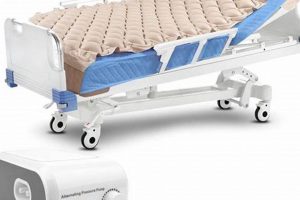
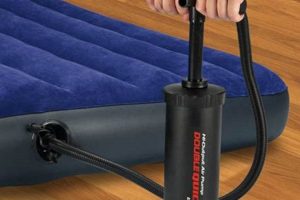
Specialized support surfaces designed to alleviate pressure on vulnerable areas of the body, primarily used to prevent and manage skin breakdown, are critical in healthcare. These devices utilize alternating pressure or low air loss technology to redistribute weight and minimize constant pressure on bony prominences. These support systems represent a proactive approach to wound care, reducing the incidence and severity of tissue damage. An example is a dynamic surface that cyclically inflates and deflates air cells.
The implementation of pressure-redistributing surfaces offers significant benefits, including improved patient comfort, enhanced circulation to at-risk tissues, and reduced reliance on manual repositioning. Historically, static support surfaces like foam mattresses were the primary method of pressure reduction. However, advancements in technology have led to the development of more sophisticated systems, leading to a demonstrable decrease in the prevalence of pressure injuries. These improvements save on associated healthcare costs.
The subsequent sections will delve into the specific types of these pressure-redistributing support surfaces, their mechanisms of action, factors to consider when selecting an appropriate model, and evidence-based guidelines for their effective use in various clinical settings. Additionally, practical advice for maintenance and troubleshooting will be presented to ensure optimal performance and longevity of the equipment.
Guidance on Utilizing Specialized Mattresses for Pressure Ulcer Management
The following recommendations aim to maximize the effectiveness of specialized air mattresses in preventing and treating pressure ulcers. Proper implementation and adherence to these guidelines are essential for optimal patient outcomes.
Tip 1: Ensure Proper Inflation: Verify that the air mattress is inflated to the manufacturer’s recommended pressure level. Under-inflation compromises its pressure redistribution capabilities, while over-inflation can create areas of increased pressure. A pressure mapping system may be utilized to confirm proper pressure relief.
Tip 2: Conduct Regular Inspections: Routinely examine the mattress surface for any signs of damage, such as punctures, tears, or leaks. Any compromise in the mattress’s integrity can diminish its effectiveness and create a potential safety hazard. Immediate repair or replacement is crucial.
Tip 3: Maintain Proper Patient Positioning: While the air mattress aids in pressure redistribution, it does not eliminate the need for regular patient repositioning. Implement a scheduled repositioning protocol, typically every two hours, to further minimize sustained pressure on bony prominences.
Tip 4: Utilize Appropriate Linen: Employ moisture-wicking, breathable linens to prevent moisture build-up on the skin surface. Excessive moisture can increase the risk of skin maceration and subsequent pressure ulcer development. Avoid using thick or wrinkled linens, as they can create points of increased pressure.
Tip 5: Educate Caregivers and Patients: Provide comprehensive education to caregivers and, if applicable, patients regarding the proper use and maintenance of the air mattress. Emphasize the importance of adherence to repositioning schedules, regular skin assessments, and reporting any issues with the mattress.
Tip 6: Monitor Skin Integrity: Conduct thorough skin assessments at regular intervals, paying close attention to bony prominences. Early detection of skin redness or signs of breakdown is crucial for initiating timely interventions and preventing the progression to a more severe pressure ulcer.
These considerations are vital for maximizing the benefits of these mattresses. Implementing these measures contributes significantly to patient well-being and promotes optimal wound healing.
The subsequent section will delve into the contraindications and limitations associated with using these specific types of support surfaces.
1. Pressure Redistribution Efficiency

Pressure redistribution efficiency is a critical functional characteristic of air mattresses intended for pressure ulcer prevention and management. It refers to the capacity of the mattress to evenly distribute the patient’s weight across the support surface, thus minimizing peak pressures on bony prominences such as the sacrum, heels, and ischial tuberosities. Inadequate pressure redistribution directly contributes to localized ischemia, leading to tissue damage and subsequent ulcer formation. For instance, an air mattress with a design flaw that creates localized pressure concentrations negates its intended therapeutic benefit.
The design and materials of an air mattress directly influence its pressure redistribution efficiency. Alternating pressure mattresses, for example, cyclically inflate and deflate individual air cells, thereby shifting pressure points and promoting blood flow. Low air loss mattresses incorporate tiny perforations that allow for continuous airflow, reducing moisture buildup and shear forces. The selection of an appropriate air mattress must consider factors such as patient weight, body habitus, and specific risk factors for pressure ulcer development. A heavier patient requires a mattress with higher weight capacity and superior pressure redistribution capabilities to achieve optimal pressure relief.
Ultimately, the effective prevention of pressure ulcers hinges on the optimized pressure redistribution efficiency of the chosen support surface. While air mattresses offer a valuable tool in pressure ulcer management, their success relies on appropriate selection, proper usage, and consistent monitoring of skin integrity. Failing to prioritize and evaluate pressure redistribution can lead to avoidable patient harm and increased healthcare costs. The integration of pressure mapping technology offers a quantitative method for assessing the effectiveness of pressure redistribution in specific clinical scenarios.
2. Microclimate Management

Microclimate management, the control of temperature and moisture at the skin-support surface interface, is integral to the effectiveness of air mattresses in preventing pressure ulcers. Elevated skin temperature and excessive moisture, often arising from perspiration or incontinence, compromise skin integrity, increasing the susceptibility to friction, shear, and maceration. These factors disrupt the skin’s natural barrier function, rendering it more vulnerable to pressure-induced damage. The design of an air mattress must, therefore, incorporate features that actively manage the microclimate. Failure to control temperature and moisture creates an environment conducive to bacterial growth and skin breakdown. The significance of microclimate control is exemplified in the case of patients with hyperhidrosis, where
the increased moisture exacerbates pressure ulcer risk.
Air mattresses that incorporate low air loss technology actively address microclimate concerns. These systems utilize a continuous flow of air through small perforations in the mattress surface, facilitating evaporation and reducing moisture accumulation. Some models also employ specialized fabrics with wicking properties to draw moisture away from the skin. The effectiveness of microclimate management can be assessed by monitoring skin temperature and humidity levels at the mattress-skin interface. Practical application involves regularly assessing patients for signs of excessive moisture and adjusting mattress settings or implementing additional moisture-absorbing strategies as needed. The utilization of breathable bedding materials further enhances microclimate control, complementing the function of the air mattress.
In summary, effective microclimate management is a non-negotiable component of a comprehensive pressure ulcer prevention strategy utilizing air mattresses. Addressing temperature and moisture regulation at the skin surface is crucial for maintaining skin integrity and mitigating the risk of pressure-induced damage. The selection of an air mattress should include careful consideration of its microclimate management capabilities, combined with consistent monitoring and appropriate interventions to ensure optimal outcomes. Challenges remain in developing universally applicable solutions due to individual patient variations in perspiration levels and microclimate needs, necessitating personalized care plans.
3. Patient Weight Capacity

Patient weight capacity constitutes a fundamental consideration in the selection and application of specialized support surfaces, specifically air mattresses intended for pressure ulcer prevention and management. Exceeding the designated weight limit compromises the therapeutic efficacy of these mattresses and poses potential safety risks to the patient. Inadequate attention to this parameter can lead to mattress failure, increased pressure on vulnerable areas, and subsequent tissue damage.
- Compromised Pressure Redistribution
When a patient’s weight surpasses the air mattress’s specified capacity, the system’s ability to effectively redistribute pressure is significantly impaired. The internal air cells may become overstressed, resulting in localized areas of high pressure concentration, particularly over bony prominences. This defeats the primary purpose of the mattress, increasing the risk of pressure ulcer development rather than mitigating it. For example, a 300-pound patient on a mattress rated for a maximum of 250 pounds will experience concentrated pressure points, negating the pressure-relieving design.
- Mattress Structural Integrity
Exceeding the weight limit places undue stress on the mattress’s structural components, potentially leading to damage or premature failure. This can manifest as air leaks, cell rupture, or deformation of the support surface. Such damage not only renders the mattress ineffective but also creates a potential safety hazard for the patient. Consider a scenario where an overloaded mattress cell bursts during the night, causing the patient to sink onto a hard surface, leading to immediate pressure and discomfort.
- Reduced Lifespan and Increased Costs
Consistent overloading of an air mattress significantly reduces its lifespan and increases the total cost of ownership. The added stress accelerates wear and tear on internal components, necessitating more frequent repairs or replacements. This represents a preventable expense and highlights the importance of adherence to manufacturer specifications. An example includes frequent cell repairs on a mattress exceeding its weight capacity, ultimately costing more than a correctly sized replacement.
- Inaccurate Pressure Settings
The pressure settings on an air mattress are calibrated based on the specified weight capacity. Exceeding this limit can render the pressure adjustments inaccurate, leading to either insufficient or excessive inflation. Insufficient inflation compromises pressure redistribution, while overinflation increases the risk of skin breakdown due to increased surface tension. This means that even when attempting to adjust the pressure, the mattress will not behave as intended, placing the patient at risk.
The integration of patient weight capacity considerations into the selection and maintenance protocols for air mattresses is paramount for ensuring patient safety and optimizing the effectiveness of these support surfaces. Regular weight monitoring and adherence to manufacturer guidelines are essential components of a comprehensive pressure ulcer prevention strategy. The consequences of neglecting weight limits range from compromised therapeutic benefit to outright equipment failure, underscoring the importance of this seemingly simple, yet critically important, factor. Prioritize adherence to weight limitations to maintain the integrity and efficacy of pressure redistribution mattresses.
4. Infection Control Protocols
Air mattresses, due to their design and usage within healthcare settings, present a potential reservoir for microorganisms and a vector for cross-contamination. Consequently, stringent infection control protocols are paramount in their maintenance and utilization. The complex structure of air mattresses, with numerous air cells and surfaces, creates environments conducive to microbial growth, particularly in the presence of moisture or organic matter. Failure to implement and adhere to appropriate infection control practices can lead to healthcare-associated infections (HAIs), significantly impacting patient outcomes and increasing healthcare costs. For example, inadequate disinfection procedures following contact with bodily fluids can result in the transmission of pathogens, such as Methicillin-resistant Staphylococcus aureus (MRSA) or Clostridium difficile, to subsequent patients.
Effective infection control protocols for air mattresses encompass several key components: regular cleaning and disinfection, barrier protection, and proper handling and storage. Cleaning and disinfection should be performed routinely and after each patient use, employing hospital-grade disinfectants with demonstrated efficacy against relevant pathogens. Barrier protection, such as the use of waterproof and antimicrobial mattress covers, minimizes contamination of the mattress core. Proper handling and storage practices, including avoiding dragging the mattress across floors and storing it in a clean, dry environment, prevent damage and reduce the risk of contamination. A practical application includes the implementation of a standardized cleaning checklist to ensure consistent adherence to disinfection procedures. Furthermore, healthcare personnel require comprehensive training on the correct application of these protocols, emphasizing the importance of hand hygiene and personal protective equipment.
In summary, the successful integration of infection control protocols is indispensable for the safe and effective use of air mattresses in pressure ulcer management. Strict adherence to cleaning, disinfection, and barrier protection strategies minimizes the risk of cross-contamination and prevents the transmission of HAIs. The implementation of these protocols neces
sitates a collaborative effort involving healthcare administrators, clinicians, and environmental services personnel. Continuous monitoring and evaluation of infection control practices are essential to identify areas for improvement and ensure ongoing patient safety. Ultimately, robust infection control protocols safeguard patient well-being and contribute to a higher standard of care.
5. Equipment Maintenance Schedule

The establishment and consistent adherence to a rigorous equipment maintenance schedule are indispensable for ensuring the continued efficacy and safety of air mattresses used in pressure ulcer prevention and treatment. These specialized mattresses, designed to redistribute pressure and minimize skin breakdown, are complex systems requiring periodic inspection, cleaning, and repair. Neglecting these maintenance protocols can lead to equipment malfunction, compromised pressure redistribution capabilities, and an increased risk of healthcare-associated infections, directly undermining the intended therapeutic benefits. For instance, a delayed repair of a minor air leak can escalate into a complete mattress failure, exposing the patient to prolonged, unrelieved pressure.
A comprehensive maintenance schedule for air mattresses should encompass several key elements. Regular visual inspections are necessary to identify tears, punctures, or signs of wear and tear on the mattress surface and air hoses. Cleaning and disinfection protocols must be implemented after each patient use to prevent cross-contamination and the proliferation of microorganisms. Scheduled functional testing should verify the proper operation of the pressure control unit, air cell inflation/deflation mechanisms, and alarm systems. Furthermore, preventive maintenance, such as replacing air filters and lubricating moving parts, can prolong the lifespan of the equipment and minimize the risk of unexpected breakdowns. In practice, a hospital might schedule monthly inspections by biomedical engineering staff, coupled with daily visual checks by nursing personnel.
In conclusion, the implementation and meticulous execution of an equipment maintenance schedule are not merely procedural formalities but rather integral components of a holistic pressure ulcer prevention and management strategy. These scheduled activities directly impact patient safety, equipment longevity, and the overall cost-effectiveness of care. While challenges exist in ensuring consistent adherence to these schedules amidst demanding clinical workflows, the potential consequences of neglect underscore the paramount importance of prioritizing and investing in robust equipment maintenance programs. The interrelationship between meticulous care and maintenance ensures the continuous efficacy of pressure ulcer prevention strategies, directly impacting patient outcomes.
Frequently Asked Questions
The following section addresses common inquiries concerning specialized air mattresses used in the prevention and treatment of pressure ulcers, aiming to provide clarity and evidence-based information.
Question 1: How does an air mattress specifically prevent pressure ulcers?
Specialized air mattresses mitigate pressure ulcer formation by redistributing the patient’s weight across a larger surface area, minimizing concentrated pressure on bony prominences. Some models feature alternating pressure or low air loss technology to further reduce sustained pressure and promote tissue perfusion.
Question 2: Are all air mattresses equally effective for pressure ulcer prevention?
No, effectiveness varies based on mattress design, features, and patient-specific factors. Alternating pressure and low air loss mattresses are generally considered more effective for high-risk individuals compared to basic static air mattresses. Proper patient assessment is crucial for selecting the appropriate support surface.
Question 3: What weight capacity should be considered when selecting an air mattress?
The selected air mattress must have a weight capacity that exceeds the patient’s weight. Exceeding the weight limit compromises the mattress’s pressure redistribution capabilities and can lead to premature equipment failure. Refer to the manufacturer’s specifications for accurate weight limits.
Question 4: How often should an air mattress be cleaned, and what cleaning agents should be used?
Air mattresses should be cleaned and disinfected after each patient use and routinely according to facility protocols. Hospital-grade disinfectants with demonstrated efficacy against relevant pathogens are recommended. Avoid using abrasive cleaners or solvents that can damage the mattress material.
Question 5: Does an air mattress eliminate the need for patient repositioning?
No, an air mattress is an adjunct to, not a replacement for, regular patient repositioning. Repositioning schedules, typically every two hours, should be maintained to further reduce sustained pressure on vulnerable areas.
Question 6: What are the potential contraindications for using an air mattress?
While generally safe, air mattresses may be contraindicated in patients with unstable spinal fractures or certain orthopedic conditions where a firm, stable support surface is required. Consult with a healthcare professional to determine the suitability of an air mattress in specific clinical situations.
Air mattresses are important. Their correct use is a core factor in patient care.
The following section delves into real-world case studies that exemplify the application of air mattresses in different clinical scenarios.
Conclusion
This exploration has underscored the critical role of air mattresses in the prevention and management of pressure ulcers. Factors such as pressure redistribution efficiency, microclimate control, patient weight capacity, infection control protocols, and equipment maintenance schedules have been identified as essential for maximizing the effectiveness of these devices. Failure to address these key considerations can compromise patient safety and diminish the therapeutic benefits of air mattress technology.
Continued research and innovation in support surface technology are warranted to further refine pressure ulcer prevention strategies. Healthcare professionals must remain vigilant in their assessment of patient risk factors, selection of appropriate support surfaces, and implementation of evidence-based protocols. The effective utilization of air mattresses, coupled with meticulous patient care, represents a vital component of a comprehensive approach to minimizing the incidence and severity of pressure ulcers, ultimately enhancing patient outcomes and reducing healthcare burdens.