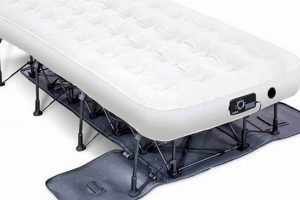
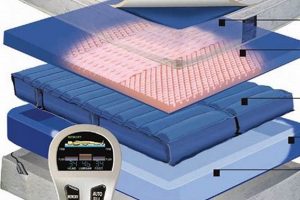
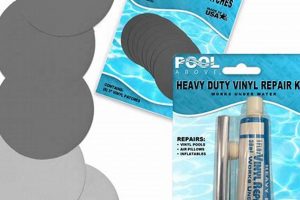
A flexible adhesive material designed for mending punctures and tears in inflatable sleeping surfaces, commonly constructed from polyvinyl chloride (PVC) or similar airtight materials, constitutes an essential component for maintaining the functionality of air mattresses. Applied directly to the damaged area after proper cleaning and preparation, it creates a seal to prevent air leakage, thereby extending the lifespan of the mattress. Examples include self-adhesive patches, those requiring separate adhesive application, and specialized kits containing multiple patches and cleaning solutions.
The utility of these repair solutions lies in their capacity to offer a cost-effective and environmentally conscious alternative to complete mattress replacement. Addressing minor damages promptly prevents further deterioration and maintains the structural integrity and comfort of the air mattress. Historically, the development of these repair methods paralleled advancements in polymer chemistry, leading to increasingly durable and reliable adhesive technologies capable of withstanding the stresses of inflation and deflation.
The following sections will delve into the various types available, proper application techniques, factors influencing patch selection, and best practices for ensuring a long-lasting and effective repair. Understanding these aspects will empower consumers to effectively maintain their inflatable sleeping solutions and minimize the need for replacement.
Essential Tips for Effective Inflatable Mattress Mending
Proper application and selection are crucial for successful inflatable mattress repair. The following guidelines will assist in maximizing the effectiveness and longevity of repairs.
Tip 1: Surface Preparation is Paramount: Thoroughly clean the area surrounding the puncture with isopropyl alcohol to remove dirt, oils, and debris. A clean surface ensures optimal adhesion and a secure bond.
Tip 2: Precise Patch Size Matters: Select a repair piece that extends at least one inch beyond the damaged area in all directions. This provides sufficient surface area for a strong and reliable seal.
Tip 3: Round the Edges: Trim the adhesive material into a circular or oval shape. Rounded edges minimize the risk of peeling or lifting, particularly in areas subject to flexing.
Tip 4: Apply Even Pressure: After applying the repair component, use a smooth, hard object, such as a rolling pin or spoon, to apply consistent pressure across the entire surface. This eliminates air bubbles and promotes a firm bond.
Tip 5: Allow Adequate Curing Time: Consult the manufacturer’s instructions for the recommended curing time. Typically, allowing the adhesive to set for at least 24 hours before inflating the mattress is advisable.
Tip 6: Test the Repair: After the curing period, partially inflate the mattress and carefully inspect the mended area for any signs of air leakage. Submerge the area in water to detect small leaks.
Tip 7: Reinforce Weak Spots: For larger tears or areas subject to high stress, consider applying an additional layer as reinforcement. This provides added durability and prolongs the life of the repair.
Adhering to these recommendations will significantly improve the success rate of inflatable mattress mending, reducing the need for frequent replacements and extending the useable lifespan of the product.
The subsequent sections will cover advanced repair techniques and preventative measures to further safeguard the integrity of inflatable sleeping surfaces.
1. Adhesive Strength

Adhesive strength is a critical determinant of an air mattress repair patch’s efficacy and longevity. It directly influences the patch’s ability to maintain a secure seal over a puncture or tear, preventing air leakage and ensuring continued usability of the mattress.
- Bonding Mechanism
The bonding mechanism employed by the patch’s adhesive dictates its capacity to adhere to the air mattress material, typically PVC or similar polymers. Chemical bonding, involving the formation of intermolecular forces between the adhesive and the mattress surface, generally yields superior strength compared to purely mechanical adhesion. Surface energy, polarity, and the presence of compatible functional groups influence the extent of chemical interaction.
- Shear Strength
Shear strength measures the adhesive’s resistance to forces acting parallel to the bonded surface. An air mattress repair patch experiences shear stress during inflation, deflation, and normal use, as the mattress material stretches and flexes. Higher shear strength translates to a reduced likelihood of the patch detaching or shifting over time.
- Peel Strength
Peel strength quantifies the force required to peel the patch away from the mattress surface. This property is particularly relevant at the edges of the patch, where stress concentrations can initiate peeling. Adequate peel strength prevents the patch from progressively detaching, thereby maintaining an airtight seal.
- Environmental Factors
Environmental factors such as temperature, humidity, and exposure to UV radiation can significantly impact adhesive strength. Some adhesives may become brittle or lose their bonding properties under extreme conditions. Selection of a patch with an adhesive formulated for the intended environment is essential for long-term performance.
Therefore, the adhesive strength characteristics of an air mattress repair patch directly correlate with its ability to provide a durable and reliable repair. Patches featuring adhesives with robust bonding mechanisms, high shear and peel strengths, and resistance to environmental degradation offer the greatest assurance of a long-lasting seal and extended mattress lifespan. Inadequate adhesive strength compromises the patch’s functionality and necessitates more frequent repairs or premature mattress replacement.
2. Material Flexibility

Material flexibility, when considered in the context of an air mattress repair patch, signifies the patch’s ability to conform to the contours of the mattress surface without compromising the integrity of the adhesive bond. This characteristic is crucial for achieving an airtight seal, particularly on mattresses that exhibit surface irregularities or are subject to flexing during use.
- Conformability to Surface Irregularities
A flexible material readily adapts to minor imperfections, creases, or textures on the mattress surface. This is especially important for mattresses that have been folded, stored, or exposed to varying temperatures, which can lead to localized distortions. A rigid patch may bridge these irregularities, creating air gaps and ultimately leading to leakage.
Examples include patches made from thin PVC films or specialized elastomeric materials designed to mold to the underlying surface. - Resistance to Stress Concentrations
Inflatable mattresses undergo significant stress during inflation and deflation, particularly around areas that have been repaired. A flexible patch distributes these stresses more evenly, minimizing the risk of localized tearing or detachment. A rigid patch, conversely, can act as a stress concentrator, increasing the likelihood of failure at the patch edges or within the surrounding mattress material.
- Adaptability to Dynamic Loading
During normal use, an air mattress experiences dynamic loading due to the weight and movement of the occupant. A flexible patch can accommodate these dynamic forces without losing its seal, whereas a rigid patch may crack, delaminate, or otherwise fail under repeated flexing. The selection of a patch with appropriate flexibility is therefore essential for ensuring long-term durability and reliability.
- Compatibility with Mattress Material
The flexibility of the patch material should also be compatible with that of the air mattress itself. A patch that is significantly more rigid or flexible than the mattress may create stress points or uneven load distribution. For instance, using a very stiff patch on a highly flexible mattress could lead to premature failure of the mattress material around the patch perimeter.
In conclusion, material flexibility is a critical performance parameter for an air mattress repair patch. It facilitates a secure and long-lasting seal by enabling the patch to conform to surface irregularities, distribute stress evenly, adapt to dynamic loading, and maintain compatibility with the mattress material. The selection of a patch with appropriate flexibility is essential for ensuring a successful and durable repair.
3. Surface Preparation

Surface preparation is a critical step in ensuring the successful application and long-term performance of an air mattress repair patch. Its primary function is to create a clean and receptive surface that facilitates optimal adhesion between the patch and the mattress material, typically PVC or similar polymers. Without proper surface preparation, even the highest-quality patch may fail to create a durable, airtight seal.
- Cleaning and Degreasing
The removal of dirt, oils, and other contaminants from the mattress surface is paramount. These substances can impede the adhesive’s ability to bond directly with the PVC, leading to weak adhesion and potential air leakage. Isopropyl alcohol is commonly used as a cleaning agent due to its effectiveness in dissolving oils and its rapid evaporation. For example, residue from lotions or sunscreen can significantly compromise patch adhesion if not thoroughly removed.
- Abrasion and Roughening
Light abrasion of the mattress surface, using fine-grit sandpaper or a similar abrasive material, can enhance adhesion by increasing the surface area available for bonding. Roughening the surface creates microscopic irregularities that allow the adhesive to grip more effectively. However, excessive abrasion should be avoided to prevent damaging the mattress material. As an illustration, gentle sanding can be particularly beneficial for older mattresses where the surface may have become smooth and less receptive to adhesives over time.
- Drying and Moisture Removal
Ensuring the surface is completely dry before applying the patch is crucial. Moisture can interfere with the adhesive’s bonding process, resulting in a weak or incomplete seal. After cleaning, allowing sufficient time for the surface to air dry or using a clean, lint-free cloth to remove any residual moisture is recommended. Consider a scenario where the mattress was recently cleaned with water; immediate patch application would likely result in failure due to the presence of moisture between the patch and the mattress.
- Contaminant Prevention
After cleaning and preparing the surface, it is essential to prevent recontamination before applying the patch. Handling the prepared area with bare hands can transfer oils and dirt, negating the cleaning efforts. Using gloves or carefully positioning the patch to avoid contact with the prepared surface can minimize the risk of recontamination. For instance, after cleaning, a user might inadvertently touch the area with their fingers, transferring skin oils that would reduce adhesion.
These facets of surface preparation are interdependent and collectively contribute to the overall success of an air mattress repair. Skipping or inadequately performing any of these steps can significantly reduce the likelihood of achieving a durable and airtight repair. A meticulously prepared surface, coupled with a quality patch and proper application technique, is essential for extending the lifespan of the air mattress and ensuring its continued functionality.
4. Patch Size

The dimension of an air mattress repair patch is a critical determinant of its effectiveness in sealing punctures and tears. Proper sizing ensures adequate coverage and distribution of stress, contributing to a durable and lasting repair. Undersized patches risk premature failure, while excessively large patches can introduce unnecessary stiffness and potential discomfort.
- Coverage of Damaged Area
The patch must extend sufficiently beyond the perimeter of the damage to create a secure seal on undamaged mattress material. A general guideline dictates that the patch should overlap the damaged area by at least one inch in all directions. For example, a half-inch puncture necessitates a patch with a minimum diameter of two inches. Insufficient overlap compromises the bond strength and increases the likelihood of air leakage.
- Stress Distribution
The patch size influences the distribution of stress around the repaired area. Larger patches distribute stress over a wider area, reducing the concentration of force on the adhesive bond and the surrounding mattress material. This is particularly important for repairs located in areas subject to frequent flexing or high pressure. A small patch on a highly stressed area may be prone to peeling or tearing.
- Mattress Material Thickness
The optimal patch size can be influenced by the thickness of the air mattress material. Thicker materials may require larger patches to provide sufficient support and prevent the repair from sinking or bulging under pressure. Conversely, excessively large patches on thinner materials can create an uneven surface and potential discomfort. The patch should be proportionate to the mattress thickness.
- Flexibility and Conformity
While adequate coverage is essential, overly large patches can reduce the flexibility of the repaired area, potentially leading to discomfort or premature failure of the surrounding mattress material. The patch should be sized to provide sufficient coverage without excessively restricting the mattress’s natural flex. Rounding the corners of the patch can also help to minimize stress concentrations and improve conformity.
In summary, the selection of an appropriate patch size for an air mattress repair necessitates a careful considera
tion of the damage extent, stress distribution, mattress material thickness, and desired flexibility. A well-sized patch, correctly applied, contributes significantly to the durability and longevity of the repaired air mattress.
5. Application Technique

The application technique employed when utilizing an air mattress repair patch is paramount to achieving a durable and airtight seal. Proper execution of each step in the application process directly influences the long-term effectiveness and reliability of the repair. Deviations from recommended procedures can result in premature patch failure and necessitate further repairs or mattress replacement.
- Cleaning and Preparation Protocols
Effective cleaning of the damaged area is a prerequisite for successful adhesion. The application technique must involve the removal of all dirt, oils, and contaminants from the mattress surface using appropriate cleaning agents, such as isopropyl alcohol. Failure to adequately clean the surface will impede the adhesive’s ability to bond effectively. A poorly cleaned surface results in a compromised seal and a higher risk of air leakage.
- Adhesive Activation and Application
Certain patches require the application of a separate adhesive. The application technique should adhere strictly to the adhesive manufacturer’s instructions regarding activation time and application thickness. Inconsistent or improper adhesive application can lead to weak bonds and patch detachment. Applying too much or too little adhesive reduces the patch’s ability to maintain an airtight seal under pressure.
- Patch Placement and Alignment
Precise placement and alignment of the repair patch are essential. The application technique should ensure that the patch fully covers the damaged area with sufficient overlap onto the surrounding undamaged material. Misaligned patches or patches that do not adequately cover the damage will fail to create a complete seal. Air leakage often occurs when a patch is not correctly positioned over the puncture or tear.
- Pressure Application and Curing
Applying uniform pressure to the patch after placement is critical for establishing a strong adhesive bond. The application technique should involve the use of a smooth, hard object to press the patch firmly against the mattress surface, eliminating air bubbles and ensuring intimate contact. Insufficient pressure or inadequate curing time will weaken the bond and reduce the patch’s long-term durability. Failure to apply proper pressure and allow for complete curing often leads to premature patch failure.
The success of air mattress repair hinges on meticulous adherence to established application techniques. Each step, from surface preparation to curing, plays a crucial role in achieving a durable and airtight seal. A well-executed application technique ensures that the repair patch effectively restores the mattress’s functionality and extends its lifespan.
6. Durability
The inherent longevity and resistance to degradation of an air mattress repair patch directly dictate its effectiveness in maintaining an airtight seal over time. Durability, in this context, encompasses the patch’s ability to withstand environmental factors, physical stresses, and the cyclical pressures associated with inflation and deflation. A patch lacking in durability will invariably fail, leading to air leakage and the eventual compromise of the air mattress’s functionality. The selection of a repair solution boasting demonstrable durability is, therefore, a pivotal factor in ensuring a cost-effective and sustainable approach to air mattress maintenance. For instance, a low-quality vinyl patch may initially seal a small puncture but will quickly degrade under UV exposure and repeated flexing, requiring frequent replacement. Conversely, a patch constructed from reinforced PVC or a similar resilient material exhibits superior resistance to these degrading forces, providing a more enduring repair.
The practical significance of understanding the durability characteristics of different patches extends beyond simple cost savings. A durable patch minimizes the inconvenience and potential disruptions associated with repeated repairs. Furthermore, it contributes to responsible resource management by reducing the frequency of disposable patch replacements. In outdoor applications, such as camping, the durability of the repair is even more critical, as environmental conditions are often more severe. A tear-resistant, waterproof patch is essential to maintaining a functional sleeping surface throughout the duration of the trip. The consequences of patch failure in such situations can range from discomfort to potential safety hazards.
In conclusion, durability is an indispensable attribute of an air mattress repair patch, directly influencing its long-term performance and the overall lifespan of the repaired air mattress. While initial cost may be a consideration, prioritizing durability ensures a more reliable and sustainable repair solution, reducing the need for frequent replacements and minimizing potential disruptions. The effective application of a durable patch represents a practical and responsible approach to air mattress maintenance, contributing to both cost savings and environmental stewardship.
7. Environmental Resistance
Environmental resistance, in the context of an air mattress repair patch, pertains to the patch’s ability to maintain its structural integrity and adhesive bond when exposed to a range of environmental conditions. Its importance lies in the fact that air mattresses are frequently used in diverse settings, from climate-controlled indoor environments to outdoor locations subject to temperature fluctuations, humidity, and ultraviolet (UV) radiation. A patch’s ability to withstand these conditions directly affects its long-term performance and the lifespan of the repaired mattress.
- Temperature Fluctuations
Temperature variations can significantly impact the adhesive properties and flexibility of repair patch materials. Extreme heat may cause adhesives to soften or delaminate, while freezing temperatures can lead to embrittlement and cracking. For instance, an air mattress used in a camping environment may experience temperatures ranging from below freezing at night to well above room temperature during the day. A patch designed without temperature resistance may fail under these conditions. Patches utilizing acrylic adhesives are often more susceptible to such degradation than those using rubber-based formulations.
- Humidity and Moisture Exposure
Prolonged exposure to high humidity or direct contact with moisture can compromise the adhesive bond between the patch and the mattress material. Moisture ingress can lead to adhesive hydrolysis, weakening the bond and potentially causing the patch to peel away. This is particularly relevant in marine environments or humid climates. As an example, an air mattress used on a boat may be continuously exposed to saltwater spray, necessitating a patch with excellent moisture resistance. Materials such as polyurethane exhibit better resistance to
moisture-related degradation than some natural rubber compounds. - Ultraviolet (UV) Radiation
UV radiation from sunlight can cause degradation of many polymers, including those used in air mattress repair patches and the mattresses themselves. UV exposure can lead to discoloration, cracking, and a reduction in tensile strength. An air mattress used frequently outdoors will be subjected to significant UV exposure. A patch lacking UV inhibitors may become brittle and fail prematurely. Patches incorporating UV-resistant additives, such as carbon black, offer enhanced protection against UV degradation.
- Chemical Exposure
Exposure to certain chemicals, such as cleaning agents, solvents, or insect repellents, can also affect the integrity of a repair patch. Some chemicals may dissolve or weaken the adhesive bond, while others may cause the patch material to swell or degrade. For instance, using a harsh chemical cleaner on an air mattress may inadvertently damage the repair patch. Choosing patches formulated with chemical-resistant materials, such as certain fluoropolymers, can mitigate this risk.
In conclusion, environmental resistance is a critical consideration when selecting an air mattress repair patch, particularly for applications where the mattress will be used in harsh or variable conditions. The patch’s ability to withstand temperature fluctuations, humidity, UV radiation, and chemical exposure directly influences its long-term performance and the overall lifespan of the repaired air mattress. Therefore, selecting a patch specifically designed to resist the anticipated environmental stressors is crucial for ensuring a durable and reliable repair.
Frequently Asked Questions
This section addresses common inquiries and misconceptions regarding the use of air mattress repair solutions. It provides concise, factual answers to assist in informed decision-making and proper application.
Question 1: What constitutes a suitable cleaning agent for preparing an air mattress surface prior to patch application?
Isopropyl alcohol is generally recommended for cleaning air mattress surfaces prior to applying a repair component. It effectively removes oils, dirt, and other contaminants that can impede adhesion. A clean, lint-free cloth should be used to apply and remove the alcohol, ensuring the surface is dry before proceeding.
Question 2: Is it necessary to abrade the mattress surface before applying a patch?
Light abrasion, using fine-grit sandpaper, can improve adhesion by increasing the surface area available for bonding. However, excessive abrasion should be avoided to prevent damaging the mattress material. Abrasion is particularly beneficial for older mattresses where the surface may have become smooth and less receptive to adhesives.
Question 3: How long should a repair component be allowed to cure before the mattress is inflated?
The recommended curing time varies depending on the specific adhesive used in the repair patch. Generally, allowing the adhesive to set for at least 24 hours before inflating the mattress is advisable. Consult the patch manufacturer’s instructions for precise curing time recommendations.
Question 4: Can a standard adhesive, such as household glue, be used in lieu of a specialized adhesive?
The use of standard adhesives is strongly discouraged. Specialized adhesives are formulated to bond effectively with PVC and other materials commonly used in air mattresses. Standard adhesives may not provide a durable or airtight seal and can potentially damage the mattress material.
Question 5: What factors contribute to premature patch failure?
Premature failure is often attributed to inadequate surface preparation, improper adhesive application, insufficient curing time, or the use of a low-quality patch. Exposure to extreme temperatures, humidity, or certain chemicals can also compromise the patch’s integrity.
Question 6: How can the effectiveness of a repair be assessed?
After the curing period, partially inflate the mattress and carefully inspect the mended area for any signs of air leakage. Submerging the area in water can help detect small leaks. If leaks are detected, the repair process should be repeated or a different patching method considered.
In summary, proper application, the use of quality materials, and adherence to recommended procedures are essential for achieving a durable and effective air mattress repair. Ignoring these factors can lead to patch failure and necessitate further maintenance.
The following section will explore advanced repair techniques and preventative measures to further safeguard the integrity of inflatable sleeping surfaces.
Air Mattress Repair Patch
The preceding discussion has illuminated the multifaceted nature of air mattress repair patch selection and application. Effective utilization hinges on a comprehensive understanding of adhesive properties, material flexibility, surface preparation protocols, and the influence of environmental factors. The appropriate choice, coupled with meticulous adherence to established techniques, directly impacts the lifespan and continued usability of inflatable sleeping solutions.
Responsible maintenance, guided by the principles outlined herein, represents a pragmatic approach to minimizing waste and maximizing the value of existing resources. Continued advancements in material science and adhesive technologies promise further improvements in the durability and reliability of these essential repair components, reinforcing their role in sustainable consumer practices. Prudent selection and diligent application remain paramount for ensuring long-term performance and minimizing the need for premature replacement.