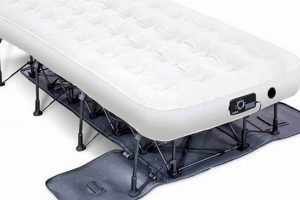
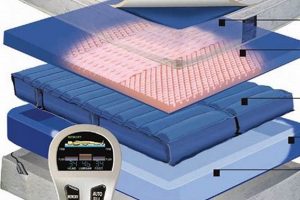
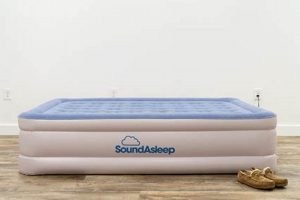
Inflatable sleeping platforms designed for use within the confines of a vehicle provide a means of creating a temporary bed. These products typically consist of a durable, airtight bladder that can be inflated to provide a cushioned surface. An example application is transforming the back seat of a sedan or the cargo area of an SUV into a comfortable resting space.
The advantage of such a mobile bedding solution lies in its portability and convenience, particularly during road trips, camping excursions, or emergency situations where a readily available sleeping area is desired. Their lightweight nature and compact storage size when deflated contribute to ease of transport and minimal space consumption. Early iterations likely evolved from standard camping air mattresses, adapted to better suit the dimensions and constraints of vehicle interiors.
Subsequent sections will delve into various aspects, including types, materials, inflation methods, considerations for purchase, and safety guidelines applicable to vehicular inflatable beds. Understanding these factors is crucial for selecting an appropriate option and ensuring safe and comfortable usage.
Tips for Selecting and Using a Vehicular Inflatable Sleeping Platform
Optimizing the experience with an automotive inflatable bed requires careful consideration of various factors. These tips are designed to enhance selection, setup, and overall usability.
Tip 1: Measure Available Space: Prior to purchase, meticulously measure the interior dimensions of the vehicle where the platform will be used. This ensures a proper fit and avoids obstruction of essential vehicle components.
Tip 2: Evaluate Material Durability: Examine the material composition. Thicker PVC or reinforced fabrics offer increased resistance to punctures and tears, enhancing longevity. Consider materials resistant to temperature fluctuations prevalent within vehicle interiors.
Tip 3: Assess Inflation/Deflation Mechanisms: Determine the type of pump required (electric, manual, integrated). Electric pumps offer convenience, while manual pumps provide independence from power sources. Consider inflation/deflation speed and ease of operation.
Tip 4: Consider Additional Features: Look for integrated pillows, side supports, or repair kits. These features enhance comfort and provide solutions for potential damage during usage.
Tip 5: Prioritize Safety: Never obstruct airbags or safety features with the inflated platform. Ensure adequate ventilation to prevent carbon dioxide buildup during sleep. Avoid using while the vehicle is in motion.
Tip 6: Proper Storage: When not in use, deflate the platform completely and store it in a cool, dry place. Avoid exposing it to direct sunlight or extreme temperatures, which can degrade the material.
Tip 7: Test Before Travel: Inflate the mattress fully at least once before relying on it during a trip. This allows you to identify any leaks or defects and ensure you are familiar with the inflation and deflation process.
Adhering to these guidelines promotes a safer and more comfortable experience with an automotive inflatable bed, maximizing its utility and minimizing potential risks.
The concluding section will provide a comprehensive summary and final recommendations regarding vehicular inflatable sleeping platforms.
1. Vehicle Compatibility

Vehicle compatibility represents a critical parameter in the selection and utilization of vehicular inflatable beds. The dimensions and contours of a vehicle’s interior space, particularly the rear seat or cargo area, directly influence the suitability of a particular mattress model. An improperly sized inflatable bed may either fail to fit within the designated space, rendering it unusable, or it may obstruct essential safety features such as side airbags. The cause-and-effect relationship is straightforward: incompatible dimensions lead to compromised safety and utility. For instance, installing a mattress designed for an SUV in a compact sedan may impede airbag deployment, posing a significant safety hazard.
The importance of vehicle compatibility extends beyond mere physical fit. A correctly sized mattress distributes weight evenly across the vehicle’s interior, preventing undue stress on specific points. This mitigates the risk of damage to the vehicle’s upholstery or internal components. Moreover, a properly fitting mattress enhances user comfort by providing a stable and level sleeping surface. Consider the example of a user attempting to sleep on an oversized mattress that is folded and contorted to fit within the vehicle; the resulting uneven surface would compromise sleep quality and potentially cause discomfort.
In summary, vehicle compatibility is an indispensable consideration when selecting a vehicular inflatable bed. Failure to account for this factor can lead to safety risks, compromised comfort, and potential damage to the vehicle. Prioritizing accurate measurements and consulting product specifications tailored to specific vehicle models is essential for ensuring optimal functionality and safety. Selecting an appropriate mattress enhances convenience, ensuring usability and user experience.
2. Inflation Method

The inflation method represents a key determinant in the practicality and user experience associated with vehicular inflatable beds. The means by which the mattress is inflated directly influences convenience, setup time, and the overall suitability of the product for various scenarios.
- Electric Pump Integration
Electric pumps, often powered by a vehicle’s 12V outlet or a portable power source, offer rapid and convenient inflation. This method minimizes physical exertion and is particularly beneficial in situations where time is limited or physical capabilities are constrained. The electric pump facilitates quick and efficient inflation, enhancing usability in travel or emergency situations. However, reliance on a power source is a limitation.
- Manual Inflation Options
Manual inflation, typically achieved through a hand or foot pump, provides an alternative independent of electrical power. While requiring greater physical effort and time, manual inflation offers a reliable solution in locations lacking electrical access. The trade-off involves increased setup time and physical exertion versus independence from external power dependencies. Example cases include remote camping locations or situations where vehicle power is unavailable.
- Integrated Inflation Systems
Certain models incorporate self-inflating mechanisms, often utilizing open-cell foam that expands upon valve opening. While not fully self-inflating, these systems significantly reduce the effort required compared to purely manual methods. Subsequent air addition via a small pump or
manual inflation is usually necessary to achieve optimal firmness. These offer a balance between convenience and power independence. - Inflation Speed and Noise
The speed of inflation, often dependent on the pump type and mattress size, impacts the time required to prepare the sleeping surface. Furthermore, the noise generated by electric pumps can be a consideration, particularly in quiet environments or when attempting to avoid disturbing others. Faster inflation is advantageous, but the associated noise level must be considered.
The selection of an appropriate inflation method for a vehicular inflatable bed should be guided by individual needs and anticipated usage scenarios. Balancing convenience, power availability, and physical exertion is crucial for optimizing the overall experience. An example of poor consideration would be opting for an electric pump-only mattress for remote camping with no access to power, thereby rendering the product unusable.
3. Material Durability

The operational lifespan and performance of an vehicular inflatable bed are intrinsically linked to the durability of its constituent materials. Material selection directly influences the mattress’s resistance to punctures, tears, and abrasion, factors critically important given the often-constrained and potentially abrasive environment of a vehicle interior. The cause-and-effect relationship is evident: inferior materials result in premature failure, rendering the mattress unusable and negating its intended benefit. Conversely, durable materials ensure longevity and reliability, providing a consistent and comfortable sleeping surface. A puncture, for example, will inevitably lead to deflation and loss of support, negating the purpose of the device.
The practical significance of material durability extends beyond simple longevity. A robust mattress construction contributes to safety. Inflatable beds are sometimes used in emergency situations or during extended travel, where a reliable sleeping surface is paramount. A mattress constructed from reinforced PVC or similar high-strength material is less susceptible to damage from incidental contact with sharp objects within the vehicle or from repeated use. This is exemplified by the scenario of a traveler relying on the mattress for sleep during a prolonged road trip; a puncture mid-journey could lead to significant discomfort and disruption. Furthermore, durable materials exhibit greater resistance to temperature fluctuations common within vehicles, preventing premature degradation or deformation.
Ultimately, material durability is a non-negotiable aspect of a quality vehicular inflatable bed. It directly impacts the product’s lifespan, safety, and overall utility. Selecting a mattress constructed from robust, puncture-resistant materials is a critical investment that ensures reliable performance and prevents the inconvenience and potential hazards associated with premature failure. This consideration is paramount for maximizing the benefits and minimizing the risks associated with the use of vehicular inflatable sleeping platforms.
4. Storage Size

Storage size is a critical attribute of a vehicular inflatable bed, directly influencing its practicality and suitability for various travel and emergency scenarios. The deflated dimensions of the mattress dictate how easily it can be transported and stored within a vehicle, a factor particularly relevant given the limited space often available in cars and trucks. The cause-and-effect relationship is clear: a larger deflated size limits portability, while a compact storage footprint enhances convenience. A bulky mattress, when deflated, may occupy a significant portion of cargo space, hindering the ability to transport luggage, equipment, or other essential items.
The importance of storage size extends beyond mere convenience. In emergency situations, where a vehicular inflatable bed may serve as a temporary sleeping arrangement, rapid deployment and minimal storage requirements are paramount. A compact and easily stowed mattress can be quickly retrieved and inflated, providing immediate comfort and rest. Furthermore, the material and construction of the mattress significantly impact its storage size. Mattresses crafted from thinner, more flexible materials tend to compress more readily, resulting in a smaller deflated volume. Conversely, thicker, more rigid materials may retain their shape even when deflated, increasing the storage space required. For example, a rolled-up mattress using thin PVC will occupy less space than the same mattress made with thick, reinforced canvas.
In summary, storage size is a non-negligible consideration when selecting a vehicular inflatable bed. It directly impacts the product’s portability, ease of use, and suitability for various travel and emergency applications. Opting for a mattress with a compact deflated footprint ensures that it can be readily transported and stored within a vehicle without compromising valuable cargo space or hindering rapid deployment when needed. Prioritizing smaller storage size increases usability and convenience, supporting the overall purpose and utility of the vehicular inflatable sleeping platform.
5. Comfort Level
Comfort level represents a crucial performance criterion for vehicular inflatable beds, influencing user satisfaction and the practicality of these devices for rest and sleep within automotive environments. It transcends mere surface softness and encompasses a range of factors that contribute to a restful and supportive sleeping experience. Therefore, a comprehensive understanding of these facets is essential for evaluating the suitability of a vehicular inflatable mattress.
- Surface Texture and Material
The tactile feel of the mattress surface significantly affects perceived comfort. Materials such as flocked PVC provide a soft, non-slip surface that minimizes friction and enhances sleep quality. The texture can prevent the user from sliding on the mattress, which is especially important in the confined space of a vehicle. For example, a smooth, glossy surface may be easier to clean but can lead to discomfort due to excessive movement during sleep.
- Support and Firmness Adjustment
The ability to adjust the firmness of the mattress allows users to customize the level of support to their individual preferences and needs. This is particularly important for individuals with back pain or other musculoskeletal conditions. Over-inflation can result in a rigid, uncomfortable surface, while under-inflation may lead to inadequate support and spinal misalignment. Many vehicular inflatable beds feature dual-chamber designs, enabling independent adjustment of different mattress zones.
- Contour Adaptation and Pressure Distribution
An effective vehicular inflatable bed should conform to the contours of the body, distributing weight evenly to minimize pressure points. This prevents localized discomfort and promotes circulation. Mattresses with internal baffles or interconnected air cells are better equipped to achieve this contour adaptation. Consider the example of a side-sleeper who requires adequate shoulder support to prevent pressure build-up,
a feature directly related to contour adaptation capabilities. - Thermal Regulation
The materials used in the construction of the mattress influence its thermal properties. Some materials retain heat, leading to discomfort in warm environments, while others promote breathability and ventilation. A vehicular inflatable bed designed for use in diverse climates should ideally incorporate materials that minimize heat retention and facilitate moisture wicking, preventing overheating and promoting a comfortable sleeping temperature. In warmer climates, selecting a mattress with a breathable top layer is highly recommended.
These facets collectively define the comfort level of a vehicular inflatable bed, directly impacting its utility and user satisfaction. Therefore, evaluation necessitates consideration of surface texture, support adjustability, contour adaptation, and thermal regulation properties. In summary, an understanding of each aspect ensures well-informed decision-making when selecting sleeping solutions for car use.
6. Safety Features

Safety features integrated into vehicular inflatable beds are of paramount importance due to the inherent constraints and potential hazards associated with using these products within the confined space of a vehicle. The cause-and-effect relationship is evident: a lack of appropriate safety measures can lead to injury or even death, while the inclusion of such features significantly mitigates risk. For example, an inflatable bed lacking a non-slip base may shift during sleep, obstructing access to vehicle controls or emergency exits. The presence of safety features transforms the device from a potential hazard into a usable solution.
Several specific safety features are particularly noteworthy. Non-slip bases prevent unwanted movement, ensuring stability and minimizing the risk of obstruction. The use of flame-retardant materials reduces the potential for fire hazards. Moreover, some models incorporate multiple air chambers, mitigating the risk of complete deflation in the event of a puncture. Proper ventilation, often achieved through the material’s breathability or integrated ventilation ports, is crucial to prevent carbon dioxide build-up, a potentially deadly hazard in enclosed spaces. A practical application is selecting a model with reinforced seams, reducing the likelihood of bursting under pressure, especially during temperature fluctuations. A mattress blocking driver access is a serious safety risk, which these designs aim to minimize.
In summary, safety features are a non-negotiable aspect of vehicular inflatable beds. Their inclusion directly impacts user safety and the suitability of these products for use within vehicles. Selecting a model with robust safety features, such as non-slip bases, flame-retardant materials, multiple air chambers, and proper ventilation, is crucial for minimizing risk and ensuring a safe and comfortable experience. Prioritizing these features safeguards users and maximizes the utility of these solutions in travel and emergency situations.
7. Ease of Setup
Ease of setup is a primary determinant of the practicality and user acceptance of vehicular inflatable beds. A complex or time-consuming setup process diminishes the utility of these products, particularly in situations where speed and efficiency are paramount. The connection between ease of setup and the value proposition of a vehicular inflatable mattress is direct: a cumbersome inflation and deployment procedure negates the benefits of having a readily available sleeping surface. For instance, a mattress requiring a lengthy or physically demanding manual inflation process may be unsuitable for individuals with limited mobility or time constraints. The practical impact of ease of setup is evident in scenarios involving roadside emergencies or spontaneous travel plans, where a quick and uncomplicated bedding solution is essential.
The factors contributing to ease of setup include the type of inflation mechanism (electric vs. manual), the design of the inflation valve, and the overall size and shape of the mattress. Electric pumps, for example, generally offer faster and less physically demanding inflation compared to manual pumps. An easily accessible and intuitively designed inflation valve streamlines the process and minimizes the risk of air leakage. Furthermore, the mattress’s dimensions and construction influence how readily it can be unfolded and positioned within the vehicle. Consider the contrast between a self-inflating mattress with an integrated pump and a multi-piece system requiring manual inflation of separate components; the former significantly reduces setup time and effort. A design that unfolds smoothly within the typical contours of a car’s back seat is also critical to making it easier to set up.
In summary, ease of setup is a critical attribute of vehicular inflatable beds, directly impacting their usability and overall value. Products designed for rapid and straightforward deployment are more likely to be used and appreciated, particularly in time-sensitive situations. Therefore, manufacturers should prioritize designs that minimize setup time and physical exertion, leveraging user-friendly inflation mechanisms and intuitive deployment procedures. Streamlining the setup enhances the convenience and practicality of the device.
Frequently Asked Questions
This section addresses common inquiries regarding vehicular inflatable beds, providing clarity on usage, safety, and maintenance.
Question 1: Is it safe to sleep in a car with the engine running while using an inflatable bed?
Operating a vehicle in an enclosed space presents a risk of carbon monoxide poisoning. Sleeping with the engine running, even with windows slightly open, is strongly discouraged. Ensure adequate ventilation and consider using battery-operated devices for climate control if necessary.
Question 2: Can a vehicular inflatable bed be used in any type of vehicle?
Compatibility depends on interior dimensions. Measure the available space in the vehicle’s rear seat or cargo area and compare it to the specifications of the inflatable bed. Obstruction of airbags or safety features must be avoided.
Question 3: How should a vehicular inflatable bed be cleaned?
Use a damp cloth and mild detergent to clean the surface. Avoid harsh chemicals or abrasive cleaners, which can damage the material. Ensure the mattress is completely dry before storage to prevent mold or mildew growth.
Question 4: What is the typical lifespan of a vehicular inflatable bed?
Lifespan varies depending on material quality, frequency of use, and proper maintenance. High-quality materials and careful handling will extend the product’s usability. Inspect the mattress regularly for signs of wear and tear, such as leaks or weakened seams.
Question 5: Are there any specific temperature limitations for using a vehicular inflatable bed?
Extreme temperatures can affect the mattress material. Avoid prolonged exposure to direct sunlight or freezing temperatures, which can cause damage or deformation. Store the mattress in a temperature-controlled environment when not in use.
Question 6: How can punctures in a vehicular inflatable bed be repaired?
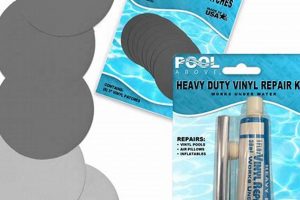
Most inflatable beds include a repair kit with patches and adhe
sive. Follow the instructions provided with the kit to properly seal the puncture. Clean and dry the area around the puncture before applying the patch.
Proper use and care contribute to the longevity and safety of a vehicular inflatable bed.
The concluding summary will reiterate key considerations and provide final recommendations regarding the utilization of vehicular inflatable sleeping platforms.
Vehicular Inflatable Bed
This exploration of the vehicular inflatable bed has underscored critical factors influencing its utility and safety. Vehicle compatibility, inflation method, material durability, storage size, comfort level, safety features, and ease of setup are all indispensable considerations when selecting and utilizing this product. Neglecting any of these aspects can compromise user experience and potentially lead to hazardous situations.
The decision to employ a “blow up air mattress for car” necessitates a thorough evaluation of individual needs and potential risks. While offering convenience and portability, these solutions demand responsible implementation and diligent adherence to safety guidelines. Therefore, careful consideration and informed decision-making remain paramount when integrating vehicular inflatable beds into travel or emergency preparedness strategies.