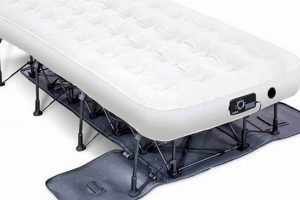
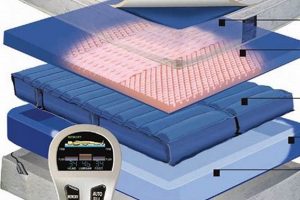
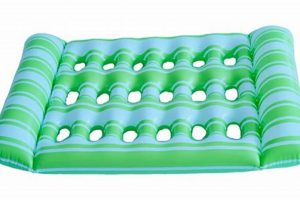
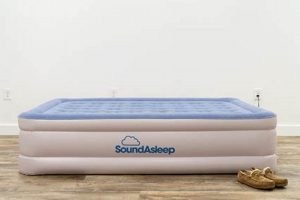
An inflatable sleeping surface, designed for camping and backpacking, provides insulation and cushioning for comfortable rest in outdoor environments. Constructed from durable, lightweight materials, it’s often self-inflating or requires a pump for inflation. The design prioritizes portability and packability while ensuring adequate support.
These sleeping solutions offer significant advantages over traditional sleeping pads, including superior comfort, reduced weight, and enhanced insulation against cold ground temperatures. Their development reflects advancements in material science and manufacturing processes, resulting in increasingly robust and user-friendly products. This contributes to improved sleep quality and overall experience during outdoor adventures. They are also ideal for camping where weight and pack size are important considerations.
The following sections will delve into specific features, construction materials, usage guidelines, maintenance procedures, and comparative analyses relevant to this type of equipment, thereby offering a thorough understanding of its applications and potential benefits.
Usage and Maintenance Tips
Proper usage and maintenance extend the lifespan and optimize the performance of an inflatable sleeping surface. These guidelines provide essential information for achieving optimal results.
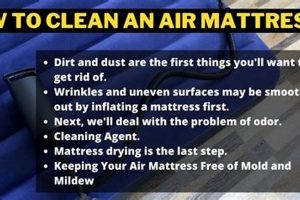
Tip 1: Inflation Considerations: Avoid over-inflation. Excessive pressure can stress seams and materials, potentially leading to failure. Inflate to the manufacturer’s recommended pressure, testing firmness by feel.
Tip 2: Surface Preparation: Prior to deployment, thoroughly inspect the ground surface for sharp objects like rocks, thorns, or glass. Clear the area or utilize a protective ground sheet to prevent punctures.
Tip 3: Inflation Method: Employ the appropriate inflation method as directed by the manufacturer. Self-inflating models require valve opening; pump-required models demand a compatible pump. Avoid using excessive force during inflation.
Tip 4: Storage Practices: When not in use, deflate completely, ensuring all air is expelled. Roll or fold according to the manufacturer’s instructions to minimize stress on seams and materials. Store in a dry, cool environment away from direct sunlight and extreme temperatures.
Tip 5: Cleaning Procedures: Clean the surface with a damp cloth and mild soap to remove dirt and debris. Avoid harsh chemicals or abrasive cleaners. Ensure the surface is completely dry before storage to prevent mildew growth.
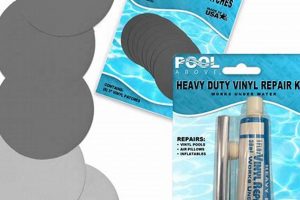
Tip 6: Puncture Repair: Carry a repair kit specifically designed for inflatable products. Familiarize oneself with the repair process before heading into the field. Promptly address any punctures to prevent further damage.
Adhering to these guidelines maximizes the lifespan and ensures optimal performance of the equipment, contributing to a more comfortable and secure outdoor experience.
The concluding sections will further explore comparative analyses and potential applications, providing a comprehensive overview of the inflatable sleeping surface’s utility and benefits.
1. Durability

Durability, in the context of an inflatable sleeping surface, directly correlates with its operational lifespan and resistance to environmental stressors. The materials and construction techniques employed determine the extent to which it can withstand abrasion, puncture, and prolonged use in varied outdoor conditions. A less durable model is prone to leaks and tears, rendering it unusable and potentially hazardous in remote locations.
For example, models constructed with high-denier fabrics and reinforced seams exhibit greater resistance to damage compared to those using lighter, less robust materials. In instances of extended backcountry trips or expeditions involving uneven terrain, a durable sleeping surface is essential for consistent performance and reliable comfort. A puncture during a multi-day trek can lead to significant discomfort, sleep deprivation, and potential hypothermia, highlighting the critical need for robust construction.
In summary, durability is an important attribute. Choosing an air mattress that are built to withstand the demands of outdoor use minimizes the risk of equipment failure and contributes to a safer, more enjoyable experience. The selection of materials and manufacturing processes directly influence the product’s capacity to endure environmental challenges, thereby affecting its overall value and long-term performance.
2. Insulation
Insulation is a critical attribute of a sleeping surface intended for outdoor use. Ground temperatures can significantly impact thermal comfort and core body temperature, particularly in colder climates. An air mattress without adequate insulation conducts heat away from the body, leading to discomfort and, in extreme conditions, hypothermia. Insulation mitigates this heat transfer, maintaining a more stable and comfortable sleeping environment. Effective insulation is achieved through various methods, including the incorporation of synthetic fills, down fills, or reflective layers within the mattress’s construction.
The effectiveness of insulation is quantified using R-value or thermal resistance. A higher R-value indicates greater insulating capability. For instance, an air mattress with an R-value of 4 or higher is suitable for use in temperatures approaching freezing, whereas a lower R-value may suffice for warmer conditions. Manufacturers often specify the intended temperature range for their products, allowing users to select appropriate insulation levels based on anticipated environmental conditions. Furthermore, the distribution of insulation within the mattress is crucial; even distribution prevents cold spots and ensures uniform thermal performance across the sleeping surface. Many insulated air mattresses use baffled chambers in their design to limit air movement and prevent the accumulation of cold air inside the air mattress
In conclusion, insulation is a determinant factor in the suitability of an air mattress for outdoor applications. The selection of an air mattress with an appropriate R-value, coupled with informed understanding of its intended use, contributes directly to thermal comfort and safety in the outdoors. Consideration of insulation characteristics is essential for mitigating heat loss and ensuring a comfortable and protective sleeping environment.
3. Packability
Packability, referring to the compacted size and ease of transport, is a paramount consideration in the design and selection of air mattresses, particularly those intended for backpacking and mountaineering expeditions. It dictates the overall weight and volume burde
n on the user, directly impacting mobility and efficiency in outdoor environments.
- Compressed Volume
The reduced size of a deflated air mattress is a primary indicator of its packability. Measured in liters or cubic inches, this metric signifies the minimum space required within a backpack or gear haul. Minimal compressed volume allows for efficient allocation of space for other essential equipment, such as food, water, and shelter. Materials and construction methods influence the final compressed volume; lighter fabrics and streamlined designs contribute to smaller packed sizes.
- Weight-to-Size Ratio
While compressed volume is important, the weight-to-size ratio provides a more comprehensive assessment of packability. An air mattress with a small compressed volume but excessive weight may still be less desirable than a slightly larger, lighter alternative. The ideal scenario balances both factors, offering a compact and lightweight solution. Advancements in materials science have enabled the production of air mattresses that minimize weight without compromising durability or insulation.
- Stuff Sack Integration
The inclusion of a dedicated stuff sack or compression sack is integral to the packability of an air mattress. These sacks facilitate efficient compression and protect the mattress from abrasion and damage during transport. Stuff sacks often incorporate compression straps or roll-top closures, enabling further reduction in size. The design and durability of the stuff sack are essential considerations, ensuring it can withstand the rigors of backpacking and outdoor use.
- Inflation/Deflation Efficiency
Rapid inflation and deflation contribute to overall packability by minimizing setup and breakdown time at campsites. Air mattresses equipped with efficient valves and integrated pumps expedite these processes. Self-inflating models, while offering convenience, may not achieve the same level of compression as models requiring manual inflation. Balancing inflation efficiency with compressed size is crucial for optimizing the user experience.
The facets of packability collectively define the suitability of air mattresses for weight-conscious adventurers. The integration of lightweight materials, efficient compression methods, and optimized inflation systems directly influences the ease of transport and overall user experience, solidifying the air mattress as an indispensable piece of equipment for outdoor pursuits.
4. Comfort
Comfort, in the context of an inflatable sleeping surface, extends beyond mere softness and encompasses physiological and psychological well-being. The design and features directly influence the user’s ability to achieve restful sleep, which is paramount for physical recovery and cognitive function, particularly in demanding outdoor environments. The surface texture, pressure distribution, and noise reduction capabilities contribute significantly to the overall comfort level.
Examples illustrating the importance of comfort abound. Prolonged exposure to uneven or excessively firm sleeping surfaces can induce pressure points, leading to discomfort, interrupted sleep, and even musculoskeletal pain. Conversely, a properly designed sleeping surface provides uniform support, distributing weight evenly and minimizing pressure concentrations. Some models incorporate baffled chambers or adjustable air pressure to customize firmness levels, catering to individual preferences and anatomical needs. For instance, individuals with pre-existing back conditions often require specific support characteristics to alleviate discomfort and promote proper spinal alignment. Beyond physical considerations, the psychological impact of a comfortable sleep environment should not be overlooked. The assurance of a reliable and comfortable sleeping surface reduces anxiety and enhances overall relaxation, contributing to improved mental acuity and stress management during extended outdoor trips. A high-quality air mattress is constructed with sound-dampening materials to minimize crinkling or squeaking noises that could disrupt sleep.
In summation, comfort is not merely a desirable attribute, but a necessary one for promoting health, safety, and performance in outdoor settings. The careful consideration of design features, material selection, and customizable options is essential for maximizing comfort and ensuring that the inflatable sleeping surface fulfills its primary purpose: to provide a restful and restorative sleeping experience.
5. Weight
The weight of an air mattress directly influences its suitability for various outdoor activities. Increased weight typically necessitates greater physical exertion during transportation, affecting overall endurance and mobility. A heavier mattress may be more appropriate for car camping, where proximity to a vehicle mitigates the burden of carrying it over long distances. Conversely, for backpacking or mountaineering, where every gram counts, a lightweight air mattress is essential. This reduced weight allows for more efficient allocation of pack space and energy conservation during strenuous hikes.
Real-world examples demonstrate the practical significance of weight considerations. A backpacker embarking on a multi-day trek, burdened with a heavy mattress, experiences increased fatigue and reduced agility, potentially compromising safety and enjoyment. Conversely, using a lightweight model results in a more manageable pack weight, allowing for greater freedom of movement and reduced strain. The difference in weight between two models can range from several hundred grams to over a kilogram, which, when combined with other gear, significantly impacts the overall load. Manufacturers often employ lightweight materials and streamlined designs to minimize the weight of these mattresses without sacrificing durability or comfort, balancing performance with portability.
In conclusion, the weight of an air mattress is a determinant attribute that must align with the intended use. Selecting a model with an appropriate weight minimizes the physical demands of transportation and contributes to a safer, more enjoyable outdoor experience. While factors such as comfort and insulation are important, the weight remains a primary consideration for backpackers and others prioritizing mobility and efficiency. Understanding the interplay between weight and other features facilitates informed decision-making and optimizes gear selection for specific outdoor activities.
Frequently Asked Questions
The following questions address common concerns and misconceptions regarding this specific type of camping equipment. The answers provide factual information to assist in informed decision-making.
Question 1: What is the typical lifespan of an Exped air mattress under normal usage conditions?
Lifespan varies depending on frequency of use, environmental conditions, and maintenance practices. Under typical recreational use, a well-maintained model can last 3-5 years or more. Exposure to abrasive surfaces, extreme temperatures, and improper storage can significantly reduce longevity.
Question 2: How does the R-value of an Exped air mattress affect its performance in cold weather?
The R-value indicates the mattress’s resistance to heat flow. A higher R-value signifies greater insulation and suitability for colder temperatures. Selecting a model with an ad
equate R-value for the expected conditions is critical to prevent heat loss and maintain thermal comfort.
Question 3: What are the recommended procedures for repairing a puncture in an Exped air mattress in the field?
Manufacturers typically provide repair kits including adhesive patches. Locate the puncture, clean the area, apply the adhesive patch according to instructions, and allow sufficient time for the adhesive to cure before re-inflating. Proper field repairs are crucial for maintaining usability and preventing further damage.
Question 4: What is the best method for cleaning and storing an Exped air mattress to prevent mildew and degradation?
Clean the surface with a damp cloth and mild soap. Ensure it is thoroughly dry before storing it in a cool, dry place, away from direct sunlight and sharp objects. Proper cleaning and storage prevent mildew growth and material degradation, extending the mattress’s lifespan.
Question 5: What is the maximum weight capacity of a standard Exped air mattress, and what happens if this limit is exceeded?
Weight capacity varies by model; consult the manufacturer’s specifications. Exceeding the weight limit can lead to premature wear, seam failure, or complete mattress failure. Adhering to the specified weight limit ensures optimal performance and longevity.
Question 6: Are there specific inflation devices or techniques recommended for Exped air mattresses to avoid damage to the valve or internal structure?
Use the inflation device recommended by the manufacturer. Avoid over-inflation and rapid inflation using high-pressure sources. Following the manufacturer’s guidelines prevents damage to the valve and internal structure.
Proper care and maintenance, appropriate usage, and informed decision-making based on product specifications contribute to the longevity and performance of these sleeping solutions.
The subsequent sections will address comparative analyses and alternative options, providing a broader perspective on camping sleep systems.
Conclusion
The preceding exploration of the Exped air mattress has examined its key attributes: durability, insulation, packability, comfort, and weight. Each aspect influences the product’s suitability for diverse outdoor pursuits. Durability ensures longevity; insulation provides thermal protection; packability enhances portability; comfort facilitates restful sleep; and weight impacts mobility. The Exped air mattress balances these factors to provide a sleeping solution tailored to specific needs.
Ultimately, the selection of a sleeping surface is a critical decision for outdoor adventurers. Careful evaluation of individual requirements and environmental conditions is essential. Informed decision-making, coupled with proper usage and maintenance, maximizes the benefits derived from this sleeping equipment. Continued advancements in materials and design promise to further enhance the performance and functionality of this equipment, solidifying its role in outdoor recreation.