Mending punctures in inflatable sleeping surfaces involves identifying the damaged area and applying a sealant to restore air retention. The process typically requires cleaning the affected area, applying an adhesive patch or liquid sealant, and allowing sufficient time for the bond to solidify. This ensures the inflatable structure can again hold air effectively.
Addressing damage to these items prevents discomfort during use, extends the lifespan of the product, and minimizes waste associated with premature disposal. Historically, solutions ranged from makeshift repairs using cloth and glue to specialized kits designed for durable and long-lasting fixes, reflecting a continual effort to maintain the utility of these portable bedding solutions.
This article will detail methods for locating leaks, preparing the surface, selecting appropriate repair materials, and applying them effectively to restore the integrity of damaged inflatable mattresses.
Repairing Inflatable Mattress Leaks
Effectively repairing punctures in inflatable mattresses requires careful preparation and execution. The following guidelines provide a structured approach to achieving a durable and lasting repair.
Tip 1: Leak Detection: Submerge the inflated mattress section by section in water, observing for escaping air bubbles to pinpoint the puncture location accurately.
Tip 2: Surface Preparation: Thoroughly clean the area surrounding the hole with isopropyl alcohol to remove dirt, oils, and debris, ensuring optimal adhesion of the repair material.
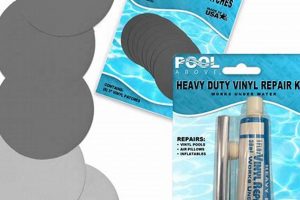
Tip 3: Patch Size: Select a patch that extends at least one inch beyond the puncture in all directions to distribute stress and prevent future tears around the repaired area.
Tip 4: Adhesive Application: Apply a thin, even layer of adhesive to both the patch and the prepared surface of the mattress. Allow the adhesive to become tacky before bonding.
Tip 5: Pressure Application: Once the patch is in place, apply firm, consistent pressure for several minutes. This promotes maximum contact and bond strength between the patch and the mattress material.
Tip 6: Curing Time: Allow the adhesive to cure fully, as directed by the manufacturer’s instructions, before reinflating the mattress. This ensures the bond reaches its maximum strength.
Tip 7: Reinforcement (Optional): For larger holes, consider using a fabric-reinforced patch to provide additional strength and durability to the repair.
Adhering to these guidelines enhances the likelihood of a successful repair, extending the service life of the inflatable mattress and preventing future air leaks.
The subsequent sections of this article will elaborate on material selection and specific repair techniques to further optimize the repair process.
1. Locate the leak

Identifying the source of escaping air is the foundational step in rectifying damage to an inflatable mattress. Without precise pinpointing of the breach, any subsequent repair efforts are rendered ineffective, as the sealant or patch cannot be correctly applied.
- Auditory Detection
Listening carefully near the mattress surface may reveal a hissing sound emanating from the leak. This method is most effective in quiet environments and with larger punctures.
- Soapy Water Application
Applying a solution of soapy water to the mattress surface and observing for bubble formation provides a visual indication of the leak’s location. The escaping air will cause bubbles to form at the point of the puncture.
- Immersion Method
Submerging the inflated mattress, section by section, in water allows for direct observation of air bubbles escaping from the puncture. This is particularly useful for identifying multiple or small leaks.
- Pressure Mapping
Applying pressure to different areas of the mattress while monitoring for changes in air pressure can help narrow down the general location of the leak before using more precise methods.
The efficacy of locating the leak directly impacts the success of any repair strategy. Utilizing a combination of these methods, starting with the least invasive and progressing to more thorough techniques, ensures that the puncture is accurately identified before the implementation of any repair measures.
2. Clean surface thoroughly

The effectiveness of any procedure designed to mend breaches in inflatable mattresses is fundamentally predicated on the preparation of the affected surface. Specifically, the tenet “clean surface thoroughly” represents a non-negotiable prerequisite in the broader process of addressing such damage. The presence of contaminants, including but not limited to dirt, oils, and residual adhesives, directly impedes the formation of a strong and durable bond between the inflatable material and the patching agent. A compromised bond, in turn, leads to premature failure of the repair, necessitating repeated interventions and potentially rendering the mattress unusable.
Consider, for example, a scenario where an adhesive patch is applied to a surface marred by body oils. The oils create a barrier that prevents the adhesive from making direct contact with the mattress material. Over time, the adhesive will gradually detach, exposing the puncture once more. Conversely, proper cleaning with a solvent, such as isopropyl alcohol, removes these contaminants, creating a pristine surface that allows the adhesive to achieve optimal contact and bonding. This meticulous preparation is the cornerstone of achieving a long-lasting and reliable repair.
In conclusion, the emphasis on thorough surface cleaning is not merely a matter of procedural correctness but a critical factor determining the long-term success of inflatable mattress repairs. Neglecting this step undermines the integrity of the repair and increases the likelihood of recurring issues. Therefore, prioritizing a clean surface is essential for maintaining the functionality and lifespan of inflatable mattresses.
3. Appropriate patch selection
The selection of a suitable patch directly influences the longevity and effectiveness of any repair performed on an inflatable mattress. A mismatch between the patch material and the mattress composition, or an inadequate patch size, compromises the integrity of the bond and increases the likelihood of recurring leaks. The selection process constitutes a crucial component in the practical execution of fixing punctures.
For instance, ut
ilizing a vinyl patch on a flocked air mattress often results in poor adhesion due to the textured surface. A more appropriate choice would be a patch specifically designed for flocked surfaces, incorporating a compatible adhesive. Similarly, a patch that is too small fails to distribute stress evenly around the puncture, leading to premature failure at the edges. Conversely, an oversized patch can be unwieldy and aesthetically unappealing, though functionally preferable to an undersized one.
In summary, selecting the correct patch necessitates careful consideration of the mattress material, the size and nature of the damage, and the adhesive properties of the patch. This careful selection is not merely a detail but a critical determinant of the repair’s success, impacting the mattress’s ability to retain air and provide a comfortable sleeping surface. Adherence to appropriate patch selection protocols ultimately contributes to a more sustainable and cost-effective approach to mattress maintenance.
4. Adhesive application technique

The method by which adhesive is applied directly determines the efficacy of any repair to an inflatable mattress. Inadequate or improper application compromises the bonding process between the patch and the mattress material, resulting in air leaks and diminished structural integrity. The technique employed is thus a critical component in the overall success of fixing a puncture. Factors such as adhesive type, surface preparation, and distribution all contribute to the strength and durability of the repair.
For example, consider a situation where the adhesive is applied unevenly. Areas with insufficient adhesive will fail to bond properly, creating weak spots prone to air leakage. Conversely, excessive adhesive can create a thick layer that prevents direct contact between the patch and the mattress, similarly weakening the bond. The optimal technique involves applying a thin, consistent layer of adhesive to both surfaces, allowing it to become tacky before joining them. This ensures maximum contact and a strong, lasting seal. Furthermore, the specific adhesive used must be compatible with the mattress material; using an incorrect adhesive may lead to chemical reactions or degradation of the materials, negating the repair effort.
In summary, the adhesive application technique represents a crucial element in successfully mending an inflatable mattress. The skill with which the adhesive is applied dictates the overall strength and longevity of the repair. Prioritizing proper surface preparation, selecting the appropriate adhesive, and executing a consistent application technique are essential for achieving a durable and airtight seal, thereby extending the lifespan of the inflatable mattress.
5. Curing process adherence
The adherence to specified curing processes is a pivotal element in effecting durable repairs to inflatable mattresses. The chemical reactions that facilitate bonding between the patching material and the mattress substrate require time and, in some cases, specific environmental conditions to reach their full potential. Failure to observe prescribed curing times and conditions directly undermines the strength and longevity of the repair, increasing the likelihood of future air leaks.
Consider, for example, a patch applied with an adhesive that requires 24 hours to fully cure. If the mattress is reinflated and subjected to weight-bearing stress before this period elapses, the adhesive bond may be disrupted before it can fully solidify. This results in a weakened connection susceptible to tearing or separation, effectively nullifying the repair effort. In contrast, strict adherence to the curing instructions allows the adhesive molecules to fully cross-link, forming a robust and resilient bond capable of withstanding the pressures exerted during normal use. The curing timeframe is a crucial period where the adhesive transitions from a liquid or semi-solid state to a solid with enhanced mechanical properties. Temperature and humidity, as specified by the adhesive manufacturer, often play critical roles in facilitating this transition. High humidity, for instance, may impede the curing process of certain adhesives, while extreme temperatures could either accelerate or inhibit the reaction, thereby affecting the quality of the bond.
In conclusion, proper adherence to the curing process is not merely a procedural detail but a fundamental requirement for a successful and lasting inflatable mattress repair. By strictly following the manufacturers instructions regarding curing time, temperature, and humidity, individuals can significantly enhance the durability of the repair, extending the service life of the mattress and preventing recurring problems. Ignoring this step negates the benefits of meticulous surface preparation, appropriate patch selection, and careful adhesive application.
Frequently Asked Questions
The following addresses common inquiries related to mending punctures in inflatable sleeping surfaces. The provided information seeks to clarify best practices and address potential complications in the repair process.
Question 1: Can any type of glue be used to patch an air mattress?
No, general-purpose adhesives are often unsuitable. Adhesives formulated for flexible plastics, such as vinyl or PVC, are necessary to ensure a lasting bond that can withstand the stretching and flexing inherent in an inflatable mattress.
Question 2: Is it always necessary to use a patch, or can liquid sealant alone suffice?
Liquid sealant may be sufficient for very small pinholes. However, for any puncture of noticeable size, a physical patch provides the structural reinforcement needed to prevent the hole from re-opening under pressure.
Question 3: What is the best method for cleaning the area around the puncture before applying a patch?
Isopropyl alcohol is recommended. It effectively removes oils, dirt, and other contaminants that can impede adhesion without damaging the mattress material. The area must be completely dry before proceeding.
Question 4: How long should the adhesive be allowed to dry before applying the patch?
The adhesive should be allowed to become tacky, typically a few minutes depending on the specific product. This allows for a stronger initial bond when the patch is applied.
Question 5: What can be done to ensure the patch adheres properly to a flocked air mattress?
Flocked surfaces require additional preparation. Gently abrade the flocked area around the puncture with fine-grit sandpaper to create a smoother surface for adhesion. Thorough cleaning after abrasion is essential.
Question 6: How much weight can the repaired area withstand after the repair is completed?
The weight capacity of the repaired area will be less than that of the original mattress. Excessive weight concentration directly on the repaired section should be avoided to prevent future failures.
In summary, a successful repair necessitates the proper materials, meticulous surface preparation, and adherence to manufacturer’s instructions. By considering these factors, individuals can effectively extend the lifespan of their inflatable mattresses.
The following section will explore advanced repair techni
ques for more significant damage to inflatable mattresses.
Conclusion
This article has explored the multifaceted process of how to fix a hole in the air mattress, emphasizing the critical role of meticulous preparation, appropriate material selection, and adherence to established repair protocols. Key aspects such as precise leak detection, thorough surface cleaning, proper adhesive application, and sufficient curing time are vital components of a successful repair.
Mastering these techniques extends the lifespan of inflatable mattresses, reducing waste and conserving resources. Continued diligence in proper maintenance and timely repair of damage contributes to both economic savings and environmental responsibility, ensuring the enduring utility of these portable sleeping solutions.