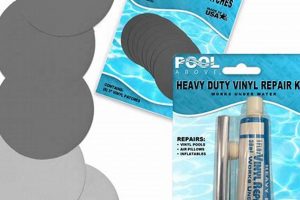
A collection of materials designed to mend punctures and tears in inflatable sleeping surfaces is essential for maintaining their usability. This typically includes adhesive patches, a specialized glue or sealant, and tools for surface preparation, such as an abrasive pad or cleaning wipes. These kits enable the user to address common damage, extending the life of the inflatable and preventing air leakage.
The value of these kits lies in their convenience and cost-effectiveness. Purchasing one is significantly less expensive than replacing the entire inflatable. Furthermore, they allow for quick on-site repairs, which is especially beneficial during camping trips or when the inflatable is used for temporary bedding. Historically, patching damaged inflatables has been a common practice, evolving from basic adhesive solutions to specialized formulations tailored for the specific materials used in modern construction.
Understanding the components of these repair solutions, the techniques for effective application, and preventative measures to minimize damage are key to maximizing the lifespan of inflatable sleeping solutions. The following sections will delve into these aspects, providing practical guidance for users.
Tips for Using Repair Solutions Effectively
Employing the appropriate techniques and understanding the characteristics of patching products are crucial for achieving durable and reliable repairs on inflatable sleeping surfaces. This section outlines key strategies for maximizing the effectiveness of the process.
Tip 1: Ensure Surface Cleanliness. Before applying any adhesive or patch, meticulously clean the area around the puncture. Remove any dirt, oil, or debris, as these contaminants can compromise the bond between the patch and the inflatable material. Isopropyl alcohol is suitable for effective cleaning.
Tip 2: Precisely Locate the Leak. Inflate the mattress and use a soapy water solution to identify the exact location of the leak. Bubbles will form at the point of escape, marking the area requiring attention. Thoroughly dry the area after leak detection.
Tip 3: Use Appropriately Sized Patches. Select a patch that adequately covers the damaged area with sufficient overlap, typically extending at least one inch beyond the puncture in all directions. Larger punctures may require multiple patches or specialized reinforcement.
Tip 4: Apply Adhesive Sparingly and Evenly. When using a liquid adhesive, apply a thin, uniform layer to both the patch and the inflatable material. Avoid excessive application, as this can weaken the bond and prolong drying time. Allow the adhesive to become tacky before joining the surfaces.
Tip 5: Apply Firm and Consistent Pressure. Once the patch is positioned, apply firm, even pressure across its entire surface. This ensures optimal adhesion and eliminates air pockets. A roller or similar tool can be used to achieve consistent pressure.
Tip 6: Allow Adequate Curing Time. Consult the product instructions for the recommended curing time. Typically, this involves allowing the patched area to remain undisturbed for several hours to ensure the adhesive fully bonds. Avoid inflating the mattress until the curing process is complete.
Tip 7: Consider Reinforcement for Large Tears. Substantial damage may necessitate reinforcing the patched area with additional layers of material or specialized fabric. This strengthens the repair and prevents future tearing in the same location.
Adhering to these guidelines promotes durable and reliable repairs, extending the usability of inflatable sleeping surfaces and preventing the need for frequent replacements. Proper application techniques are as vital as having patching supplies available.
The concluding section will offer preventative measures for avoiding damage to inflatable sleeping solutions, further enhancing their longevity and overall value.
1. Adhesive Patch Quality

Adhesive patch quality is a fundamental determinant of a repair solution’s overall effectiveness. The integrity and longevity of repairs to inflatable sleeping surfaces hinge directly on the characteristics of these patches, influencing their ability to withstand pressure and maintain an airtight seal.
- Adhesive Strength and Formulation
The adhesive’s formulation dictates its bonding capability with the inflatable material. High-quality adhesives exhibit superior peel strength and resistance to shear forces, ensuring the patch remains securely attached even under stress. Lower-quality adhesives may fail prematurely, leading to air leakage and requiring repeated repairs. The composition of the adhesive must be chemically compatible with the material of the inflatable to ensure a strong and lasting bond. For instance, an adhesive specifically designed for PVC will perform significantly better on a PVC inflatable compared to a general-purpose adhesive.
- Patch Material Durability and Flexibility
The material composition of the patch itself is critical. Durable materials resist tearing, puncturing, and degradation from environmental factors such as UV exposure and temperature fluctuations. Flexibility is equally important, allowing the patch to conform to the contours of the inflatable without creating stress points that could lead to failure. Patches made from reinforced vinyl or specialized fabrics often exhibit superior performance in these areas compared to those made from thin, non-reinforced materials. This translates to repairs that can withstand repeated use and storage without compromising the seal.
- Resistance to Environmental Factors
Inflatable sleeping surfaces are often used in diverse environments, exposing them to varying temperatures, humidity levels, and potentially harsh chemicals. High-quality adhesive patches must demonstrate resistance to these factors to maintain their adhesive properties and structural integrity. Adhesives that degrade under exposure to moisture or extreme temperatures are likely to fail, rendering the repair ineffective. UV resistance is particularly important for inflatables used outdoors, as prolonged exposure can cause the adhesive to become brittle and lose its bonding strength.
- Patch Size and Coverage Area
The dimensions of the adhesive patch must be appropriate for the size and nature of the damage being repaired. A patch that is too small may not adequately cover the damaged area, resulting in incomplete sealing and continued air leakage. Conversely, an excessively large patch can create stress points and potentially weaken the surrounding material. Selecting a patch size that provides sufficient overlap beyond the damaged area is crucial for ensuring a secure and lasting repair. Kits that offer a variety of patch sizes provide the flexibility to address different types of damage effectively.
The quality of adhesive patches directly impacts the reliability and longevity of an inflatable sleeping solution repair. Selecting patches with robust adhesive strength, durable mate
rials, environmental resistance, and appropriate size is essential for achieving effective and lasting repairs. These factors, collectively, contribute to the overall value and utility of inflatable repair systems.
2. Leak detection method

The effectiveness of a repair solution for inflatable sleeping surfaces is directly contingent upon accurately pinpointing the source of air leakage. A precise leak detection method is not merely a preliminary step but an integral component of a comprehensive solution. Without proper identification of the leak’s location, any repair attempt, regardless of the solution used, is unlikely to provide a lasting fix. For instance, blindly applying a patch to an area near a suspected leak may fail if the actual puncture is slightly removed or if there are multiple points of escape. The result is wasted materials and continued deflation.
Common strategies for identifying leaks involve inflating the mattress and applying a soapy water solution to the surface. The formation of bubbles indicates the precise location of the air escaping. Alternative approaches include submerging sections of the inflated mattress in water or using specialized electronic leak detectors, particularly in cases where the leak is minute and difficult to locate visually. An ineffective leak detection method, such as relying solely on auditory cues or visual inspection without the aid of a soapy solution, often leads to misidentification of the source, rendering the patching material useless and necessitating further attempts. The time investment in precise detection is significantly less than the time wasted on repeated, ineffective repairs.
In summary, a reliable leak detection method constitutes an essential precursor to any successful inflatable repair. This method’s accuracy directly influences the outcome, conserving patching materials and ensuring the long-term functionality of the repaired item. The investment in an effective leak detection technique represents a crucial element in maximizing the value and lifespan of repair applications.
3. Surface preparation importance

Effective adhesion of a patch to an inflatable sleeping surface is critically dependent on the quality of surface preparation. The process directly influences the strength and longevity of the resulting bond, impacting the overall success of a repair procedure.
- Removal of Contaminants
The presence of dirt, oils, and other surface contaminants can significantly impede the adhesive’s ability to bond effectively. These substances create a barrier between the patch and the inflatable material, reducing the contact area and compromising the bond’s integrity. Abrasive cleaning or the use of solvents, such as isopropyl alcohol, are typically required to remove these contaminants, ensuring a clean surface for optimal adhesion. For instance, a failure to remove body oils from the area around a puncture will invariably result in a weak and unreliable repair, even if the patch and adhesive are of high quality.
- Texturing for Enhanced Adhesion
Lightly abrading the surface of the inflatable material can create a textured surface that increases the mechanical interlocking between the adhesive and the substrate. This process enhances the bond strength by providing more surface area for the adhesive to grip. Abrasive pads or fine-grit sandpaper are commonly used to achieve this texturing effect, particularly on smooth or glossy surfaces. Neglecting to properly texture the surface can lead to a reduced bond strength, especially under stress or pressure, resulting in patch failure.
- Drying and Stabilization
Moisture can significantly interfere with the adhesive’s bonding process. Ensuring that the surface is completely dry before applying the patch is essential for achieving a strong and durable bond. Allowing the cleaned surface to air dry or using a clean, lint-free cloth to remove any residual moisture is critical. Furthermore, allowing the prepared surface to stabilize before patch application prevents subsequent contamination and ensures optimal adhesion conditions. Applying a patch to a damp or unstable surface is highly likely to result in a compromised repair.
- Compatibility with Adhesive Type
The method of surface preparation must be compatible with the type of adhesive being used. Some adhesives require specific surface treatments to achieve optimal bonding. For instance, certain adhesives may require the application of a primer to enhance adhesion, while others may be negatively affected by certain cleaning agents. Consulting the adhesive manufacturer’s instructions and adhering to their recommendations for surface preparation is essential for ensuring a successful repair. Incompatibility between the surface preparation method and the adhesive can lead to a weakened bond or even complete failure of the repair.
Proper surface preparation is an indispensable step in the inflatable repair process. The meticulous removal of contaminants, texturing for enhanced adhesion, ensuring dryness and stability, and compatibility with the adhesive type collectively contribute to a strong and lasting repair, maximizing the lifespan and utility of inflatable sleeping surfaces.
4. Material compatibility factors

The selection of a repair kit for air mattress must prioritize material compatibility. Incompatibility between the patch and the inflatable’s material can render the adhesive bond ineffective, leading to repair failure. Air mattresses are constructed from various materials, including PVC, flocked PVC, and TPU-coated fabrics. A patch designed for PVC, for example, may not adhere properly to a flocked surface unless the flocking is meticulously removed, or to a TPU-coated fabric without a specialized adhesive. This disparity stems from differences in surface energy, chemical composition, and flexibility. The adhesive must possess a chemical affinity for both the patch material and the inflatable to establish a durable bond. A common consequence of neglecting this consideration is patch delamination after inflation, negating any repair efforts.
The practical significance of material compatibility extends beyond initial adhesion. It influences the repair’s long-term durability and resistance to environmental factors such as temperature fluctuations and UV exposure. A mismatch in material properties can cause differential expansion and contraction under varying temperatures, stressing the adhesive bond and potentially leading to premature failure. For instance, using a rigid patch on a highly flexible air mattress can create stress concentrations at the patch’s edges, promoting tearing or detachment. Furthermore, certain adhesives may react adversely with specific inflatable materials, causing degradation or discoloration over time.
Therefore, identifying the precise material composition of the air mattress is the first step in selecting a compatible repair kit. Many kits are explicitly labeled for use with specific materials. For universal kits, verifying the adhesive’s suitability for the air mattress material is critical. Material compatibil
ity is not merely a technical detail but a fundamental prerequisite for achieving a lasting and effective repair. The failure to consider this aspect inevitably results in wasted resources and the continued inconvenience of a deflating air mattress.
5. Application pressure consistency

Application pressure consistency is a critical, often underestimated, factor in the effective use of a repair kit for air mattress. Unevenly distributed pressure during the patch application process can compromise the adhesive bond, leading to air leaks and premature repair failure. The bond between the patch and the air mattress material relies on uniform contact and close proximity at a molecular level. Inconsistent pressure introduces voids and weak points, diminishing the overall strength of the repair. For example, applying greater pressure to the center of the patch while neglecting the edges results in an incomplete seal around the perimeter, creating pathways for air to escape. The effectiveness of even the highest quality repair materials is contingent upon the uniformity of the applied force.
The tools included within a repair kit often provide indirect methods for achieving consistent pressure. A small roller or a hard, smooth object, such as the back of a spoon, can be used to distribute force evenly across the patch surface. The users technique also plays a pivotal role. Applying pressure in a rolling or pressing motion, starting from the center and working outwards, helps to eliminate air pockets and ensure full contact between the patch and the mattress material. A lack of attention to this detail can necessitate repeat repairs, increasing material waste and prolonging the inconvenience of a damaged air mattress. Furthermore, variations in the inflatable material’s thickness can exacerbate the challenges of achieving uniform pressure, requiring greater care and attention.
In summary, application pressure consistency directly impacts the success and longevity of air mattress repairs. Insufficient or uneven pressure leads to weakened bonds and increased likelihood of leaks. By employing appropriate tools and techniques to ensure uniform force distribution, users can maximize the effectiveness of repair kits and extend the lifespan of their air mattresses. This aspect is frequently overlooked, but understanding its significance is essential for achieving reliable and durable repairs.
6. Curing time adherence

Curing time adherence is a non-negotiable element in achieving effective and lasting repairs using patching solutions for inflatable sleeping surfaces. Deviations from the manufacturer’s recommended curing duration can compromise the bond’s integrity, resulting in premature failure and rendering the repair ineffective.
- Adhesive Polymerization Process
The curing process facilitates the polymerization of the adhesive, enabling it to transition from a liquid or semi-solid state to a robust, cross-linked solid. This transformation requires a specific duration to ensure complete molecular bonding between the patch and the inflatable material. Interrupting this process before completion results in a weakened bond with diminished strength and reduced resistance to stress. For instance, inflating a patched air mattress before the adhesive has fully cured can disrupt the bonding process, leading to immediate or rapid deflation.
- Environmental Factors Impact
Ambient temperature and humidity levels can significantly influence the curing time of adhesives. Lower temperatures typically extend the curing duration, while high humidity levels may impede the process. Adhering to the manufacturer’s recommended curing time under ideal conditions does not guarantee success if environmental factors are not considered. In cooler climates, extending the curing time beyond the stated recommendation may be necessary to ensure complete polymerization. Ignoring these environmental influences can lead to under-cured adhesives that are susceptible to peeling or cracking.
- Stress Resistance Development
The curing process is not merely about solidification; it is also about the development of resistance to various stresses, including tensile, shear, and compressive forces. Full curing enables the adhesive to withstand the pressure exerted by the inflated air mattress without compromising the bond. Premature use of the repaired mattress before full curing has occurred places undue stress on the adhesive, preventing it from reaching its optimal strength. This can result in bond failure and necessitate repeated repairs.
- Long-Term Durability Implications
Proper curing time adherence has implications for the long-term durability of the repair. A fully cured adhesive bond resists degradation from environmental factors such as UV exposure and temperature fluctuations. Under-cured adhesives are more susceptible to these factors, leading to premature weakening and eventual failure. Following the recommended curing time ensures that the repair remains effective over an extended period, maximizing the lifespan of the air mattress.
The success of a repair kit for air mattress is intrinsically linked to strict adherence to the recommended curing time. Failure to allow the adhesive to fully polymerize compromises the bond’s strength, environmental resistance, and long-term durability, ultimately leading to repair failure. Proper curing, therefore, is not merely a procedural step but a fundamental requirement for achieving lasting and effective repairs.
Frequently Asked Questions About Repair Solutions for Inflatable Sleeping Surfaces
This section addresses common inquiries concerning the usage and effectiveness of solutions designed to mend damage to inflatable sleeping surfaces, providing clarity on various aspects of their application and performance.
Question 1: What types of damage can these kits effectively repair?
These kits are primarily designed to address small punctures and tears in the inflatable material. Larger tears or damage to seams may require professional repair or replacement of the item.
Question 2: How long does a typical repair last?
The lifespan of a repair is dependent upon factors such as the size and location of the damage, the quality of the repair materials, and the adherence to proper application techniques. A well-executed repair can last for the remaining lifespan of the inflatable, while poorly executed repairs may fail quickly.
Question 3: Are these kits suitable for use on all types of inflatable sleeping surfaces?
Kits are typically formulated for use with specific materials, such as PVC or flocked PVC. Verify compatibility with the inflatable’s material before application to avoid damage or ineffective repairs.
Question 4: What are the essential components of a comprehensive solution?
A comprehensive solution should include adhesive patches, a specialized adhesive or sealant, and tools for surface preparation, such as an abrasive pad or cleaning wipes.
Question 5: Is it necessary to deflate the inflatable completely before applying a patch?
Yes, complete deflation is necessary to ensure proper adhesion and prevent air pressure from disrupting the
bonding process during application and curing.
Question 6: How should the repaired area be stored to maximize the lifespan of the repair?
Store the repaired inflatable in a clean, dry environment away from direct sunlight and extreme temperatures. Avoid folding or compressing the repaired area, as this can stress the bond and lead to premature failure.
Understanding the appropriate usage and limitations of these solutions is crucial for achieving successful and long-lasting repairs. Adherence to the recommended procedures maximizes their effectiveness.
The following section will offer preventative measures for avoiding damage to inflatable sleeping solutions, further enhancing their longevity and overall value.
Conclusion
The preceding exploration has detailed the essential elements concerning repair kit for air mattress. From surface preparation and adhesive selection to pressure consistency and curing time adherence, each aspect plays a critical role in achieving durable and reliable repairs. Neglecting these factors can lead to compromised bonds and premature failure, undermining the intended purpose of the repair kit for air mattress.
Effective utilization of a repair kit for air mattress extends beyond simple application. It necessitates a comprehensive understanding of the underlying principles governing adhesion and material compatibility. Consistent diligence in these areas ensures that inflatable sleeping surfaces remain functional, providing comfort and utility for extended periods. Prioritizing proper technique ultimately minimizes waste, reduces replacement costs, and maximizes the value derived from these essential maintenance tools.