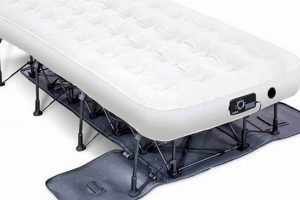
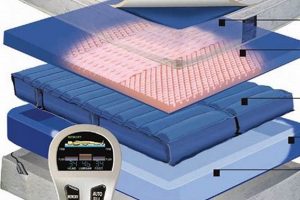
Specialized support surfaces are designed to mitigate the risk and promote the healing of pressure injuries, also known as bedsores or decubitus ulcers. These surfaces redistribute pressure away from bony prominences, reducing localized ischemia and promoting improved circulation. An example of such a surface is a mattress that utilizes alternating air cells to cyclically change pressure points on the patient’s body.
The use of these support systems is paramount in preventing and managing pressure ulcers, particularly for individuals with limited mobility or those confined to bed for extended periods. Historically, simple foam mattresses were the standard, but advancements in materials science and engineering have led to more sophisticated solutions offering superior pressure relief and microclimate control. These advancements contribute significantly to patient comfort, reduce the need for frequent repositioning, and lower the overall cost of care associated with pressure ulcer management.
This article will delve into the various types of these mattresses, focusing on their mechanisms of action, suitability for different patient populations, and the evidence supporting their efficacy in pressure ulcer prevention and treatment. The analysis will also cover factors to consider when selecting the appropriate support surface, including patient weight, risk factors, and the stage of any existing pressure injuries.
Tips for Selecting and Using Air Mattresses for Pressure Ulcer Management
The appropriate selection and effective utilization of specialized mattresses are crucial for both the prevention and treatment of pressure ulcers. These tips offer guidance on optimizing their use.
Tip 1: Understand the Mattress Type: Static air mattresses redistribute pressure, while alternating pressure models cyclically inflate and deflate air cells. Choose the type based on the patient’s risk level and existing ulcer stage. Alternating pressure models are often preferred for higher-risk individuals or those with existing ulcers.
Tip 2: Ensure Proper Inflation: The mattress must be inflated to the manufacturer’s specified pressure. Insufficient inflation will negate the pressure redistribution benefits, while over-inflation can increase the risk of skin breakdown. Regularly check and adjust the pressure as needed.
Tip 3: Use with a Moisture-Wicking Cover: Select a mattress cover that is waterproof, breathable, and moisture-wicking. This helps to maintain a dry microclimate at the skin surface, reducing the risk of maceration and skin breakdown.
Tip 4: Implement a Repositioning Schedule: Even with a specialized mattress, regular repositioning is essential. Establish a consistent repositioning schedule (e.g., every two hours) to further alleviate pressure on bony prominences. Document repositioning efforts meticulously.
Tip 5: Conduct Regular Skin Assessments: Perform thorough skin assessments at least daily, paying close attention to bony prominences such as the sacrum, heels, and hips. Early detection of skin breakdown is crucial for timely intervention.
Tip 6: Optimize Nutrition and Hydration: Adequate nutrition and hydration are vital for maintaining skin integrity and promoting wound healing. Ensure the patient receives a balanced diet rich in protein, vitamins, and minerals. Collaborate with a registered dietitian for personalized recommendations.
Tip 7: Inspect the Mattress Regularly for Damage: Routinely inspect the mattress for leaks, tears, or other damage. Promptly repair or replace damaged mattresses to ensure their effectiveness.
Effective use of these mattresses requires a comprehensive approach involving proper selection, diligent monitoring, and adherence to established best practices for pressure ulcer prevention and management. They serve as a valuable tool in a multifaceted strategy.
These tips provide a foundation for optimizing the effectiveness of specialized mattresses in pressure ulcer care. The following sections will address specific patient populations and advanced considerations for their use.
1. Pressure Redistribution

Pressure redistribution is the fundamental mechanism by which specialized air mattresses for decubitus ulcers exert their therapeutic effect. Decubitus ulcers, or pressure injuries, develop when sustained pressure compromises blood flow to tissues, leading to ischemia and eventual tissue necrosis. The primary goal of an air mattress designed for decubitus ulcer management is to reduce and redistribute this pressure, preventing prolonged periods of concentrated load on bony prominences. For example, a patient lying supine on a standard mattress experiences significant pressure on the sacrum and heels; an air mattress, particularly an alternating pressure model, cyclically inflates and deflates different air cells, shifting the pressure away from these vulnerable areas and allowing for reperfusion.
The effectiveness of pressure redistribution is directly linked to the design and functionality of the air mattress. Static air mattresses, which contain interconnected air cells, redistribute pressure passively by allowing the patient’s weight to be distributed across a larger surface area. Alternating pressure mattresses, on the other hand, actively redistribute pressure by sequentially inflating and deflating air cells, creating a dynamic pressure relief system. In practice, this means that an alternating pressure mattress is generally more effective for patients at high risk of developing decubitus ulcers or those with existing ulcers, as it provides more frequent and complete pressure relief. Furthermore, the choice of air mattress should be tailored to the individual patient’s needs, considering factors such as weight, mobility, and the presence of comorbidities that may affect tissue perfusion.
In summary, pressure redistribution is the core principle driving the therapeutic benefit of specialized air mattresses for decubitus ulcers. Understanding this connection is crucial for healthcare professionals to select the appropriate mattress type and implement effective strategies for pressure injury prevention and treatment. Challenges remain in ensuring consistent and proper usage, as well as addressing individual patient variability. The benefits of optimized pressure redistribution extend beyond ulcer management, contributing to improved patient comfort, reduced pain, and enhanced overall quality of life.
2. Microclimate Control

Microclimate control, specifically the regulation of moisture and temperature at the skin-support surface interface, plays a crucial role in the prevention and management of decubitus ulcers in conjunction with specialized air mattresses. Maintaining an optimal microclimate is essential for preserving skin integrity and reducing the risk of maceration and subseq
uent breakdown, particularly in patients with limited mobility.
- Moisture Management
Excessive moisture, often resulting from perspiration, incontinence, or wound exudate, can compromise the skin’s barrier function, increasing its vulnerability to friction, shear, and pressure. Mattress covers designed with moisture-wicking materials actively draw moisture away from the skin, promoting a drier microenvironment. This is particularly important for patients who are immobile or incontinent, as prolonged exposure to moisture can lead to maceration and skin breakdown, thereby increasing the risk of decubitus ulcer formation.
- Temperature Regulation
Elevated skin temperature can increase metabolic demands and exacerbate tissue hypoxia in areas subjected to pressure. Air mattresses that incorporate breathable materials and designs promote airflow, helping to dissipate heat and maintain a more stable skin temperature. This is particularly relevant for patients who are febrile or who have impaired thermoregulation, as excessive heat can contribute to skin damage and increase the risk of ulcer development.
- Material Properties
The materials used in the construction of air mattresses and their covers significantly impact microclimate control. Waterproof yet breathable fabrics, such as those incorporating semi-permeable membranes, allow moisture vapor to escape while preventing the ingress of liquids. This balance is essential for maintaining a dry and comfortable microenvironment without compromising the mattress’s ability to protect against contamination. Similarly, materials with low thermal conductivity help to minimize heat buildup at the skin surface.
- Airflow Design
Certain air mattresses incorporate designs that actively promote airflow within the mattress itself, further enhancing microclimate control. These designs may involve channels or perforations that facilitate air circulation, reducing moisture and heat accumulation. This is particularly beneficial for patients who are prone to excessive sweating or who are at high risk of developing decubitus ulcers due to compromised skin integrity.
The facets of microclimate control are intrinsically linked to the effectiveness of air mattresses in preventing and managing decubitus ulcers. By addressing the challenges associated with moisture, temperature, and material properties, these mattresses can create a more favorable environment for skin health and reduce the incidence of pressure injuries in vulnerable patient populations. Effective integration of microclimate control strategies represents a critical component of comprehensive pressure ulcer prevention and treatment protocols.
3. Patient Immobility

Patient immobility constitutes a significant risk factor in the development of decubitus ulcers, underscoring the importance of specialized air mattresses in mitigating this risk. Prolonged periods of unrelieved pressure, a direct consequence of immobility, compromise blood flow to tissues, leading to ischemia, cellular damage, and ultimately, ulcer formation. Air mattresses designed for decubitus ulcer prevention and treatment address this challenge by redistributing pressure and minimizing the duration of concentrated force on vulnerable areas. For instance, individuals with spinal cord injuries or those recovering from major surgery often experience limited mobility, predisposing them to pressure injuries; an air mattress, particularly an alternating pressure model, can significantly reduce this risk by actively shifting pressure points and promoting reperfusion.
The selection and utilization of air mattresses for immobile patients necessitate careful consideration of several factors. The degree of immobility, the patient’s weight, and the presence of other comorbidities all influence the choice of mattress type. Static air mattresses, which passively redistribute pressure, may be sufficient for patients with some degree of movement, while alternating pressure mattresses are typically recommended for those who are completely immobile or at high risk of ulcer development. Furthermore, the mattress should be used in conjunction with a comprehensive pressure ulcer prevention protocol, including regular skin assessments, meticulous repositioning schedules, and optimal nutritional support. The effectiveness of air mattresses in preventing pressure injuries in immobile patients is supported by clinical evidence demonstrating a significant reduction in ulcer incidence compared to standard mattresses. Studies have shown that alternating pressure mattresses, in particular, can significantly lower the risk of pressure ulcer development in patients with prolonged immobility due to stroke or hip fracture.
In conclusion, patient immobility is a critical determinant of decubitus ulcer risk, making the use of specialized air mattresses an essential component of preventive care. The benefits of these mattresses extend beyond simple pressure redistribution, encompassing improved comfort, reduced pain, and enhanced overall quality of life for immobile individuals. Ongoing research and clinical practice continue to refine the understanding of optimal mattress selection and usage, ensuring that immobile patients receive the most effective protection against the debilitating consequences of pressure injuries.
4. Ulcer Stage
The selection and application of an air mattress for decubitus ulcer management are intrinsically linked to the ulcer stage. The stage of a pressure injury directly influences the type of support surface required and the level of pressure redistribution necessary for effective healing. Early-stage ulcers, such as Stage 1 or Stage 2, may respond well to static air mattresses that provide consistent pressure redistribution. For instance, a patient with a Stage 1 ulcer, characterized by non-blanchable erythema of intact skin, may benefit from a static air mattress to relieve pressure and prevent progression to a more severe stage. In contrast, more advanced ulcers, such as Stage 3 or Stage 4, necessitate dynamic support surfaces like alternating pressure air mattresses. These mattresses cyclically inflate and deflate air cells, providing intermittent pressure relief to promote blood flow and tissue healing. A patient with a Stage 4 ulcer, involving full-thickness tissue loss with exposed bone, tendon, or muscle, requires the more aggressive pressure relief offered by an alternating pressure mattress to facilitate granulation tissue formation and wound closure.
The staging system, based on depth of tissue damage, guides clinical decision-making regarding support surface selection. The National Pressure Injury Advisory Panel (NPIAP) guidelines advocate for the use of air mattresses as part of a comprehensive pressure ulcer management strategy, with specific recommendations varying by stage. For example, the NPIAP recommends an alternating pressure mattress for Stage 3 and 4 ulcers, while a static air mattress may be sufficient for Stage 1 or 2 ulcers in conjunction with other preventive measures. Moreover, the patient’s overall risk factors, such as mobility status, nutritional status, and comorbidities, must be considered in conjunction with the ulcer stage. A patient with multiple risk factors may require a more aggressive pressure redistribution strategy, regardless of the current ulcer stage. Regular assessment and documentation of the ulcer stage are essential for monitoring treatment effe
ctiveness and adjusting the support surface as needed. If an ulcer progresses despite the use of a static air mattress, escalation to an alternating pressure mattress may be warranted.
Understanding the correlation between ulcer stage and air mattress selection is crucial for optimizing patient outcomes. Improper selection can lead to delayed healing, increased morbidity, and higher healthcare costs. Challenges include ensuring consistent adherence to staging criteria, timely reassessment of ulcers, and appropriate selection of support surfaces based on individual patient needs and risk factors. The integration of specialized air mattresses into a comprehensive pressure ulcer management protocol, guided by accurate staging and assessment, remains a cornerstone of effective care, reducing the incidence of pressure injuries and improving the quality of life for vulnerable individuals. The ongoing refinement of staging systems and the development of innovative support surface technologies continue to drive improvements in pressure ulcer prevention and treatment.
5. Proper Inflation

Proper inflation is a critical determinant of efficacy for air mattresses used in the prevention and treatment of decubitus ulcers. Insufficient or excessive inflation can negate the intended pressure redistribution properties, thereby compromising patient safety and therapeutic outcomes. Consistent adherence to manufacturer guidelines regarding inflation levels is therefore paramount.
- Pressure Redistribution Efficiency
When an air mattress is underinflated, its capacity to redistribute pressure is significantly diminished. This results in increased pressure concentration on bony prominences, negating the primary benefit of using a specialized air mattress. Conversely, overinflation can create a rigid surface, similarly concentrating pressure and increasing the risk of skin breakdown. For example, if an air mattress designed for a 150-pound patient is inflated to a level intended for a 250-pound patient, the surface will be too firm, diminishing its ability to conform to the bodys contours and distribute pressure evenly. Proper inflation ensures optimal conformity and pressure relief.
- Microclimate Management
Adequate inflation supports the designed airflow and ventilation within the mattress, contributing to effective microclimate management. Underinflation can restrict airflow, leading to increased moisture accumulation and elevated skin temperatures, both of which heighten the risk of maceration and subsequent ulcer formation. Conversely, overinflation can reduce the surface area in contact with the patient, diminishing the potential for moisture absorption by the mattress cover. Therefore, proper inflation is essential for maintaining a dry and thermally regulated microenvironment at the skin-support surface interface.
- Support Surface Stability
Correct inflation levels contribute to the overall stability and support provided by the air mattress. Underinflation can cause the mattress to sag or bottom out, negating its pressure redistribution capabilities and increasing the risk of falls or instability for the patient. Overinflation can create an unstable and unyielding surface, potentially leading to patient discomfort and increased risk of shear forces. For example, when a patient attempts to reposition themselves on an overinflated air mattress, the lack of conformity can increase friction and shear, damaging vulnerable skin. Proper inflation ensures a stable and supportive surface that facilitates patient mobility and reduces the risk of injury.
- Mattress Longevity and Durability
Maintaining proper inflation extends the lifespan of the air mattress and ensures its continued functionality. Underinflation can cause excessive wear and tear on the mattress components, leading to premature failure of the air cells or support structures. Overinflation can stretch the mattress material beyond its designed capacity, increasing the risk of leaks and structural damage. Regular monitoring of inflation levels and adherence to manufacturer recommendations can prevent these issues and maximize the useful life of the air mattress, ensuring a sustained investment in pressure ulcer prevention and treatment.
In summary, the importance of proper inflation for air mattresses used in decubitus ulcer management cannot be overstated. Consistent monitoring and adherence to manufacturer guidelines are essential for optimizing pressure redistribution, microclimate management, support surface stability, and mattress longevity, all of which contribute to improved patient outcomes and reduced healthcare costs. Deviations from recommended inflation levels can compromise these benefits, increasing the risk of pressure injuries and undermining the therapeutic value of the specialized support surface.
6. Consistent Monitoring
The therapeutic efficacy of an air mattress in preventing and treating decubitus ulcers is inextricably linked to consistent monitoring. The air mattress provides a foundation for pressure redistribution, but its effectiveness hinges on vigilant observation and proactive adjustments. Without regular monitoring, factors such as improper inflation levels, mattress malfunctions, or changes in the patient’s condition can undermine the benefits of the support surface. For example, if an air mattress develops a slow leak, the gradual loss of air pressure may go unnoticed without consistent monitoring, leading to a reduction in pressure redistribution and an increased risk of skin breakdown. In practice, this means that a healthcare provider or caregiver must regularly assess the mattress’s inflation, inspect the skin for early signs of pressure injury, and evaluate the patient’s overall condition to ensure that the air mattress continues to meet their needs.
Consistent monitoring extends beyond the mechanical aspects of the air mattress to encompass the patient’s physiological response and the overall care environment. Regular skin assessments, performed at least daily, are crucial for identifying early signs of pressure injury, such as redness, warmth, or pain. These assessments should focus on bony prominences, where pressure is most likely to concentrate. Concurrently, the patient’s nutritional status, hydration levels, and mobility should be evaluated, as these factors can influence skin integrity and the effectiveness of pressure redistribution. Furthermore, the monitoring process should include an assessment of the care environment, ensuring that the mattress is properly positioned, that linens are smooth and free of wrinkles, and that other potential sources of pressure or friction are minimized. A real-world instance of inadequate monitoring could involve a patient discharged home with an air mattress but without proper instructions or follow-up; if the patient or caregiver fails to monitor the mattress’s inflation or the patient’s skin, a pressure ulcer may develop despite the presence of the specialized support surface.
In conclusion, consistent monitoring is an indispensable component of air mattress utilization in decubitus ulcer management. It provides a mechanism for early detection of potential problems, allowing for timely intervention and preventing the progression of pressure injuries. Challenges include ensuring adequate staffing levels, providing comprehensive training to caregivers, and implementing standardized monitoring protocols
. The integration of technology, such as pressure mapping systems and remote monitoring devices, may further enhance the effectiveness of consistent monitoring in the future. Ultimately, the success of air mattresses in preventing and treating decubitus ulcers depends on a holistic approach that combines specialized support surfaces with diligent observation, proactive adjustments, and a commitment to patient-centered care.
Frequently Asked Questions
The following provides answers to common inquiries regarding the use of specialized air mattresses in the prevention and treatment of pressure injuries (decubitus ulcers).
Question 1: Are all air mattresses equally effective in preventing decubitus ulcers?
No. Static air mattresses redistribute pressure passively, while alternating pressure models cyclically inflate and deflate air cells. Alternating pressure mattresses are generally more effective for high-risk individuals or those with existing ulcers.
Question 2: How often should an air mattress be inspected for proper inflation?
Air mattresses should be inspected at least once per shift, or more frequently if concerns arise. Adherence to the manufacturer’s inflation guidelines is crucial.
Question 3: Can an air mattress completely eliminate the need for patient repositioning?
No. While air mattresses aid in pressure redistribution, regular repositioning (typically every two hours) remains essential for optimal pressure relief and skin integrity.
Question 4: Are specialized mattress covers necessary when using an air mattress?
Yes. Moisture-wicking and waterproof covers help maintain a dry microclimate, reducing the risk of maceration and skin breakdown. Breathable covers are also recommended.
Question 5: What factors should be considered when selecting an air mattress for a specific patient?
Factors include patient weight, mobility status, existing ulcer stage (if any), risk factors for pressure injury development, and any comorbidities that may affect skin integrity.
Question 6: Can an air mattress be used on any bed frame?
Most air mattresses are designed for standard hospital bed frames. Ensure the bed frame is compatible with the mattress’s dimensions and weight capacity. Consult the manufacturer’s guidelines for specific recommendations.
These answers provide a concise overview of key considerations related to air mattress use in pressure ulcer management. Careful selection, proper implementation, and consistent monitoring are essential for maximizing the benefits of these specialized support surfaces.
The next section will address emerging technologies and future directions in air mattress design and application.
Conclusion
The preceding discussion has elucidated the multifaceted role of air mattresses in the context of decubitus ulcer management. From their fundamental mechanism of pressure redistribution to the intricacies of microclimate control and the criticality of consistent monitoring, the proper application of these devices is paramount. The interplay between ulcer stage, patient immobility, and the need for appropriate inflation further underscores the complexity of this intervention. A comprehensive understanding of these elements is essential for healthcare professionals seeking to mitigate the incidence and severity of pressure injuries.
The ongoing pursuit of innovation in air mattress technology, coupled with rigorous adherence to established best practices, represents a continued commitment to enhancing patient care. Further research and clinical implementation are warranted to optimize the use of these devices and improve outcomes for individuals at risk of, or suffering from, decubitus ulcers.The long-term goal should be a significant reduction in the prevalence of pressure injuries.