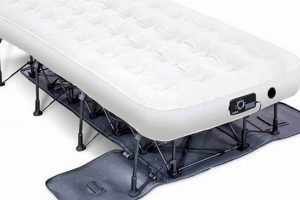
Identifying the source of escaping air is crucial to restoring an air mattress to its intended functionality. The process involves systematically examining the mattress’s surface and components to pinpoint the precise location where air is seeping out. This often requires a combination of visual inspection, auditory detection, and the application of soapy water to reveal escaping air bubbles.
A swift identification and repair of the breach can prevent further deflation and ensure a comfortable and supportive sleeping surface. Addressing leaks promptly extends the lifespan of the air mattress, preserving its value and minimizing the need for premature replacement. The ability to identify and resolve the issue contributes to a more sustainable approach to managing household goods and minimizing waste.
The following sections will provide a detailed guide on methods and techniques employed to efficiently locate air leaks within an air mattress. These instructions offer a practical framework to address the problem systematically.
Air Leak Detection Strategies
Employing methodical approaches is essential for efficiently identifying the source of air loss in an air mattress. These tips provide a structured method for locating leaks and ensuring effective repairs.
Tip 1: Visual Inspection: Begin by thoroughly examining the entire surface, focusing on seams, valves, and areas subject to frequent stress or folding. Look for visible punctures, tears, or areas of discoloration that might indicate compromised material.
Tip 2: Auditory Detection: Inflate the mattress fully in a quiet environment and listen carefully for hissing sounds. Pay close attention to valves, seams, and any areas that appeared suspect during the visual inspection. A focused listening approach can pinpoint larger leaks.
Tip 3: Soapy Water Application: Mix mild dish soap with water in a spray bottle. Apply the solution liberally to sections of the inflated mattress, particularly around seams and valves. Observe for the formation of bubbles, which indicate escaping air. Systematically cover the entire mattress surface.
Tip 4: Submersion Technique (for smaller mattresses): If feasible and safe, submerge sections of the inflated mattress in a tub or pool of water. Escaping air will manifest as bubbles rising from the leak’s location. This method is particularly effective for pinpointing small, difficult-to-detect leaks.
Tip 5: Valve Inspection: Carefully examine the valve for proper sealing. Ensure the valve is free of debris and that the seal is not damaged. A faulty valve can be a common source of air loss.
Tip 6: Pressure Testing: Inflate the mattress to its recommended pressure and mark the fill level with a marker. Monitor the pressure over several hours. A noticeable drop in pressure indicates a leak, even if the precise location is not immediately apparent; this confirms the need for further investigation.
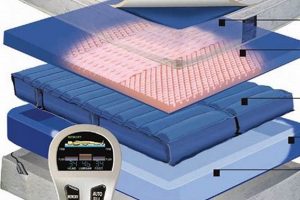
Tip 7: Interior Baffle Check: Internal baffles can develop leaks, leading to uneven deflation and localized sagging. If deflation is uneven, suspect a leak within the internal structure. These leaks can be more challenging to locate and repair.
These strategies offer a comprehensive approach to identifying and addressing air leaks. The systematic application of these techniques maximizes the likelihood of a successful repair.
With the leak successfully identified, focus shifts to effective repair techniques, ensuring a lasting solution and prolonged use of the air mattress.
1. Visual Inspection

Visual inspection constitutes the preliminary and fundamental step in determining the source of air leakage from an air mattress. The objective is to identify physical damage, anomalies, or structural weaknesses that may compromise the mattress’s airtight integrity. This process precedes more invasive or elaborate detection methods and can often reveal obvious causes of air loss, thus streamlining the overall diagnostic procedure. The effectiveness of subsequent techniques, such as soapy water application, is contingent upon the insights gained from this initial assessment.
The areas subjected to the most rigorous scrutiny during visual inspection include seams, valve assemblies, and surfaces prone to abrasion or puncture. Seams, where separate pieces of material are joined, represent inherent weak points and are common sites of failure. Valves, responsible for inflation and deflation, can become damaged or improperly sealed. Surface areas exposed to friction or sharp objects are susceptible to punctures or tears. Identifying such defects visually allows for targeted application of more specialized detection techniques.
For example, a visible tear along a seam instantly identifies the primary cause of deflation. Similarly, a distorted or cracked valve indicates a potential compromise in its sealing mechanism. By carefully conducting a visual assessment before proceeding with other detection methods, individuals can expedite the leak identification process, reduce the need for more complex procedures, and potentially implement a repair with minimal effort. The carefulness of visual inspection is of utmost importance.
2. Auditory detection.

Auditory detection serves as a crucial method in pinpointing air leaks, leveraging the human ear to identify escaping air. This technique is most effective in relatively quiet environments where subtle sounds can be discerned, allowing for the identification of compromised areas in an air mattress that may not be immediately visible.
- Acoustic Signature of Leaks
Air escaping from a leak generates a distinct hissing sound. The pitch and intensity of the sound can indicate the size of the leak. Larger leaks produce louder, lower-pitched sounds, while smaller leaks may generate higher-pitched, more subtle noises. Familiarity with these acoustic signatures enhances the effectiveness of auditory detection.
- Environmental Factors
The ambient noise level significantly impacts the efficacy of auditory detection. Conducting the test in a quiet room minimizes interference and allows for more accurate identification of leak sounds. Turning off appliances, closing windows, and reducing background noise are essential preparatory steps.
- Systematic Listening Approach
A structured approach to listening is vital. It involves systematically moving around the inflated mattress, focusing attention on potential leak areas such as seams, valves, and repaired sections. Pausing briefly at each area to listen intently increases the likelihood of detecting subtle air leaks.
- Combining with Visual Inspection
Auditory detection is most effective when used in conjunction with visual inspection. Areas identified as suspec
t during the visual check should receive heightened auditory scrutiny. This combined approach allows for a more comprehensive assessment and increases the chances of locating elusive leaks.
The successful application of auditory detection, therefore, hinges on understanding the nature of leak sounds, controlling environmental factors, employing a systematic listening strategy, and integrating this technique with visual inspection. These elements collectively enhance the ability to detect and locate air leaks efficiently.
3. Soapy water test.

The soapy water test is a pivotal technique utilized to identify air leaks in an air mattress. This method relies on the principle of surface tension reduction to visually manifest escaping air, enabling precise leak localization. Its simplicity and effectiveness make it a standard procedure in air mattress maintenance.
- Bubble Formation
The core mechanism of the soapy water test involves applying a mixture of soap and water to the surface of the inflated air mattress. The soap reduces the surface tension of the water, allowing it to form bubbles at the site of an air leak. The escaping air inflates these bubbles, creating a visual indication of the leak’s location. The size and frequency of bubble formation can provide an estimate of the leak’s severity.
- Application Technique
Effective application requires mixing a mild soap, such as dish soap, with water in a spray bottle or container. The solution should be applied liberally and evenly across the surface, focusing on seams, valves, and areas suspected of leaks. Care must be taken to avoid excessive saturation, which can obscure small leaks. A systematic approach, covering the mattress in sections, ensures comprehensive leak detection.
- Interpretation of Results
The presence of bubbles indicates an air leak at the point of formation. It is crucial to differentiate between genuine leak bubbles and those caused by residual soap film. Persistent bubble formation, especially when accompanied by a steady stream of air, confirms a leak. The absence of bubbles suggests the absence of a leak in that specific area, although further testing may be required in other sections.
- Advantages and Limitations
The soapy water test is non-destructive, inexpensive, and requires minimal equipment, making it accessible to most users. However, it may be less effective in windy conditions or with very small leaks, where bubble formation is inhibited. Additionally, the soapy solution can temporarily alter the surface properties of the mattress material. Despite these limitations, the soapy water test remains a reliable and widely used method for leak detection.
The success of a soapy water test in pinpointing air leaks is contingent on careful preparation, proper application, and accurate interpretation of results. When integrated with other leak detection techniques, such as visual inspection and auditory detection, the soapy water test significantly enhances the overall effectiveness of leak identification and repair efforts. It provides a direct visual indication of where air is escaping, facilitating targeted repairs and extending the lifespan of the air mattress.
4. Submersion (if possible).

The technique of submersion constitutes a highly effective method for determining the source of air leakage in an air mattress, contingent upon practical considerations. Its utility lies in the direct visualization of escaping air, manifesting as a stream of bubbles emanating from the leak site. When an air mattress, or a section thereof, can be safely and conveniently submerged in water, the identification process is often expedited and simplified compared to alternative methods. The cause-and-effect relationship is straightforward: a breach in the mattress’s airtight seal results in air displacing water, thereby creating visible bubbles.
Submersion’s importance as a component of air leak detection stems from its ability to reveal minute leaks that may be undetectable through visual or auditory means alone. Soapy water, while useful, can be affected by surface tension and evaporation, potentially obscuring very small leaks. Submersion eliminates these factors. For example, a slow leak in a seam, too subtle to hear or to produce noticeable bubbles with soapy water, will invariably generate a continuous stream of bubbles when submerged. Small inflatable pools or bathtubs often serve as appropriate submersion vessels. However, the feasibility depends on the size and construction of the mattress, as well as the availability of a suitable water source and space.
In summary, submersion offers a direct and reliable method for locating air leaks, particularly those that are difficult to detect by other means. The practical significance of understanding this technique lies in its potential to save time and resources by providing a clear visual indication of the leak’s precise location. While not always feasible due to size or logistical constraints, submersion remains a valuable tool in the comprehensive process of identifying and resolving air leaks in air mattresses.
5. Valve integrity.

The assessment of valve integrity represents a critical juncture in identifying air leaks. As the primary portal for inflation and deflation, the valve assembly is inherently susceptible to mechanical failure, material degradation, or inadequate sealing, all of which can manifest as a compromised airtight seal. A defective valve directly precipitates air leakage, rendering the mattress incapable of maintaining its intended pressure. Therefore, evaluating the valve’s condition is an indispensable step in a comprehensive leak detection process.
Valve failure can manifest in several forms. A cracked or deformed valve body may preclude a secure seal, allowing air to escape continuously. Debris or foreign matter lodged within the valve mechanism can obstruct proper closure, creating an unintended air passage. Similarly, a worn or damaged valve gasket, responsible for forming an airtight barrier, will inevitably result in leakage. If, for example, an air mattress is stored improperly with the valve exposed, the valve stem might be bent or the sealing surfaces damaged. This damage would directly lead to air loss, regardless of the condition of the mattress itself. Thus, even a visually pristine mattress may deflate rapidly due solely to valve malfunction.
In conclusion, evaluating valve integrity is not merely a supplemental step, but a fundamental requirement for accurate air leak identification. A failure to adequately assess the valve may lead to misdiagnosis and ineffective repair efforts, leaving the underlying problem unaddressed. By prioritizing valve inspection and maintenance, individuals can significantly enhance the likelihood of successfully identifying and resolving air leaks, thereby prolonging the lifespan of the air mattress and ensuring consistent performance.
Frequently Asked Questions
This section addresses common inquiries regarding locating air leaks in an air mattress, providing clear and concise answers to assist in effective troubleshooting.
Question 1: How does environmental temperature affect the identification of an air leak?
Temperature fluctuations influence the pressure within the air mattress. Cooler temperatures cause air contraction, potentially masking small leaks. Warmer temperatures expand the air, potentially exaggerating the perceived leak rate. Therefore, conducting leak detection in a stable, moderate environment is recommended.
Question 2: Can the age of an air mattress impact its susceptibility to leaks?
Material degradation occurs over time. The elasticity of the mattress material diminishes, rendering it more prone to punctures and seam failures. Older mattresses, therefore, are inherently more vulnerable to developing leaks.
Question 3: What is the most reliable method for detecting extremely small leaks?
While soapy water and submersion are effective, for pinpointing minute leaks, consider using an ultrasonic leak detector. This device identifies the high-frequency sounds emitted by escaping air, even when the leak is imperceptible to human hearing.
Question 4: Is it possible for leaks to occur within the internal baffles of an air mattress?
Yes, internal baffle structures can develop leaks, leading to uneven deflation or localized bulging. Identifying these leaks is often challenging as they may not be readily apparent through external inspection alone. Pressure testing and careful observation of deflation patterns can provide clues.
Question 5: What role does proper storage play in preventing air leaks?
Correct storage practices minimize stress on the mattress material. Avoid folding the mattress along the same creases repeatedly, and store it in a cool, dry place away from sharp objects or extreme temperatures. Proper storage significantly reduces the likelihood of developing leaks.
Question 6: How frequently should an air mattress be inspected for leaks, even if it is not in regular use?
Periodic inspection, even for infrequently used mattresses, is advisable. At a minimum, an annual inspection is recommended to identify any developing leaks before they become significant problems. This proactive approach extends the lifespan of the mattress.
Effective leak detection hinges on a systematic approach, consideration of environmental factors, and an understanding of material degradation. Employing a combination of techniques maximizes the probability of successfully locating and repairing air leaks.
Having identified the source of air leakage, the next phase involves implementing appropriate repair strategies to restore the air mattress to its full functionality.
Conclusion
The preceding exploration of air leak detection has presented a systematic and multifaceted approach to identifying compromised areas within an air mattress. The techniques outlined, ranging from visual inspection and auditory analysis to the application of soapy water and, where feasible, submersion, constitute a comprehensive methodology for locating leaks of varying magnitudes. Emphasis has been placed on the importance of valve integrity, as well as the influence of environmental factors and material degradation on the overall leak detection process.
The successful application of these principles serves not only to restore the immediate functionality of the air mattress but also to extend its lifespan and reduce the need for premature replacement. Through meticulous application of the methods detailed herein, one can efficiently locate and resolve the breach, promoting a more sustainable practice.