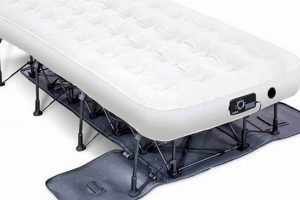
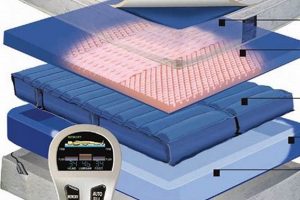
An air mattress featuring an integrated inflation mechanism provides a self-contained solution for quickly establishing a comfortable sleeping surface. These mattresses incorporate an electric pump directly within their structure, streamlining the setup process. For example, a guest arriving late at night can rapidly prepare a bed without needing external devices or manual labor.
The primary advantage of this design is convenience. Elimination of a separate pump reduces the number of components to manage, minimizing storage requirements and potential for misplacement. Historically, air mattresses required manual or external pumps, which were often cumbersome and time-consuming. The integrated system represents a significant improvement in user experience, enabling faster and easier inflation and deflation.
The subsequent sections detail the operational procedures for effectively using the built-in pump, including safety precautions, troubleshooting common issues, and maintenance recommendations to extend the lifespan of the mattress and its inflation system. These guidelines facilitate optimal performance and ensure long-term usability.
Essential Guidelines for Air Mattress Inflation
The following guidelines offer practical advice for the correct operation and maintenance of an air mattress featuring an integrated inflation system, designed to maximize product lifespan and performance.
Tip 1: Power Source Verification: Prior to initiating the inflation process, ensure that the power source meets the specified voltage and current requirements of the integrated pump. Employing an incompatible power supply can result in damage to the pump motor or electrical components.
Tip 2: Surface Preparation: Position the air mattress on a clean, level surface free from sharp objects or debris. This precaution mitigates the risk of punctures or abrasions to the mattress material during inflation and subsequent use.
Tip 3: Valve Integrity Check: Before engaging the integrated pump, confirm that all inflation and deflation valves are securely closed. Loose valves can cause air leakage, prolonging the inflation time and potentially straining the pump motor.
Tip 4: Controlled Inflation Duration: Adhere to the manufacturer’s recommended inflation time. Over-inflation can compromise the mattress seams and reduce its overall durability. Monitor the mattress firmness during the inflation process and cease inflation upon reaching the desired level.
Tip 5: Post-Inflation Inspection: Upon completion of inflation, thoroughly inspect the mattress for any signs of leaks or imperfections. Address any identified issues promptly to prevent further air loss during use.
Tip 6: Deflation Procedures: Consult the manufacturer’s instructions for proper deflation techniques. Typically, this involves opening the designated deflation valve and allowing the integrated pump to exhaust the air. Avoid manually compressing the mattress, as this can damage internal components.
Adherence to these guidelines promotes optimal performance and longevity of the air mattress. Prioritizing safety and carefully following the instructions ensures a positive user experience.
The following section will cover troubleshooting common issues encountered during inflation and deflation, offering potential solutions and preventative measures.
1. Power Source Compatibility

Power source compatibility represents a foundational element of the operational process for air mattresses with integrated pumps. The built-in pump, being electrically driven, requires a specific voltage and amperage to function correctly. Incompatibility between the power source and the pump’s specifications leads to a range of adverse outcomes, from pump malfunction to complete failure. For instance, supplying a 220V pump with 110V power results in insufficient power delivery, hindering the inflation process or preventing it entirely. Conversely, exceeding the rated voltage damages the motor windings and electronic control circuits.
The importance of confirming power source compatibility extends beyond preventing immediate damage. Repeated use with an incorrect power supply causes cumulative stress on the pump’s components, shortening its lifespan and degrading its performance over time. This issue is particularly relevant in travel scenarios where voltage standards differ across regions. Using an improper adapter or relying on an unknown power source can unknowingly expose the pump to damaging electrical conditions, undermining the air mattress’s reliability when it is most needed.
Therefore, understanding and adhering to the manufacturer’s specified power requirements is paramount. Verifying voltage and amperage ratings on both the mattress and the power outlet, and utilizing appropriate voltage converters when necessary, constitutes a fundamental step in ensuring the successful and safe activation of the integrated pump. Ignoring this aspect risks compromising the entire inflation process and potentially rendering the air mattress unusable.
2. Valve Integrity Inspection

Valve integrity inspection is a critical prerequisite for successful air mattress inflation when employing a built-in pump. The operational efficiency and effectiveness of the integrated inflation system depend directly on the proper functioning of the inflation and deflation valves. Compromised valve integrity undermines the mattress’s ability to maintain air pressure, negating the benefits of the integrated pump.
- Airtight Seal Verification
The primary function of both inflation and deflation valves is to create an airtight seal, preventing air leakage during and after the inflation process. Inspection involves ensuring that the valve components are free from cracks, tears, or debris that could compromise this seal. For example, a small particle lodged within the valve seat can create a pathway for air to escape, leading to gradual deflation. Verifying an airtight seal is crucial before activating the built-in pump.
- Valve Closure Mechanism Functionality
Many air mattresses utilize valves with integrated closure mechanisms, such as screw caps or locking levers, to maintain the airtight seal. Inspection includes confirming that these mechanisms operate correctly and securely. A stripped screw thread or a broken locking lever prevents the valve from closing completely, resulting in continuous air leakage. Checking the functionality of these closure mechanisms is a key step in the pre-inflation process.
- Valve Body Integrity
The valve body itself, typically constructed from plastic or rubber, can be susceptible to damage over time. Exposure to extreme temperatures, harsh chemica
ls, or physical stress can lead to cracks or deformation of the valve body. Inspection involves visually assessing the valve body for any signs of structural damage. A compromised valve body renders the entire valve assembly ineffective, necessitating repair or replacement. - Compatibility with Pump Nozzle
While most integrated pumps are designed with nozzles compatible with the mattress’s valves, discrepancies can occur due to manufacturing variations or valve replacements. Inspection includes ensuring that the pump nozzle fits securely and snugly into the valve opening, allowing for efficient air transfer. A loose or incompatible nozzle leads to air leakage during inflation, prolonging the process and potentially overheating the pump.
The preceding aspects highlight the direct correlation between diligent valve integrity inspection and the successful utilization of an air mattress with a built-in pump. Addressing any valve-related issues prior to initiating inflation ensures optimal performance, extends the mattress’s lifespan, and prevents unnecessary strain on the integrated pump system. Thorough inspection protocols are therefore essential for maximizing the convenience and reliability of the air mattress.
3. Surface preparation importance

The significance of surface preparation prior to inflation of an air mattress equipped with an integrated pump cannot be overstated. This preparatory step directly impacts the structural integrity and longevity of the mattress and, consequently, the effective utilization of the built-in pump mechanism. Failure to adequately prepare the surface upon which the mattress is to be inflated initiates a chain of potential negative consequences, ultimately affecting the performance and lifespan of the product. For example, inflating an air mattress on a surface strewn with small, sharp objects, such as pebbles or small toys, poses a high risk of puncture. Such punctures, even if initially small, progressively enlarge under the pressure of the inflated mattress, resulting in air leakage and necessitating repair or replacement. This outcome directly undermines the functionality of the built-in pump, rendering its convenience and efficiency null.
The detrimental effects of inadequate surface preparation extend beyond immediate punctures. Inflating an air mattress on an uneven surface creates localized stress points. These stress points concentrate pressure on specific areas of the mattress material, accelerating wear and tear. Over time, this uneven distribution of stress leads to material fatigue and premature failure of the mattress seams or internal baffles. The integrated pump, while designed to inflate the mattress to a consistent pressure, cannot compensate for the underlying structural weaknesses induced by an improperly prepared surface. Furthermore, a non-level surface compromises sleeping comfort and stability, negating the intended purpose of the air mattress.
In conclusion, the act of surface preparation is not merely a perfunctory step but an essential component of responsible air mattress usage. Adequate preparation, entailing the removal of debris and the provision of a level and smooth surface, directly mitigates the risk of damage, enhances the mattress’s lifespan, and ensures the sustained effectiveness of the integrated pump. Neglecting this preparatory measure introduces unnecessary risks and compromises the overall utility of the air mattress system. Investing time in surface preparation represents a proactive approach to preserving the integrity and performance of the product.
4. Inflation duration control

Inflation duration control is a critical parameter in the effective operation of air mattresses equipped with integrated pumps. Managing the length of the inflation cycle directly impacts the mattress’s structural integrity, comfort level, and overall longevity. Understanding the factors influencing optimal inflation duration is essential for users to maximize the benefits of these self-inflating systems.
- Preventing Over-Inflation
Exceeding the recommended inflation duration can lead to over-inflation, a condition where the internal pressure surpasses the mattress’s design limits. This situation increases the risk of seam rupture, baffle damage, and material stretching. Over-inflation not only compromises the mattress’s structural integrity but also affects its comfort, rendering it excessively firm and uncomfortable for sleep. Adherence to the manufacturer’s specified inflation duration is crucial for preventing over-inflation and its associated consequences.
- Ensuring Adequate Inflation
Conversely, insufficient inflation duration results in an inadequately inflated mattress, characterized by a lack of firmness and support. Such a mattress fails to provide proper spinal alignment and contributes to discomfort and potential back pain. The integrated pump is designed to achieve a specific pressure level within a defined timeframe. Interrupting the inflation cycle prematurely compromises the mattress’s intended performance characteristics, negating its ergonomic benefits. Proper monitoring and adherence to the recommended inflation period are vital for ensuring adequate inflation.
- Pump Motor Protection
The integrated pump motor is engineered to operate within a specific duty cycle. Prolonged operation beyond the recommended inflation duration can cause the motor to overheat, potentially leading to premature failure. Overheating is particularly problematic in situations where the mattress has minor leaks, requiring extended pump operation to maintain pressure. Monitoring inflation duration and addressing any underlying leakage issues are essential for protecting the pump motor and extending its lifespan. Regularly inspecting the mattress surface helps detect any leakage.
- Material Stress Reduction
Controlling the inflation duration minimizes the amount of stress placed on the mattress material. Rapid inflation and deflation cycles, often associated with exceeding or falling short of the recommended duration, contribute to material fatigue and accelerate wear and tear. Maintaining a controlled and consistent inflation duration reduces the strain on the seams, baffles, and surface fabric, thereby prolonging the mattress’s overall lifespan. Gradual inflation and deflation cycles mitigate excessive stress on the mattress material, enhancing its durability.
The coordinated management of these elements preventing over-inflation, ensuring adequate inflation, protecting the pump motor, and reducing material stress emphasizes the integral role of inflation duration control in the overall operation of an air mattress with a built-in pump. By carefully managing the inflation cycle, users can maximize the comfort, longevity, and reliability of their air mattress system.
5. Post-inflation leakage check

The “post-inflation leakage check” forms an indispensable component of the broader procedure, “how to inflate air mattress with built in pump.” The successful completion of the inflation process does not guarantee t
he absence of leaks. Small perforations, faulty valve seals, or compromised seams may remain undetected during inflation but manifest as gradual air loss subsequently. A failure to conduct a thorough leakage check after inflation negates the intended purpose of the built-in pump and compromises the user’s comfort and the mattress’s structural integrity. For instance, a guest bed prepared with an air mattress may deflate overnight due to an unnoticed leak, rendering it unusable and defeating the convenience afforded by the integrated pump system.
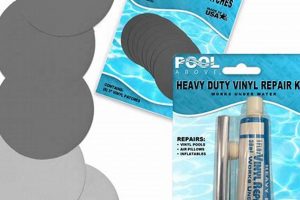
Practical applications of the post-inflation leakage check involve visual and auditory assessments. The mattress’s surface is visually inspected for irregularities or signs of stress, particularly along seams and around valves. Auditory examination entails listening for the subtle hissing sound indicative of escaping air. Soapy water can also be applied to suspect areas; the formation of bubbles confirms the presence of a leak. Addressing these leaks promptly is crucial. Small perforations are often repairable with patching kits, while valve issues might require tightening or replacement. Ignoring these issues will necessitate frequent reinflation using the integrated pump, thereby increasing its wear and tear and shortening its lifespan.
In summary, the post-inflation leakage check is not an optional step but a necessary safeguard. It ensures the effective utilization of the “how to inflate air mattress with built in pump” procedure, preserving user comfort, prolonging the mattress’s lifespan, and preventing unnecessary strain on the integrated pump mechanism. Overlooking this check introduces the risk of sleep disruption and product failure, undermining the convenience and reliability that an air mattress with a built-in pump is designed to provide. This practice is therefore integral to responsible air mattress ownership and operation.
6. Proper deflation technique
Proper deflation technique is intrinsically linked to the broader operational context of “how to inflate air mattress with built in pump,” acting as the concluding phase of a cyclical process. While the inflation stage receives initial focus, the deflation method directly influences the potential for subsequent successful inflations. Utilizing incorrect deflation practices can inflict long-term damage on the mattress material, internal pump components, and valve mechanisms, thus undermining the overall efficiency and lifespan of the integrated system. For example, forcefully compressing the mattress during deflation may cause stress fractures in the internal baffles or damage the pump’s exhaust port, leading to uneven inflation or complete pump failure in future use.
The integration of a built-in pump inherently facilitates controlled deflation, usually through a dedicated exhaust setting. This controlled process allows for a gradual and even removal of air, minimizing stress on the mattress seams and internal structure. Conversely, manually opening the valve and applying external pressure leads to uneven deflation, potentially creating localized stress points and accelerating material fatigue. Moreover, failing to fully deflate the mattress before storage results in increased volume and difficulty in folding and storing, leading to potential abrasion and puncture risks during handling. Therefore, proper deflation technique is not merely about removing air but about preserving the structural integrity of the mattress for future use.
In essence, proper deflation technique is an essential complement to the “how to inflate air mattress with built in pump” methodology. By adhering to manufacturer-recommended procedures, including utilizing the built-in pump’s exhaust function and ensuring complete deflation before storage, users can mitigate potential damage, extend the mattress’s lifespan, and ensure the ongoing reliable operation of the integrated inflation system. This holistic approach guarantees that the convenience and comfort offered by the air mattress with a built-in pump are sustained over time, maximizing the value of the product.
7. Storage environment optimization

Storage environment optimization constitutes a crucial, often overlooked, element directly influencing the functionality described by “how to inflate air mattress with built in pump.” The conditions under which an air mattress is stored exert a significant effect on the material’s integrity, valve functionality, and, consequently, the reliable operation of the integrated pump. An inadequate storage environment precipitates material degradation, valve distortion, and pump motor inefficiency, undermining the entire inflation process. For example, storing an air mattress in a damp basement fosters mold growth, which weakens the material and compromises valve seals, leading to air leakage. This necessitates more frequent inflation attempts, placing undue stress on the integrated pump and shortening its lifespan.
Conversely, optimizing the storage environment mitigates these risks. Storing the air mattress in a climate-controlled space, away from direct sunlight and extreme temperatures, prevents material cracking and valve deformation. Properly folding the deflated mattress according to manufacturer instructions before storage reduces stress on seams and internal baffles. Furthermore, protecting the mattress from pests and sharp objects prevents punctures and tears. These measures ensure that the mattress material remains pliable and that the valves maintain their airtight seal, facilitating efficient and trouble-free inflation when the built-in pump is activated. Regular inspection of the stored mattress further reinforces the benefit, enabling prompt detection and resolution of any developing issues.
In conclusion, storage environment optimization is not merely a matter of convenience; it represents a critical prerequisite for sustained functionality within the context of “how to inflate air mattress with built in pump.” Proper storage practices ensure material integrity, valve reliability, and efficient pump operation, maximizing the lifespan and utility of the air mattress. Neglecting this aspect increases the likelihood of inflation failures and premature product degradation, undermining the value proposition of an air mattress with an integrated inflation system.
Frequently Asked Questions
The following questions address common inquiries and concerns regarding the proper use and maintenance of air mattresses featuring a built-in pump system.
Question 1: What is the correct procedure for initially activating an air mattress with an integrated pump?
Prior to first use, ensure the mattress is placed on a clear, level surface, free from any sharp objects. Connect the power cord to a compatible outlet, verifying voltage requirements. Engage the inflation switch or dial, observing the inflation process. Cease inflation once the desired firmness is achieved, avoiding over-inflation.
Question 2: What are potential causes if the built-in pump fails to inflate the air mattress?
Possible causes include power source issues (incorrect voltage, tripped circuit breaker), pump motor malfunction, valve leaks, or obstructions in the air intake. Rule out power issues first, then inspect valves for proper closure. If the pump emits unusual noises or fails to operate, professional repair may be necessary.
Question 3: Is there a r
isk of over-inflating the air mattress using the integrated pump?
Yes, over-inflation poses a significant risk, potentially damaging seams and internal baffles. Adhere to the manufacturer’s recommended inflation time and monitor the mattress firmness during the process. Discontinue inflation immediately upon reaching the desired level of firmness.
Question 4: How does temperature affect the inflation level of an air mattress with an integrated pump?
Temperature fluctuations influence air pressure. Colder temperatures cause air contraction, leading to a perceived loss of firmness. Warmer temperatures cause air expansion, increasing firmness. Adjust inflation levels accordingly to maintain desired comfort.
Question 5: What is the recommended method for deflating the air mattress utilizing the integrated pump?
Locate the designated deflation valve. If the pump offers a deflation setting, engage it to expedite air removal. Once the majority of air is expelled, manually compress the mattress to facilitate complete deflation. Store the deflated mattress in a dry, temperature-controlled environment.
Question 6: How should leaks be addressed in an air mattress with a built-in pump?
Locate the leak source by listening for hissing sounds or applying soapy water to the mattress surface. Once identified, clean and dry the area thoroughly. Apply a patch kit according to manufacturer instructions. For valve-related leaks, ensure proper sealing or consider valve replacement.
Proper usage and regular maintenance contribute significantly to the lifespan and reliable performance of an air mattress with an integrated pump.
The subsequent section will address troubleshooting common issues encountered with air mattresses.
Concluding Remarks
The preceding analysis has elucidated essential aspects of “how to inflate air mattress with built in pump,” encompassing operational procedures, maintenance protocols, and troubleshooting strategies. The emphasis has been placed on optimizing user experience, maximizing product lifespan, and ensuring safe and effective utilization of the integrated inflation system. Critical areas covered include power source compatibility, valve integrity inspection, surface preparation, controlled inflation, leak detection, proper deflation techniques, and storage environment management.
The information presented provides a foundation for responsible air mattress ownership. Adherence to these guidelines is vital for achieving consistent performance and long-term value from this product. Continued diligence in maintenance and informed operational practices will ensure the reliable functionality of air mattresses equipped with integrated pumps, enabling users to fully realize the intended convenience and comfort.