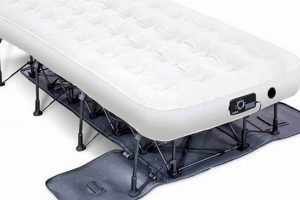
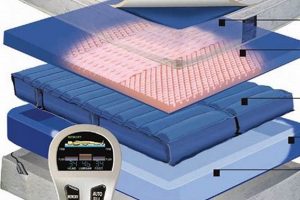
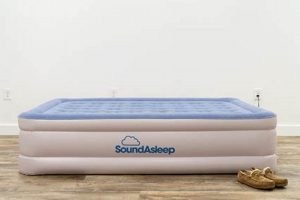
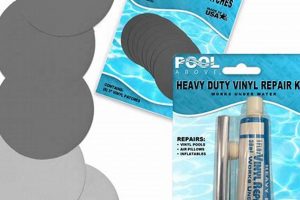
These sets typically include adhesive patches, glue, and occasionally specialized tools designed to seal punctures and tears in inflatable mattresses. Their purpose is to restore the airtight integrity of these mattresses, allowing for continued use after damage occurs. A common example is a collection of circular or rectangular patches, often made of vinyl or rubber, accompanied by a small tube of fast-drying adhesive.
The value of these collections lies in their ability to extend the lifespan of inflatable sleeping surfaces, saving users the cost of replacement. Historically, damage to an air mattress often meant its disposal. The advent of readily available solutions provided a convenient and cost-effective alternative. Furthermore, the use of these repair solutions reduces waste and contributes to a more sustainable approach to product longevity.
The following discussion will detail the components commonly found in these solutions, explore the methods used for effective application, and provide guidance on selecting the appropriate solution for specific types of mattress damage.
Air Mattress Repair Solutions
Effective utilization of patching materials requires careful attention to detail. Adherence to these guidelines will maximize the likelihood of a successful and durable repair.
Tip 1: Clean the Affected Area: Before application, thoroughly clean the area surrounding the puncture with rubbing alcohol. This removes dirt, oils, and other contaminants that could impede adhesion.
Tip 2: Deflate the Mattress: Completely deflate the mattress before beginning the repair process. This ensures proper contact between the patch and the mattress surface and relieves any pressure on the damaged area.
Tip 3: Apply Adhesive Sparingly: Use the adhesive sparingly, following the instructions provided with the specific patching material. Overapplication can weaken the bond and create a messy finish.
Tip 4: Allow Sufficient Drying Time: Allow the adhesive sufficient time to dry and cure before reinflating the mattress. Refer to the instructions for the recommended drying time, which may vary depending on the type of adhesive used.
Tip 5: Use a Roller or Smooth Object: After applying the patch, use a roller or other smooth, hard object to apply even pressure across the entire surface of the patch. This helps to ensure a strong and consistent bond.
Tip 6: Inspect the Repair: Once the adhesive has cured, carefully inspect the repair for any signs of air leakage. Apply additional adhesive or a second patch if necessary.
Tip 7: Consider Interior Patching: For larger tears, consider using a patch on both the interior and exterior of the mattress. This provides added reinforcement and reduces the risk of future failures.
Proper application, combined with selecting the correct solutions, offers an effective and long-lasting remedy for punctures and tears, significantly extending the life of the air mattress.
The concluding section will cover the proper storage of inflatable beds and preventative measures to minimize future damage.
1. Patch Material
Patch material is a critical element within solutions designed to mend inflatable sleeping surfaces, directly impacting repair durability and effectiveness. The composition of the patching material must be compatible with the mattress itself. Vinyl, being the most common material for air mattresses, typically necessitates the use of vinyl patches. Utilizing incompatible materials, such as cloth or certain plastics, can lead to inadequate adhesion and subsequent air leakage. The type of patch determines the solution’s capability to withstand the continuous pressure exerted upon the mattress during use. For instance, a patch made of thin, low-quality vinyl is likely to fail more rapidly than a thicker, reinforced vinyl patch, regardless of the adhesive used.
The success of any mend depends heavily on the physical properties of the patching material. Flexibility, tensile strength, and resistance to tearing are all essential characteristics. A patch that is too rigid may crack or detach at the edges, while one that lacks sufficient strength may tear under pressure, rendering the repair ineffective. Manufacturers often include a variety of patch sizes and shapes in these sets to accommodate different types of damage. Smaller, circular patches are typically suitable for pinhole punctures, while larger, rectangular patches are better suited for longer tears. Selecting the appropriate size and shape is crucial for ensuring full coverage of the damaged area and preventing future leakage. A real-world example can be seen in patching inflatable pools, which operate on the same principles; inappropriate patches fail rapidly due to continuous water pressure and flexing of the material.
In summary, the selection of an appropriate patch material is fundamental for achieving a successful and long-lasting mend. Compatibility, strength, and flexibility are paramount considerations. Failure to acknowledge these factors often leads to premature failure, necessitating further repair attempts or even complete replacement of the inflatable. Therefore, close examination of patch material specifications and characteristics is crucial when choosing a solution, linking directly to the efficacy and value of the overall solution.
2. Adhesive Strength

Adhesive strength represents a critical factor in the efficacy of any air mattress repair solution. The adhesives ability to create and maintain a bond between the patch and the mattress material directly dictates the long-term success of the repair. Inadequate adhesive strength results in air leaks, rendering the repair ineffective and necessitating further intervention.
- Bonding Mechanism
The adhesives bonding mechanism involves chemical interactions between the adhesive compound and the surfaces of both the patch and the mattress. A robust bond requires the adhesive to properly wet both surfaces, allowing for intimate contact and the formation of strong intermolecular forces. Factors such as surface contamination, improper adhesive application, or incompatible materials can disrupt this process, leading to a weak or incomplete bond.
- Shear Strength
Shear strength refers to the adhesives ability to resist forces applied parallel to the bonded surface. This is particularly important in air mattresses, where the internal pressure exerts significant stress on the patch-to-mattress interface. An adhesive with low shear strength will be prone to peeling or slippage, especially around the edges of the patch, ultimately leading to air leakage.
- Tensile Strength
Tensile strength measures the adhesives resistance to forces pulling directly away from the bonded surface. In the context of air mattress repair, te
nsile strength is relevant when considering the potential for punctures to enlarge or tears to propagate under pressure. An adhesive with high tensile strength helps to distribute stress evenly across the patch, preventing it from detaching or tearing away from the mattress. - Environmental Resistance
Environmental factors such as temperature, humidity, and exposure to ultraviolet radiation can all affect adhesive strength over time. Adhesives that are not formulated to withstand these conditions may become brittle, lose their bonding properties, or degrade completely, leading to repair failure. A high-quality solution will utilize adhesives designed to maintain their strength and flexibility even under challenging environmental conditions.
These factors collectively influence the adhesive strength within patching applications, highlighting its significance in establishing durable and effective mends. When selecting or using air mattress solutions, careful consideration of these aspects contributes significantly to the lasting integrity and usability of the repaired mattress.
3. Surface Preparation

Surface preparation is a foundational element in the successful application of air mattress solutions. The condition of the surface to which the patch is applied directly influences the adhesive bond, and thus, the longevity of the repair. Failure to properly prepare the surface negates the potential benefits of high-quality patches and adhesives.
- Cleaning and Degreasing
Contaminants such as dirt, oils, and residues from cleaning products impede proper adhesion. Cleaning with a suitable solvent, such as isopropyl alcohol, removes these barriers, allowing the adhesive to directly contact the mattress material. Example: Residual body oils left on the mattress can prevent the adhesive from forming a secure bond, leading to premature patch failure.
- Drying
Moisture present on the mattress surface interferes with the adhesive’s ability to bond. Thorough drying after cleaning is essential to ensure a strong and lasting connection. Example: Attempting to apply a patch to a damp surface results in a weakened bond that is susceptible to air leakage.
- Texturing (if applicable)
In some cases, particularly with certain mattress materials, lightly abrading the surface with fine-grit sandpaper can improve adhesion by creating a slightly rougher texture. This provides more surface area for the adhesive to grip. Example: Certain types of rubberized air mattresses may benefit from light abrasion prior to patch application.
- Assessing Damage Extent
Prior to patching, thorough inspection of the damaged area is crucial. This informs the appropriate patch size and reveals potential complications, such as material degradation, that might impact repair effectiveness. Example: Recognizing that the material surrounding the puncture is brittle indicates a larger patch and potentially interior reinforcement are required.
The significance of proper surface preparation cannot be overstated in the context of inflatable mattress mend applications. Each step outlined ensures optimal adhesion and prolongs the functionality of the repaired area. Attention to detail in these preliminary stages ultimately determines the success and durability of the repair, safeguarding the investment in the solutions themselves.
4. Application Technique

The successful utilization of solutions hinges significantly on the application technique employed. Regardless of the quality of the patching materials, improper application can lead to premature failure. A methodical approach is crucial to ensure a durable and airtight mend. The first step involves meticulous cleaning of the area surrounding the puncture with an appropriate solvent, typically isopropyl alcohol, to remove dirt, oils, and other contaminants that can impede adhesion. Failure to thoroughly clean the area is a common cause of patch failure. For example, residual body oils left on the mattress surface prevent the adhesive from forming a secure bond.
Following cleaning, the adhesive must be applied evenly and sparingly. Overapplication of adhesive can weaken the bond and create a messy finish, while underapplication results in insufficient adhesion. Allowing adequate drying time, as specified by the adhesive manufacturer, is paramount. Premature reinflation before the adhesive has fully cured compromises the bond strength and can cause the patch to detach. Once the adhesive has cured, applying even pressure across the entire surface of the patch using a roller or smooth object helps to ensure a strong and consistent bond. In cases of larger tears, the application of a patch to both the interior and exterior of the mattress provides added reinforcement and reduces the risk of future failures.
In summary, the application technique is an indispensable component of the repair process. Adherence to proper procedures, including thorough cleaning, precise adhesive application, adequate drying time, and uniform pressure, directly impacts the longevity and effectiveness of the repair. Ignoring these factors diminishes the value of even the highest quality patching materials and significantly increases the likelihood of needing to repeat the repair process. This underlines the practical significance of understanding and implementing correct application techniques.
5. Drying Time

Drying time is a crucial, often underestimated, aspect of utilizing air mattress solutions. It refers to the duration required for the adhesive within the patching material to fully cure and establish a robust bond between the patch and the air mattress surface. Proper consideration of drying time significantly influences the success and longevity of the repair.
- Adhesive Curing Process
Adhesives undergo a chemical process during drying, transitioning from a liquid or semi-liquid state to a solid. This process involves the evaporation of solvents and the cross-linking of polymers within the adhesive. Insufficient drying time interrupts this process, resulting in a weaker, less durable bond. A real-world example is premature inflation of the air mattress, which introduces stress to the uncured adhesive, disrupting the cross-linking and compromising the repair.
- Environmental Factors
Environmental conditions such as temperature and humidity significantly affect drying time. Higher temperatures generally accelerate the curing process, while high humidity can slow it down. The adhesive manufacturer’s instructions provide guidelines for optimal drying conditions. Failure to account for these environmental factors can lead to under-cured or improperly cured adhesives. For example, repairing an air mattress in a cold, damp environment may require significantly longer drying time than in a warm, dry one.
- Impact on Bond Strength
The degree to which the adhesive is allowed to dry directly impacts the final bond strength. A fully cured adhesive exhibits optimal shear and tensile strength, enabling the patch to withstand the internal pressure of the
inflated mattress. Conversely, an under-cured adhesive is more susceptible to peeling, slippage, and ultimately, air leakage. This can lead to a recurring cycle of repairs or the eventual abandonment of the air mattress. - Manufacturer Specifications
Different adhesives require varying drying times, which are typically specified by the manufacturer. These specifications should be strictly adhered to for optimal results. Ignoring these guidelines can lead to suboptimal repair outcomes. For instance, some adhesives may require only a few hours to dry, while others necessitate 24 hours or more. Consulting the instructions included with the solution is therefore imperative.
In summary, drying time is an indispensable component of air mattress mend efficacy. Overlooking or disregarding the specified drying period compromises the adhesive’s capacity to establish a strong, resilient bond, diminishing the solution’s effectiveness and potentially leading to premature failure. Therefore, patient adherence to recommended drying times is crucial for realizing the full potential of air mattress solutions and ensuring a lasting repair.
6. Durability Assessment
Durability assessment, in the context of air mattress repair solutions, is the systematic evaluation of a repair’s ability to withstand prolonged use and maintain its integrity over time. This evaluation is crucial because a seemingly successful repair may degrade rapidly under the constant pressure and stress inherent in air mattress use. The assessment process often involves inflating the repaired mattress to its maximum capacity and monitoring for air leakage over an extended period, typically 24 to 48 hours. A decrease in pressure indicates a compromised repair, necessitating further intervention. For instance, if a patch appears initially secure but begins to lift or bubble within a day, the repair’s long-term viability is questionable.
The importance of durability assessment stems from the practical inconveniences and potential disruptions caused by a failing repair. A sudden deflation during sleep results in discomfort and sleep disturbance. Moreover, repeated repairs, without a clear understanding of the factors contributing to failure, can become time-consuming and costly. Understanding these factors often involves analyzing the initial cause of the damage, the quality of the materials used in the patching solution, and the technique employed during application. An assessment should also account for environmental conditions, such as temperature fluctuations, which can impact the flexibility and adhesion of the repair materials. Examples of relevant real-life scenarios include air mattresses used in camping environments, where exposure to temperature extremes can accelerate the degradation of repairs, and air mattresses used frequently for guests, where the cumulative stress of repeated use tests the repair’s endurance.
In conclusion, durability assessment is not merely an optional step but an integral component of effective air mattress repair. It serves to confirm the long-term viability of the repair, minimize disruptions, and ensure that the repaired mattress provides reliable service. The challenges inherent in this process, such as accounting for a wide range of environmental and usage conditions, underscore the need for thoroughness and attention to detail. By recognizing the practical significance of durability assessment, users can avoid the pitfalls of superficial repairs and maximize the lifespan of their air mattresses.
Frequently Asked Questions
The following addresses common inquiries regarding the use, selection, and effectiveness of inflatable mattress repair solutions. Understanding these points contributes to successful and long-lasting repairs.
Question 1: What types of damage can be addressed with inflatable mattress mend applications?
These are designed primarily for small punctures and tears. Larger tears, seam separations, or valve failures may necessitate professional repair or mattress replacement.
Question 2: How can one determine the appropriate solution for a specific type of damage?
The solution should be selected based on the mattress material and the size of the damage. Vinyl mattresses require vinyl patches. Larger tears require larger patches or specialized reinforcement techniques.
Question 3: Is surface preparation truly necessary for patch adhesion?
Yes, surface preparation is essential. Cleaning the area with isopropyl alcohol removes contaminants that impede adhesion, ensuring a stronger and more durable bond.
Question 4: What are the consequences of shortening the recommended adhesive drying time?
Shortening drying time compromises the adhesive bond, leading to premature patch failure and air leakage. Adhering to the manufacturer’s drying time recommendation is critical for a lasting repair.
Question 5: How can the long-term durability of a repair be assessed?
Durability is assessed by inflating the mattress to its maximum capacity after repair and monitoring for air pressure loss over a 24-48 hour period. Significant pressure loss indicates a failing repair.
Question 6: Are there preventative measures to minimize the need for these solutions?
Preventative measures include avoiding sharp objects, using a protective mattress pad, and storing the mattress properly when not in use to prevent punctures and tears.
Proper application and understanding of these aspects ensure effective and extended use of inflatable mattress mend applications.
The following section explores optimal storage practices for prolonging the life of inflatable beds and diminishing the incidence of future damages.
Conclusion
This exploration has detailed the vital role of air mattress repair kits in maintaining the functionality and extending the lifespan of inflatable beds. The discussion encompassed material selection, adhesive properties, surface preparation, application techniques, and the importance of adequate drying time. The necessity of durability assessment was emphasized, alongside frequently asked questions addressing common concerns.
Effective utilization of air mattress repair kits not only represents a cost-saving measure but also contributes to responsible consumption by minimizing waste. The informed application of these kits ensures continued comfort and utility from inflatable mattresses, while preventative measures further reduce the need for repairs, promoting long-term product value.