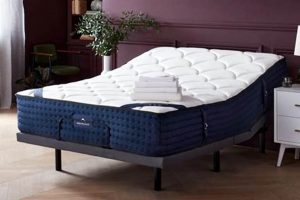
The lifespan of a sleep surface is a crucial consideration for maintaining sleep hygiene and overall well-being. This refers to the duration one can expect a sleeping platform to provide adequate support and comfort before its performance diminishes. For example, a high-quality innerspring may offer suitable performance for roughly seven to ten years, while a memory foam construction might maintain its integrity for a similar timeframe under typical usage.
The period for which a sleep surface remains effective is tied to several factors. The quality of materials used in construction, the frequency of use, and the weight of the individuals using it all play a role. Furthermore, proper maintenance, such as regular rotation and the use of a mattress protector, can significantly extend its usable life. Investing in a durable and well-cared-for platform provides consistent sleep quality and prevents the potential for back pain and other discomforts associated with a deteriorated surface. The concept has evolved from simple straw-filled sacks to sophisticated engineered products, reflecting an increasing understanding of the connection between sleep and physical health.
Understanding the factors that affect a sleeping platform’s longevity, the typical lifespans of different types, and the signs that indicate a replacement is needed are essential to ensure optimal sleep quality and avoid potential health issues. The discussion will now turn to specific aspects that determine its service life.
Maximizing Mattress Longevity
Extending the usable life of a sleeping platform requires proactive measures and informed decision-making. Adhering to these guidelines will contribute to preserving its performance and delaying the need for replacement.
Tip 1: Employ a Mattress Protector: A waterproof and breathable mattress protector shields the surface from spills, stains, and dust mites, all of which can degrade materials and shorten the lifespan.
Tip 2: Rotate Regularly: Rotating the mattress every three to six months ensures even wear and prevents sagging or indentations from developing in specific areas.
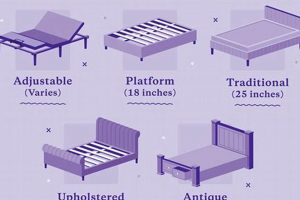
Tip 3: Utilize a Supportive Bed Frame: A properly designed and sturdy bed frame provides adequate support, preventing premature sagging and structural damage.
Tip 4: Maintain Proper Hygiene: Regular vacuuming of the surface removes dust and allergens, contributing to a cleaner and healthier sleeping environment and preventing material degradation.
Tip 5: Adhere to Weight Recommendations: Exceeding the weight limit specified by the manufacturer can lead to accelerated wear and tear and compromise the structural integrity.
Tip 6: Avoid Jumping or Excessive Pressure: Refrain from activities that place undue stress on the mattress, as this can damage the internal components and shorten its lifespan.
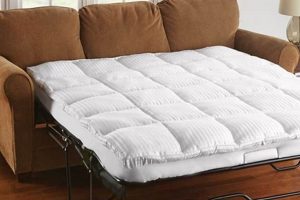
Tip 7: Consider a Mattress Topper: For older mattresses or those showing early signs of wear, a topper can add an extra layer of comfort and support, potentially extending the usable life.
Implementing these practices can significantly impact the duration of effective mattress performance, safeguarding the investment and ensuring continued comfort.
Following these recommendations supports informed decision-making regarding upkeep and ultimately contributes to a greater return on investment.
1. Material Composition

The constituent materials exert a dominant influence on the anticipated lifespan of a sleeping platform. The selection of componentsranging from the core support system to the comfort layersdictates its inherent durability and resistance to degradation over time. Higher-quality materials generally exhibit greater resilience to compression, deformation, and wear, thereby prolonging the period of optimal performance. For example, a mattress incorporating high-density memory foam is likely to maintain its shape and supportiveness longer than one utilizing lower-density foam, which may exhibit premature sagging or indentation. Similarly, the gauge and temper of steel coils in an innerspring mattress correlate directly with their ability to withstand continuous pressure without losing their structural integrity.
The relationship between material composition and durability extends beyond the core support elements. The materials used in the ticking, or outer cover, also play a role. A tightly woven, high-thread-count fabric will be more resistant to tears, stains, and abrasion, protecting the inner layers from external damage and maintaining the mattress’s overall appearance and hygiene. Natural materials, such as latex derived from rubber trees, are often valued for their inherent durability and resistance to breakdown compared to synthetic alternatives. Understanding the material properties is therefore crucial for predicting the sleeping platforms longevity.
Ultimately, the longevity is intrinsically linked to the quality and properties of its constituent materials. While other factors such as usage patterns and maintenance practices also contribute, the foundational composition sets the upper limit on how long it can reasonably be expected to perform. Selecting a mattress crafted from durable, high-quality materials represents a strategic investment that yields long-term benefits in terms of sleep quality, comfort, and overall value. Challenges remain in accurately assessing material quality without destructive testing, emphasizing the need for reliance on reputable brands and transparent product specifications.
2. Usage Frequency

The frequency with which a sleeping platform is utilized directly influences its expected lifespan. Consistent and prolonged use accelerates the degradation of internal components, such as springs and foam, leading to a reduction in support and comfort over time. A bed used nightly by one individual will naturally experience less wear than one used by two individuals, or one that is a primary sleeping surface, compared to a guest bed.
The impact of usage frequency is amplified by factors such as user weight and sleeping habits. Individuals with higher body masses exert greater pressure, causing faster compression of the internal materials. Similarly, those with restless sleeping patterns or a tendency to sit or stand on the bed may contribute to localized wear and tear, potentially shortening its useful life. In commercial settings, such as hotels, mattresses experience significantly higher usage rates than in residential environments. This increased demand necessitates more frequent replacements to maintain acceptable levels of comfort and support for guests. The intensity of usage is also relevant; prolonged periods of inactivity, such as leaving a mattress unused in storage, can also negatively impact longevity due to factors like humidity and dust accumula
tion.
Understanding the relationship between usage frequency and the expected lifespan is critical for both consumers and commercial purchasers. Adjusting expectations based on anticipated use and implementing preventative maintenance measures, such as regular rotation, can help to mitigate the negative effects of frequent use. For instance, a mattress in a frequently used guest room might benefit from more frequent rotation. Awareness enables informed purchasing decisions and proactive management, maximizing value and ensuring consistent sleep quality. Ultimately, a comprehensive assessment of anticipated use patterns is essential for accurately estimating lifespan and optimizing long-term satisfaction.
3. Maintenance Practices

Maintenance practices exert a tangible influence on the lifespan of a sleep surface. The regularity and thoroughness of upkeep directly correlate with its ability to provide adequate support and comfort over an extended period. Neglecting routine care precipitates premature degradation, thereby shortening the period of optimal performance. For instance, failure to protect a mattress from spills or stains can compromise its structural integrity, fostering mold growth or causing materials to break down. Conversely, diligent cleaning and the use of protective barriers can mitigate these risks, preserving the mattress’s condition.
The practice of regularly rotating or flipping a mattresswhen applicableis a critical maintenance procedure. This redistributes the weight and pressure exerted on the surface, preventing localized sagging and uneven wear. Consider a scenario where a mattress is consistently slept on in the same position; without rotation, the materials in that area will compress more rapidly, leading to an uneven and uncomfortable sleeping surface. Similarly, vacuuming the surface periodically removes dust mites, allergens, and debris that can penetrate the fabric and degrade the underlying materials. Bed frames are part of the overall maintenance; A broken or weak bed frame puts additional strain on the mattress leading to sag and damage. These proactive measures, though seemingly minor, contribute significantly to preserving the mattress’s form and function.
In summary, adherence to recommended maintenance protocols is essential for maximizing its longevity. Neglecting these practices accelerates wear and tear, diminishes comfort, and ultimately necessitates earlier replacement. A consistent maintenance regimen, encompassing protection, rotation, and cleaning, represents a strategic investment that safeguards its performance and ensures sustained sleep quality. Prioritizing these proactive steps translates to greater value over its lifespan, postponing the need for premature replacement and ensuring consistent sleep quality.
4. Body Weight Impact

Body weight directly influences the lifespan of a sleeping platform. Greater mass exerts increased pressure on the internal components, accelerating the rate of compression and material fatigue. This effect is especially pronounced in areas that bear the majority of the weight, leading to localized sagging and diminished support. For example, an individual weighing 250 pounds will typically cause more rapid degradation than someone weighing 150 pounds, assuming identical usage patterns and material quality. The selection should, therefore, consider the anticipated weight load to ensure longevity and consistent comfort.
The connection between body weight and longevity is further modulated by the mattress type. Models with reinforced support cores, such as those incorporating high-density foams or enhanced coil systems, exhibit greater resistance to compression under heavier loads. In contrast, less robust designs may exhibit premature failure. As an example, a lightweight foam mattress might quickly lose its shape and supportiveness when consistently subjected to a high weight load, leading to discomfort and the need for early replacement. Knowledge of this impact allows consumers to make informed purchasing decisions, selecting models that can withstand the anticipated weight and maintain their integrity over time.
Ultimately, understanding the relationship between body weight and the expected lifespan is critical for maximizing the value. Consideration should be given to the weight capacity specified by the manufacturer, and models should be selected accordingly. Failure to do so can result in accelerated wear, reduced comfort, and premature failure, negating any initial cost savings. While material quality and maintenance practices are also essential factors, body weight remains a primary determinant of longevity, requiring careful consideration during the selection process.
5. Support System Quality

The durability of a sleeping surface is fundamentally linked to the caliber of its support system. This internal structure, whether composed of innerspring coils, foam layers, or a hybrid combination, bears the brunt of the load and dictates the degree to which the platform retains its shape and structural integrity over time. A support system constructed with inferior materials or a flawed design will inevitably succumb to compression and deformation more rapidly, resulting in sagging, unevenness, and a diminished lifespan. For instance, an innerspring unit utilizing low-gauge steel coils is prone to losing its resilience and developing permanent impressions, while a foam core made with low-density materials will compress and degrade quickly, leading to a loss of support. Conversely, a high-quality support system crafted from durable materials and engineered for optimal weight distribution can significantly extend its usable life. The choice of support system is, therefore, a crucial determinant of how long a bed mattress should last.
The practical significance of a robust support system extends beyond mere longevity. A well-designed system provides consistent and proper spinal alignment, minimizing pressure points and promoting restful sleep. As the support system deteriorates, these benefits diminish, potentially leading to discomfort, back pain, and disrupted sleep patterns. Consider a scenario where an individual invests in a sleep surface with a seemingly attractive price point, only to find that the inadequate support system fails within a few years, necessitating premature replacement. This not only incurs additional expense but also results in a period of compromised sleep quality. A higher initial investment in a superior support system can, therefore, prove to be more cost-effective in the long run, given the extended lifespan and sustained comfort it provides. Regular rotation can help distribute wear and tear but cannot replace a poorly designed structure.
In conclusion, the support system quality is a cornerstone of longevity. A robust, well-engineered system provides sustained comfort, promotes proper spinal alignment, and maximizes the usable lifespan. While factors such as usage patterns and maintenance practices also contribute, the support system’s intrinsic quality sets the upper limit on how long it can reasonably be expected to perform effectively. Consumers should prioritize this aspect during the selection process, recognizing that a higher initial investment in a quality support system t
ranslates to long-term value and sustained sleep quality, with an important part of how long should a bed mattress last.
Frequently Asked Questions
The following addresses commonly asked questions pertaining to the expected duration of a bed mattress’s usability.
Question 1: What constitutes the average lifespan of a bed mattress?
The typical service life ranges from seven to ten years, contingent upon factors such as material composition, usage frequency, and maintenance practices. Certain high-quality models may exceed this range, while lower-quality options may require replacement sooner.
Question 2: How does mattress type affect its expected duration?
Different mattress types exhibit varying degrees of longevity. Latex and high-density memory foam designs generally demonstrate greater resilience than traditional innerspring models. Hybrid mattresses, combining elements of both, often offer a balance between comfort and durability.
Question 3: What are the key indicators suggesting a bed mattress requires replacement?
Obvious signs include visible sagging, permanent indentations, and persistent discomfort. Increased allergy symptoms or exacerbation of back pain upon waking may also indicate a need for replacement.
Question 4: Can mattress protectors extend its lifespan?
Yes. A mattress protector acts as a barrier against spills, stains, and dust mites, preventing premature degradation of materials and maintaining hygiene. It’s a cost effective and smart thing to do.
Question 5: How does body weight influence the lifespan?
Higher body weight exerts increased pressure on internal components, accelerating wear and tear. Individuals with greater mass should consider models designed to provide enhanced support and durability.
Question 6: Does rotating or flipping a mattress increase its longevity?
Rotating distributes wear evenly, preventing localized sagging. Flipping, if applicable to the mattress type, achieves a similar effect. These practices are helpful, yes.
In conclusion, understanding the elements affecting mattress longevity facilitates informed decision-making regarding its care and replacement.
The subsequent section will delve into choosing an appropriate replacement mattress.
Conclusion
This article has provided a comprehensive exploration of the factors influencing the service life of a sleep surface. The discussion encompassed material composition, usage frequency, maintenance practices, body weight impact, and support system quality. Each element contributes significantly to determining how long should a bed mattress last, a consideration with direct implications for sleep quality and overall well-being.
The information presented underscores the importance of proactive maintenance and informed purchasing decisions. Recognizing the variables that affect the duration of a mattress’s usability empowers individuals to optimize their investment and ensure sustained comfort. A proactive approach to care and a discerning eye in selection will maximize its lifespan. Prioritizing the longevity of sleep surfaces protects not only the financial investment but the health and the essential need of sleep itself.