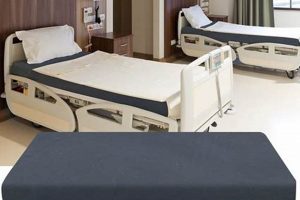
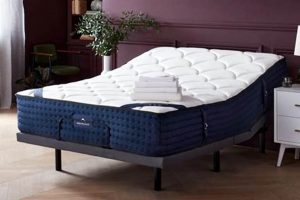
Specialized sleeping surfaces designed to alleviate pressure and improve airflow are crucial in the prevention and management of pressure ulcers, also known as bed sores. These products offer support while minimizing concentrated pressure on bony prominences, such as the hips, sacrum, and heels, areas particularly susceptible to skin breakdown due to prolonged immobility. An example would be a low air loss system, where air is continuously circulated to reduce moisture and pressure.
The significance of these surfaces lies in their ability to enhance patient comfort, promote healing, and decrease the risk of developing new or worsening existing skin injuries. Historically, simple padding was the primary method, but advancements in materials science and engineering have led to sophisticated designs incorporating alternating pressure, gel infusions, and specialized foam contours. This evolution reflects a growing understanding of the biomechanical factors contributing to pressure ulcer formation.
The following sections will delve into specific types of pressure-redistributing surfaces, discuss the key features to consider when selecting an appropriate option, and outline the proper use and maintenance protocols for optimal performance and longevity. Factors such as patient weight, mobility level, and existing skin condition will be addressed to provide a comprehensive overview of this essential healthcare product category.
Guidance on Selecting and Utilizing Pressure-Redistributing Surfaces
The following guidance aims to provide essential information for healthcare professionals and caregivers involved in the selection and appropriate utilization of pressure-redistributing surfaces, crucial for preventing and managing pressure ulcers.
Tip 1: Conduct a Thorough Risk Assessment: Prior to selecting a surface, a comprehensive assessment of the patient’s risk factors for pressure ulcer development is paramount. This assessment should include factors such as mobility, nutritional status, continence, and sensory perception.
Tip 2: Choose the Appropriate Surface Type: Different surface types are designed for varying levels of risk and existing skin conditions. Static air, foam, alternating pressure, and low air loss options exist. Selection should align with the individual patient’s needs and the healthcare setting’s capabilities.
Tip 3: Ensure Proper Surface Size and Fit: The selected surface must adequately accommodate the patient’s size and weight. Overhang or inadequate support can negate the benefits of pressure redistribution and potentially increase the risk of skin breakdown.
Tip 4: Implement a Consistent Repositioning Schedule: Pressure-redistributing surfaces are not a substitute for regular repositioning. A consistent schedule, typically every two hours, is necessary to relieve pressure and promote circulation.
Tip 5: Monitor Skin Integrity Regularly: Frequent skin checks are essential to identify early signs of pressure ulcer development. Pay particular attention to bony prominences and areas subjected to prolonged pressure.
Tip 6: Maintain Proper Surface Hygiene: Cleanliness is critical to prevent infection. Follow manufacturer’s instructions for cleaning and disinfecting the surface regularly. Ensure the surface is completely dry before patient use.
Tip 7: Provide Patient and Caregiver Education: Education on the proper use, benefits, and limitations of pressure-redistributing surfaces is vital for optimal outcomes. Educate patients and caregivers on repositioning techniques, skin assessment, and surface maintenance.
Adherence to these guidelines, coupled with diligent monitoring and individualized care planning, can significantly contribute to the prevention and management of pressure ulcers. These factors ultimately improve patient outcomes and reduce the burden on healthcare systems.
The subsequent sections will address specific considerations for long-term care settings and explore emerging technologies in pressure ulcer prevention.
1. Pressure Redistribution

Pressure redistribution is a foundational principle in the design and application of specialized sleeping surfaces intended to prevent and manage pressure ulcers. The effectiveness of these surfaces, often referred to as “mattress for bed sores,” hinges on their ability to minimize concentrated pressure on vulnerable areas of the body, thereby reducing the risk of tissue ischemia and subsequent skin breakdown.
- Immersion and Envelopment
Immersion refers to the degree to which the body sinks into the support surface, while envelopment describes how well the surface conforms to the body’s contours. A surface providing adequate immersion and envelopment distributes pressure over a larger area, reducing peak pressure points. For example, a memory foam surface conforms to the body, increasing contact area and reducing the pressure concentrated on bony prominences such as the sacrum and heels. Inadequate immersion and envelopment can lead to increased pressure concentrations and a heightened risk of pressure ulcer development, regardless of the overall surface design.
- Alternating Pressure Technology
Alternating pressure surfaces utilize inflatable cells that cyclically inflate and deflate, changing the pressure distribution pattern over time. This dynamic pressure redistribution helps to improve circulation and prevent prolonged pressure on any single area. A typical alternating pressure surface might have a 10-minute cycle, where cells inflate and deflate in sequence, effectively “massaging” the tissue and promoting blood flow. Improper cycle settings or cell malfunction can compromise this function, leading to areas of sustained pressure and negating the intended benefits.
- Material Properties and Design
The materials used in the construction of pressure-redistributing surfaces significantly impact their performance. Materials like viscoelastic foam, gel, and air are selected for their ability to deform under load and distribute pressure. The design, including contouring and channeling, also influences pressure distribution. A multi-layered foam surface with specific zones designed for the torso, hips, and heels can optimize pressure redistribution according to anatomical needs. Suboptimal material selection or flawed design can result in uneven pressure distribution and increased vulnerability to pressure ulcers.
- Weight Capacity and Patient Positioning
The effectiveness of a pressure-redistributing surface is contingent on its ability to support the patient’s weight without bottoming out or losing its pressure-redistributing properties. Exceeding the surface’s weight capacity can render it ineffective, concentrating pressure rather than alleviating it. Proper patient positioning, including the use of pillows and wedges to offload pressure from bony prominences, further enhances the benefits of pressure redistribution. Failure to consider weight capacity or neglecting proper positioning can undermine the effectivene
ss of even the most sophisticated pressure-redistributing surfaces.
These elements are interlinked. Effective pressure redistribution relies on the interplay of immersion, envelopment, alternating pressure technology, material properties, weight capacity, and appropriate patient positioning. An optimal “mattress for bed sores” integrates these factors to provide a comprehensive solution for preventing and managing pressure ulcers, ultimately improving patient outcomes and reducing the incidence of pressure-related complications.
2. Moisture Management
Moisture management is a critical factor in the prevention of pressure ulcers and, therefore, an essential consideration in the design and selection of specialized sleeping surfaces. Excessive moisture, arising from perspiration, incontinence, or wound exudate, weakens the skin’s integrity, increasing its susceptibility to friction, shear, and pressure damage. The characteristics of a “mattress for bed sores” that facilitate moisture management directly impact its effectiveness in mitigating pressure ulcer risk.
- Breathable Fabrics
Breathable fabrics, such as those incorporating open-weave structures or moisture-wicking fibers, promote air circulation and allow moisture vapor to escape from the skin’s surface. In the context of “mattress for bed sores,” these fabrics are often used in the cover layers to create a drier microclimate. For instance, a cover material made from polyester knit with moisture-wicking properties can reduce skin hydration levels compared to a non-breathable vinyl cover, thus decreasing the risk of maceration. Inadequate breathability traps moisture, leading to increased skin hydration and a higher likelihood of pressure ulcer formation.
- Vapor-Permeable Coatings
Vapor-permeable coatings provide a barrier against fluid penetration while still allowing moisture vapor to pass through. These coatings are frequently applied to the underlying layers of a “mattress for bed sores” to protect the inner components from contamination without compromising breathability. A polyurethane film coating, for example, can prevent urine from reaching the foam core while allowing perspiration to evaporate. Conversely, impermeable coatings, while providing superior fluid protection, can significantly increase skin hydration and elevate pressure ulcer risk.
- Moisture-Absorbent Materials
The incorporation of moisture-absorbent materials within the “mattress for bed sores” construction can further enhance moisture management. These materials, such as superabsorbent polymers or specialized foams, draw moisture away from the skin, creating a drier environment. For example, a layer of foam infused with superabsorbent particles can capture and retain fluids, reducing the amount of moisture in contact with the patient’s skin. Without adequate moisture absorption, excess fluid remains on the skin, increasing the risk of maceration and subsequent ulcer development.
- Surface Design and Airflow
The surface design of a “mattress for bed sores” can contribute to moisture management by promoting airflow and reducing areas of stagnant moisture. Contoured surfaces, channels, or ventilation holes can enhance air circulation and facilitate moisture evaporation. A surface with deep channels, for instance, allows air to circulate under the patient, drying the skin and reducing humidity. A flat, impermeable surface, on the other hand, restricts airflow and promotes moisture accumulation, increasing the risk of pressure ulcers.
The effective management of moisture in “mattress for bed sores” is a multifaceted approach, involving the selection of breathable fabrics, vapor-permeable coatings, moisture-absorbent materials, and optimized surface designs. These elements work synergistically to maintain a dry skin microclimate, thereby reducing the risk of maceration and subsequent pressure ulcer development. Neglecting moisture management compromises the protective function of even the most advanced pressure-redistributing surfaces, emphasizing the critical need for a comprehensive approach to skin care and support surface selection.
3. Shear Reduction

Shear forces, resulting from friction and gravity acting on the skin and underlying tissues, are significant contributors to pressure ulcer development. Specialized sleeping surfaces, or “mattress for bed sores,” address shear reduction through various design and material considerations aimed at minimizing the tangential forces exerted on the skin.
- Low-Friction Fabrics
The selection of low-friction fabrics for the surface cover is a primary strategy for shear reduction. These materials, often constructed from specialized synthetic fibers, reduce the coefficient of friction between the patient’s skin and the support surface. For instance, a cover made of tightly woven, silicone-coated nylon will exhibit lower friction than a standard cotton sheet, thereby minimizing shear forces during repositioning or movement. The direct consequence of using high-friction materials is an increased risk of skin tearing and subsequent ulcer formation.
- Conforming Surface Design
A conforming surface design allows the “mattress for bed sores” to adapt to the patient’s body contours, reducing the relative movement between the skin and the underlying tissues. This is achieved through the use of viscoelastic materials, such as memory foam or gel, which distribute pressure and minimize localized shear. A surface that fails to conform adequately creates points of high pressure and increased shear, particularly over bony prominences. Consider a patient sliding down an inclined bed; a conforming surface will distribute the shear force, while a rigid surface will concentrate it at the sacrum.
- Layered Construction with Differential Movement
Some “mattress for bed sores” designs incorporate multiple layers with differential movement capabilities. This allows the top layer to move independently of the underlying support structure, accommodating shifts in body position without transmitting shear forces to the skin. A common example involves a thin layer of gel or low-friction fabric placed between the support core and the cover material. The gel layer allows the cover to slide slightly without pulling on the underlying tissue. A lack of differential movement transmits shear directly to the skin, increasing the risk of tissue damage.
- Inclined Bed Therapy Compatibility
Inclined bed therapy, where the head of the bed is elevated, is often used for respiratory management. However, this practice can exacerbate shear forces as the patient tends to slide downwards. “Mattress for bed sores” designed for inclined bed therapy incorporate features like heel slopes or specialized surface textures to counteract the increased shear. A surface lacking these features will contribute to significant shear forces at the sacrum and heels, increasing the likelihood of pressure ulcer development in these areas.
The effective reduction of shear forces in “mattress for bed sores” requires a multifaceted approach, combining low-friction materials, conforming surface designs, layered construction, and compatibility with common patient positioning practices. These elements work in concert to protect the skin from tangential forces, thereby redu
cing the risk of pressure ulcer formation and promoting overall skin integrity. Neglecting shear reduction compromises the preventative capabilities of even the most sophisticated pressure-redistributing surfaces.
4. Microclimate Control

Microclimate control, referring to the regulation of temperature and humidity at the skin-support surface interface, is a crucial consideration in the design and selection of “mattress for bed sores.” The microclimate directly impacts skin integrity; elevated temperature and humidity contribute to skin maceration, increasing its susceptibility to pressure, shear, and friction. The ability of a “mattress for bed sores” to effectively manage the microclimate significantly influences its effectiveness in preventing pressure ulcers.
- Breathability of Cover Materials
The breathability of the cover material directly influences the microclimate. Materials with high air permeability facilitate moisture evaporation and heat dissipation, reducing humidity and temperature at the skin surface. For example, covers constructed from open-weave synthetic fibers promote airflow, preventing the buildup of moisture from perspiration or incontinence. Conversely, impermeable covers, such as vinyl, trap moisture and heat, creating an environment conducive to skin maceration. The selection of appropriate cover materials is paramount in maintaining a favorable microclimate.
- Ventilation and Airflow Design
The internal design of a “mattress for bed sores” can incorporate ventilation channels or airflow systems to further regulate the microclimate. These features promote air circulation within the support surface, facilitating the removal of moisture and heat. Low air loss systems, for instance, continuously circulate air through the mattress, actively drying the skin and preventing the buildup of humidity. Surfaces lacking adequate ventilation impede airflow, resulting in localized areas of elevated temperature and humidity, particularly in contact with bony prominences.
- Moisture-Wicking Properties of Fill Materials
The fill materials used within the “mattress for bed sores” contribute to microclimate control through their moisture-wicking properties. Materials such as specialized foams or fiber blends can draw moisture away from the skin, reducing surface hydration. Foams infused with gel particles or superabsorbent polymers enhance moisture absorption, further improving the microclimate. The absence of moisture-wicking properties allows moisture to accumulate on the skin, leading to maceration and increased ulcer risk.
- Temperature Regulation Technologies
Advanced “mattress for bed sores” may incorporate temperature regulation technologies to actively control the microclimate. These technologies can involve circulating cooled or heated fluids through the mattress core or utilizing phase change materials to absorb and release heat, maintaining a stable temperature at the skin surface. Active temperature regulation is particularly beneficial for patients with impaired thermoregulation or those at high risk for pressure ulcers due to prolonged immobility. Without active temperature control, the microclimate may fluctuate excessively, increasing the vulnerability of the skin.
Effective microclimate control in “mattress for bed sores” relies on the synergistic interaction of breathable cover materials, ventilation design, moisture-wicking fill materials, and, in some cases, active temperature regulation technologies. These elements collectively work to maintain a stable, dry, and cool environment at the skin surface, thereby reducing the risk of maceration and preventing the onset of pressure ulcers. Neglecting microclimate control undermines the overall effectiveness of pressure-redistributing surfaces, highlighting the necessity of a holistic approach to skin care and support surface selection.
5. Support Surface
The term “support surface” encompasses a broad category of products designed to redistribute pressure, manage moisture, and control the microclimate at the interface between a patient’s body and the underlying surface. A “mattress for bed sores” falls squarely within this category, representing a specific application of support surface technology focused on preventing and treating pressure ulcers. The connection is inextricable; the efficacy of a “mattress for bed sores” is directly dependent on the characteristics and performance of the support surface it provides. A poorly designed or improperly selected support surface can negate the intended benefits of pressure redistribution, potentially exacerbating the risk of skin breakdown. For example, a standard hospital mattress, lacking specialized features, fails to adequately redistribute pressure on bony prominences, leading to ischemia and subsequent ulcer formation in immobile patients. In contrast, a “mattress for bed sores” utilizing alternating pressure technology cyclically relieves pressure, promoting blood flow and preventing tissue damage.
The support surface’s materials, construction, and functional capabilities dictate its suitability for a given patient. Considerations include patient weight, mobility level, existing skin condition, and the presence of risk factors for pressure ulcer development. A high-risk patient with limited mobility requires a more advanced support surface, such as a low air loss mattress, to effectively manage moisture and redistribute pressure. Conversely, a lower-risk patient may benefit from a simpler, less costly foam mattress designed to provide basic pressure redistribution. Real-world examples illustrate the practical significance of this understanding; a long-term care facility that invests in appropriate support surfaces tailored to its patient population experiences a significant reduction in pressure ulcer incidence, resulting in improved patient outcomes and reduced healthcare costs. Furthermore, the support surface must be properly maintained and utilized in conjunction with other preventative measures, such as regular repositioning and meticulous skin care.
In summary, the support surface is the fundamental component of any “mattress for bed sores,” directly influencing its ability to prevent and treat pressure ulcers. Selecting the appropriate support surface requires a thorough assessment of patient-specific needs and a comprehensive understanding of the available technologies. Challenges remain in optimizing support surface design to meet the diverse needs of patients and in ensuring consistent adherence to best practices for utilization and maintenance. Addressing these challenges is crucial to maximizing the effectiveness of “mattress for bed sores” and improving outcomes for vulnerable patients at risk for pressure ulcers.
6. Patient Immobility
Patient immobility represents a primary risk factor for pressure ulcer development. The prolonged absence of movement leads to sustained pressure on bony prominences, compromising blood flow and ultimately resulting in tissue damage. The selection and implementation of a “mattress for bed sores” is therefore inextricably linked to a patient’s level of immobility, serving as a critical intervention to mitigate the ad
verse effects of prolonged pressure.
- Pressure Redistribution and Immobility
The core function of a “mattress for bed sores” is to redistribute pressure away from vulnerable areas. For immobile patients, this function becomes paramount. Traditional mattresses concentrate pressure on bony prominences such as the sacrum, heels, and ischial tuberosities. Prolonged pressure in these areas, unchecked by regular movement, leads to ischemia and necrosis. A “mattress for bed sores” employing alternating pressure or low air loss technology actively redistributes pressure, mimicking the natural pressure relief that occurs with movement. For instance, a patient completely reliant on a support surface for pressure relief requires a more sophisticated system than one who can independently shift position, highlighting the direct correlation between immobility and support surface needs.
- Microclimate Management and Immobility
Immobile patients are often unable to regulate their own microclimate, increasing the risk of skin maceration due to perspiration or incontinence. The ability of a “mattress for bed sores” to manage moisture and temperature is thus critical. Breathable fabrics, moisture-wicking materials, and low air loss systems contribute to a drier, cooler microclimate, reducing the risk of skin breakdown. A patient confined to bed for extended periods, unable to change soiled linens or adjust their position for ventilation, is particularly vulnerable to the adverse effects of a poorly managed microclimate. The “mattress for bed sores” therefore acts as an artificial regulator, compensating for the patient’s inability to maintain optimal skin conditions.
- Shear Reduction and Immobility
Immobility can exacerbate shear forces, particularly during repositioning or transfers. When an immobile patient is moved in bed, friction between the skin and the support surface can cause tissue damage. A “mattress for bed sores” designed with low-friction fabrics or multi-layered construction minimizes shear forces, protecting the skin from injury. Consider a patient who requires assistance to reposition; the act of pulling or sliding the patient across a standard mattress can generate significant shear forces. A “mattress for bed sores” with appropriate shear reduction features mitigates this risk, reducing the likelihood of pressure ulcer development.
- Support Surface Stability and Immobility
For immobile patients, the stability of the support surface is crucial for maintaining proper alignment and preventing falls. A “mattress for bed sores” must provide adequate support to prevent the patient from sinking too deeply or sliding off the edge of the bed. Features such as reinforced edges and adjustable firmness contribute to a stable and secure support surface. An unstable support surface can lead to poor posture, increased pressure on vulnerable areas, and an elevated risk of falls, particularly for patients with impaired cognitive function or muscle weakness. The “mattress for bed sores” therefore serves not only to redistribute pressure but also to provide a safe and stable environment for the immobile patient.
The interconnection of patient immobility and “mattress for bed sores” is evident in the need for specialized support surfaces that actively compensate for the limitations imposed by prolonged inactivity. Selecting the appropriate “mattress for bed sores” for an immobile patient necessitates a comprehensive assessment of individual needs, encompassing pressure redistribution, microclimate management, shear reduction, and support surface stability. This holistic approach is essential for preventing pressure ulcers and promoting optimal skin integrity in this vulnerable population. This assessment is not a one-time event, rather, requires continuous monitoring and adjustment to meet evolving patient conditions.
Frequently Asked Questions About Mattresses for Bed Sores
The following addresses common inquiries regarding specialized sleeping surfaces designed to prevent and treat pressure ulcers, also known as bed sores. This information aims to clarify misconceptions and provide a deeper understanding of these essential medical devices.
Question 1: Are all mattresses marketed for bed sores equally effective?
No. Effectiveness varies significantly based on design, materials, and the patient’s specific needs. A low-risk patient may benefit from a basic foam mattress, while a high-risk, immobile patient requires a more sophisticated system with alternating pressure or low air loss capabilities.
Question 2: Can a specialized mattress completely eliminate the need for repositioning?
No. Regular repositioning remains crucial, even with advanced pressure-redistributing surfaces. These mattresses augment, but do not replace, the need to relieve pressure manually. Repositioning frequency should be determined by a healthcare professional based on individual patient risk factors.
Question 3: How frequently should a mattress for bed sores be cleaned?
Cleaning frequency depends on the specific mattress type and manufacturer’s recommendations. Generally, the surface should be cleaned and disinfected regularly, particularly after episodes of incontinence or wound drainage, to prevent bacterial growth and maintain hygiene.
Question 4: Does mattress firmness correlate with its effectiveness in preventing bed sores?
Not necessarily. The key is pressure redistribution, not firmness. A very firm mattress may still concentrate pressure on bony prominences, while a softer, conforming mattress may provide better pressure relief. The ideal firmness depends on individual patient weight and body shape.
Question 5: Are mattresses for bed sores covered by insurance?
Coverage varies depending on the insurance provider and the patient’s medical condition. A physician’s order and documentation of medical necessity are typically required for reimbursement. It is advisable to contact the insurance provider directly to confirm coverage details.
Question 6: Can a mattress topper provide the same benefits as a dedicated mattress for bed sores?
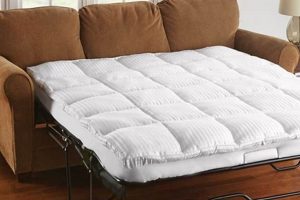
While some mattress toppers may offer limited pressure redistribution, they generally do not provide the same level of protection as a dedicated “mattress for bed sores,” particularly for high-risk patients. Toppers may not adequately address moisture management or shear reduction, critical components of comprehensive pressure ulcer prevention.
In summary, selecting and utilizing a mattress for bed sores requires careful consideration of individual patient needs and adherence to established best practices. Consulting with healthcare professionals is essential for optimal outcomes.
The following sections will explore emerging technologies in pressure ulcer prevention and management.
Conclusion
The preceding discussion has illuminated the multifaceted role of “mattress for bed sores” in mitigating the risk and severity of pressure ulcers. From pressure redistribution and microclimate control to shear reduction and patient stability, these specialized support surfaces represent a critical intervention for vulnerable individuals. The selection of an appropriate surface necessitates a thorough understanding of patient-specific needs and a commitment to evidence-based practices.
The persistent challenge lies in translating theoretical knowledge into consistent clinical application. The continued advancement of support surface technology, coupled with rigorous adherence to preventative protocols, offers a pathway towards reducing the incidence of pressure ulcers and improving the quality of life for those at risk. Vigilance
and ongoing education remain paramount in this endeavor, ensuring that “mattress for bed sores” are utilized effectively to safeguard patient well-being.