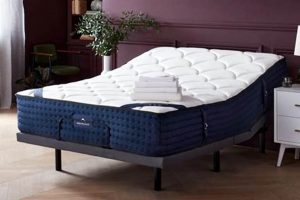
These sleeping structures are space-saving solutions featuring two or more beds stacked vertically, commonly found in homes, dormitories, and hostels. A key aspect often bundled with the frame is the inclusion of a sleeping surface, providing immediate usability upon assembly. An example would be a twin-over-twin configuration complete with the necessary support and cushioning.
The inherent vertical design maximizes floor space, especially valuable in smaller rooms or shared living arrangements. Historically, similar elevated sleeping arrangements have been utilized in confined environments like ships and military barracks. Providing the bedding surfaces as part of the purchase simplifies the acquisition process for consumers and ensures compatibility between the frame and the support.
Subsequent sections will address factors influencing the selection process, including material composition, safety considerations, weight capacities, and available styles. Furthermore, the various advantages and potential drawbacks of these particular products will be examined, along with guidance on appropriate use and maintenance.
Bunk Bed Selection and Usage Guidance
The following provides guidance on choosing and utilizing stacked sleeping arrangements that include the sleeping surface, promoting safety and longevity of the product.
Tip 1: Verify Weight Capacity. Adhere strictly to the manufacturer’s specified weight limits for each bunk. Exceeding these limits compromises structural integrity and increases the risk of collapse.
Tip 2: Assess Material Quality. Opt for constructions crafted from durable materials such as solid wood or heavy-gauge steel. Inferior materials are susceptible to damage and may not withstand prolonged use.
Tip 3: Ensure Ladder Security. Confirm that the ladder is securely attached and capable of supporting the user’s weight. Loose or unstable ladders pose a significant fall hazard.
Tip 4: Prioritize Railing Height. Verify that the guardrails on the upper bunk meet or exceed established safety standards. Adequate railing height prevents accidental falls during sleep.
Tip 5: Adhere to Age Recommendations. Do not permit children under the age of six to occupy the upper bunk. Younger children lack the necessary coordination and understanding to safely navigate the elevated position.
Tip 6: Use Appropriately Sized Bedding. Employ only the specified size of bedding designed for the dimensions of each bunk. Oversized or undersized bedding can create hazards and compromise comfort.
Tip 7: Conduct Regular Inspections. Routinely inspect the structure for any signs of wear, damage, or loose connections. Address any identified issues promptly to prevent escalation.
Tip 8: Follow Assembly Instructions Meticulously. Ensure that the unit is assembled precisely according to the manufacturer’s provided instructions. Deviations from the intended assembly process can compromise structural stability.
Implementing these recommendations will contribute significantly to the safety, durability, and effective utilization of the stacked sleeping arrangement and included sleeping surfaces.
The subsequent section will delve into maintenance procedures and long-term care strategies, further extending the product’s lifespan and preserving its functionality.
1. Space Optimization

The vertical configuration inherent in stacked sleeping arrangements directly addresses the challenge of space optimization, particularly crucial in environments with limited square footage. By stacking sleeping surfaces, these units effectively double the sleeping capacity within the same floor area. This is of significant importance to those living in smaller apartments, dormitories, shared bedrooms, or hostels, where maximizing the available space is paramount. The inclusion of the sleeping surface as part of the unit further contributes to space efficiency by eliminating the need for separate transportation and storage of bulkier mattress items during the initial setup. The practical significance of this space-saving design is evident in increased room functionality, allowing for additional furniture, study areas, or play spaces within the same confines.
Real-life examples demonstrate the effectiveness of this optimization. In densely populated urban areas, smaller apartments often necessitate creative space-saving solutions, in addition, a fully equipped unit minimizes clutter and maximizes usable area. Furthermore, in shared children’s bedrooms, the maximized floor space allows for a dedicated play area or study zone, fostering a more organized and functional environment. This arrangement proves invaluable for families seeking to maximize the utility of limited living areas without compromising on comfort or functionality.
In summary, the direct correlation between stacked sleeping arrangements with bundled bedding and space optimization lies in the efficient utilization of vertical space. This design approach transforms previously underutilized areas into functional sleeping zones, thereby enhancing the overall usability of the living environment. While challenges remain in terms of accessibility and safety, the benefits of space savings remain a central advantage. The importance of space optimization is undeniable, aligning with the broader theme of efficient living and maximizing resource utilization.
2. Immediate Usability
The concept of immediate usability, as it pertains to stacked sleeping arrangements that include sleeping surfaces, refers to the characteristic of being ready for use directly upon assembly, without requiring additional purchases or preparations. This facet contributes significantly to the overall value proposition of these units.
- Elimination of Separate Mattress Procurement
The inclusion of sleeping surfaces removes the need for consumers to independently source appropriately sized bedding. This not only simplifies the purchasing process but also eliminates the potential for compatibility issues between the frame and the surface. Real-life examples include dormitory settings where incoming students benefit from having a fully furnished sleeping space immediately available upon arrival, thus reducing logistical challenges and associated costs.
- Reduced Setup Time and Effort
By providing a complete unit, manufacturers streamline the setup process. Consumers are spared the task of comparing and selecting mattresses, thereby saving time and effort. For instance, families furnishing a guest room can appreciate the convenience of a ready-to-use sleeping solution, especially when facing time constraints or limited experience in mattress selection. Reduced set up time and effort enables the users to use as soon as possible.
- C
ost Predictability and Budget ManagementBundling the frame and sleeping surface into a single purchase allows for more accurate budget planning. Consumers gain clear visibility into the total cost upfront, avoiding unforeseen expenses related to bedding. Example includes first-time home buyers who benefit from the cost predictability when furnishing multiple rooms, ensuring that resources are allocated efficiently and without unexpected budgetary strain.
- Simplified Logistics and Delivery
A unified purchase simplifies the logistics of delivery and handling. Consumers receive all necessary components in a single shipment, reducing the complexity of coordinating multiple deliveries from different vendors. This is especially beneficial for individuals living in remote areas or those with limited access to transportation. Simplified delivery reduces potential complications and time constraints.
In conclusion, the immediate usability offered by stacked sleeping arrangements with included surfaces is a multifaceted benefit. It addresses logistical challenges, simplifies the purchasing process, and promotes efficient budget management, all contributing to an enhanced consumer experience. By combining structural support and a sleeping surface into one readily available package, these units deliver practical value that extends beyond their space-saving advantages. These benefits make it an excellent option for quick accommodations in any space.
3. Cost Efficiency

The proposition of stacked sleeping arrangements bundled with sleeping surfaces inherently possesses a degree of cost efficiency stemming from several interconnected factors. The primary driver is the consolidation of purchases. Acquiring the frame and the surface in a single transaction often results in a lower combined price compared to sourcing each item separately. This bundling strategy leverages economies of scale and reduces logistical overhead for the manufacturer, which translates into cost savings for the consumer. For instance, educational institutions furnishing dormitory rooms in bulk often opt for these bundled units to minimize per-unit expenditure. This directly impacts their overall budget, freeing up resources for other operational needs. Cost efficiency is essential to achieve budget and operation needs.
Furthermore, the inclusion of a sleeping surface mitigates the risk of purchasing an incompatible product. Selecting the appropriate bedding size and type for a specific bunk bed frame can be challenging, leading to potential returns or the need for replacement purchases. By providing a guaranteed fit, bundled units eliminate these uncertainties and associated costs. An example is a family outfitting a guest room; purchasing a bundled set ensures immediate usability without incurring additional expenses due to incorrect measurements or incompatible dimensions. Guaranteed fit prevents potential risks and returns.
In summary, the cost efficiency of stacked sleeping arrangements with included bedding derives from the convergence of bundled pricing, reduced logistical complexities, and minimized compatibility risks. While the upfront investment may appear similar to purchasing items separately, the long-term cost benefits and convenience factors contribute to a more economically sound decision. Challenges relating to initial product quality and durability can affect the cost efficiency over time. These advantages need to be balanced to make a sound financial decision.
4. Safety standards

Adherence to established safety standards is paramount in the design, manufacture, and use of stacked sleeping arrangements with included bedding. These standards, often mandated by regulatory bodies, aim to mitigate potential hazards associated with elevated sleeping surfaces and structural stability. Cause and effect are directly linked; failure to comply with specified weight limits, railing heights, or ladder security protocols significantly increases the risk of falls, injuries, or structural collapse. The importance of safety standards lies in their role as preventative measures, ensuring a reasonable level of protection for users, particularly children.
Real-life examples underscore the practical significance of these standards. Cases of collapsed structures resulting from exceeding weight capacities or insufficient railing heights highlight the consequences of non-compliance. Regulatory agencies often cite manufacturers for failing to meet minimum safety requirements, leading to product recalls and financial penalties. Furthermore, responsible retailers prioritize the sale of units that have undergone independent testing and certification, demonstrating a commitment to consumer safety. It should be noted that mattress material also plays a role in flammability and users health.
In conclusion, safety standards are not merely a regulatory burden but rather a fundamental component of stacked sleeping arrangements that include a sleeping surface. Their strict enforcement is essential to minimizing risks and ensuring the well-being of users. While challenges remain in terms of consistent global standardization and consumer awareness, the adherence to established safety protocols remains a non-negotiable aspect of responsible product design and usage. The link between standards and safety is a constant and fundamental requirement.
5. Mattress quality
Mattress quality, when considered in the context of stacked sleeping arrangements that include a sleeping surface, is a critical determinant of user comfort, support, and long-term health. The characteristics of the bedding material directly influence the quality of sleep, and, consequently, overall well-being.
- Support and Spinal Alignment
The primary function of a sleeping surface is to provide adequate support to the spine, maintaining proper alignment during sleep. Inadequate support can lead to musculoskeletal discomfort, back pain, and potentially, long-term spinal issues. For instance, a high-density foam mattress can offer superior support compared to a low-density alternative, ensuring optimal spinal alignment for the occupant of the upper or lower bunk. Example of mattress quality is supporting spinal allignment.
- Material Composition and Durability
The materials used in the construction of the bedding directly impact its durability and lifespan. Higher-quality materials, such as memory foam or innerspring systems with reinforced edges, tend to withstand prolonged use and resist sagging or compression. Durable materials can withstand wear and tear. Conversely, lower-quality materials may degrade quickly, necessitating frequent replacements. This has economic implications for institutional settings like dormitories or hostels where multiple units are in constant use.
- Comfort and Temperature Regulation
Comfort is a subjective but essential aspect of sleeping surface quality. The bedding should provide a comfortable sleeping environment, minimizing pressure points and promoting restful sleep. Temperature regulation is also crucial, preventing overheating or excessive cooling during sleep. Materials like gel-infused memory foam can help regulate t
emperature. Poor comfort could significantly affect the user’s ability to sleep soundly, and therefore function effectively. - Hygiene and Allergen Resistance
The hypoallergenic properties of the bedding are significant, particularly in shared living spaces. Materials that resist dust mites, mold, and other allergens can help mitigate allergic reactions and respiratory issues. Antimicrobial treatments can further enhance hygiene. This is especially important for individuals with sensitivities or allergies. Hypoallergenic fabrics contribute to hygiene, especially for those susceptible to allergies.
In conclusion, mattress quality is an indispensable consideration when evaluating stacked sleeping arrangements that include a sleeping surface. Its impact extends beyond mere comfort, influencing spinal health, durability, and hygiene. A higher investment in quality bedding translates to long-term benefits in terms of user well-being, product longevity, and reduced replacement costs. While there may be opportunities to upgrade the quality of mattress, it’s recommended that initial purchase prioritizes an optimum option for the unit. This would significantly improve the unit and its user’s experience.
6. Frame Material

The composition of the frame material is a foundational element in the structural integrity and overall lifespan of stacked sleeping arrangements. Its selection significantly influences the unit’s weight capacity, stability, and resistance to wear and tear. A direct cause-and-effect relationship exists between the material’s properties and the safety and durability of the entire structure. The importance of frame material as a component of stacked beds is undeniable, as it provides the necessary support for both the upper and lower bunks, including the sleeping surfaces. Consider, for example, the use of solid hardwood versus particleboard; the former offers superior strength and resistance to bending, while the latter is more susceptible to damage under sustained weight. In practical terms, understanding the frame material helps consumers make informed decisions, ensuring the unit can safely support the intended occupants and withstand prolonged use. The durability of any stacked arrangement is mainly determined by its frame.
Real-life examples illustrate the practical implications of frame material selection. In dormitory settings, where stacked beds are subjected to heavy use, frames constructed from heavy-gauge steel are often favored for their robustness and resistance to damage. Conversely, in residential settings, solid wood frames may be preferred for their aesthetic appeal and durability, though they may require more maintenance. The selection process often involves balancing factors such as cost, aesthetics, and anticipated usage. A robust steel frame can better withstanding heavy usage.
In summary, the frame material is a crucial component of stacked sleeping arrangements, directly impacting their safety, durability, and suitability for various applications. While challenges exist in balancing cost with quality, a thorough understanding of the properties of different materials enables informed decision-making, ensuring long-term value and user safety. Its stability is a crucial consideration when purchasing stacked arrangement.
7. Assembly Ease

The characteristic of assembly ease, when applied to stacked sleeping arrangements with included bedding, significantly affects the overall consumer experience and the practical utility of the product. A direct correlation exists between the complexity of the assembly process and the time, effort, and potential for errors encountered by the individual setting up the unit. In instances where the assembly is straightforward and well-documented, consumers can quickly and efficiently prepare the beds for use, reducing frustration and minimizing the need for professional assistance. Conversely, convoluted or poorly explained assembly procedures can lead to missteps, structural instability, and even safety hazards. Assembly ease serves as a critical factor in determining the initial usability and long-term satisfaction associated with these particular structures.
Real-world scenarios exemplify the importance of streamlined assembly. Consider, for example, a family setting up stacked beds in a child’s room; clear and concise instructions, coupled with pre-drilled holes and readily accessible hardware, enable a swift and secure assembly process. This allows the children to begin using the beds promptly, without prolonged delays or complications. In contrast, complex assemblies requiring specialized tools or extensive technical knowledge can deter potential buyers and lead to negative product reviews. Further, institutions responsible for furnishing multiple units, such as dormitories or shelters, benefit greatly from simplified assembly procedures, reducing labor costs and accelerating the setup timeline. Some arrangements include a team to support the assembly, if not, clearly stated and well explained assembly is required.
In summary, assembly ease stands as an integral component of stacked sleeping arrangements that include bedding. Its impact extends beyond mere convenience, influencing product satisfaction, safety, and overall cost-effectiveness. While challenges remain in standardizing assembly procedures across different manufacturers, prioritizing simplicity and clarity in the design and documentation can greatly enhance the value proposition of these space-saving sleeping solutions. Its process significantly affects user experience of stacked beds.
Frequently Asked Questions
The following addresses commonly asked questions regarding stacked sleeping structures sold complete with support. This information is designed to clarify concerns and provide a comprehensive understanding of these products.
Question 1: What are the recommended age restrictions for the top bunk?
Generally, manufacturers advise against allowing children under the age of six to occupy the top bunk. This restriction is due to developmental considerations; younger children may lack the coordination and awareness necessary to safely navigate the elevated position and minimize the risk of falls.
Question 2: What is the typical weight capacity for each bunk?
Weight capacities vary depending on the specific model and construction materials. However, a common range for the upper bunk is 200-250 pounds, while the lower bunk may accommodate slightly higher weights. Refer to the manufacturer’s specifications for precise weight limits and adhere to them strictly to prevent structural failure.
Question 3: What type of bedding surface is typically included?
The type of bedding material varies among manufacturers and models. Common options include innerspring, foam, and hybrid constructions. The quality and density of the material influence comfort, support, and durability. Examine product descriptions carefully to determine the specific characteristics of the included material.
Question 4: Are guardrails and ladders included with the purchase?
Reputable manufacturers include guardrails and ladders as standard components of stacked sleeping structures. Guardrails must meet specified height requirements to prevent falls, and ladders should be securely attached and capable of supporting the user’s weight. Verify the presenc
e and quality of these safety features before purchase and installation.
Question 5: What safety certifications should one look for?
Seek products that have been tested and certified by independent organizations such as ASTM International or similar recognized bodies. These certifications indicate that the product meets established safety standards for structural integrity, material composition, and flammability.
Question 6: What maintenance is required to ensure the longevity and safety of the structure?
Regular inspections are crucial to identify any signs of wear, damage, or loose connections. Tighten bolts and screws periodically, and promptly address any structural issues to prevent escalation. Cleaning the bedding surface according to the manufacturer’s instructions is equally important for hygiene and allergen control.
In summary, understanding age restrictions, weight capacities, material composition, safety features, certifications, and maintenance protocols is essential for the safe and effective utilization of stacked sleeping arrangements with a bundled bedding. Prioritizing safety and adhering to manufacturer guidelines will contribute significantly to a positive user experience.
The subsequent section will explore case studies and real-world applications of these products, providing further insights into their benefits and limitations.
Conclusion
This article has comprehensively explored the multifaceted aspects of stacked sleeping arrangements featuring included bedding. Key areas examined encompass space optimization, immediate usability, cost efficiency, safety standards, material considerations, and assembly processes. The integration of these elements significantly impacts user satisfaction, safety, and long-term value. Each aspect requires careful evaluation to ensure the selected unit aligns with specific needs and usage scenarios.
The information presented herein serves to empower informed decision-making, prompting thorough assessment of structural integrity, adherence to safety regulations, and appropriateness for the intended environment. Continued awareness of evolving safety standards and material advancements remains crucial for maximizing the benefits and mitigating the inherent risks associated with these space-saving sleeping solutions. Further investigation is encouraged to remain abreast of industry developments and refine selection criteria accordingly.