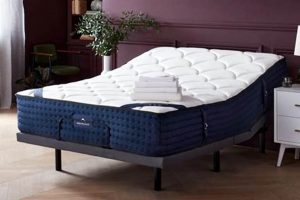
These specialized sleep systems offer a customizable foundation for mattresses, allowing users to elevate the head and foot sections independently. For example, a person might raise the head to read comfortably in bed or elevate their legs to improve circulation.
The importance of these systems lies in their potential to enhance comfort and support various health needs. Historically, adjustable beds were primarily found in hospitals, but advancements in technology and design have made them accessible and desirable for home use. The benefits include alleviating pressure points, reducing snoring, and providing relief from acid reflux.
The following sections will delve into the features, benefits, and considerations for selecting the appropriate adjustable bed to meet individual needs.
Considerations for Adjustable Bed Selection
Selecting the appropriate adjustable bed requires careful evaluation of individual needs and available options. The following tips offer guidance in making an informed decision.
Tip 1: Evaluate Health Requirements: Individuals with specific medical conditions, such as back pain, sleep apnea, or acid reflux, should prioritize features that address these concerns. Elevated head and foot sections can provide therapeutic benefits.
Tip 2: Assess Mattress Compatibility: Not all mattresses are suitable for use with adjustable bases. Memory foam and latex mattresses generally offer the best flexibility. Confirm compatibility with the manufacturer before purchasing.
Tip 3: Determine Desired Features: Adjustable beds offer a range of features, including massage, USB ports, and under-bed lighting. Prioritize features based on personal preferences and intended use.
Tip 4: Measure Available Space: Adjustable beds require adequate space for both the base and the mattress. Measure the bedroom dimensions to ensure the bed fits comfortably and allows for sufficient movement.
Tip 5: Consider Weight Capacity: Adjustable beds have weight limits. Ensure the chosen model can support the combined weight of the mattress and all users.
Tip 6: Review Warranty and Return Policies: Understand the warranty coverage and return policies before making a purchase. This provides protection against defects and ensures satisfaction with the product.
Tip 7: Research Motor Quality and Noise Levels: The motor is a critical component of an adjustable bed. Research motor quality and read reviews to assess noise levels during operation. A quiet motor contributes to a more restful sleep environment.
By considering these factors, individuals can select an adjustable bed that enhances comfort, provides therapeutic benefits, and meets their specific needs. Careful research and evaluation are essential for a satisfactory purchase.
The following section will provide a comprehensive overview of maintaining and caring for your new adjustable bed.
1. Customized Sleep Positions

The capacity to attain customized sleep positions stands as a core functional attribute of adjustable beds. These beds, through motorized mechanisms, allow independent adjustments of the head and foot sections. This adaptability directly affects user comfort and has potential therapeutic implications. The ability to elevate the head, for instance, can alleviate symptoms of acid reflux by reducing gastric pressure. Similarly, elevating the legs may improve circulation and reduce swelling. The importance of customized sleep positions stems from the diverse needs of individuals, acknowledging that a single sleeping posture is not universally optimal. Consider a scenario where an individual suffers from both back pain and sleep apnea. An adjustable bed enables the user to find a position that minimizes spinal stress while simultaneously promoting unobstructed breathing, something a standard flat bed cannot achieve. Understanding this connection is practically significant as it informs purchasing decisions and underscores the beds’ potential for enhancing well-being.
A practical application extends to recovery from injury or surgery. Individuals may require specific reclining angles to minimize pain and promote healing. Adjustable beds allow for precise positioning that can be difficult or impossible to achieve with pillows and traditional mattresses. Furthermore, couples with differing sleep preferences can leverage the dual adjustability found in some models to create personalized sleep zones. One partner may prefer an elevated head position for reading, while the other may prefer a flat sleeping surface. This personalized control is key to minimizing sleep disturbances caused by positional discomfort.
In summary, customized sleep positions are a fundamental component of adjustable beds, influencing comfort, health, and convenience. The ability to precisely adjust sleeping posture addresses individual needs and circumstances, making it a valuable feature. Challenges exist in achieving optimal positioning due to variations in body type and individual preferences. However, the benefits associated with customized sleep positions make adjustable beds a potentially worthwhile investment for those seeking enhanced sleep quality and improved physical well-being.
2. Health Benefit Potential

Adjustable beds offer a range of potential health benefits by allowing users to customize their sleeping positions, potentially alleviating certain medical conditions. This customized support is a central component in the analysis of any adjustable bed’s overall value.
- Acid Reflux Mitigation
Elevating the head section of an adjustable bed can reduce acid reflux symptoms. This elevation leverages gravity to keep stomach acid from flowing back into the esophagus, offering a non-pharmaceutical method to manage this condition. For individuals experiencing frequent heartburn, this benefit is of significant practical value.
- Sleep Apnea Relief
Sleeping in a reclined position can help maintain an open airway, potentially reducing the severity of sleep apnea. While not a replacement for medical treatment, the adjustability of these beds can complement other therapies by facilitating easier breathing during sleep. The effectiveness varies depending on the individual and the severity of the sleep apnea.
- Back Pain Reduction
Adjustable beds allow users to find a sleeping position that minimizes pressure on the spine, potentially alleviating back pain. The ability to elevate the legs and head can create a more neutral spinal alignment. Individuals with chronic back pain may experience a reduction in discomfort and improved sleep quality through customized positioning.
- Improved Circulation
Elevating the lower extremities can promote better blood circulation, reducing swelling and
discomfort. This is particularly beneficial for individuals with circulatory issues or those who spend long periods sitting or standing. Improved circulation can contribute to overall well-being and reduced leg fatigue.
These potential health benefits underscore the functional advantages of adjustable beds. While not a cure for medical conditions, the ability to customize sleep positions offers a non-invasive method for managing certain symptoms and enhancing comfort. The actual benefits experienced depend on individual circumstances and the specific features of the adjustable bed in question.
3. Mattress Compatibility Analysis

Mattress Compatibility Analysis is a critical preliminary step when considering the purchase of adjustable beds. It ensures that the chosen mattress will perform optimally with the adjustable base and deliver the intended benefits. Without proper analysis, the investment in an adjustable bed may not yield the desired results.
- Flexibility and Material Composition
Mattresses intended for use with adjustable bases must possess sufficient flexibility to conform to the contours of the base without damage or deformation. Memory foam and latex mattresses typically exhibit the necessary flexibility. Innerspring mattresses, particularly those with a high coil count or a rigid border wire, may not be suitable. Using an incompatible mattress can lead to reduced lifespan and diminished comfort.
- Thickness and Weight Considerations
The mattress’s thickness and weight can influence its performance on an adjustable base. Excessively thick or heavy mattresses may restrict the base’s range of motion and place undue stress on the motor. Conversely, very thin mattresses may not provide adequate support when the base is adjusted. Manufacturer specifications should be consulted to determine the recommended mattress thickness and weight limits.
- Warranty Implications
Using an incompatible mattress on an adjustable base can void the mattress warranty. Mattress manufacturers often specify acceptable base types, and failure to adhere to these guidelines can nullify coverage for defects or damage. A thorough review of warranty documentation is essential before combining a mattress with an adjustable base.
- Performance and Comfort Impact
An incompatible mattress may not properly conform to the adjustable base, resulting in uneven support and reduced comfort. Gaps or pressure points can develop, negating the intended benefits of the adjustable bed. This can lead to discomfort, sleep disturbances, and a diminished user experience. Selecting a compatible mattress is essential for maximizing comfort and realizing the potential benefits of the adjustable base.
In conclusion, Mattress Compatibility Analysis is an indispensable element in the purchasing process for adjustable beds. Assessing flexibility, weight, warranty implications, and performance impact guarantees seamless functionality with these products. This assessment results in an enhanced sleep experience and ensures the longevity of both the mattress and adjustable base.
4. Motorized Base Durability

Motorized base durability is a critical determinant of the long-term value and functionality of adjustable beds. The motorized base is responsible for the core function of adjusting the bed’s position, and its failure renders the entire system unusable. A durable base ensures consistent and reliable operation over an extended period, directly impacting the user’s experience and satisfaction. For instance, a base constructed with high-quality steel and equipped with a robust motor is less likely to experience mechanical failures or performance degradation compared to a base built with inferior materials. This translates to fewer repairs, reduced downtime, and a prolonged lifespan for the adjustable bed system. A durable base contributes directly to enhanced sleep quality and convenience.
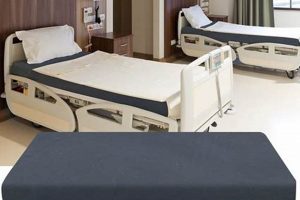
Real-life examples abound where inadequate motorized base durability has led to premature failure and user dissatisfaction. Reports frequently cite instances of motor burnout, frame bending, and component breakage within a short period of ownership. These failures not only disrupt sleep but also necessitate costly repairs or replacements, negating the initial investment in an adjustable bed. Conversely, bases built to withstand heavy use, employing reinforced frames and reliable motors, have demonstrated resilience over many years. A notable practical application arises in healthcare settings, where adjustable beds are subjected to frequent adjustments and heavy loads. Durability in these environments is paramount, ensuring that patients receive consistent and reliable support without the risk of mechanical breakdown. The ability to withstand constant use underscores the significance of selecting an adjustable bed system with a robust and well-engineered motorized base.
In summary, the connection between motorized base durability and the overall performance of adjustable beds is undeniable. A durable base is not merely a desirable feature but an essential requirement for long-term satisfaction and functionality. The selection of adjustable beds should prioritize the quality of materials, motor specifications, and overall construction to mitigate the risk of premature failure and maximize the investment. The practical implications of this understanding extend from individual consumers seeking improved sleep to healthcare providers relying on adjustable beds for patient care. Addressing the challenges associated with inferior durability through informed selection and rigorous quality control remains paramount.
5. Space Requirement Evaluation
Space Requirement Evaluation is an essential consideration in the selection and integration of adjustable beds into a residential environment. Careful assessment of available space is necessary to ensure both functionality and aesthetic harmony, especially when dealing with the significant footprint of adjustable bed systems.
- Base Dimensions and Range of Motion
Adjustable bed bases typically exceed the dimensions of standard bed frames to accommodate the internal mechanisms and range of motion. The evaluation must account for the bed’s footprint in both its flat and fully articulated positions. Failure to consider this can lead to obstruction of walkways, limited access to bedside furniture, and an overall cramped feeling within the room. Accurate measurements and consideration of articulation paths are paramount for a successful integration.
- Clearance for Headboard and Footboard
Existing headboards and footboards may not be compatible with adjustable bed frames due to interference with the motorized components or the bed’s articulation. A proper evaluation necessitates assessing the clearance between the frame and any existing furniture pieces. In some cases, alternative mounting solutions or the removal of existing furniture may be necessary to accommodate the adjustable bed system without compromising functionality or aesthetics. Compatibility
checks are crucial during pre-purchase planning. - Proximity to Electrical Outlets
Adjustable beds require access to electrical outlets to power their motorized components. The space requirement evaluation should consider the proximity of available outlets to the bed’s intended location. Extension cords or power strips may be necessary if outlets are not readily accessible, but these should be used with caution to avoid safety hazards and aesthetic detractions. Strategically positioning the bed in relation to existing electrical infrastructure enhances convenience and minimizes potential risks.
- Impact on Room Layout and Functionality
The introduction of an adjustable bed may necessitate a re-evaluation of the room’s overall layout and functionality. Its larger footprint and potential range of motion can affect traffic flow, accessibility to other furniture pieces, and the overall sense of spaciousness. A comprehensive evaluation considers how the adjustable bed system integrates with the existing environment, ensuring that it enhances rather than detracts from the room’s usability and aesthetic appeal. Careful planning ensures that the bed does not dominate the room but rather complements its overall design.
These elements highlight the importance of a thorough Space Requirement Evaluation. Failing to account for each of these aspects can lead to operational challenges and undermine both user satisfaction and design cohesion. By comprehensively evaluating the interaction between “city mattress adjustable beds” and their intended environment, users can make informed decisions that result in comfortable, functional, and aesthetically pleasing bedroom setups.
Frequently Asked Questions About “city mattress adjustable beds”
The following addresses common inquiries regarding the selection, functionality, and maintenance of adjustable bed systems offered by City Mattress.
Question 1: What mattress types are compatible with City Mattress adjustable beds?
City Mattress adjustable beds are generally compatible with memory foam, latex, and some hybrid mattresses. Innerspring mattresses with rigid coil systems may not conform properly to the adjustable base and are typically not recommended. Consult the specific product details or contact City Mattress customer service for mattress compatibility confirmation.
Question 2: What is the typical weight capacity of a City Mattress adjustable bed?
Weight capacity varies depending on the specific model. Generally, City Mattress adjustable beds can support between 650 and 850 pounds, including the mattress and occupants. Refer to the manufacturer’s specifications for the exact weight capacity of the chosen model. Exceeding the weight limit can damage the base and void the warranty.
Question 3: How can the motor noise levels be minimized on City Mattress adjustable beds?
City Mattress adjustable beds are designed to operate with minimal noise. To ensure quiet operation, verify that the base is properly assembled and leveled on a flat surface. Avoid placing the bed against walls or furniture that may amplify vibrations. If excessive noise persists, contact City Mattress customer service for troubleshooting assistance.
Question 4: What is the typical warranty coverage for City Mattress adjustable beds?
Warranty coverage varies depending on the specific model. City Mattress adjustable beds typically include a limited warranty covering the frame, motor, and electrical components. Review the warranty documentation carefully to understand the terms, duration, and limitations of coverage. Proper maintenance and adherence to usage guidelines are essential for maintaining warranty validity.
Question 5: How frequently should City Mattress adjustable beds be inspected and maintained?
Regular inspection and maintenance are recommended to ensure optimal performance and longevity. Inspect the frame, motor, and electrical components for any signs of damage or wear every six months. Vacuum the base regularly to remove dust and debris. Consult the owner’s manual for specific maintenance recommendations.
Question 6: Where can replacement parts for City Mattress adjustable beds be obtained?
Replacement parts can be obtained through City Mattress customer service or authorized retailers. Provide the model number and a detailed description of the required part. Retaining the original purchase receipt and warranty information will facilitate the replacement process.
These FAQs address key considerations related to City Mattress adjustable beds. Understanding mattress compatibility, weight capacity, noise levels, warranty coverage, maintenance requirements, and replacement part availability is vital for informed decision-making and long-term satisfaction.
The following section will delve into potential issues, troubleshooting steps, and preventative measures to ensure continued performance of your adjustable bed.
Conclusion
This discussion has provided an overview of the characteristics and considerations pertinent to City Mattress adjustable beds. It has addressed mattress compatibility, weight capacity, motorized base durability, space requirements, and potential health benefits. A thorough understanding of these factors is crucial for consumers seeking to make an informed purchase.
Ultimately, the decision to invest in City Mattress adjustable beds rests on individual needs and priorities. By carefully evaluating the presented information and aligning it with personal requirements, individuals can determine whether these specialized sleep systems offer a worthwhile enhancement to their sleep environment.