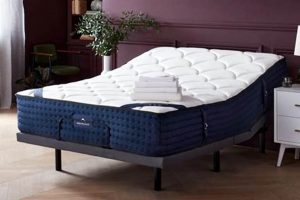
Specialized support surfaces designed to alleviate pressure on bony prominences are crucial for individuals at risk of developing pressure ulcers. These surfaces aim to redistribute weight, minimizing concentrated pressure points that can lead to tissue damage and subsequent breakdown, commonly observed in individuals with limited mobility or sensory impairment. An effective support surface often incorporates features like pressure redistribution, moisture management, and microclimate control.
The implementation of such surfaces offers substantial benefits, including a reduction in the incidence of pressure ulcers, improved patient comfort, and decreased healthcare costs associated with wound care. Historically, advancements in material science and engineering have driven the evolution of these surfaces, moving from basic foam padding to sophisticated air-filled and alternating pressure designs that dynamically adjust to a patients position and weight distribution. This evolution reflects a growing understanding of the pathogenesis of pressure ulcers and the critical role of pressure relief in prevention.
The following sections will delve into the different types of support surfaces available, focusing on their specific characteristics, applications, and considerations for selection. A detailed examination of key features, such as material composition, pressure redistribution capabilities, and maintenance requirements, will provide a comprehensive overview for healthcare professionals and caregivers involved in pressure ulcer prevention.
Guidance on Pressure Ulcer Prevention Through Support Surfaces
The effective utilization of support surfaces is paramount in minimizing the risk of pressure ulcer development. The following guidance outlines essential considerations for implementing and maintaining appropriate support surfaces to safeguard vulnerable individuals.
Tip 1: Select the Appropriate Surface: Evaluate the individual’s risk factors, including mobility, sensory perception, and nutritional status, to determine the optimal support surface. Higher-risk individuals typically require surfaces with advanced pressure redistribution capabilities.
Tip 2: Ensure Proper Sizing: The support surface must adequately accommodate the individual’s body dimensions. Overhang or contact with hard surfaces can negate the pressure relief benefits.
Tip 3: Adhere to Manufacturer Instructions: Regularly consult and follow the manufacturer’s guidelines for inflation levels, cleaning procedures, and weight capacity to maintain optimal performance and prevent damage.
Tip 4: Implement a Regular Inspection Schedule: Routinely inspect the support surface for signs of wear, damage, or deflation. Promptly address any issues to ensure continued effectiveness.
Tip 5: Educate Caregivers and Individuals: Comprehensive education on the proper use, maintenance, and limitations of the support surface is crucial for consistent and effective pressure ulcer prevention.
Tip 6: Regular Repositioning: Even with an appropriate support surface, scheduled repositioning remains essential to offload pressure from vulnerable areas and promote blood flow.
Tip 7: Optimize the Microclimate: Manage moisture levels on the skin by utilizing breathable fabrics and addressing incontinence promptly to prevent maceration, which increases pressure ulcer risk.
The consistent application of these guidelines, combined with a comprehensive pressure ulcer prevention program, will significantly reduce the incidence of pressure ulcers and improve patient outcomes. Effective implementation requires a collaborative approach involving healthcare professionals, caregivers, and the individual at risk.
The subsequent sections will explore specific support surface types and technologies in greater detail, providing a deeper understanding of their features and benefits in pressure ulcer prevention.
1. Pressure Redistribution
Pressure redistribution forms a cornerstone of effective pressure ulcer prevention within specialized support surfaces. The primary mechanism of these surfaces involves evenly distributing body weight over a larger contact area, thereby mitigating concentrated pressure on bony prominences, which are particularly susceptible to tissue ischemia and subsequent breakdown. Failure to redistribute pressure adequately is a direct causative factor in the development of pressure ulcers. For example, an individual confined to a standard hospital bed with a thin mattress experiences prolonged, concentrated pressure on the sacrum and heels, increasing the likelihood of ulcer formation. In contrast, a low air loss mattress, designed to cyclically inflate and deflate air cells, dynamically redistributes pressure, minimizing sustained pressure on these high-risk areas.
The importance of pressure redistribution is further highlighted by the prevalence of pressure ulcers in immobile patients. Individuals with spinal cord injuries or those recovering from major surgery often experience impaired mobility, necessitating reliance on specialized support surfaces. Without effective pressure redistribution, capillary blood flow is compromised, leading to tissue hypoxia, cell death, and ulceration. The effectiveness of a given surface in redistributing pressure is commonly assessed through pressure mapping, which quantifies the pressure exerted between the patient and the support surface. This data informs the selection of the most appropriate surface based on the individual’s risk factors and specific pressure distribution needs. For instance, a patient with a high body mass index may require a surface with a higher weight capacity and more robust pressure redistribution capabilities compared to a patient with a lower body mass index.
In summary, pressure redistribution is an indispensable component of specialized support surfaces, functioning to mitigate the development of pressure ulcers by minimizing sustained pressure on vulnerable bony prominences. Understanding the mechanics of pressure redistribution, combined with appropriate surface selection and ongoing monitoring, is critical for achieving optimal pressure ulcer prevention outcomes. The challenges lie in accurately assessing individual risk factors, selecting the most appropriate surface from a wide range of options, and ensuring consistent adherence to manufacturer guidelines for optimal performance and longevity.
2. Moisture Management
Excessive moisture, originating from perspiration, incontinence, or wound drainage, significantly elevates the risk of pressure ulcer development. Prolonged exposure to moisture macerates the skin, weakening its integrity and rendering it more susceptible to friction, shear forces, and pressure-induced damage. Therefore, effective moisture management is integral to specialized support surfaces designed to miti
gate pressure ulcer formation. The primary function of moisture management in these surfaces is to wick away excess moisture from the skin’s surface, maintaining a dry microclimate and preserving skin integrity. For instance, consider a patient with urinary incontinence lying on a standard hospital mattress; the prolonged contact with urine creates a warm, moist environment, promoting bacterial growth and skin breakdown. In contrast, a support surface with moisture-wicking properties and a vapor-permeable cover facilitates the evaporation of moisture, reducing the risk of maceration and subsequent ulcer development.
The implementation of moisture management strategies within specialized support surfaces often involves the use of specific materials and designs. For example, fabrics engineered with hydrophilic properties actively draw moisture away from the skin, while vapor-permeable covers allow moisture to escape into the surrounding environment without compromising the surface’s waterproof barrier. Some surfaces incorporate air circulation systems that further enhance moisture evaporation and promote a dry microclimate. Real-world examples illustrate the practical significance of moisture management. In long-term care facilities, where incontinence is prevalent, the utilization of support surfaces with advanced moisture management features has been shown to significantly reduce the incidence of moisture-associated skin damage and pressure ulcers. Furthermore, prompt and effective incontinence management protocols are crucial in conjunction with these surfaces to prevent saturation and maintain their effectiveness.
In summary, moisture management is a critical component of specialized support surfaces for pressure ulcer prevention. By maintaining a dry microclimate, these surfaces mitigate skin maceration, reduce the risk of bacterial growth, and enhance the skin’s resilience to pressure, friction, and shear forces. Challenges remain in accurately assessing individual moisture levels, selecting surfaces with appropriate moisture management capabilities, and ensuring consistent adherence to incontinence management protocols. However, the integration of effective moisture management strategies into a comprehensive pressure ulcer prevention plan is essential for safeguarding vulnerable individuals and promoting optimal skin health.
3. Shear Reduction

Shear forces, generated when tangential forces distort tissue, play a significant role in pressure ulcer development, necessitating shear reduction strategies within specialized support surfaces. Understanding the mechanics of shear is critical for mitigating its impact and optimizing pressure ulcer prevention.
- Role of Surface Material
The surface material of a mattress directly influences shear forces. Materials with low friction coefficients, such as silicone-coated fabrics or specialized polymer films, minimize resistance to movement, thereby reducing shear stress on underlying tissues. For instance, a patient sliding down a bed covered with a high-friction cotton sheet experiences substantial shear forces compared to the same patient on a low-friction surface. This difference significantly impacts the risk of pressure ulcer formation, especially in individuals with limited mobility.
- Impact of Mattress Design
The design of the mattress, including its contouring and articulation, affects shear distribution. Mattresses designed with segmented or hinged sections allow for more natural body movement and reduce the dragging effect that generates shear. For example, a mattress that articulates at the hip and knee joints accommodates Fowler’s position without subjecting the sacrum to excessive shear. This design consideration is particularly relevant for individuals who spend extended periods in semi-recumbent positions.
- Relationship to Repositioning
While a specialized support surface reduces shear, it does not eliminate the need for regular repositioning. Repositioning strategies must consider shear reduction techniques, such as lifting rather than dragging the patient, to minimize tissue distortion. Ineffective repositioning can negate the benefits of a shear-reducing mattress and inadvertently contribute to pressure ulcer development. Consequently, caregiver training on proper repositioning techniques is crucial.
- Effect on Microclimate
Moisture accumulation exacerbates shear-related skin damage. A moist environment increases the coefficient of friction between the skin and the support surface, amplifying the effects of shear forces. Therefore, shear-reducing mattresses must also incorporate moisture management properties to maintain a dry microclimate. Combining low-friction materials with effective moisture wicking further minimizes the risk of pressure ulcer formation.
The facets of shear reduction, encompassing surface material, mattress design, repositioning strategies, and microclimate control, are interdependent components of effective pressure ulcer prevention. Specialized support surfaces designed to minimize shear forces, coupled with appropriate care protocols, significantly reduce the incidence of pressure ulcers in at-risk individuals.
4. Microclimate Control

Microclimate control, pertaining to the temperature and humidity at the skin-support surface interface, represents a critical factor in specialized support surfaces designed for pressure ulcer prevention. Elevated temperature and humidity levels contribute to skin maceration, weakening its barrier function and increasing susceptibility to friction, shear, and pressure-related damage. Without effective regulation of the microclimate, the risk of pressure ulcer development significantly increases, regardless of the pressure redistribution capabilities of the support surface. An example illustrating this connection is a patient with limited mobility residing on a standard foam mattress in a warm environment. The lack of ventilation and moisture-wicking properties leads to perspiration accumulation, creating a warm, moist microclimate that compromises skin integrity.
Specialized support surfaces address microclimate control through various design features and material selection. Breathable fabrics, moisture-wicking materials, and integrated airflow systems actively regulate temperature and humidity levels. For example, low air loss mattresses circulate air through the support surface, promoting evaporation and dissipating heat. In clinical settings, the implementation of these surfaces demonstrates a measurable reduction in skin maceration and associated pressure ulcer incidence. Understanding the interplay between microclimate, skin integrity, and pressure ulcer risk informs the selection of appropriate support surfaces and guides the implementation of comprehensive skin care protocols. Factors such as environmental conditions, patient activity levels, and incontinence status further influence the microclimate and necessitate tailored intervention strategies.
In summary, microclimate control is an indispensable component of support surfaces engineered to prevent pressure ulcers. By regulating temperature and humidity at the skin surface, these surfaces mitigate maceration, enhance skin resilience, and reduce the overall risk of pressure ulcer formation. Achieving effective microclimate control requires a multifaceted approach encompassing appropriate surface selection, environmental management, and in
dividualized skin care practices. Integrating these principles into clinical practice remains essential for optimizing pressure ulcer prevention outcomes and promoting patient well-being.
5. Support Surface Selection
Appropriate selection of a support surface is paramount in mitigating pressure ulcer risk, particularly when considering specialized mattresses designed for prevention. Informed decision-making, guided by patient-specific risk assessments and an understanding of surface characteristics, directly impacts the effectiveness of a mattress in preventing tissue breakdown.
- Risk Assessment Integration
Selecting a support surface necessitates integration of a comprehensive risk assessment, utilizing validated tools such as the Braden Scale or Norton Scale. These assessments identify individuals at high risk based on factors like mobility, sensory perception, and nutritional status. For instance, an immobile patient with poor nutritional intake warrants a higher-specification mattress with advanced pressure redistribution capabilities compared to a more mobile individual. Overlooking these risk factors compromises the prophylactic benefits of any specialized mattress.
- Surface Type and Technology
The market offers various mattress types, including foam, alternating air, and low air loss surfaces, each employing different technologies for pressure redistribution and microclimate control. Foam mattresses provide basic support and pressure redistribution, while alternating air mattresses cyclically inflate and deflate to relieve pressure. Low air loss mattresses add moisture management through continuous airflow. Selecting the appropriate technology depends on the patient’s risk level and specific needs. A patient with established pressure ulcers, for example, may benefit from a low air loss mattress to promote wound healing and manage moisture.
- Weight Capacity and Dimensions
Ensuring the selected mattress accommodates the patient’s weight and body dimensions is critical for its effective function. Exceeding the manufacturer’s weight capacity can compromise pressure redistribution and accelerate mattress degradation. Similarly, a mattress that is too small may not adequately support vulnerable areas, increasing pressure concentration. Proper sizing and weight capacity are fundamental considerations, often overlooked but essential for maximizing therapeutic benefits.
- Maintenance and Longevity
The maintenance requirements and expected lifespan of a support surface should factor into the selection process. Some mattresses require specialized cleaning procedures or periodic recalibration to maintain optimal performance. A durable mattress that retains its pressure redistribution properties over time provides a more cost-effective solution compared to a less robust option requiring frequent replacement. Evaluating the long-term cost of ownership, including maintenance and replacement, is a key aspect of informed selection.
In conclusion, strategic support surface selection, grounded in rigorous risk assessment, technological understanding, and consideration of practical factors like weight capacity and maintenance, is integral to realizing the preventative benefits of any specialized mattress. A well-informed selection process optimizes pressure redistribution, minimizes complications, and promotes improved patient outcomes.
Frequently Asked Questions
The following questions address common concerns and misconceptions regarding the use of specialized mattresses in preventing pressure ulcers. These answers aim to provide clear and concise information for healthcare professionals and caregivers.
Question 1: How does a mattress designed for pressure ulcer prevention differ from a standard mattress?
A specialized mattress incorporates design and material characteristics that redistribute pressure, manage moisture, reduce shear forces, and control microclimate, features generally absent in standard mattresses. These characteristics minimize concentrated pressure on bony prominences and create an environment less conducive to skin breakdown.
Question 2: Is a specialized mattress sufficient to prevent pressure ulcers on its own?
A specialized mattress serves as a crucial component of a comprehensive pressure ulcer prevention strategy, but it is not a standalone solution. Regular repositioning, meticulous skin care, adequate nutritional support, and consistent monitoring remain essential for optimal prevention.
Question 3: How frequently should a specialized mattress be cleaned?
Cleaning frequency depends on the specific mattress type and manufacturer recommendations. Generally, the mattress should be cleaned and disinfected after each patient use and according to a regularly scheduled maintenance protocol. Prompt cleaning is necessary following any soiling from bodily fluids.
Question 4: What are the key indicators that a specialized mattress is no longer effective?
Indicators of reduced effectiveness include visible damage (tears, punctures), deflation or loss of air pressure, uneven pressure distribution, persistent moisture accumulation, and failure to conform to the patient’s body contours. Any of these signs necessitate mattress repair or replacement.
Question 5: Are all specialized mattresses suitable for all patients?
No. Mattress selection must align with the patient’s individual risk factors, weight, mobility level, and specific needs. A comprehensive risk assessment is essential to determine the most appropriate mattress type and features for each patient.
Question 6: Can a specialized mattress completely eliminate the risk of pressure ulcer development?
While specialized mattresses significantly reduce the risk of pressure ulcers, they cannot eliminate it entirely. Persistent pressure, even on a specialized surface, coupled with other risk factors, can still lead to tissue breakdown. Vigilant monitoring and adherence to comprehensive prevention protocols remain crucial.
Specialized mattresses offer a valuable tool in the fight against pressure ulcers, but their effectiveness hinges on appropriate selection, proper maintenance, and integration within a comprehensive prevention strategy.
The following section will address practical considerations for integrating specialized mattresses into various healthcare settings.
Conclusion
The preceding exploration has detailed the function and critical attributes of a mattress engineered to prevent bed sores. Key points underscore the significance of pressure redistribution, moisture management, shear reduction, and microclimate control. Optimal selection and consistent maintenance of these specialized support surfaces are vital for mitigating the risk of pressure ulcer development, particularly within vulnerable populations.
Sustained vigilance and adherence to established clinical protocols remain paramount. Continued research and technological advancements offer the potential for further enhancements in support surface design and effectiveness. Prioritizing the integration of these preventative measures represents a tangible commitment to improving patient outcomes and reducing the incidence of pressure-related injuries.