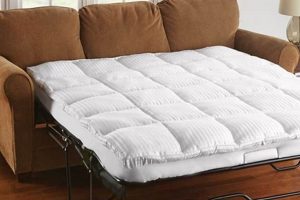
A new sleeping surface designed to fit a folding guest bed offers a practical solution for enhanced comfort and support. These mattresses are specifically dimensioned to accommodate the unique frame structure of portable beds, ensuring proper fit and functionality when the bed is both open and folded for storage. For instance, a worn or inadequate mattress on such a bed can be exchanged with a model engineered for improved sleep quality.
The significance of a suitable sleeping surface for a folding guest bed is often underestimated. A quality mattress can substantially improve the sleeping experience for guests, contributing to their overall well-being and satisfaction. Historically, these beds often came with thin, uncomfortable mattresses, but advancements in materials and manufacturing have led to the availability of options that prioritize support, durability, and comfort. This upgrade is a worthwhile investment, enhancing the utility and hospitality provided by the folding bed.
The following discussion will delve into the key considerations when selecting a new sleeping surface for a portable bed, including factors such as size, material, thickness, and storage considerations. An exploration of different mattress types and their suitability for these beds will also be provided.
Tips for Choosing a New Mattress
Selecting the appropriate sleeping surface for a folding guest bed requires careful consideration of several factors to ensure both comfort and practicality. Prioritize specifications and features that align with the bed’s intended use and storage requirements.
Tip 1: Confirm Bed Frame Dimensions: Accurate measurements of the folding bed frame are essential. Mattress size must correspond precisely to the frame to prevent shifting during use or difficulty when folding the bed for storage.
Tip 2: Evaluate Mattress Thickness: Thickness affects comfort and foldability. Thicker mattresses offer more cushioning but may hinder the bed’s ability to fold completely. Balance these factors based on usage frequency and storage space limitations.
Tip 3: Consider Material Composition: Options range from innerspring to memory foam and hybrid designs. Memory foam conforms to the body, while innerspring provides firmer support. Hybrid models combine elements of both.
Tip 4: Assess Weight and Portability: A lighter mattress facilitates easier setup and breakdown of the folding bed. Consider the weight of the mattress, particularly if the bed is frequently moved or stored.
Tip 5: Prioritize Breathability: Materials with enhanced breathability, such as open-cell foam or mattresses with ventilation channels, help regulate temperature and improve sleep comfort, especially in warmer climates.
Tip 6: Check for Certifications: Look for certifications such as CertiPUR-US, which indicate that the mattress foam has been tested for harmful substances and meets certain emissions standards. This ensures a safer and healthier sleep environment.
Tip 7: Evaluate Storage Conditions: If the bed is stored frequently, consider a mattress with a durable cover that can withstand compression and resist dust or moisture damage during storage.
By carefully evaluating these factors, it is possible to select a sleeping surface for a folding guest bed that provides a comfortable and supportive sleep experience, while also maintaining the bed’s portability and ease of storage.
The next section will provide guidance on maintaining the new mattress to prolong its lifespan and preserve its quality.
1. Correct Size

The relationship between proper dimensioning and a new sleeping surface for a portable bed is one of fundamental necessity. Incorrect dimensions can negate the functionality of the bed itself. If the sleeping surface is too large, the bed will not fold correctly, hindering storage and portability. Conversely, if it is too small, gaps will exist between the mattress edge and the frame, creating potential discomfort and safety concerns. These gaps can lead to uneven support and increase the risk of the mattress shifting during use.
The selection of a new sleeping surface specifically engineered for the dimensions of a rollaway bed frame is therefore a non-negotiable element. For example, a standard twin mattress, while similar in size, will often not conform precisely to the smaller, more compact dimensions of a folding guest bed. Attempts to force a larger mattress into a smaller frame can damage both the mattress and the bed’s folding mechanism. Likewise, using a mattress that is too short will leave exposed frame edges, increasing the risk of injury. Therefore, the “correct size” is not merely a desirable attribute, but a prerequisite for safe and effective operation.
In conclusion, precise dimensional accuracy is paramount when sourcing a sleeping surface for a folding guest bed. The functionality, safety, and overall utility of the bed are directly contingent on adherence to the specified dimensions. Failure to prioritize this aspect can lead to inconvenience, damage, and potential injury, thereby undermining the intended purpose of the portable bed solution.
2. Appropriate Thickness
The thickness of a new sleeping surface for a folding bed is a critical determinant of both comfort and functionality. It is a direct causal factor in the bed’s ability to fold correctly and the sleeper’s overall experience. Insufficient thickness may result in inadequate support and pressure relief, leading to discomfort and potentially disrupting sleep quality. Conversely, excessive thickness can impede the folding mechanism, preventing the bed from closing completely and compromising its storage capabilities. The “appropriate thickness” is therefore not an arbitrary dimension but a carefully considered balance between these competing needs. For example, if a mattress is too thick, the folding bed will not latch securely, increasing the risk of it unfolding unexpectedly during storage or transport.
A real-world example highlights the practical significance of this consideration. A hotel chain equipped its guest rooms with folding beds featuring mattresses that were overly thick, believing it would improve guest comfort. However, the beds became difficult to store, requiring significant physical effort to fold and latch. This led to increased strain on housekeeping staff and, in some instances, damage to the bed frames. Ultimately, the hotel had to replace the mattresses with thinner models that allowed for proper folding and storage, demonstrating the importance of matching mattress thickness to the bed’s design specifications.
In conclusion, the selection of a new sleeping surface for a folding bed requires careful evaluation of its thickness. This factor is intrinsically linked to the bed’s ability to function as intended. By unde
rstanding the interplay between thickness, comfort, and foldability, an informed choice can be made that maximizes user satisfaction while preserving the bed’s practicality. The goal is to achieve a balance that provides adequate support without compromising the core design principle of convenient storage.
3. Material Composition

The selection of materials in a sleeping surface for a folding bed directly influences factors such as comfort, support, durability, and overall product lifespan. The material composition of a new mattress designed for a portable bed is not merely an aesthetic consideration but a determinant of its functionality and suitability for its intended purpose. The choice of foam density, coil type (if applicable), and cover fabric each contribute to the mattress’s ability to withstand repeated folding and unfolding, provide adequate support for the sleeper, and resist wear and tear over time. For instance, a low-density foam may compress and lose its shape more quickly, leading to discomfort and requiring more frequent replacement.
Consider the example of a hospitality setting. Hotels and resorts frequently utilize folding beds to accommodate extra guests. If the replacement mattresses are constructed with inferior materials, they will likely exhibit signs of wear more rapidly, such as sagging, uneven support, or fabric tears. This not only impacts guest satisfaction but also increases the long-term operating costs due to the need for more frequent replacements. Conversely, a mattress incorporating high-density memory foam or a robust innerspring system, combined with a durable, stain-resistant cover fabric, can withstand the rigors of frequent use and storage, providing a more consistent and comfortable sleeping experience for guests while extending the mattress’s usable life. The practical significance lies in the balance between initial cost and long-term value.
In conclusion, material composition is a foundational element in the design and selection of a replacement mattress for a folding bed. A thorough understanding of the properties of different materials and their impact on the mattress’s performance is essential for making informed decisions that prioritize both immediate comfort and long-term durability. The optimal material selection will depend on factors such as intended usage frequency, weight capacity requirements, and budgetary constraints.
4. Storage Capability

The storage capability of a sleeping surface specifically designed for a portable bed is a primary consideration, integral to the utility and practicality of the overall system. A well-engineered mattress must not only provide adequate comfort but also maintain its structural integrity throughout repeated cycles of compression and expansion associated with storage and deployment.
- Compression Resilience
This refers to the mattress’s ability to rebound to its original shape and thickness after being compressed for extended periods during storage. Mattresses lacking sufficient compression resilience may develop permanent indentations or deformities, compromising their comfort and supportiveness. For instance, a low-density foam mattress stored in a compressed state for several months might not fully recover its original loft, leading to a diminished sleep experience.
- Material Degradation Resistance
The materials used in the mattress construction must be resistant to degradation caused by the conditions typically encountered during storage, such as humidity, temperature fluctuations, and potential pest exposure. Materials prone to mildew or insect infestation can compromise the mattress’s hygiene and longevity. A mattress stored in a damp environment, for example, may develop mold, rendering it unusable.
- Foldability Retention
The ability of the mattress to maintain its designed foldability is crucial for ensuring that the portable bed can be easily and effectively stored. If the mattress becomes overly stiff or develops permanent creases, it can hinder the folding mechanism, making storage difficult or impossible. A mattress with a rigid innerspring system might resist folding properly, preventing the bed from latching securely in the closed position.
- Protective Cover Durability
The cover material must be robust enough to withstand abrasion and other forms of physical stress encountered during storage and transportation. A fragile cover can tear or develop holes, exposing the inner components of the mattress to damage and contamination. A mattress cover made of thin, non-woven fabric might easily rip when the bed is moved or stored, exposing the foam to dust and potential damage.
These facets collectively underscore the importance of prioritizing storage capability when selecting a new sleeping surface for a portable bed. A mattress that effectively addresses these considerations will provide a more durable, hygienic, and convenient solution, maximizing the utility of the portable bed system. Neglecting storage capabilities can result in premature mattress degradation, compromised sleep comfort, and reduced overall value.
5. Support Needs

The correlation between individual support requirements and the selection of a new sleeping surface for a folding guest bed is critical for ensuring adequate rest and minimizing potential musculoskeletal strain. A mattress that fails to provide appropriate support can lead to discomfort, pain, and disrupted sleep, undermining the primary function of the bed. Therefore, understanding the specific support needs of the intended user is essential when choosing a replacement.
Support requirements are influenced by several factors, including body weight, preferred sleeping position, and any pre-existing medical conditions. For example, individuals with higher body weights generally require firmer mattresses to prevent excessive sinking and maintain spinal alignment. Side sleepers typically benefit from mattresses with softer surfaces that conform to the body’s contours, relieving pressure on the shoulders and hips. Those with back pain often require mattresses that provide a balance of support and cushioning to maintain proper spinal curvature. Consider a situation where a folding guest bed is primarily used by elderly relatives with arthritis. In this case, a memory foam mattress that conforms to the body and reduces pressure points may be a more suitable choice than a traditional innerspring mattress. Conversely, for a younger, heavier guest who prefers to sleep on their stomach, a firmer innerspring or hybrid mattress might be more appropriate. The practical significance of understanding these nuances lies in the ability to provide a sleeping environment that promotes rest and minimizes discomfort, leading to improved guest satisfaction and potentially preventing the exacerbation of existing medical conditions.
In summary, the selection of a sleeping surface for a folding guest bed must be guided by a thorough assessment of the intended user’s support needs. Failure to consider these requirements can result in discomfort, disrupted sleep, and potentially adverse health consequences. By prioritizing support needs, it is possible to choose
a replacement mattress that provides a comfortable and healthful sleeping experience, enhancing the overall utility of the folding guest bed and promoting guest well-being.
Frequently Asked Questions
The following addresses common inquiries regarding replacement mattresses for rollaway beds, providing informative answers to aid in informed decision-making.
Question 1: What is the standard size for a rollaway bed mattress?
The most prevalent dimension for a rollaway bed mattress is approximately 31 inches wide by 72 inches long. However, it is imperative to verify the specific dimensions of the existing rollaway bed frame prior to purchasing a replacement mattress.
Question 2: What is the recommended thickness for a rollaway bed mattress?
While preferences vary, a thickness ranging from four to six inches generally offers a balance between comfort and the bed’s ability to fold properly for storage. Exceeding this range may compromise the folding mechanism.
Question 3: What mattress materials are suitable for rollaway beds?
Options include innerspring, memory foam, and hybrid constructions. Memory foam offers pressure relief, while innerspring provides firmer support. Hybrid mattresses combine elements of both. The selection should consider comfort preferences and budget.
Question 4: Can any twin-sized mattress be used on a rollaway bed?
No. Standard twin mattresses typically exceed the dimensions of rollaway bed frames. Using an improperly sized mattress may impede the bed’s folding function and potentially damage the frame.
Question 5: How does one maintain a rollaway bed mattress to prolong its lifespan?
Regular rotation of the mattress can promote even wear. Furthermore, the use of a mattress protector can safeguard against spills and stains. Proper storage in a dry environment is also essential.
Question 6: Where can a replacement mattress for a rollaway bed be acquired?
These mattresses can be found at online retailers specializing in bedding products, department stores, and furniture stores. It is advisable to compare specifications and read customer reviews before making a purchase.
Selecting the appropriate replacement sleeping surface necessitates careful consideration of size, thickness, material, and storage requirements to maximize comfort and usability.
The subsequent section will explore the maintenance practices necessary to prolong the lifespan of a rollaway bed mattress.
Replacement Mattress for Rollaway Bed
The preceding discussion has examined the salient factors in selecting a suitable sleeping surface for a portable guest bed. The emphasis has been on size conformity, appropriate thickness, material properties, storage considerations, and individual support requirements. Each of these elements contributes to the overall comfort, functionality, and longevity of the “replacement mattress for rollaway bed” and the bed itself.
The information presented herein serves as a guide for consumers seeking to enhance the utility and comfort of their folding guest beds. Prioritizing these considerations will lead to more informed purchasing decisions, ultimately resulting in a better sleep experience for guests and a more practical and durable portable bedding solution. The investment in a quality replacement sleeping surface reflects a commitment to both hospitality and long-term value.