A large sleeping surface, typically measuring approximately 76 inches wide by 80 inches long, designed to accommodate two adults comfortably. This configuration requires both a supporting frame and a cushioned component for optimal use. For example, individuals seeking greater personal space during sleep often select this option over smaller alternatives.
The spaciousness offers benefits such as reduced sleep disturbance from a partner’s movements and increased comfort for taller individuals. Historically, larger sleeping arrangements signified affluence and provided improved rest, contributing to overall well-being. These attributes have sustained its popularity, positioning it as a desirable choice for master bedrooms.
The following sections will delve into the various types, associated accessories, and considerations for selecting the appropriate sleeping arrangement for individual needs.
Guidance on Selection and Maintenance
Careful consideration during selection and consistent maintenance are essential to maximize longevity and comfort. The following guidance addresses critical aspects of ownership.
Tip 1: Evaluate Room Dimensions: Prior to purchase, accurately measure the intended room. Ensure sufficient space exists for the frame and surrounding furniture, allowing for ease of movement.
Tip 2: Consider Support System: Explore various support options, including box springs, platform frames, and adjustable bases. Match the support system to the type of cushioning component to ensure proper support and prevent premature wear.
Tip 3: Research Material Composition: Different materials offer varying levels of support, temperature regulation, and durability. Investigate inner springs, memory foam, latex, and hybrid models to determine the most suitable option based on individual needs and preferences.
Tip 4: Account for Weight Distribution: Consider the weight of individuals sharing the surface. A higher coil count or increased density of foam may be necessary to prevent sagging and maintain even support across the entire area.
Tip 5: Rotate Regularly: Periodic rotation distributes wear evenly, preventing impressions and prolonging the lifespan. Rotate it every three to six months, depending on the manufacturer’s recommendations.
Tip 6: Utilize a Mattress Protector: A waterproof protector shields against spills, stains, and allergens. This barrier significantly extends the lifespan and maintains hygiene.
Tip 7: Follow Cleaning Instructions: Adhere to the manufacturer’s guidelines for cleaning. Vacuuming regularly removes dust mites and debris. Address spills promptly with appropriate cleaning solutions.
Implementing these practices ensures optimal performance and extends the useful life, providing consistent comfort and support over time.
The subsequent section presents a detailed comparative analysis of common materials and construction methods.
1. Dimensions
The physical dimensions are a fundamental characteristic, dictating the suitability of the sleeping arrangement for a given space and user requirements. The standard measurements, typically 76 inches in width and 80 inches in length, establish its capacity to accommodate two adults with ample personal space. Failure to consider dimensions prior to acquisition can result in spatial incompatibility, hindering movement within the bedroom and compromising functionality. For instance, attempting to place this sleeping set in a small room may necessitate rearranging or eliminating other furniture, disrupting the room’s intended design.
Precise measurement of the available space is thus essential. These measurements must account not only for the frame and cushioning component but also for any required clearances for doors, walkways, and other furnishings. Furthermore, the thickness of the cushioning component influences the overall height of the sleeping surface, affecting accessibility for individuals with mobility limitations. Example: If the ceiling fan is too close to the top of the sleeping surface it will affect the space of the user. Choosing the correct height of both the frame and cushioning component is important.
In summary, attention to dimensions is paramount when selecting. Spatial constraints can dictate the feasibility of incorporating it into a specific environment. Understanding these dimensional implications ensures a harmonious integration within the intended space and accommodates the physical needs of the occupants.
2. Support System

The support system is a critical determinant of overall performance and longevity. It provides the foundation upon which the cushioning component rests, influencing comfort, spinal alignment, and the distribution of weight. Inadequate support can lead to premature sagging, uneven wear, and compromised sleep quality. The selection of an appropriate system must be aligned with the type of cushioning component and the weight of the occupants. For instance, a memory foam surface often requires a solid platform or closely spaced slats to prevent sinking, whereas an inner spring may function effectively with a box spring.
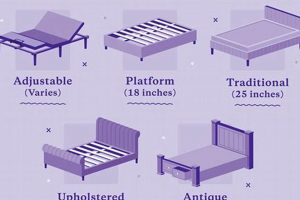
Various support systems exist, each offering unique advantages and disadvantages. Box springs, traditionally paired with innerspring mattresses, provide a degree of shock absorption and elevation. Platform beds, with their solid or slatted surfaces, offer firm support and eliminate the need for a box spring. Adjustable bases allow for customized positioning, offering therapeutic benefits for individuals with specific medical conditions. The incorrect pairing of support and cushioning component can negate the intended benefits. For example, placing a high-density latex on a flimsy slatted frame could lead to uneven support and diminished comfort.
In summary, the support system is not merely an ancillary element; it is an integral component influencing the performance and lifespan. Informed selection requires careful consideration of the cushioning component’s characteristics, the occupants’ weight, and desired comfort level. Neglecting this aspect can undermine the investment and compromise sleep quality, highlighting the practical significance of understanding the correlation between support and overall functionality.
3. Material Composition

The selection of materials fundamentally dictates the performance characteristics of a sleeping surface. Material composition affects factors such as support, temperature regulation, durability, and allergen resistance. A “king bed and mattress” constructed with high-density memory foam, for example, will exhibit a distinctively different feel and longevity compared
to one using traditional innerspring coils and a cotton ticking. The choice of materials directly impacts the user’s sleep quality and the overall lifespan of the product. For example, natural latex offers a combination of support and breathability. The innersprings use steel. The steel and latex contribute to the overall weight and long term durablity.
Different materials also present varying degrees of susceptibility to wear and tear. Lower-quality foams may degrade rapidly, leading to sagging and discomfort, thereby shortening the usable life. In contrast, materials such as high-density memory foam or reinforced steel coils are designed to withstand extended use, maintaining their structural integrity over time. Furthermore, the presence of certain materials can exacerbate or alleviate allergen sensitivities. Hypoallergenic materials, such as natural latex or tightly woven fabrics, minimize the accumulation of dust mites and other allergens, providing a healthier sleeping environment. The composition affects the temperature regulation. For example, latex allows for a temperature controlled environment for a comfortable sleeping arrangement.
In summation, material composition is a critical design element. Informed decision-making regarding the material selection is essential for optimizing comfort, ensuring durability, and promoting overall well-being. A failure to consider these factors can result in compromised sleep quality, reduced product lifespan, and potential exposure to allergens, underscoring the need for careful assessment of materials prior to purchasing.
4. Weight Distribution

Weight distribution is a paramount consideration in relation to this sleeping surface due to its direct impact on comfort, support, and the longevity. Even weight distribution across the entire surface ensures consistent support and prevents localized sagging or depressions, which can compromise sleep quality and accelerate wear.
- Support Core Integrity
The core component’s ability to evenly distribute weight is crucial. Inadequate weight distribution can result in uneven compression of the support system, leading to premature failure in specific areas. For example, a sleeping arrangement that is disproportionately stressed in the center will likely exhibit sagging in that area, while the edges remain firmer, creating an uncomfortable sleeping surface.
- Material Density and Construction
Variations in material density and construction across different sections can lead to inconsistencies in weight distribution. If certain areas are constructed with lower density materials, they will compress more readily under load, creating uneven support. For example, a hybrid construction with a low-density foam perimeter may exhibit edge sagging, especially with repeated use.
- Partner Weight Discrepancies
When two individuals with significantly different weights share the same area, proper weight distribution becomes even more critical. The heavier individual will exert greater pressure on their side, potentially leading to uneven compression and reduced support over time. Models designed with zoned support or adjustable firmness levels can mitigate this issue by providing targeted support to areas experiencing greater load.
- Edge Support Systems
Edge support systems play a crucial role in maintaining consistent weight distribution across the entire surface, particularly along the perimeter. Weak or absent edge support can result in sagging and a feeling of roll-off, diminishing the usable sleeping area and compromising comfort. Reinforced edges with high-density foam or steel supports can enhance weight distribution and provide a more stable and supportive sleeping surface.
Addressing weight distribution is not merely a matter of comfort, but a practical investment in the long-term performance. Selecting a support surface with materials that promote even weight distribution, and a proper maintenance rotation plan, ensure the longevity of the sleep arrangement.
5. Longevity
The longevity of a “king bed and mattress” is a critical attribute, representing the duration for which it provides adequate support and comfort. Longevity is directly correlated to the quality of materials used in its construction, as well as the adherence to recommended maintenance practices. High-density foams, reinforced coil systems, and durable ticking fabrics contribute to extended lifespan, while inferior materials are prone to premature degradation, resulting in sagging, reduced support, and compromised sleep quality. For instance, a model utilizing low-density polyurethane foam may exhibit significant compression within a few years of use, while a model constructed with natural latex and individually pocketed coils can maintain its structural integrity for a decade or more.
Proper maintenance significantly influences lifespan. Regular rotation of the cushioning component distributes wear evenly, preventing the formation of body impressions. Utilizing a protective encasement shields against spills, stains, and allergens, mitigating material breakdown and maintaining hygiene. Failure to follow these maintenance protocols can drastically reduce the lifespan, regardless of the initial quality of the components. A model left unprotected from spills is susceptible to mold and mildew growth, compromising its structural integrity and posing potential health risks. Consistent vacuuming reduces dust mite populations and prevents the accumulation of debris within the cushioning materials.
Ultimately, longevity is a significant factor in the overall cost-effectiveness. While a lower initial price point may seem appealing, a purchase that requires frequent replacement proves more expensive over the long term. Therefore, a thorough evaluation of materials, construction methods, and required maintenance practices is essential for maximizing the return on investment and ensuring sustained comfort and support over an extended period. A sleeping arrangement that is selected in an informed way extends the length of support.
6. Hygiene
Hygiene, in the context of a “king bed and mattress,” refers to maintaining a clean and sanitary sleeping environment to minimize health risks and maximize the useful lifespan of the product. The expansive surface area inherent to its dimensions creates a greater potential for the accumulation of dust mites, allergens, body fluids, and other contaminants. Failure to uphold adequate hygiene standards can lead to a proliferation of these elements, triggering allergic reactions, exacerbating respiratory conditions, and potentially fostering the growth of mold or bacteria. For example, prolonged exposure to dust mite allergens can induce asthma symptoms in susceptible individuals, disrupting sleep patterns and negatively impacting overall well-being.
The porous nature of many cushioning materials further compounds the challenge of maintaining hygiene. Fabrics, foams, and fibers can readily absorb liquids and trap particulate matter, providing a breeding ground for microorganisms. The use of protective encasements, such as waterproof mattress protectors, serves as a critical barrier against these contaminants, preventing them f
rom penetrating the deeper layers of the sleeping surface. Regular cleaning and vacuuming are also essential for removing surface debris and reducing allergen levels. Practical application, ensuring proper hygiene minimizes the need for costly cleaning services or premature replacement, thereby contributing to long-term cost savings and promotes a healthier sleeping environment.
In summary, maintaining impeccable hygiene is not merely an aesthetic concern but a fundamental aspect of ensuring the health, comfort, and longevity. Neglecting hygienic practices can compromise sleep quality, trigger adverse health reactions, and diminish the value of the investment. Therefore, diligent adherence to recommended cleaning and protection protocols is paramount for preserving the integrity of the sleeping surface and promoting a sanitary sleeping environment. The cost is low when compared to the positive value of a maintained support surface for the purpose of hygiene.
7. Cost

The financial outlay associated with a “king bed and mattress” represents a significant investment, encompassing initial purchase price, ongoing maintenance expenses, and potential long-term health costs arising from inadequate support or hygienic conditions. The initial cost is influenced by various factors, including material composition, construction methods, brand reputation, and retailer markups. Higher-quality materials and more intricate construction typically command a premium, while established brands often reflect a price premium based on perceived value and warranty terms. For example, a model constructed with organic latex and individually pocketed coils may cost significantly more than a basic innerspring model with synthetic materials. Initial cost can also determine the amount of time the materials will last.
Ongoing maintenance expenses include the cost of mattress protectors, cleaning supplies, and potential professional cleaning services. While seemingly minor, these expenses can accumulate over time and should be factored into the total cost of ownership. Furthermore, the potential for health-related costs should not be overlooked. A poorly supported “king bed and mattress” can contribute to back pain, joint stiffness, and other musculoskeletal issues, potentially necessitating medical intervention or physical therapy. Similarly, inadequate hygiene can exacerbate allergies and respiratory problems, leading to increased healthcare expenditures. The type of expenses will affect the life of the materials.
In summary, the total cost of a sleeping surface extends beyond the initial purchase price, encompassing maintenance and potential health consequences. A comprehensive assessment of material quality, construction methods, and maintenance requirements is essential for making an informed purchasing decision. Prioritizing long-term value and health considerations over immediate cost savings can result in a more cost-effective investment over time, ensuring sustained comfort, support, and overall well-being. Furthermore, it is essential to consider factors which may add or detract from the cost. For example, a warranty may be able to help minimize the cost if it has problems.
Frequently Asked Questions
The following addresses recurring inquiries regarding selection, maintenance, and performance characteristics. These responses are intended to provide clarity and assist in informed decision-making.
Question 1: What are the standard dimensions?
The dimensions typically measure 76 inches in width and 80 inches in length. These measurements may vary slightly depending on the manufacturer. Verification of specific dimensions is advised prior to purchase.
Question 2: How does the support system impact performance?
The support system provides the foundation and determines the overall level of support. Inadequate support can lead to sagging and discomfort. A suitable support system should be selected based on the cushioning component and individual needs.
Question 3: Which materials are most resistant to allergens?
Natural latex and tightly woven fabrics exhibit hypoallergenic properties. These materials minimize dust mite accumulation and reduce the risk of allergic reactions.
Question 4: How often should the surface be rotated?
Rotation every three to six months distributes wear evenly and prolongs lifespan. The manufacturer’s recommendations should be consulted for specific guidance.
Question 5: What is the best way to clean the surface?
Vacuuming removes dust mites and debris. Spills should be addressed promptly with appropriate cleaning solutions. Adherence to the manufacturer’s cleaning instructions is essential.
Question 6: How can longevity be maximized?
Longevity is maximized through proper maintenance, including regular rotation, utilization of a mattress protector, and adherence to cleaning guidelines. Selecting high-quality materials also contributes to extended lifespan.
Adherence to these guidelines will promote the proper care and maintenance, thereby extending the lifespan.
A summary of key considerations for selection and maintenance is presented in the next section.
Conclusion
The preceding examination has outlined the key considerations relevant to acquiring and maintaining a “king bed and mattress.” Dimensions, support systems, material composition, weight distribution, longevity, hygiene, and cost represent critical factors that collectively determine the overall value and suitability. Careful attention to these aspects ensures that the selected sleeping surface provides optimal comfort, support, and durability over its intended lifespan.
Individuals are encouraged to thoroughly evaluate their specific needs and preferences before making a purchase. Informed decision-making, coupled with diligent adherence to recommended maintenance practices, will result in a long-term investment that enhances sleep quality and promotes overall well-being. Failing to do so will create problems for the user.