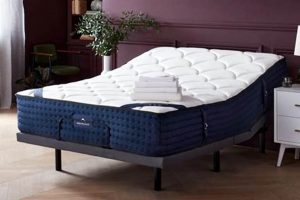
Support surfaces engineered to alleviate pressure are designed to reduce the risk of pressure ulcers. These devices redistribute weight away from bony prominences, where prolonged pressure can damage tissue and lead to skin breakdown. They are often constructed with features like alternating air cells, gel infusions, or foam contours to achieve optimal pressure relief.
Utilizing effective support surfaces offers significant benefits in preventing and managing pressure injuries. These include improved patient comfort, reduced need for frequent repositioning, and decreased healthcare costs associated with treating advanced ulcers. The development of such technologies represents a crucial advancement in patient care, rooted in the understanding of pressure’s detrimental effects on vulnerable skin.
The selection of an appropriate support surface necessitates careful consideration of individual patient needs, including their mobility level, body weight, and existing skin condition. Different types are available, ranging from simple overlays to more advanced powered systems, each offering unique features and suitability for diverse clinical scenarios.
Guidance on Pressure Injury Prevention
The following recommendations provide essential information for minimizing the risk of pressure injuries through appropriate surface selection and utilization.
Tip 1: Conduct a Thorough Risk Assessment: Evaluate patients for risk factors such as immobility, malnutrition, and incontinence. This informs the choice of support surface and preventative strategies.
Tip 2: Select an Appropriate Surface Based on Risk: Match the surface to the patient’s risk level. Higher-risk individuals may require advanced pressure redistribution features, such as powered air mattresses.
Tip 3: Ensure Proper Surface Inflation and Function: Regularly check that air mattresses are correctly inflated and functioning according to manufacturer guidelines. Malfunctioning surfaces can compromise pressure relief.
Tip 4: Implement a Repositioning Schedule: Even with specialized surfaces, a regular repositioning schedule is vital. Turning patients reduces prolonged pressure on any single area.
Tip 5: Maintain Skin Hygiene and Hydration: Clean and moisturize the skin regularly to improve its resilience against pressure. Dry, fragile skin is more susceptible to damage.
Tip 6: Optimize Nutrition and Hydration: Adequate nutrition and hydration are crucial for tissue health and repair. Support the patient’s overall well-being to enhance skin integrity.
Tip 7: Educate Caregivers on Proper Use: Ensure that all caregivers are trained on the correct use of the support surface, including inflation levels, cleaning procedures, and troubleshooting.
By adhering to these evidence-based recommendations, the incidence of pressure injuries can be significantly reduced, leading to improved patient outcomes and reduced healthcare burden.
The subsequent sections will delve further into the specific types of support surfaces available and their suitability for various clinical scenarios.
1. Pressure Redistribution
Effective pressure redistribution is a foundational principle in the design and application of specialized support surfaces. Its central aim is to mitigate the risk of pressure injuries by evenly distributing the patient’s weight across a larger surface area, thus reducing concentrated pressure points that can lead to tissue damage.
- Immersion and Envelopment
Immersion refers to the extent to which the body sinks into the support surface, while envelopment describes the surface’s ability to conform to the body’s contours. These properties are crucial for maximizing contact area and minimizing pressure concentrations. For example, a memory foam mattress exhibits both immersion and envelopment, allowing bony prominences to sink into the foam, thereby spreading the load and reducing the risk of localized pressure.
- Alternating Pressure Technology
Alternating pressure systems utilize inflatable air cells that cyclically inflate and deflate, effectively shifting pressure away from specific areas. This dynamic pressure redistribution prevents prolonged compression of tissues and promotes blood flow. These systems are often employed for individuals at high risk of developing pressure injuries due to immobility or other comorbidities.
- Shear Force Reduction
Shear forces, generated when the skin moves in one direction while underlying tissues remain stationary, can contribute to tissue damage. Specialized surfaces incorporate features such as low-friction fabrics and segmented designs to minimize shear. For instance, a mattress with a breathable, low-friction cover can reduce the force required to reposition a patient, thus minimizing the risk of shear-induced injury.
- Microclimate Control
The microclimate at the skin-surface interface plays a crucial role in pressure injury prevention. Excessive moisture and elevated temperatures can compromise skin integrity and increase susceptibility to pressure damage. Certain support surfaces incorporate moisture-wicking fabrics and ventilation systems to regulate the microclimate and maintain optimal skin health.
The effectiveness of a specialized support surface hinges on its ability to provide adequate pressure redistribution tailored to the individual’s specific needs and risk factors. Employing a multi-faceted approach that addresses immersion, envelopment, alternating pressure, shear force reduction, and microclimate control is essential for optimizing pressure injury prevention and promoting patient comfort.
2. Moisture Control

Excessive moisture against the skin constitutes a significant risk factor for pressure injury development. Prolonged exposure to perspiration, urine, or wound exudate macerates the skin, weakening its integrity and increasing its susceptibility to breakdown from pressure and shear. Support surfaces designed to mitigate pressure injuries, therefore, often integrate moisture control features as a critical component of their overall effectiveness. For example, mattresses with breathable, waterproof covers prevent fluid penetration while allowing moisture vapor to escape, reducing the risk of skin maceration. The selection of appropriate materials directly influences the mattress’s ability to manage moisture effectively. Surfaces incorporating wicking fabrics pull moisture away from the skin, promoting a drier microclimate and reducing the likelihood of skin damage. The absence of effective moisture control can negate the benefits of pressure redistribution, as compromised skin remains vulnerable despite reduced pressure.
Specific mattress designs incorporate advanced moisture management
technologies. Some include integrated ventilation systems to promote airflow and further reduce moisture build-up. Others utilize specialized foam or fiber structures that enhance wicking and evaporation. Consider the case of an incontinent patient; without proper moisture control, the constant exposure to urine would rapidly degrade the skin’s barrier function, rendering it highly susceptible to pressure injury. A mattress with a waterproof, breathable cover and moisture-wicking capabilities would significantly reduce this risk, protecting the skin and promoting a healthier microclimate. Regular cleaning and maintenance of the support surface are also crucial for preserving its moisture control properties.
In summary, moisture control is inextricably linked to the effectiveness of specialized support surfaces in preventing pressure injuries. By managing the skin’s microclimate and reducing the risk of maceration, these features contribute significantly to maintaining skin integrity and minimizing the incidence of pressure-related tissue damage. Challenges remain in optimizing moisture control for diverse patient populations and clinical settings, but ongoing research and technological advancements continue to refine the design and performance of support surfaces in this critical area. This understanding underscores the importance of selecting support surfaces that address both pressure redistribution and moisture management for comprehensive pressure injury prevention.
3. Support Optimization

Support optimization, in the context of specialized mattresses designed for pressure injury prevention, represents the process of tailoring the surface’s characteristics to meet the specific needs of the individual patient. This involves careful consideration of factors such as body weight, body shape, mobility level, existing skin condition, and other relevant medical conditions. The ultimate goal is to provide optimal pressure redistribution, shear force reduction, and microclimate control to minimize the risk of tissue damage. Without adequate support optimization, even the most advanced support surface may fail to deliver its intended benefits, potentially leading to pressure injury development or delayed healing. This principle highlights the necessity of individualized assessment and selection of the appropriate mattress type.
A practical example underscores this connection. Consider two patients, both with limited mobility and at risk of pressure injuries. The first patient is underweight with fragile skin, while the second patient is obese with significant edema. A standard foam mattress may provide adequate support for neither. The underweight patient might require a low-air-loss system with adjustable pressure settings to minimize interface pressure and prevent skin breakdown. The obese patient, on the other hand, may necessitate a high-density foam mattress with reinforced edges to provide adequate weight-bearing capacity and prevent bottoming out. Support optimization, therefore, dictates the selection of different surfaces based on individual patient characteristics, ensuring that the mattress effectively addresses their unique needs. The process extends beyond initial mattress selection to encompass ongoing adjustments and monitoring. Clinicians must regularly reassess the patient’s condition and adjust mattress settings, repositioning schedules, and other interventions as needed to maintain optimal support.
In conclusion, support optimization is an indispensable component of effective pressure injury prevention. It necessitates a comprehensive understanding of individual patient needs and the characteristics of various support surfaces. By tailoring the surface to the patient, clinicians can maximize pressure redistribution, shear force reduction, and microclimate control, ultimately minimizing the risk of tissue damage and promoting optimal healing. Despite advances in mattress technology, challenges persist in accurately assessing individual risk factors and predicting optimal support requirements. Continued research and development are needed to refine assessment tools, improve mattress designs, and enhance clinical decision-making in this critical area. The commitment to support optimization reflects a proactive approach to patient care and a dedication to minimizing the incidence of preventable pressure injuries.
4. Microclimate Management

Microclimate management, in the context of specialized mattresses for pressure injury prevention, refers to the control of temperature and moisture at the skin-support surface interface. Perspiration, incontinence, and wound exudate can contribute to a persistently moist and warm microclimate, increasing the risk of skin maceration and bacterial proliferation. Macerated skin is more susceptible to friction, shear forces, and pressure, thereby elevating the likelihood of pressure injury development. Specialized mattresses designed for pressure injury prevention often incorporate features aimed at maintaining a drier and cooler microclimate, such as breathable fabrics, moisture-wicking materials, and ventilation systems. These features counteract the adverse effects of excessive moisture and heat, promoting skin integrity and reducing the risk of tissue damage. Without effective microclimate management, the benefits of pressure redistribution may be diminished, as compromised skin remains vulnerable to breakdown.
Practical examples illustrate the significance of microclimate management. Consider a patient with urinary incontinence who is confined to bed for extended periods. Without a mattress with moisture-wicking capabilities, the skin would be constantly exposed to urine, leading to maceration and increased risk of pressure injury. A specialized mattress with a breathable, waterproof cover and moisture-wicking inner layers would mitigate this risk by keeping the skin dry and reducing the potential for breakdown. Similarly, a patient with excessive perspiration may benefit from a mattress with ventilation channels that promote airflow and dissipate heat, preventing the build-up of moisture and reducing the risk of skin maceration. The choice of materials plays a crucial role in microclimate management. Synthetic fabrics like polyester are often treated with moisture-wicking finishes to enhance their ability to draw moisture away from the skin. Natural fibers like cotton may also be used, but their moisture-wicking properties are generally less effective than those of synthetic fabrics. The mattress’s construction also influences its microclimate management capabilities. Mattresses with open-cell foam structures allow for better airflow compared to those with closed-cell foam structures.
Effective microclimate management is an essential component of comprehensive pressure injury prevention. By controlling temperature and moisture at the skin-support surface interface, specialized mattresses can help maintain skin integrity and reduce the risk of tissue damage. Challenges remain in optimizing microclimate management for diverse patient populations and clinical settings. Further research is needed to develop innovative materials and mattress designs that provide superior moisture control and temperature regulation. The integration of sensor technology into mattresses may also enable real-time monitoring of the microclimate, allowing for proactive adjustments to prevent skin breakdown. In conclusion, a holistic approach to pressure injury prevention requires attention to both pressure redistribution and microclimate manage
ment.
5. Infection Prevention

Specialized support surfaces designed to prevent pressure injuries inherently intersect with infection prevention strategies. Compromised skin, a direct consequence of pressure-induced tissue damage, provides a portal of entry for pathogens, increasing the risk of localized wound infections and potentially systemic infections. Mattresses with damaged surfaces, tears, or compromised waterproof barriers can harbor bacteria and fungi, creating a reservoir for infection. Therefore, the selection and maintenance of support surfaces must prioritize infection control to minimize the risk of healthcare-associated infections (HAIs). The design of these mattresses often incorporates antimicrobial materials, which inhibit the growth of microorganisms on the surface. Examples include fabrics treated with silver ions or coatings that prevent bacterial adhesion. In healthcare settings, routine disinfection protocols are essential to eliminate pathogens that may contaminate the mattress surface. The failure to adhere to these protocols can lead to the transmission of infectious agents to vulnerable patients.
Antimicrobial properties alone are insufficient for comprehensive infection prevention. Thorough cleaning and disinfection practices must be implemented to remove organic matter and kill remaining microorganisms. Healthcare facilities typically use hospital-grade disinfectants that are effective against a broad spectrum of pathogens. The frequency of cleaning depends on the patient’s condition, the level of contamination, and facility protocols. For instance, mattresses used by patients with known infections require more frequent and rigorous cleaning. Proper cleaning techniques are also crucial. Surfaces must be thoroughly wiped down, paying particular attention to seams, zippers, and other areas where microorganisms can accumulate. Furthermore, healthcare personnel must adhere to standard precautions, including the use of gloves and other personal protective equipment, to prevent the spread of infection during cleaning and handling. The decision to use disposable or reusable support surfaces also impacts infection control practices. Disposable mattresses eliminate the need for cleaning and disinfection, reducing the risk of cross-contamination. However, they also contribute to waste generation and may not be suitable for all patients or settings.
In summary, infection prevention is inextricably linked to the use of specialized support surfaces for pressure injury prevention. The integrity of the mattress surface, the incorporation of antimicrobial materials, and the implementation of rigorous cleaning and disinfection protocols are all critical elements of an effective infection control strategy. Ongoing research and development are needed to improve the antimicrobial properties of support surfaces and to optimize cleaning and disinfection techniques. A proactive approach to infection prevention is essential to minimize the risk of HAIs and to promote patient safety and well-being. The focus should be on selecting products and creating guidelines for a safe environment for patients at risk of pressure injuries.
6. Patient Comfort
Patient comfort is a critical consideration in the selection and utilization of specialized support surfaces designed to prevent and manage pressure injuries. While pressure redistribution, moisture control, and infection prevention are paramount, the subjective experience of the patient directly impacts adherence to care plans, overall well-being, and ultimately, healing outcomes. An uncomfortable mattress, regardless of its pressure-relieving capabilities, may lead to restlessness, agitation, and non-compliance with prescribed positioning schedules. This, in turn, can compromise the effectiveness of the support surface and increase the risk of pressure injury development.
- Material Selection and Skin Sensitivity
The materials used in the construction of a specialized mattress significantly influence patient comfort. Some individuals exhibit sensitivities or allergies to certain materials, such as latex or specific types of foam. Mattresses should be constructed from hypoallergenic and breathable materials to minimize the risk of skin irritation and promote a comfortable sleep environment. The texture of the surface also plays a role; a rough or abrasive surface can cause discomfort and friction, potentially exacerbating existing skin conditions. Smooth, soft, and conforming materials enhance comfort and reduce the risk of skin breakdown.
- Temperature Regulation and Airflow
The ability of a mattress to regulate temperature and promote airflow is crucial for patient comfort, particularly for individuals who are prone to sweating or who have difficulty regulating their body temperature. Mattresses with poor ventilation can trap heat and moisture, leading to discomfort, skin maceration, and an increased risk of infection. Specialized mattresses often incorporate features such as breathable fabrics, open-cell foam structures, and ventilation channels to promote airflow and dissipate heat. These features help maintain a comfortable and dry microclimate, enhancing patient well-being.
- Adjustability and Customization
The degree to which a mattress can be adjusted and customized to meet individual patient needs directly impacts comfort. Adjustable air mattresses allow clinicians to fine-tune pressure settings to optimize pressure redistribution and minimize discomfort. Some mattresses also offer adjustable head and foot sections, which can enhance comfort and facilitate positioning for specific medical conditions. The ability to customize the mattress to the patient’s body shape, weight, and preferred sleeping position promotes a more comfortable and restful experience.
- Noise and Vibration
The noise and vibration generated by certain types of specialized mattresses, such as alternating air mattresses, can disrupt sleep and cause discomfort. While these features are often necessary for effective pressure redistribution, manufacturers should strive to minimize noise and vibration levels. Quieter pumps and smoother inflation/deflation cycles can significantly improve patient comfort. Furthermore, educating patients about the purpose and function of these features can help alleviate anxiety and promote acceptance.
Patient comfort, therefore, is not merely a matter of luxury but a critical element of effective pressure injury prevention and management. By carefully considering material selection, temperature regulation, adjustability, and noise levels, healthcare providers can select specialized mattresses that promote both skin integrity and patient well-being. A comfortable patient is more likely to adhere to care plans, experience improved sleep quality, and ultimately, achieve better healing outcomes. It is not only a value but a necessity.
Frequently Asked Questions
The following questions address common inquiries regarding the selection, utilization, and maintenance of specialized mattresses designed to mitigate the risk of pressure injuries. This information aims to provide clarity and guidance for healthcare professionals and caregivers.
Question 1: What defines a “special mattress for bed sores” and how does it differ from a standard mattress?
A “special mattress for bed sores,” more accurately termed a pressure redistr
ibution support surface, is engineered with specific features to alleviate pressure concentration on bony prominences. Unlike standard mattresses, these surfaces utilize materials and designs that promote immersion, envelopment, and/or alternating pressure to reduce the risk of tissue ischemia.
Question 2: How frequently should “special mattress for bed sores” be cleaned, and what cleaning agents are recommended?
Cleaning frequency depends on facility protocols, patient condition, and the manufacturer’s instructions. Typically, daily cleaning with a hospital-grade disinfectant is recommended. Harsh chemicals should be avoided, as they can damage the mattress surface and compromise its integrity. Adherence to manufacturer guidelines is paramount.
Question 3: Are “special mattress for bed sores” suitable for all patients, regardless of weight or medical condition?
Not all support surfaces are suitable for all patients. Weight limits, specific medical conditions, and individual risk factors must be considered when selecting a mattress. Bariatric patients require surfaces with adequate weight-bearing capacity, while patients with spinal instability may need firmer support.
Question 4: Can a “special mattress for bed sores” completely eliminate the need for patient repositioning?
Even with the use of a specialized support surface, regular patient repositioning remains essential. Pressure redistribution reduces, but does not eliminate, the need for frequent turning and repositioning. Repositioning promotes blood flow and prevents prolonged pressure on any single area.
Question 5: How does microclimate management contribute to the effectiveness of “special mattress for bed sores”?
Microclimate management addresses the control of moisture and temperature at the skin-support surface interface. By minimizing perspiration, incontinence, and wound exudate, these features reduce the risk of skin maceration and bacterial proliferation, thereby enhancing the overall effectiveness of the support surface.
Question 6: What are the key indicators that a “special mattress for bed sores” is no longer functioning effectively and needs replacement?
Indicators include visible damage (tears, cracks), loss of inflation (for air mattresses), bottoming out (where the patient’s bony prominences contact the underlying bed frame), and failure of the pressure redistribution mechanism. Any of these signs warrant immediate inspection and potential replacement of the support surface.
In summary, the effective utilization of specialized support surfaces requires a comprehensive understanding of their capabilities, limitations, and maintenance requirements. Regular assessment, adherence to protocols, and diligent monitoring are essential for optimizing pressure injury prevention.
The subsequent sections will explore real-world case studies that illustrate the application of specialized mattresses in diverse clinical scenarios.
Special Mattress for Bed Sores
The preceding discussion has explored the multifaceted nature of specialized support surfaces, often referred to as “special mattress for bed sores,” in the prevention and management of pressure injuries. Key aspects include pressure redistribution, moisture control, support optimization, microclimate management, infection prevention, and patient comfort. These factors collectively contribute to the maintenance of skin integrity and the reduction of tissue damage risk.
The appropriate selection and diligent utilization of these surfaces represent a crucial investment in patient care, impacting not only clinical outcomes but also overall quality of life. Continued research and adherence to established best practices are essential to optimize the effectiveness of “special mattress for bed sores” and minimize the incidence of preventable pressure-related complications. Future developments may yield even more sophisticated support systems tailored to individual patient needs, further advancing the field of pressure injury prevention.