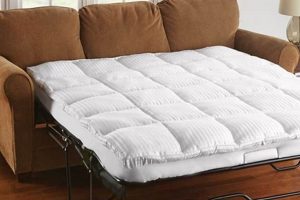
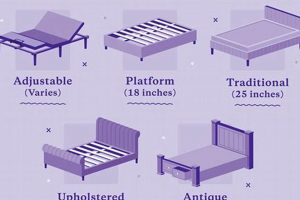
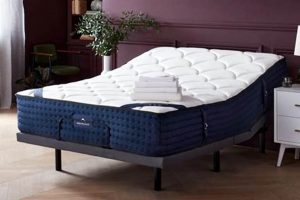
These space-saving sleeping solutions integrate a foldable bed frame with a fitted mattress, offering a convenient and compact alternative to traditional beds. This design allows for easy storage when not in use, maximizing available floor space within a room. One common example includes a bed that folds vertically into a cabinet or against a wall, effectively disappearing when not required.
The significance of such furniture lies in its ability to address spatial limitations, particularly in apartments, studios, or multi-functional rooms. Advantages include increased living area, versatility in room usage, and a decluttered aesthetic. Historically, similar concepts have existed for centuries, evolving from simple cots to sophisticated mechanisms with integrated support systems, reflecting the ongoing need for efficient living solutions.
The subsequent sections will examine the various types, mechanisms, and considerations involved in selecting an appropriate option, covering frame materials, mattress types, safety features, and space optimization strategies to assist in choosing the ideal solution.
Essential Considerations for Deploying Space-Saving Sleep Solutions
The following points offer critical guidance when evaluating and incorporating these compact sleeping arrangements into any residential or commercial space.
Tip 1: Measure Available Space Accurately: Prior to purchase, meticulously measure the intended deployment area, both in its folded and unfolded states. Inaccurate measurements can lead to operational constraints or incompatibility with the environment.
Tip 2: Evaluate Frame Material Strength and Durability: Frame construction materials dictate long-term stability and load-bearing capacity. Steel and hardwoods generally offer superior resistance to wear and tear compared to less robust alternatives.
Tip 3: Assess Mattress Comfort and Support Levels: Mattress selection profoundly impacts sleep quality. Consider factors such as firmness, material composition (e.g., memory foam, innerspring), and thickness to ensure adequate spinal support and pressure relief.
Tip 4: Inspect Folding Mechanism Smoothness and Safety Features: A smooth, reliable folding mechanism is paramount. Verify the presence of locking mechanisms, safety latches, and any safeguards against accidental collapse. Rigorous testing of the folding and unfolding process is advisable.
Tip 5: Consider Portability and Ease of Relocation: Depending on usage requirements, the ability to easily move the unit may be a decisive factor. Models equipped with integrated wheels or lightweight construction can offer enhanced maneuverability.
Tip 6: Account for Storage Capacity in Enclosed Models: Cabinet-based models often incorporate integrated storage. Assess the suitability of the storage volume and configuration for accommodating bedding, pillows, or other essential items.
Tip 7: Research Vendor Reputation and Warranty Coverage: Purchase from reputable suppliers offering comprehensive warranty protection. Thoroughly investigate customer reviews and testimonials to gauge product reliability and after-sales support quality.
Adhering to these considerations will facilitate the selection of a suitable compact sleep solution, optimizing space utilization and ensuring user satisfaction.
The ensuing sections will delve into the practical implementation and long-term maintenance of this space-efficient furnishing.
1. Space Optimization
The efficient use of available square footage is a primary concern in contemporary living spaces. Folding beds equipped with a mattress directly address this challenge by offering a dual-purpose solution: a comfortable sleeping surface that can be readily stowed away when not in use, thereby freeing up valuable floor space.
- Dual Functionality
The inherent design allows a room to transition seamlessly between different functions. For example, a home office during the day can transform into a guest room at night, eliminating the need for a dedicated bedroom. This adaptability is particularly beneficial in smaller apartments or multi-use spaces.
- Vertical Storage
Many of these beds are designed to fold vertically against a wall or into a cabinet. This leverages unused vertical space, minimizing the footprint of the sleeping arrangement when not in use. Wall-mounted units exemplify this concept, effectively disappearing when folded up.
- Footprint Reduction
When folded, the overall volume occupied by these units is significantly reduced compared to conventional beds. This allows for greater flexibility in furniture arrangement and enables the use of the freed-up area for other activities, such as exercise, work, or entertainment.
- Integrated Storage Solutions
Certain models incorporate built-in storage compartments, providing additional space for linens, pillows, or other personal items. This further maximizes the efficiency of the unit by combining sleeping and storage functionalities into a single piece of furniture. Examples include cabinet models with shelving or drawers.
The facets above highlight the integral role of space optimization in the design and implementation of folding beds equipped with a mattress. Whether it involves transforming a single room to serve multiple functions or simply minimizing the overall footprint of a sleeping arrangement, these beds represent a practical solution for maximizing available space in a variety of living environments.
2. Mechanism Reliability

The operational effectiveness and longevity of any folding bed with a mattress are intrinsically linked to the reliability of its folding mechanism. This mechanism, typically composed of hinges, springs, and locking systems, is subjected to repetitive stress during each opening and closing cycle. Failure within this system can render the entire unit unusable or, more concerningly, pose a safety hazard to the user. For instance, a poorly constructed hinge may shear under stress, causing the bed to collapse unexpectedly. A malfunctioning locking mechanism may fail to secure the bed in either the open or closed position, leading to instability and potential injury. Thus, the mechanism’s robustness is a crucial determinant of the product’s overall value and safety.
The design and materials used in the folding mechanism are paramount to its reliability. High-quality steel components, precision engineering, and rigorous testing protocols are essential to ensure consistent and safe operation over an extended period. Examples of reliable mechanisms often include gas spring systems that provide smooth and controlled movement, minimizing stress on individual components. Conversely, mechanisms employing lo
w-grade materials or lacking adequate quality control are prone to premature failure, resulting in costly repairs or replacements. The implementation of safety features, such as redundant locking systems and overload protection, further enhances the reliability and user safety.
In summary, mechanism reliability is not merely a desirable attribute of folding beds with mattresses but a fundamental requirement. Its absence can lead to functional impairment, safety risks, and ultimately, user dissatisfaction. Manufacturers should prioritize robust design, quality materials, and stringent testing to ensure the long-term performance and safety of their products. The understanding of this critical component is essential for consumers to make informed purchasing decisions and prioritize their well-being.
3. Mattress Comfort
Mattress comfort is an essential consideration when evaluating folding beds, directly impacting sleep quality and user satisfaction. The inherent design constraints of folding mechanisms necessitate careful consideration of mattress selection to balance support, durability, and ease of storage.
- Thickness and Profile Limitations
Folding beds often impose restrictions on mattress thickness to facilitate smooth folding and storage. Thicker mattresses, while potentially more comfortable, may hinder the folding process or increase the overall footprint of the stored unit. A lower profile mattress may be necessary, potentially impacting the level of support and cushioning available. For instance, a standard innerspring mattress exceeding 10 inches may not be suitable for a wall-mounted folding bed, necessitating the use of a thinner memory foam or hybrid model.
- Material Composition and Support
The materials used in mattress construction influence both comfort and durability. Memory foam, latex, and innerspring designs offer varying levels of support and pressure relief. The choice of material should align with individual sleep preferences and any specific orthopedic needs. For example, individuals with back pain may benefit from a memory foam mattress that conforms to the body’s contours, while others may prefer the firmer support of an innerspring model. However, the chosen material must also withstand frequent folding and unfolding without compromising its structural integrity. A lower-density foam, for example, may degrade more quickly than a higher-density counterpart.
- Weight Considerations
The weight of the mattress affects the ease of folding and unfolding the bed. Heavier mattresses may require more effort to maneuver and could strain the folding mechanism over time. Lighter mattresses, while easier to handle, may sacrifice some level of comfort and support. An appropriate balance between weight and comfort is crucial. For instance, a lightweight latex mattress may provide adequate support without adding excessive weight to the folding mechanism.
- Breathability and Temperature Regulation
Mattress materials influence airflow and temperature regulation during sleep. Poor breathability can lead to overheating and discomfort. Materials like open-cell memory foam or those incorporating cooling gels can enhance airflow and dissipate heat. Consider, for instance, a folding bed used in a guest room that may be occupied during warmer months; a mattress with enhanced breathability will contribute significantly to the guest’s comfort.
In conclusion, mattress comfort within the context of folding beds is a multi-faceted consideration involving thickness, material composition, weight, and breathability. Selection requires a careful assessment of individual needs and spatial constraints to optimize both sleep quality and the functionality of the folding bed unit.
4. Frame Durability
The structural integrity of a folding bed frame is paramount to its overall performance and longevity. Frame durability, defined by its resistance to stress and wear over time, directly influences the safety, stability, and lifespan of the entire unit, including the mattress it supports. The folding mechanism introduces repeated stress points, concentrated particularly at hinges and support structures. Insufficient frame durability will manifest as instability, squeaking, or eventual structural failure, rendering the item unusable or even hazardous. Consider a scenario where a poorly constructed frame buckle under the weight of a user; potential injury is significant, and the intended space-saving function is negated by the need for repair or replacement. The frame acts as the primary support system, and any compromise in its integrity directly affects the user experience and expected lifespan of the unit.
Material selection is a crucial determinant of frame durability. Steel, particularly when appropriately treated to resist corrosion, offers a robust and cost-effective solution for many folding bed frames. Hardwoods, such as oak or maple, provide both strength and aesthetic appeal, though they are typically more expensive. Conversely, frames constructed from lower-quality materials, such as particleboard or thin-gauge steel, are significantly more susceptible to damage and premature wear. The design of the frame is equally important. Adequate bracing, reinforced joints, and well-distributed load-bearing surfaces contribute to a stable and durable structure. Furthermore, the finish applied to the frame can play a role in its longevity; a durable powder coating, for example, can protect against scratches, rust, and other forms of environmental damage.
In summary, frame durability is not merely a desirable characteristic of folding beds but a fundamental requirement for safety, stability, and long-term value. The choice of materials, design features, and manufacturing processes directly impacts the frame’s ability to withstand the stresses associated with repeated folding and unfolding. Prioritizing frame durability ensures a reliable and functional space-saving solution, mitigating potential safety risks and maximizing the return on investment. The long-term efficacy of a folding bed is intimately tied to the robustness of its supporting structure.
5. Safety Features

The integration of safety mechanisms within folding beds is not merely a design consideration, but a fundamental necessity given the inherent risks associated with movable furniture and compressed spaces. Failure to adequately address safety concerns can result in serious injury or property damage. Therefore, a thorough examination of relevant safety features is paramount.
- Locking Mechanisms
These mechanisms secure the bed frame in both the open and closed positions, preventing unintended collapses or deployments. Examples include spring-loaded latches, pin-and-hole systems, and magnetic locks. A properly functioning locking mechanism is critical to prevent accidental closure while occupied or unintended opening during storage. The absence of a reliable locking system presents an immediate and unacceptable safety hazard.
- Piston Dampening Systems
Gas pistons or similar dampening devices control the speed and force of the folding and unfolding motion. These s
ystems mitigate the risk of sudden, uncontrolled movements that could cause injury. A malfunctioning or absent piston system can result in the bed slamming open or closed, posing a significant threat, especially to children or individuals with limited mobility. Regular inspection and maintenance of these systems are vital. - Weight Capacity Ratings
Manufacturers must clearly specify the maximum weight capacity of the bed frame and mattress combination. Exceeding this limit can compromise the structural integrity of the unit, increasing the risk of collapse. Clear and prominent labeling of weight restrictions is essential to prevent misuse. The advertised weight capacity should be verified through independent testing to ensure accuracy.
- Edge Protection and Pinch-Point Mitigation
Folding beds often incorporate features to protect users from sharp edges or pinch points during operation. Rounded edges, padded surfaces, and strategically placed guards minimize the risk of cuts, bruises, or trapped limbs. Design considerations should prioritize the elimination of potential hazards throughout the folding and unfolding process. Regular inspection should ensure these features remain intact and functional.
These safety features collectively contribute to the safe and reliable operation of folding beds with mattresses. Omission or compromise of these elements elevates the risk of accidents, injuries, and property damage. A comprehensive evaluation of these safety mechanisms is indispensable when selecting a folding bed to ensure the well-being of users and mitigate potential liabilities.
Frequently Asked Questions
The following questions address common inquiries regarding folding beds equipped with a mattress, providing factual information to assist in informed decision-making.
Question 1: What is the typical lifespan of a folding bed frame?
The lifespan of a folding bed frame depends significantly on material quality, usage frequency, and maintenance practices. High-quality steel frames can last for 10-15 years with regular use, while models constructed from less durable materials may exhibit signs of wear within 5-7 years.
Question 2: Are all folding beds suitable for everyday use?
While some folding beds are designed for occasional use (e.g., guest rooms), others are engineered for daily use. Units intended for everyday use typically feature more robust frames, higher-quality mattresses, and enhanced folding mechanisms.
Question 3: What is the recommended mattress thickness for a folding bed?
The recommended mattress thickness varies depending on the specific folding bed model. Exceeding the manufacturer’s specified thickness can compromise the folding mechanism and potentially damage the unit. Generally, mattresses ranging from 6 to 12 inches are suitable.
Question 4: How can the folding mechanism be properly maintained?
Regular lubrication of hinges and moving parts is essential for maintaining the folding mechanism. The use of a silicone-based lubricant is recommended. Periodic inspection for loose screws or damaged components is also advisable.
Question 5: What safety features should be prioritized when selecting a folding bed?
Essential safety features include locking mechanisms to prevent unintended folding or unfolding, piston-dampening systems for controlled movement, and clear weight capacity ratings. These features mitigate the risk of accidents and injuries.
Question 6: Can a standard mattress be used with a folding bed frame?
While some folding bed frames can accommodate standard mattresses, it’s crucial to verify compatibility with the manufacturer’s specifications. The mattress’s weight and dimensions must align with the frame’s design to ensure proper functionality and prevent damage.
In summary, understanding the lifespan, suitability for daily use, mattress thickness limitations, maintenance requirements, safety features, and mattress compatibility is essential for selecting and maintaining a folding bed equipped with a mattress.
The following section provides information on space-saving design strategies that can be used to further enhance the functionality of the folding beds.
Conclusion
This article has provided a comprehensive overview of folding beds with mattress, addressing key considerations ranging from space optimization and mechanism reliability to mattress comfort, frame durability, and essential safety features. A thorough understanding of these aspects is crucial for selecting an appropriate solution tailored to specific spatial requirements and user needs.
Careful consideration of these factors will ensure that the chosen folding bed with mattress delivers on its promise of space-saving convenience, while simultaneously prioritizing user safety and long-term value. Further research and consultation with reputable vendors are encouraged to make a well-informed purchasing decision, maximizing the benefits of this versatile furnishing option.